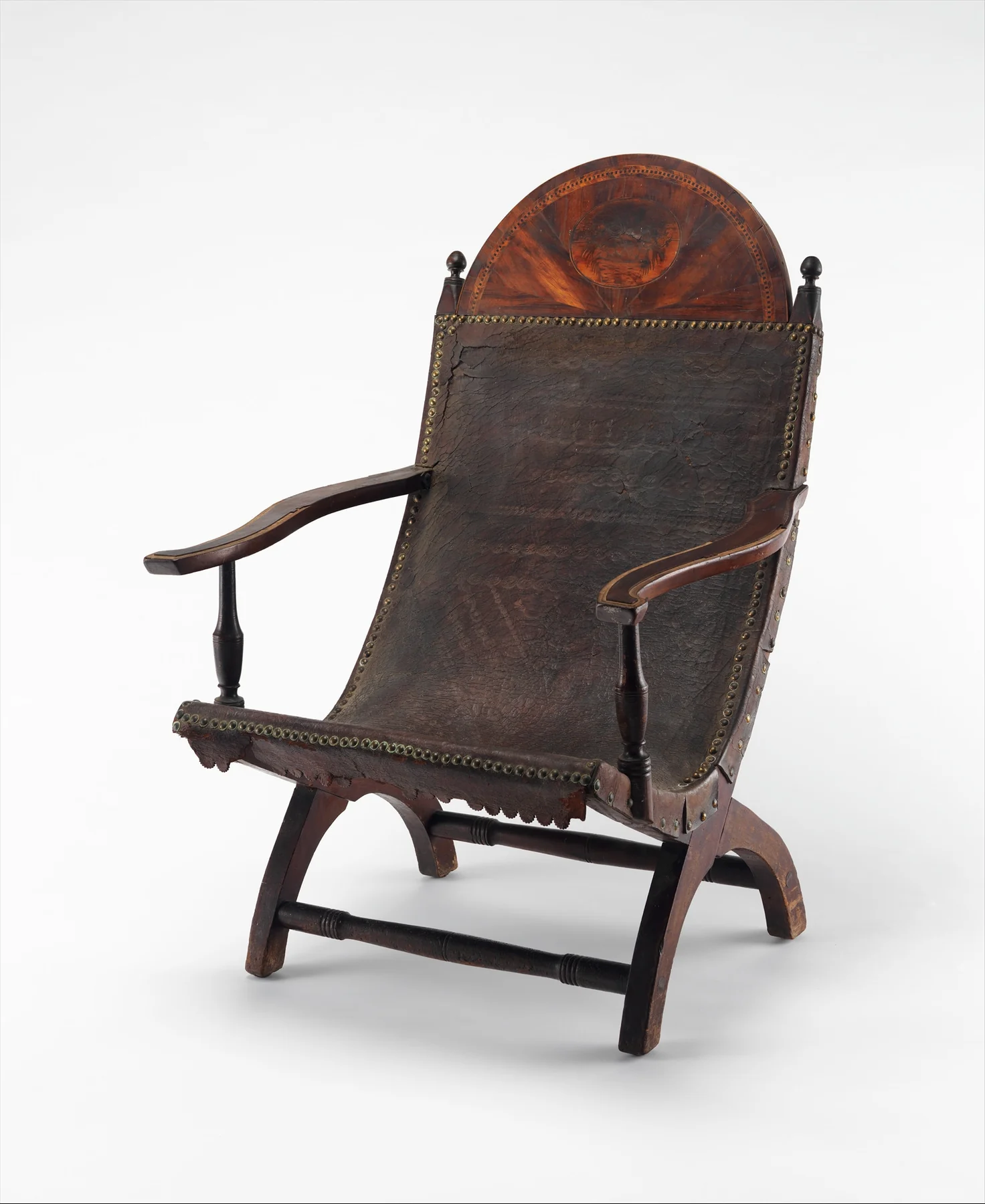
Translate the restoration word into actions
ICOM-CC distinguishes preventive conservation, remedial conservation and restoration by their aims and effects. A marketplace description may use the words more loosely, so do not correct the seller with a museum label and stop there. Ask which areas changed, which actions were taken and what outcome was intended for this exact piece.[1]
| Seller wording | Ask it to mean | Keep open |
|---|---|---|
| Restored | Exact structural, surface, upholstery, hardware or appearance work and its intended outcome | Whether every component was treated or only one area |
| Refinished | Which old coating was retained, reduced, removed or covered; preparation and new finish | Finish identity and concealed surface outside the record |
| Repaired | Location, failure or loss addressed, method, added material and present result | Condition of nearby and concealed construction |
| Reupholstered | Cover, trim, filling, support and frame work; material retained or discarded | Layers that were not opened or documented |
| Professionally restored | Person or business, relevant role, dates, written scope, records and current contact if supplied | Competence, quality and outcome until the evidence is reviewed |
Language boundary
A precise verb is more useful than an impressive adjective
‘Cleaned and waxed by the owner in 2024’ is a more usable statement than ‘beautifully restored’. Record what the seller knows and label what they do not; do not manufacture certainty by choosing a stronger word.
Confirm that the record belongs to the exact piece
Begin with the furniture now. Give it one stable identifier and record maximum dimensions, overall proportions, marks, labels, grain or veneer figure, upholstery pattern, hardware, losses, repairs and other distinctive features. Then trace those features backwards through completion, during-work and before-work images. A generic workshop portfolio, similar chair or invoice without an object description may show capability or expenditure, but it does not prove what happened to this piece.
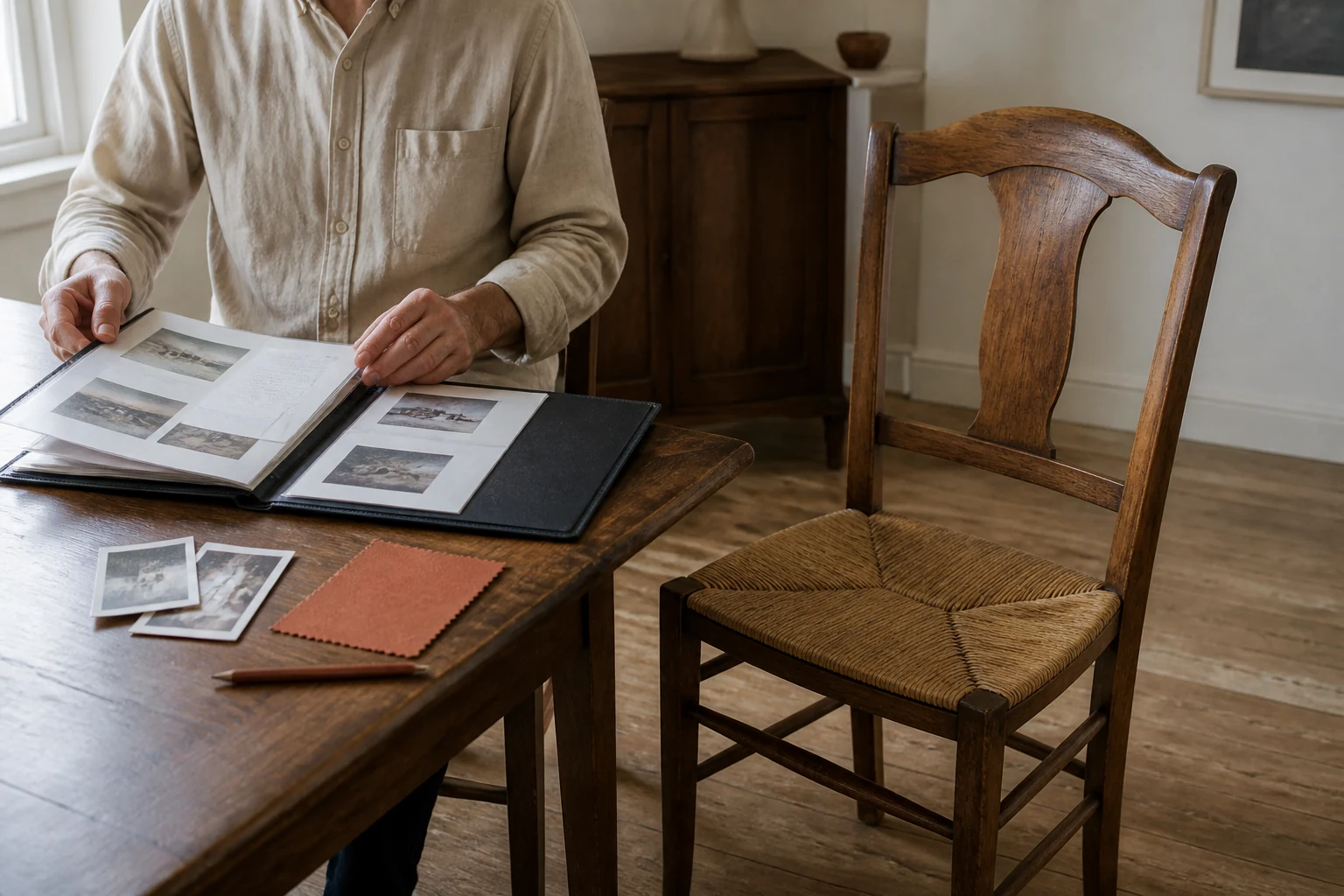
Connect every record
- Stable identityOne object number, invoice line or unambiguous description appears across the proposal, photographs, invoice and final report.
- Matching dimensionsOverall and component measurements remain compatible, allowing for explicitly recorded change.
- Persistent featuresMarks, holes, grain, joins, hardware positions, upholstery layout or old repairs connect the images through time.
- Dated sequenceThe date and custody order make sense: before, proposed scope, work, completion, later use and current sale.
- Declared gapsMissing dates, unidentified photographs, unavailable pages and unrecorded owner work remain visible rather than silently bridged.
Use the marks-and-labels Guide to record a mark in construction context. A label can help connect an object, but it does not on its own authenticate the furniture or the treatment file.
Reconstruct the condition before the work
The American Institute for Conservation's Guidelines for Practice call for documentation of examination, proposal and treatment, including condition, techniques, procedures, materials, alterations and relevant discoveries. Those professional guidelines are a useful model for reading evidence; they do not imply that every seller or earlier repairer followed them.[3]
| Baseline field | Useful evidence | What a gap leaves unknown |
|---|---|---|
| Whole object | Uncropped front, rear, sides, top and safe underside before work | Original stance, completeness and relationship between parts |
| Located condition | Details returned to a whole-object map with date and scale | Extent, distribution and whether the photographed area was exceptional |
| Function | Reported movement, support, opening, adjustment and intended use before treatment | Which functional problem the work was meant to address |
| Materials and finish | Existing layers, tests or records and explicitly unidentified areas | What was original, earlier, replacement or already altered |
| Earlier intervention | Old repairs, additions, removals and their known dates | Whether the latest project created or inherited a change |
If the baseline is only a listing, use the photograph Guide to see which whole and relationship views are missing. Do not treat the absence of a close-up as proof that the area was sound.
Baseline boundary
An after photograph cannot travel backwards
A glossy completion view may show the intended appearance, but it cannot recover material that was removed, prove the starting condition or reveal which problem was present before the work.
Read the completed work as a dated record
AIC's commentary expands treatment documentation to include who performed the work and when, before, during and after photographs, procedures and materials, changes from the proposal, and material added, removed or obscured. Use these as fields to request, not as a badge that automatically certifies an outcome.[4]
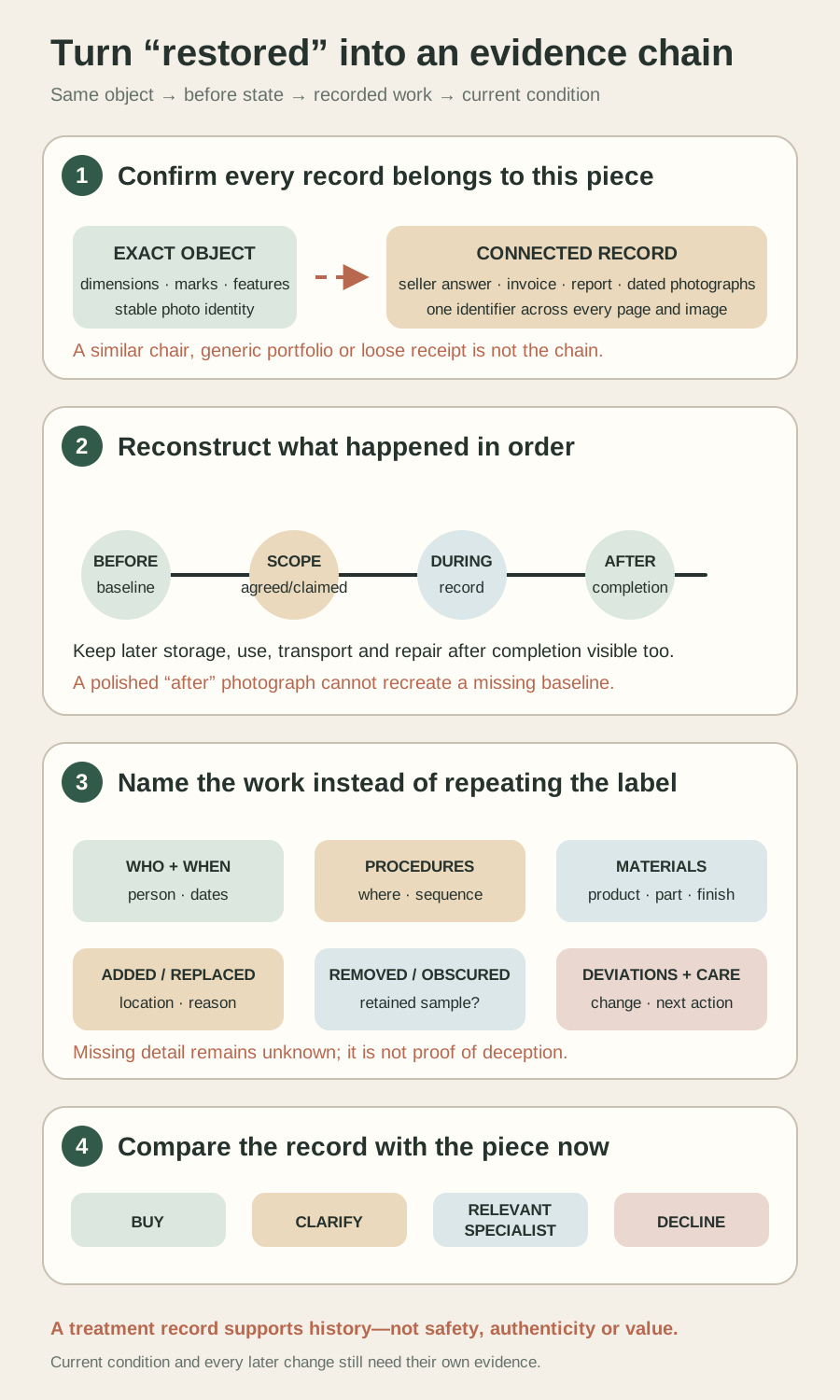
Read the record field by field
- Responsibility and datesWho examined, decided, performed and documented each part of the work, and the start and completion dates.
- Location and objectiveWhich component or surface was treated, why, and what outcome the accepted scope intended.
- Procedures and materialsPreparation, sequence, products, adhesives, coatings, fills, fasteners, new textile or replacement parts as recorded.
- Retained, added and removedOriginal or earlier material kept in place, saved separately, replaced, discarded, covered or made inaccessible.
- Discovery and deviationWhat appeared during work, how the accepted scope changed, who authorised it and what remains unresolved.
- Completion and careDated final views, current limitations, handling or cleaning advice, expected review and documents supplied.
The Institute of Conservation says a final report normally records the object's prior description, the work undertaken and before, during and after photographs, and advises keeping written confirmation with the object for future owners. That makes the file part of the handoff, while the furniture's present condition still requires a new observation.[2]
Separate interventions by material and effect
The Canadian Conservation Institute notes that original furniture finishes can contain historical information and that stripping is irreversible. That does not make every later finish unacceptable. It means the buyer should know what surface was present, what was removed or retained and what the new system covers before deciding whether the change suits the exact object and intended ownership.[5]
| Recorded action | Ask exactly where | Separate question |
|---|---|---|
| Cleaned or coated | Surface, preparation, product, removed material and areas excluded | Underlying finish identity, stability and future care |
| Stabilised or repaired | Joint, split, break, loss, support or mechanism; method and added material | Current function and condition of adjacent construction |
| Refinished or repainted | Complete surface or local field; old layers retained, reduced, removed or obscured | Historical significance, future treatment and present appearance |
| Reupholstered or rewoven | Cover, trim, filling, support, frame and retained samples | Layers not opened and suitability for intended use |
| Replaced or reproduced | Exact component, maker or supplier, material, dimensions, attachment and reason | Originality, attribution and compatibility with the remaining piece |
| Modified | Changed height, geometry, hardware, electrics, load path or use | Safety, compliance, reversibility and fit for the buyer's purpose |
Composite furniture may have several histories at once: an old frame repair, later finish, new upholstery and replacement glides can all be true. Preserve that sequence. Do not compress it into ‘fully restored’, and do not infer that an untreated component is a defect merely because another component changed.
Compare the completion record with current condition
Make a new whole-to-detail record in the furniture's current sale state. Use similar angles to the completion photographs where possible, but keep the current images dated and separate. Look for changes in stance, alignment, movement, finish, joins, upholstery tension, hardware, odour, residue, losses and repairs. Ask where the piece was used, stored, moved, cleaned and serviced after the recorded work.
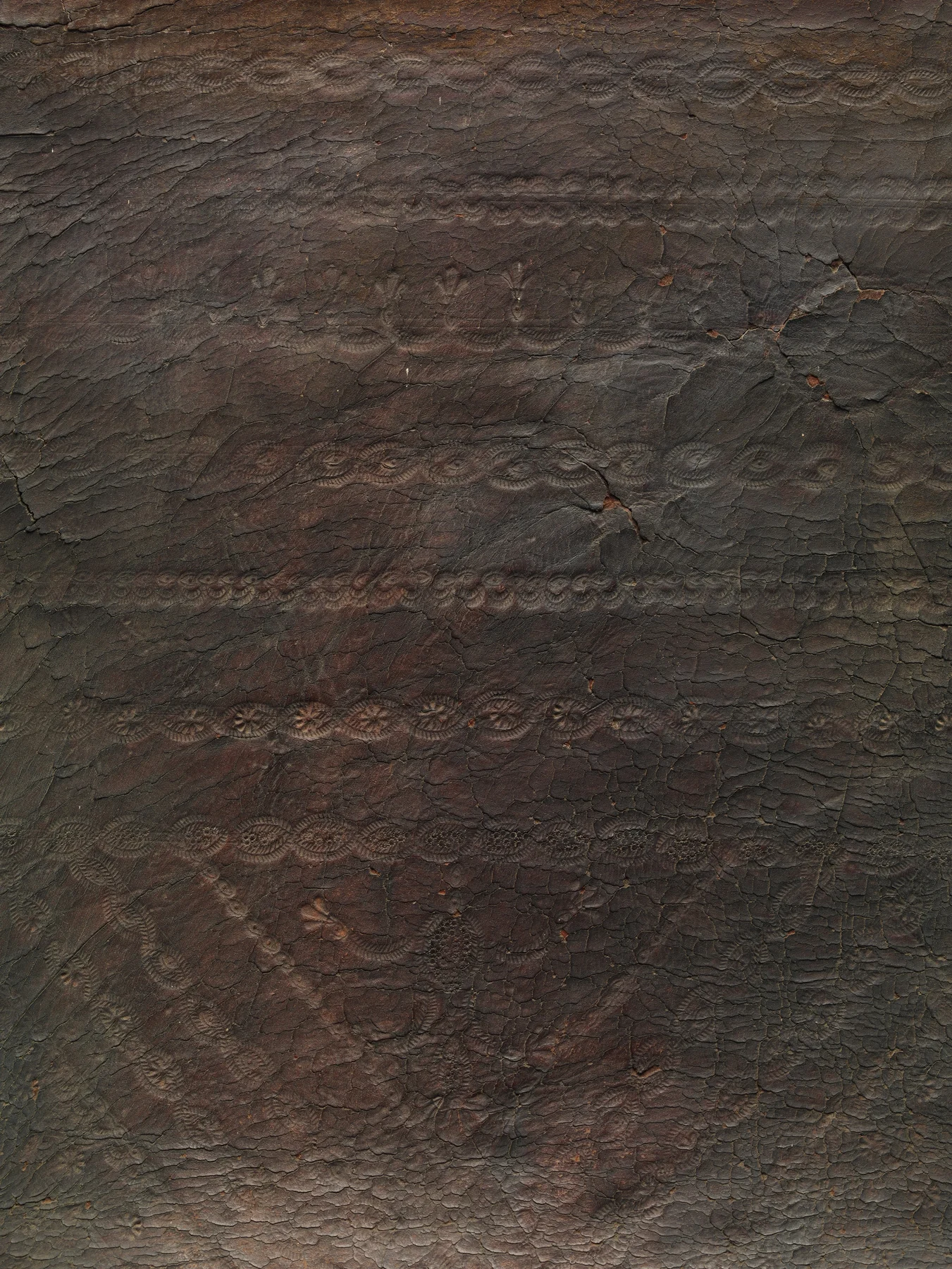
| Comparison | Ask | Decision boundary |
|---|---|---|
| Record matches current state | Are treated locations, replaced parts and distinctive features still visible and consistent? | Consistency supports the chain; it does not certify hidden work |
| Expected ageing or wear | When did it appear, where, and does aftercare describe it? | Acceptability depends on intended use and present condition |
| New movement, loss or lifting | What changed after completion, how quickly and under what use or environment? | Pause when the consequence or cause matters |
| Different component or geometry | Was there later repair, replacement, reassembly or transport work? | Do not force the old report onto a changed object |
| Current area not in the record | Was it outside the scope, inaccessible, undocumented or changed later? | Keep present condition and history independently unknown |
Use the condition Guide for the current inspection. Completed work may explain an observation; it does not replace the observation or clear the rest of the object.
Handle an incomplete or owner-made record proportionately
Many useful vintage pieces were repaired or refinished by an owner, local craftsperson or workshop that did not create a conservation report. Missing paperwork does not prove poor work, deception or an unsafe object. It does reduce what can be established about the starting condition, materials, process and removed evidence. Ask for the facts that still exist and price or inspect the remaining uncertainty according to its consequence.
Recover the record without inventing it
- Seller recollectionRecord who arranged or performed the work, approximate date, location, intended result and what the seller personally observed.
- Surviving photographsKeep original dates and full frames where available; identify which are before, during, after and current.
- Invoices and materialsLink receipts, product containers, spare textile, hardware or retained parts to a precise location only when supported.
- Visible evidenceDescribe joints, coating boundaries, replaced components, holes and repairs without reverse-engineering an unsupported method.
- Explicit unknownsList missing baseline, unidentified finish, concealed structure, discarded material and unrecorded change as unknown.
Fairness boundary
Unknown is not an accusation
State ‘the seller has no before photographs’ or ‘the product is not recorded’. Do not rewrite that gap as ‘bad restoration’, ‘original’, ‘harmless’ or ‘hidden damage’ without separate evidence.
Keep documentation, authenticity and value separate
A strong treatment file can show what was observed and done to one object. It cannot by itself prove who designed or made the furniture, whether every component is original, whether the work was technically successful, whether the piece remains safe for today's use or how the market values the intervention. Those require their own evidence and, where consequential, the right specialist.
| Question | Useful evidence | Appropriate next step |
|---|---|---|
| What work happened? | Connected before, during and after record; people, dates, procedures and materials | Clarify with the seller or recorded provider where possible |
| What is its present condition? | Current whole-to-detail inspection and reported later history | Relevant material or furniture professional when consequential |
| Who made it and when? | Marks in context, construction, chronology, dimensions, provenance and comparison | Qualified attribution research; do not rely on the repair invoice |
| Is it safe or compliant for the intended use? | Current component, structure, electrical or material evidence appropriate to that use | Competent professional for the exact risk and jurisdiction |
| What is it worth? | Comparable transactions normalised for object, condition, intervention and terms | Independent appraisal when monetary reliance warrants it |
Use the price-comparison Guide to compare the transaction on a consistent basis. The amount spent on work is neither an automatic price premium nor proof that the asking price is supported.
Send one request for the completed-work record
Message to copy
Ask what happened, then inspect what exists now
Hello—I'm considering this exact piece for [daily/occasional/display] use. The description says [restored/refinished/repaired/reupholstered]. Could you define the exact structural, surface, upholstery, hardware or other work that means; who performed each part and when; and what intended outcome was agreed? Please share any object-linked before, during, completion and current photographs, proposal, invoice or final report showing dimensions or identifying features, condition before work, procedures and materials, parts retained, added, removed, replaced or obscured, discoveries, changes from the original scope and aftercare. Please also describe later use, storage, transport, cleaning or repair, and send a current uncropped whole-to-detail condition set. Where no record exists, please mark that field unknown rather than estimating it. Thank you.
PatinaHall helps the buyer organise evidence. The independent seller remains responsible for their description, sale, payment, handoff, delivery and returns. A named provider remains responsible for their own report and work. A relevant professional may need to assess current condition or a consequential intervention; this Guide does not authenticate, certify, value or approve treatment.
Buy when the claimed work is described at the level your decision needs, the record belongs to the same object, current condition suits the intended use and any remaining gap is acceptable. Clarify when one date, location, procedure, material or replacement would change the decision. Seek a relevant specialist when a structural, surface, upholstery, electrical or other consequential treatment cannot be evaluated responsibly from the record. Decline when the purchase depends on an unsupported promise, a missing change you cannot accept or a present condition that the restoration story does not resolve.