Identify who is doing what
The U.S. Federal Trade Commission notes that online marketplaces offer different levels of help: some leave payment, returns, delivery and disputes to buyer and seller, while others provide bounded refund processes. It advises checking whether the protection applies to the item and seller and whether a deadline limits the claim. Treat that as a method, not a promise that U.S. rights apply elsewhere.[1]
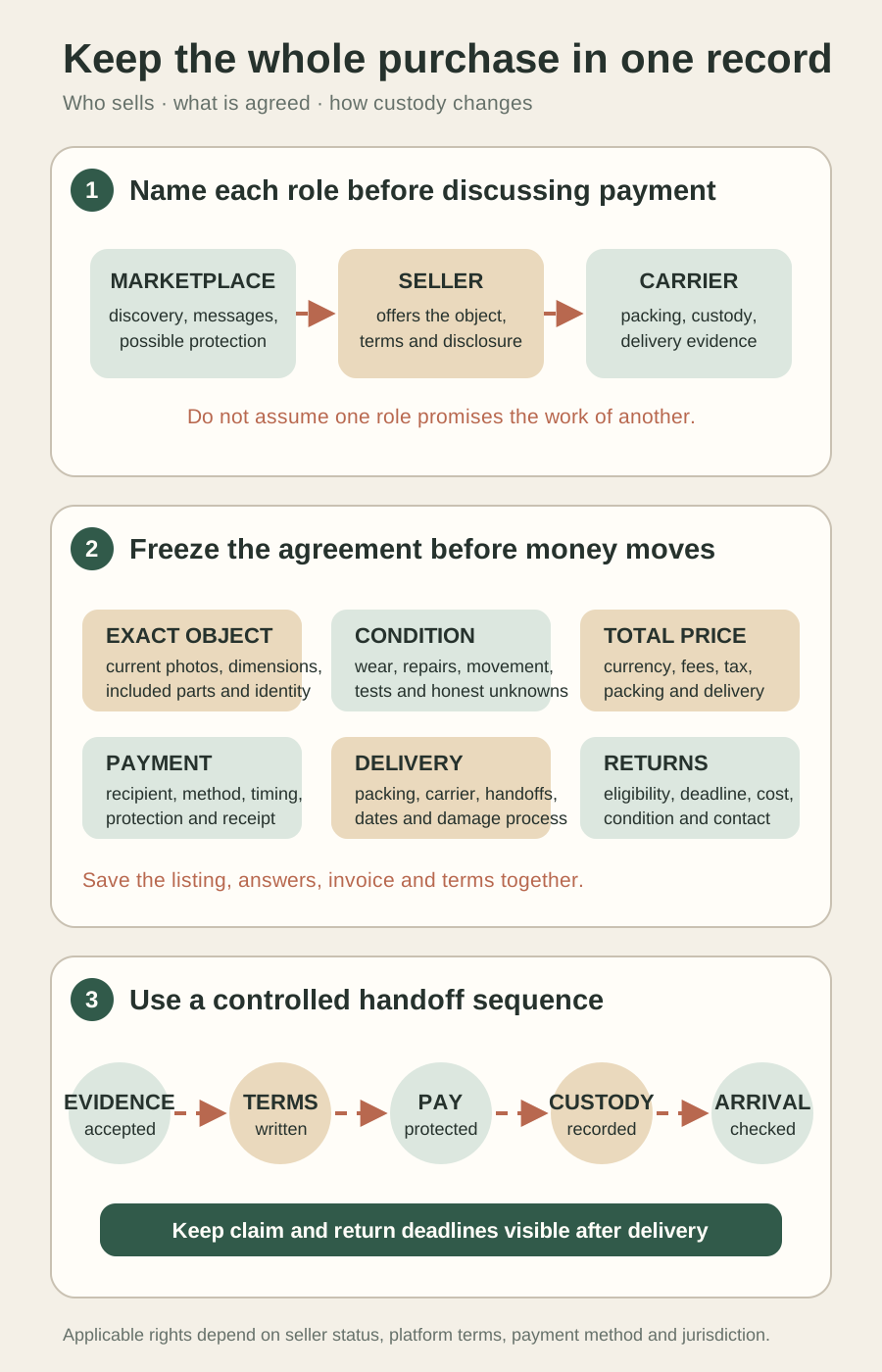
| Role | Confirm | Do not assume |
|---|---|---|
| Independent seller | Legal/trading identity, contact, location, invoice name and responsibility for the offer | That a profile name or marketplace logo identifies the contracting seller |
| Marketplace or discovery site | Messaging, payment, refund, reporting and eligibility rules for this transaction | That every seller, category, payment or delivery is protected |
| Payment provider | Payee, method, authentication, dispute route and relevant time limit | That all transfers or purchase disagreements are reversible |
| Packer and carrier | Scope, custody, insurance/declared value, exclusions, tracking and damage procedure | That seller-arranged delivery makes the seller the carrier or insurer |
| PatinaHall | Discovery and the exact route to the identified seller | That PatinaHall owns the seller's checkout, payment, delivery or returns |
PatinaHall boundary
The independent seller owns the transaction
PatinaHall helps you discover and research furniture. When you continue, recheck the named seller's current listing and terms. The seller—not PatinaHall—handles the purchase, payment, delivery and returns unless a future page explicitly states a different accepted transaction mode.
Verify the seller and the current listing together
Establish a coherent seller record
- Current contactUse contact details published through the seller's established business presence and make sure replies remain consistent across channels.
- Physical locationConfirm where the exact piece is now, where collection begins and whether the invoice and carrier use the same origin.
- Recent trading evidenceRead recent, specific feedback across more than one source where available; do not let a star average replace identity or terms.
- Invoice identityThe seller name and payment recipient should be explainably connected before funds move. Treat a last-minute change as a new verification task.
- Responsive knowledgeUseful answers locate wear, explain what the seller observed and admit what is unknown rather than repeating the listing title.
A new or small dealer is not automatically unsafe, and a long-established name is not a substitute for the exact transaction. Look for a coherent chain: the seller can identify the object, supply current evidence, state their terms, invoice from the expected identity and explain how custody will pass.
Pause and recheck
A changed payee or hurried channel move resets the decision
Do not treat a new bank account, personal payment recipient, replacement email address, copied invoice or request to leave the platform as a minor administrative detail. Verify through a previously established channel before proceeding.
Verify the exact furniture, not a representative image
FTC marketplace guidance recommends looking for photographs of the actual item rather than stock imagery and obtaining seller answers in writing. For unique vintage furniture, connect every close-up to a whole view and the listing record; a current photograph can support possession and condition evidence but cannot guarantee hidden structure, identity or future performance.[1]
Connect the listing to one object
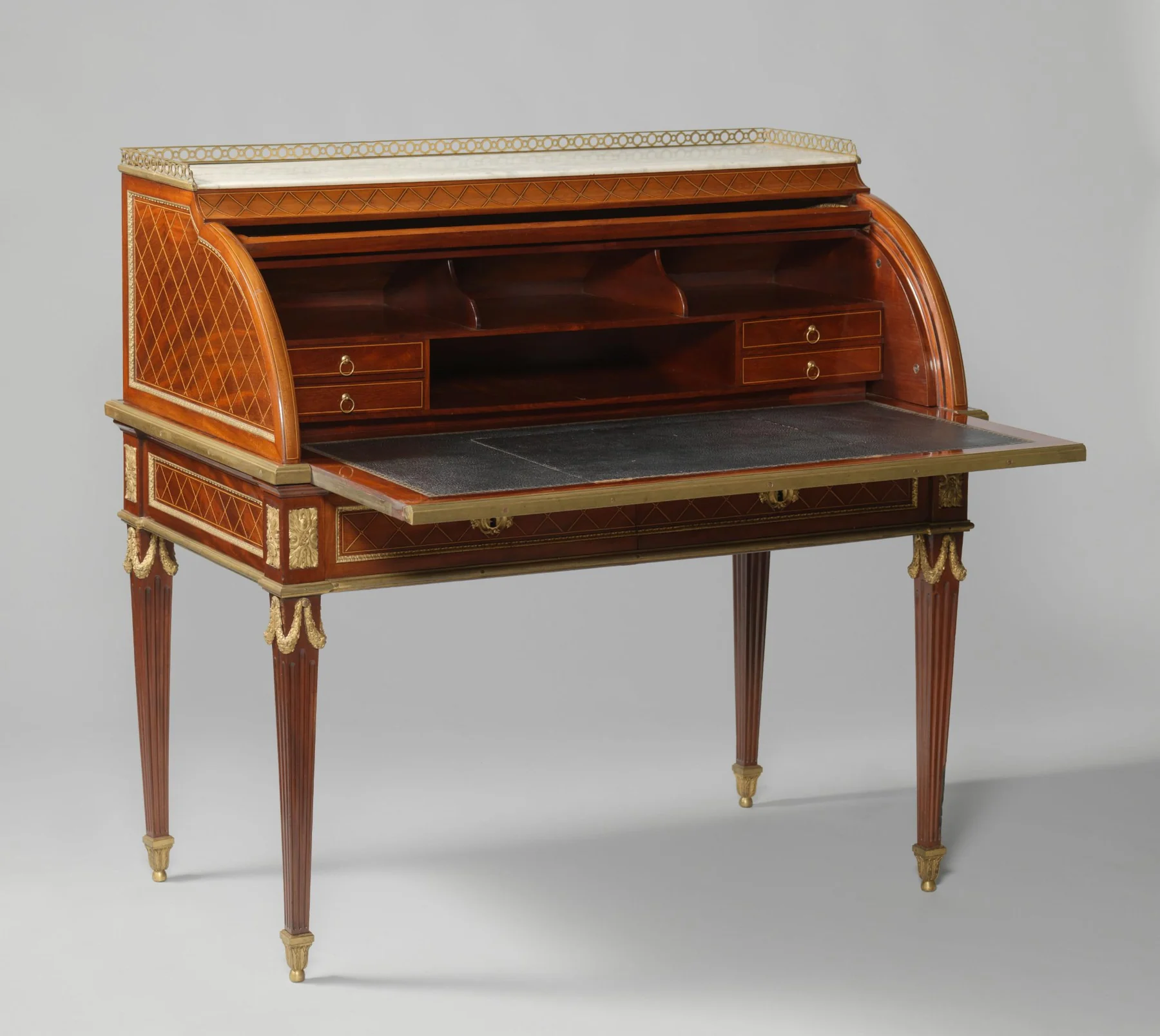
- Whole and context viewsFront, rear, both sides, top, underside where safe and one current view in the seller's space should form a coherent object.
- Decision-changing detailsRequest joints, feet, edges, upholstery, hardware, labels, repairs, damage and moving parts relevant to use and price.
- Exact measurementsKeep tape endpoints, maximum dimensions, operating envelopes and removable-part status visible.
- Included inventoryCount cushions, keys, shelves, leaves, brackets, cables and matching pieces rather than inferring them from styling.
- Current statusConfirm availability, location, recent changes, reservations and whether any image predates repair, refinishing or damage.
Use the photograph Guide for the whole–context–detail sequence and the condition Guide to keep observed, seller-reported, inferred, professionally assessed and unknown facts separate.
Freeze one written agreement before payment
| Field | Write down | Resolve before paying |
|---|---|---|
| Object | Exact description, quantity, identifiers, dimensions and included parts | Any mismatch between listing, invoice and current evidence |
| Condition | Disclosed wear, repairs, replacements, tests, movement and material unknowns | A material answer that exists only in a call or disappears from the final terms |
| Price | Amount, currency, tax treatment, discount and due date | Unexplained surcharge, conversion or recipient change |
| Packing and delivery | Who packs, carrier, collection point, destination, target dates, access and cost | Undefined kerbside/room placement or an assumed dismantling step |
| Risk and damage | Condition handoff, declared value/cover, exclusions, inspection and notice process | A promise of ‘insured shipping’ without scope or claimant |
| Cancellation and return | Eligibility, deadline, notice method, return condition, packing and who pays transport | Reliance on a general platform banner that excludes this seller or category |
Save a dated copy of the listing, seller answers, current photographs, terms, invoice and delivery agreement in their original form. If the seller corrects a material fact, keep the correction with the earlier record rather than editing history. A clear change can be acceptable; an untraceable one is not.
Your Europe explains that EU online marketplaces must indicate whether a seller is a trader or private individual because EU consumer-law protection differs. Use that as a reminder to record seller status and applicable terms; do not assume EU rights for a non-EU purchase, a private seller or another jurisdiction.[2]
Choose payment with the remedy visible
Start with methods accepted by the verified seller and permitted by the applicable platform. Read what the method covers, exclusions, evidence requirements and dispute deadline before paying—not after a problem. A familiar logo does not mean every high-value, second-hand, collection-only, bespoke-delivery or off-platform transaction qualifies.
Before authorising payment
- Match the recipientConfirm the payee through a previously trusted channel and retain the invoice or transaction reference.
- Read the exact protectionCheck item/category, seller, location, delivery method, amount and timing eligibility.
- Keep authentication privateDo not share codes, passwords or remote access because a seller or supposed payment representative asks.
- Refuse pressurePause when urgency is used to prevent verification or to demand gift cards, cryptocurrency, cash-like transfer or an unexplained off-platform route.
- Save confirmationRetain amount, currency, recipient, timestamp, reference and the terms in force at payment.
Payment boundary
No method makes a weak agreement strong
Payment protection is a bounded remedy, not inspection, authentication or delivery insurance. If the exact object, seller or terms remain incoherent, do not use a payment feature as permission to proceed.
Make packing and custody explicit
Furniture can be accurately described and still be damaged by an unsuitable move. Give the carrier the protected dimensions, weight status, materials, loose or removable parts, repairs, access at both ends and the seller's condition record. Let the responsible carrier decide people, equipment, packing, orientation and whether specialist handling is required.
| Moment | Evidence | Owner |
|---|---|---|
| Before packing | Dated whole and vulnerable-area condition; included-parts count | Seller and packer acknowledge baseline |
| After packing | Package count, labels, external condition and any separately packed part | Packer identifies the consignment |
| Collection | Date/time, collector, tracking or receipt and visible package state | Custody passes under the written arrangement |
| In transit | Tracking events, delay notices and authorised custody changes | Carrier or named subcontractor |
| Arrival | Package condition, count, unpacking record and comparison with baseline | Recipient follows the agreed inspection process |
Use the delivery-route Guide for protected dimensions, openings, turns, stairs, lifts and final placement. Visible bolts are not permission to dismantle at collection.
Inspect arrival without losing the relevant deadlines
- Photograph the unopened packages on all sides and record visible impact, moisture, puncture, tilt indicator or count discrepancy before moving them further than necessary.
- Follow the agreed unpacking method; preserve labels, packing and loose parts until the object is checked and the claim window is understood.
- Compare identity, quantity, dimensions, disclosed condition and function with the saved agreement. Do not provoke a structural or electrical failure to create evidence.
- Notify the correct seller, marketplace, carrier, insurer or payment provider promptly in the required channel, stating observed facts, dates and the remedy requested.
- Keep originals and send copies. Record every acknowledgement, deadline, instruction and custody change while the issue is unresolved.
A delivery signature can mean different things under different contracts. Read before arrival whether it confirms only receipt, package condition or full acceptance, and who may note exceptions. If damage makes handling unsafe, stop and ask the carrier or appropriate professional rather than completing a cosmetic inspection.
Evidence boundary
Describe the difference before arguing its cause
Record ‘rear left leg separated at the joint on unpacking’ or ‘one shelf listed and invoiced is absent’. Do not guess when damage occurred, discard packing or commission irreversible work before the responsible parties explain the evidence and next step.
Separate vintage condition from transaction risk
UK second-hand product guidance notes that used goods can present increased risk through worn components, missing modern features or modifications that are not obvious. Use that to ask for current condition, known changes, instructions and recall information where relevant; it does not mean every old object is unsafe or that UK rules certify a purchase elsewhere.[3]
| Finding | Useful response | Do not confuse it with |
|---|---|---|
| Disclosed stable wear | Decide whether it suits use, appearance and price | A transaction failure |
| Documented old repair | Assess stability, likely work and relevance | Automatic deception or automatic safety |
| Material condition omitted or contradicted | Preserve the agreement and use the applicable seller/platform remedy promptly | Ordinary patina |
| Unknown hidden structure | Accept, price, inspect professionally or decline before purchase | Proof of a defect |
| Seller/payment/custody inconsistency | Pause verification or dispute through the correct route | Furniture condition |
Do not demand that a seller make an uncertain object unsafe to prove it. No sitting on a loose chair, forcing a lock, energising questionable wiring, lifting stone or glass, or dismantling an unknown joint for photographs. A responsible stop can leave a fact unresolved and still improve the decision.
Send one complete online-purchase request
Message to copy
Confirm object, seller, terms and handoff together
Hello—before I decide, could you confirm the contracting seller name, current location of the exact piece and invoice/payment recipient; send current whole, detail and measurement evidence for the object and every included part; and list its wear, repairs, replacements, tested functions and consequential unknowns? Please state the total price and currency, tax/fees, who packs, the carrier and delivery scope, custody and condition handoff, declared-value or insurance terms, target dates, arrival/damage procedure, and cancellation or return eligibility, deadline and cost. Please keep any material correction in writing and do not load, force, energise, dismantle or otherwise risk the piece for evidence. Thank you.
Continue when the seller, exact object, written terms, payee and custody plan form one coherent record and the remaining furniture unknowns fit your use and total commitment. Pause when identity, evidence, payment or delivery changes. Decline when urgency, stock imagery, inconsistent parties, an irreversible payment demand or an unwritten material promise must be ignored for the purchase to work.