
Write the result you actually want
“Restore this table” leaves a remarkable amount undecided. You might mean make it stable for dinner, soften a conspicuous scratch, retain the worn finish or replace a missing leaf. Write those aims separately and put them in order. Include the details you like: a faded top, an old label or a slightly uneven colour may be things to keep.
For a family piece, say what gives it meaning. For a prospective purchase, make clear that you have not inspected or bought it yet. A practitioner can then distinguish an early opinion from a proposal based on an examination.
Find relevant experience, then look closely at it
The Institute of Conservation’s Find a Conservator directory lists accredited specialists and describes how its accreditation relates to the responsible practitioner. It is a useful starting point for conservation expertise; you still need to discuss the exact materials and work your object requires.[1]
Ask for examples comparable in construction and treatment, not merely period. A beautifully refinished plain table does not demonstrate the same work as stabilising lifting marquetry, repairing a woven seat or conserving painted decoration. Ask what the practitioner personally handled and which parts would go to somebody else.
Before-and-after photographs are most useful when accompanied by an explanation of what changed. Look for ordinary views as well as dramatic close-ups, and ask what original material was retained. A glossy result is a preference, not a universal measure of good work.
Make the proposal readable
| Part of the proposal | What you need to understand |
|---|---|
| Observed condition | What has been examined and what remains concealed. |
| Proposed work | The intended intervention and materials, explained in ordinary language. |
| Retained character | Surfaces, marks and repairs that will remain visible. |
| Practical arrangements | Collection, packing, timing, price basis and responsibility while held. |
| Unexpected findings | The stop point and approval process for additional work. |
Ask whether a figure is a fixed quote, an estimate or a fee for assessment only. Do not compare totals until the scope matches. One proposal may retain the finish while another assumes stripping it; those are different products even if both are headed “table restoration”.
Use one small example to test the agreement
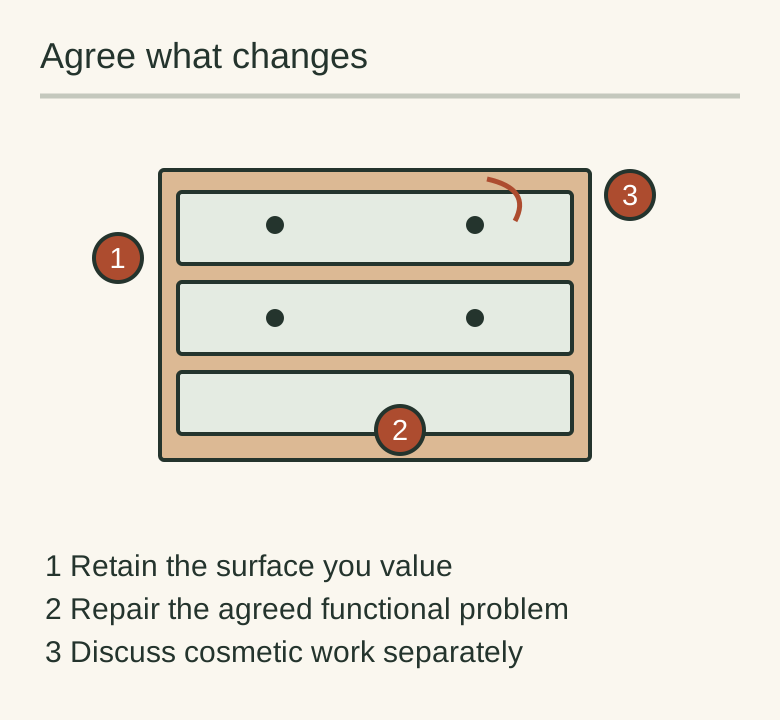
Suppose a chest has a loose handle, a sticking drawer and a pale patch on the top. Your priority is dependable storage while keeping its surface. Ask for handle and drawer work as the core scope, with the pale patch assessed separately. That makes it harder for a broad cosmetic treatment to swallow the job you actually wanted.
If a sample treatment is appropriate, agree its location and purpose with the practitioner. A sample can help you discuss sheen or colour, but it may not predict every previously repaired area. Decide what happens if the result is less even than expected before expanding the intervention.
Keep a copy of the accepted proposal and the arrival condition photographs. These are practical memory aids for a project that may take weeks, especially when several people handle the piece.
Ask about the return as well as the repair
Send a first enquiry
I have a [piece] with [observed issues]. I want to use it for [job] and retain [specific features]. Attached are whole views, details and known repair history. Is this work within your expertise, do you need an examination, and can your proposal distinguish essential repair from optional cosmetic work?
Before collection from the workshop, ask for a short record of the completed work, any remaining limitations and the care and handling instructions. Arrange the return journey around the finished object, including loose parts and any restrictions the practitioner identifies. The project ends when the piece can be used as agreed, not simply when it photographs well.