Why the cover is only part of the sofa
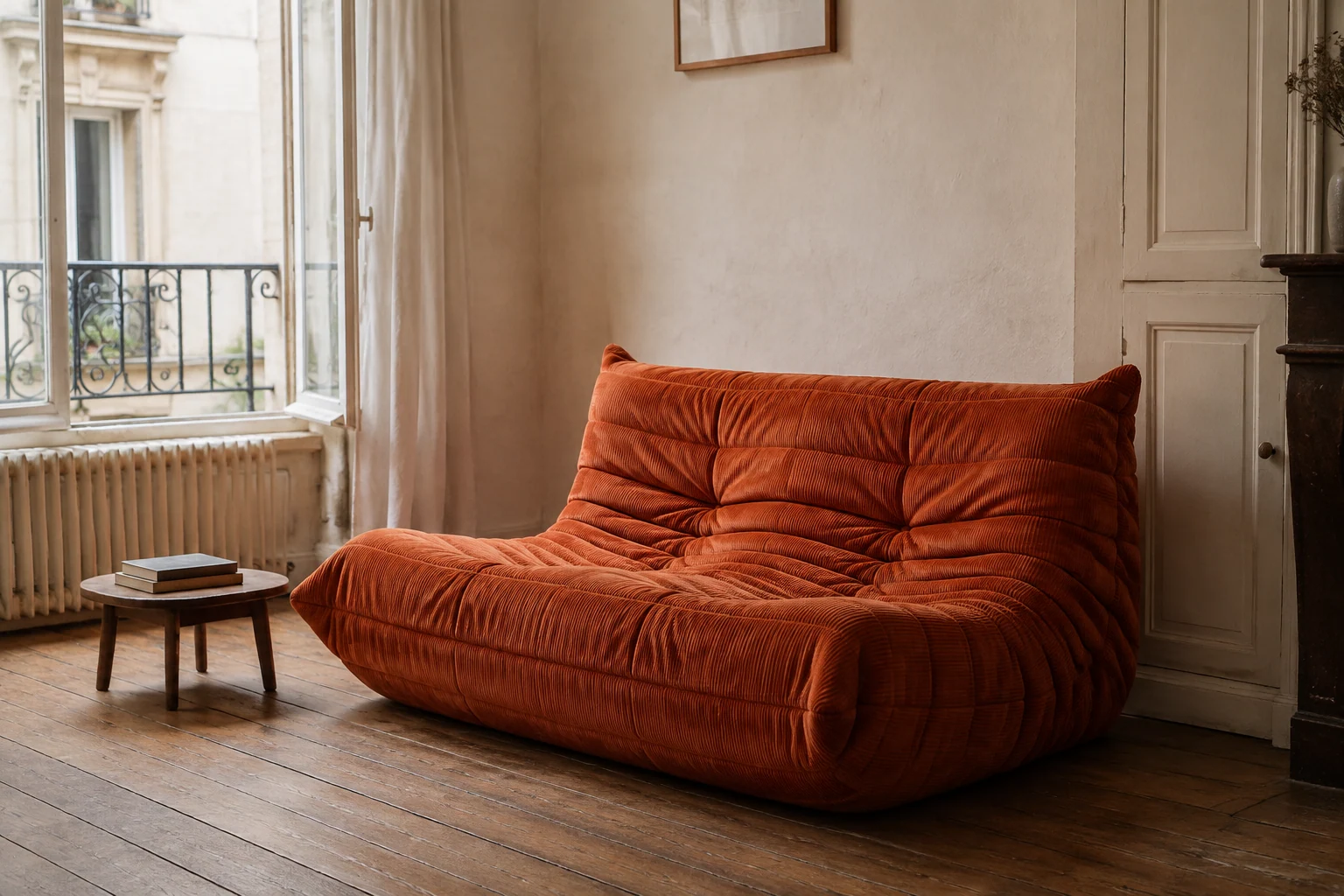
Togo’s appeal is easy to understand from across a room. The low, folded form feels informal; you can imagine dropping into it with a book before you have checked a single measurement. The buying difficulty is that the soft material giving it that shape also does the supporting.
Ligne Roset dates Togo to 1973. Its current product description explains an all-foam construction using different densities, with a quilted cover. There is no conventional timber seat frame to judge separately from the foam. Use the manufacturer’s description to understand the construction, while asking what survives inside this particular used piece.[1]
Two sofas with similar new fabric may therefore represent very different work: one had only its cover changed; another had documented interior repairs as well. Neither phrase “new upholstery” nor a convincing silhouette tells you which job was done.
Start with the sofa before the work
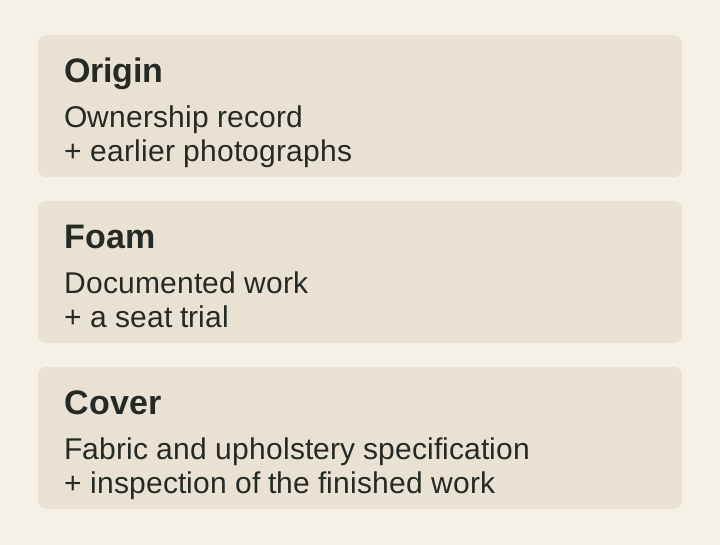
Ask for photographs taken before stripping or recovering, then connect them to the piece for sale through the seller’s work record and ownership documents. An original receipt or a clear history is useful. A folder of unrelated Togo photographs is not evidence about this sofa.
Ligne Roset specifically warns that counterfeit pieces can be offered as vintage or reupholstered Togo, and illustrates copied labels and underside fabric. That is the manufacturer’s warning about a real buying problem, not proof that an individual restored sofa is counterfeit. It explains why a label photograph should be checked alongside the object and its history.[2]
Separate what the seller knows from what they inferred. “Acquired from the original owner with an invoice” and “looks 1970s” are different claims. If a premium depends on a date or maker, get support for that claim before paying it. A photograph cannot close every attribution question.
What did “reupholstered” actually mean?
Request the upholsterer’s name, date of work and a description or invoice specifying what was retained, repaired and replaced. Did the work include the inner foam, only local repairs, or just the outer cover and associated padding? Were photographs taken during the job? You are trying to understand the remaining sofa, not demand that every old material be discarded.
Ask for the fabric reference and care instructions, and inspect seams, quilting, buttons and the underside. Look for pulls, uneven tension, openings and altered fastenings. The finished shape matters to the experience of the sofa, but neat stitching by itself does not authenticate it.
Ligne Roset’s current specification strongly recommends factory recovering for Togo because achieving the intended upholstery quality is demanding. Ask the brand or its authorised dealer whether the exact used piece can be assessed or recovered in your location, and obtain a quote before assuming that option is available.[1]
An independent upholsterer’s work can still be evaluated on its documented scope and result. Ask whether they have completed comparable work and see it. Avoid budgeting from the cost of fabric alone: a shaped, quilted cover and any interior work are the job you need priced.
Sit for longer than a photograph
Sit in the position you normally use, then stay long enough to notice where your body settles. Try the middle and the other sitting positions. Do you feel supported, or sink into a local hollow? Does the seat recover after you stand? A short trial is useful evidence about present comfort, although it cannot reveal all hidden material or predict its remaining life.
The low seat is part of the attraction, and also a practical commitment. Try standing up without a nearby object doing unexpected work as a handhold. Test your usual activity: reading, conversation, reaching a drink or watching a screen. A sofa can be enjoyable for lounging and awkward for the way you spend most evenings.
Measure the actual module’s width, depth and height, including its relaxed upholstery. Do not borrow the measurements of a different Togo configuration from a current shop page. Mark its footprint on the floor and check delivery access; a low sofa can still be deep.
When buying remotely, photographs leave texture, odour and comfort unresolved. Ask directly about smoke, pets, damp storage and cleaning, and arrange an inspection or suitable return terms if those unknowns would change the purchase. Do not treat a newly fitted cover as an answer.
Compare two honest options
Imagine one documented sofa with a faded original cover, an even seat you have tried and a scoped recovering quote. Beside it is a freshly covered example with no earlier photographs and no account of its interior. The second may photograph better; the first currently gives you more information on which to make a decision.
Now change the second offer: it comes with linked before-and-after photographs, ownership evidence, a detailed upholstery invoice and a seat trial you like. The new cover may become a benefit worth paying for. The deciding factor is what you know about the complete sofa, rather than an automatic preference for original fabric or recent work.
Add delivery and any identified work to each price. If repairs cannot yet be scoped, record that as an open cost rather than inserting a hopeful allowance. Choose worn fabric you can live with, or new upholstery whose work you understand; neither needs to pretend to be something else.
Ask for the piece and its work record
Ask the seller
What documents support this sofa’s maker and approximate age? If recovered, please send linked before-and-after photographs and the work description, including what happened to the foam, cover, padding and underside. Who did the work, and in which fabric? Please confirm the actual dimensions, remaining defects and storage history, and whether I can try the seat before buying.
The purchase becomes clearer when those answers agree with the sofa in front of you. Buy the origin you can support, the work you can understand and the seat you want to use.