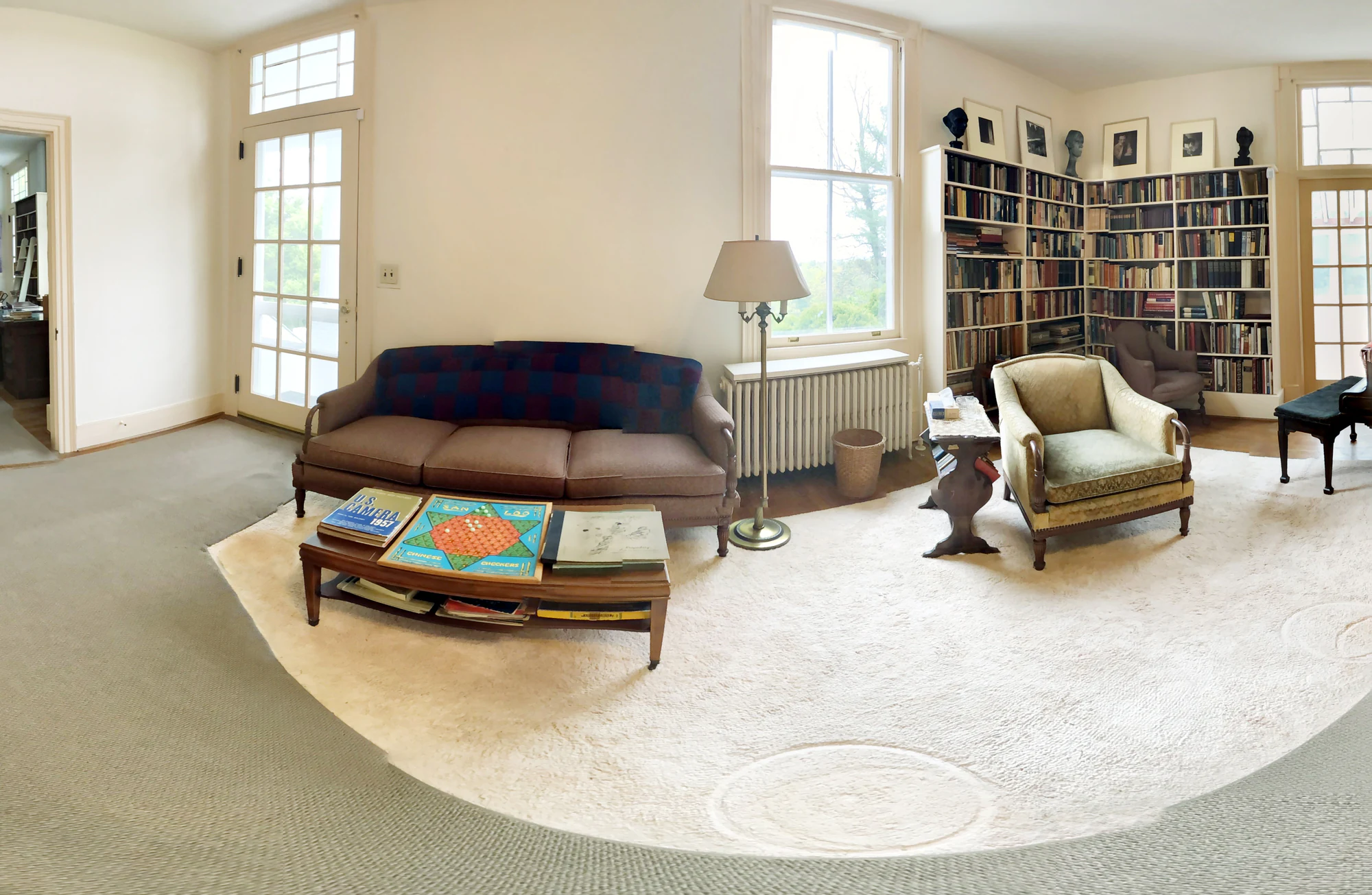
Describe the dip before calling it worn foam
Take a straight front photograph with the sofa empty. Is one seat lower, the whole middle bowed, or the fabric simply loose? Add a side view showing the front edge and feet. A tilted room photograph can exaggerate an apparent slope, so include a stable reference such as the floor.
Ask whether the dip developed gradually or followed a move or a sudden noise. Those accounts do not diagnose the cause, but they help an upholsterer decide what to examine. Stop using a sofa with an unexpected collapse, exposed spring or visibly damaged frame until it is assessed.
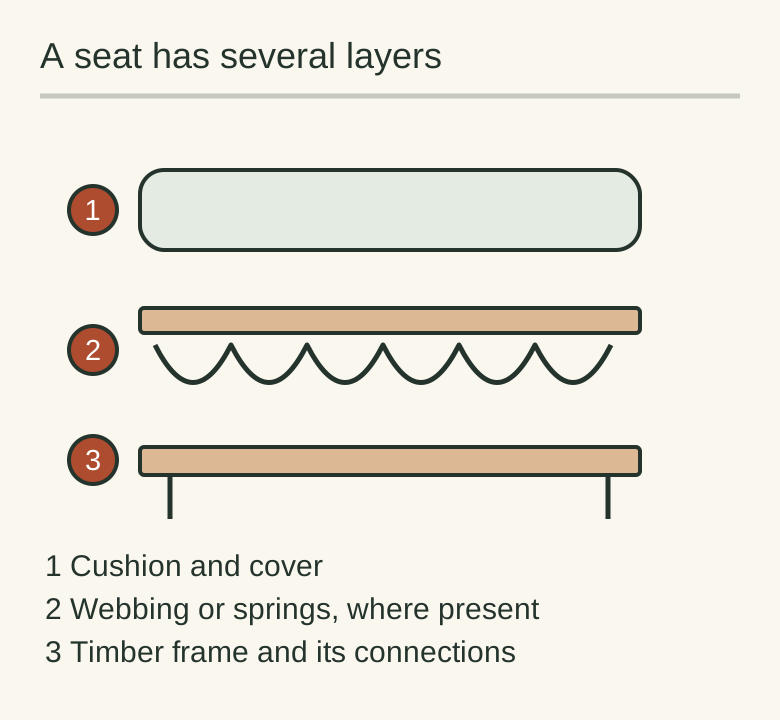
Separate the loose cushion from its support
Kennington Upholstery distinguishes cushion wear from sagging webbing, springs and frame damage beneath it. Its workshop advice also notes that a stretched cover can change the appearance. Replacing the filling alone may leave the original support problem unresolved.[1]
If the cushions are designed to lift off, photograph them beside the sofa and the platform underneath. Do not remove stitched upholstery or cut the underside cover. A cushion that looks flat away from the sofa provides different information from one that only dips when placed over a low area.
Use a comparison that the sofa actually permits
Two loose cushions may look interchangeable but have different fronts, shapes or fixing details. Only compare positions when their design permits it, and ask the owner first. If the visible low point follows a genuinely interchangeable cushion, describe that observation; if it stays in one seat position, show the platform there.
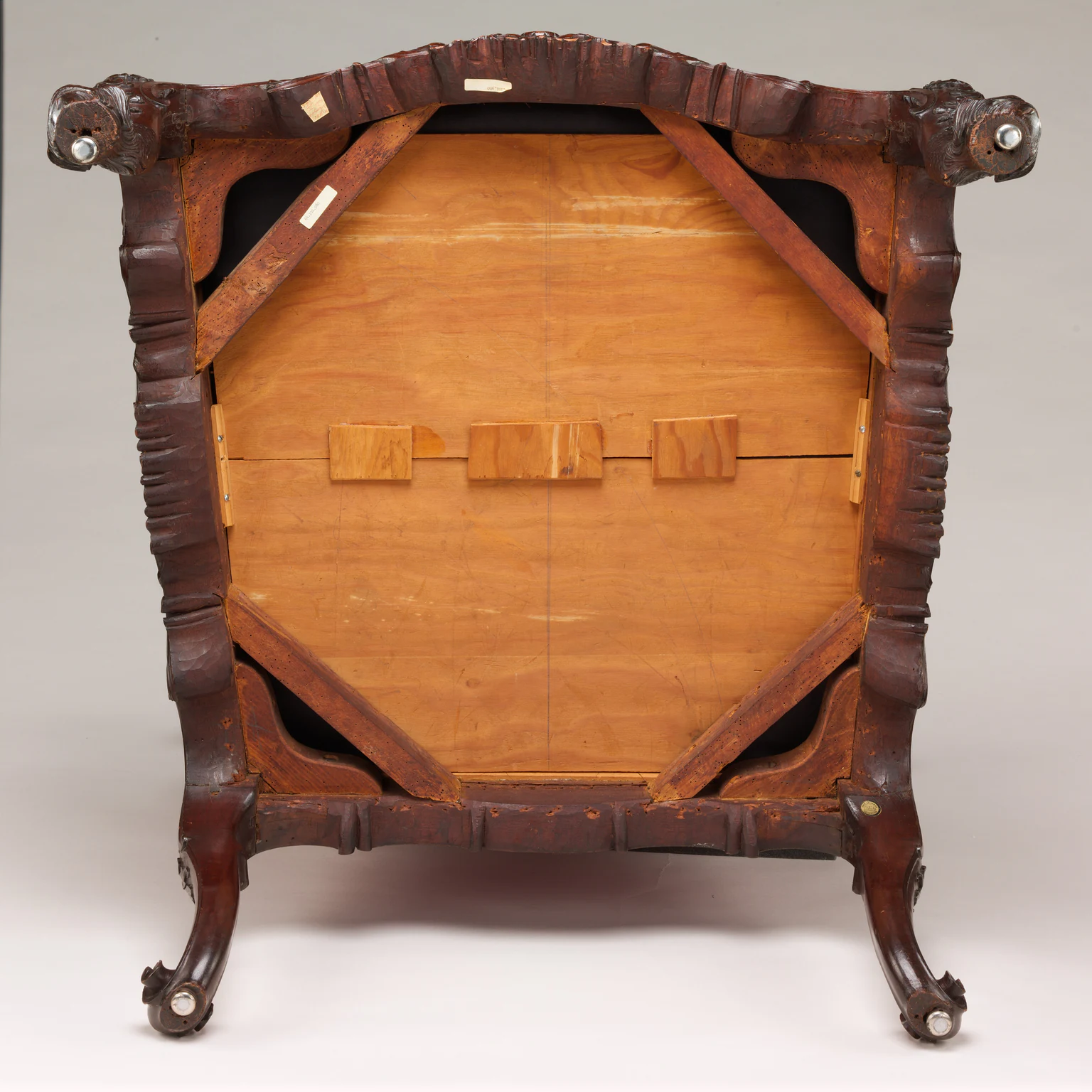
For a fixed upholstered seat, skip this step. You cannot learn the same thing by pulling at the cover. A whole view, a side view and accessible underside photographs may be the best initial evidence available.
Ask for alternatives before buying a new interior
| Possible scope | Question to settle |
|---|---|
| Cushion work | Will the proposed shape, firmness and cover fit suit the intended sitter? |
| Suspension work | What needs access, and can the existing upholstery be retained? |
| Frame repair | Who assesses and repairs the timber before upholstery closes it again? |
| Combined work | Which parts are included, and what remains provisional until opened? |
A firmer cushion changes more than appearance: it can change occupied seat height and the relationship to the arms. Try an appropriate sample arrangement with the upholsterer if comfort is the reason for the work. Do not choose a foam specification simply because somebody online used it in a different sofa.
A board slipped underneath can make the seat feel different without explaining the fault. Tell the upholsterer if one is present. Do not treat that temporary change as evidence that the frame has been repaired.
Price the sofa as the project it is
Imagine a sofa with attractive fabric and one sunken seat. The tempting budget is purchase plus a cushion refill. A more honest comparison includes the possibility of opening the upholstery, support work and transport to a workshop. Get the preliminary assessment while the sofa is still with the seller if those costs determine whether you want it.
Send to the upholsterer
The sofa has a dip in [location], noticed [when]. Attached are empty front and side views, the removable cushions and the accessible support/underside. Which layers need examination, what upholstery might need opening, and what can you estimate before seeing it in person?
Keep the original photographs until the work is complete. They make the agreed change easier to discuss than the vague request to make an old sofa “like new”.