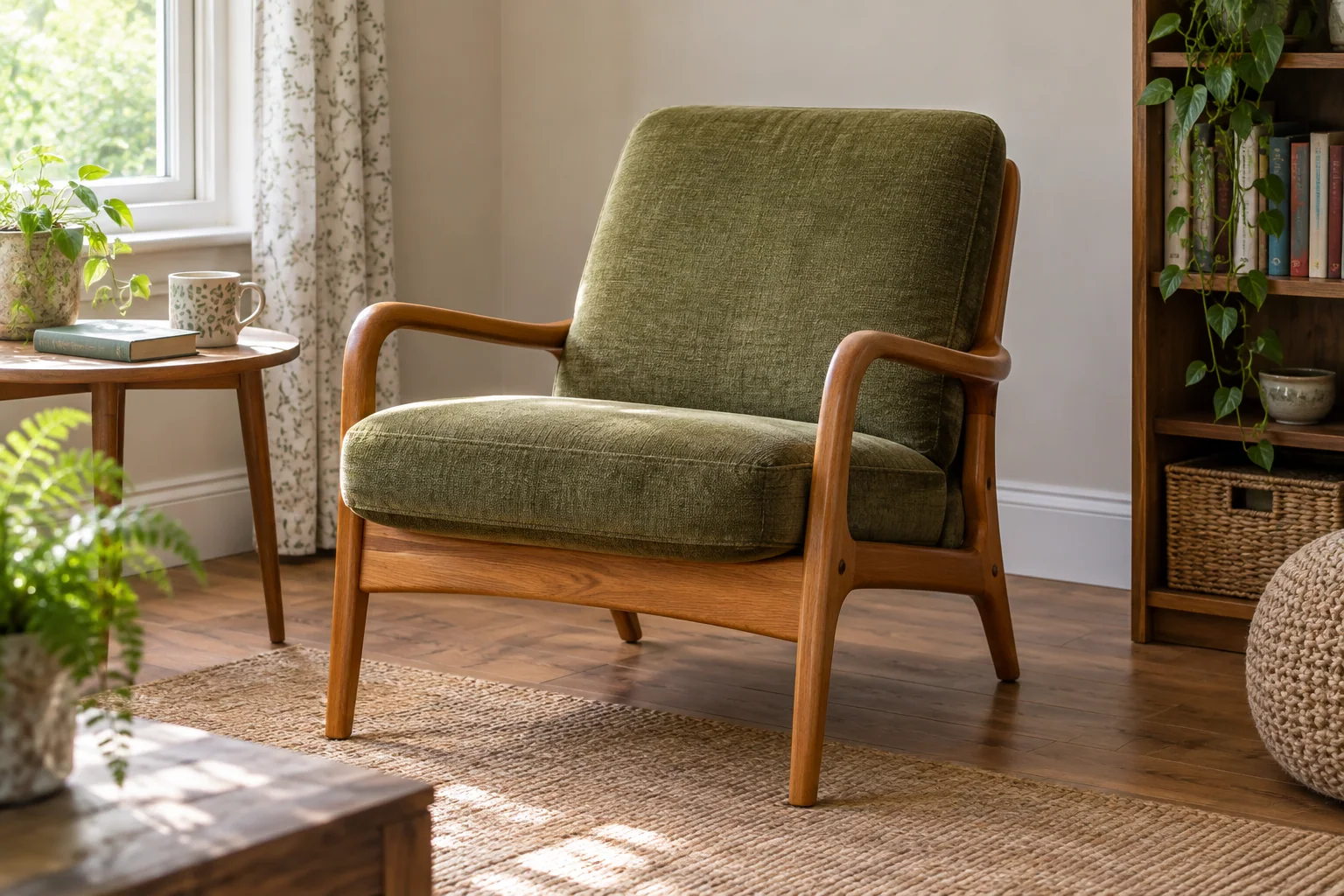
The less photogenic part can decide the budget
ES Design’s workshop account of restoring three Cintique chairs includes refinished wooden frames and springs waiting to be refitted. It is a useful first-hand illustration of a job extending beyond fabric. The post does not supply a transferable restoration price or prove that every old Cintique has the same spring arrangement.[1]
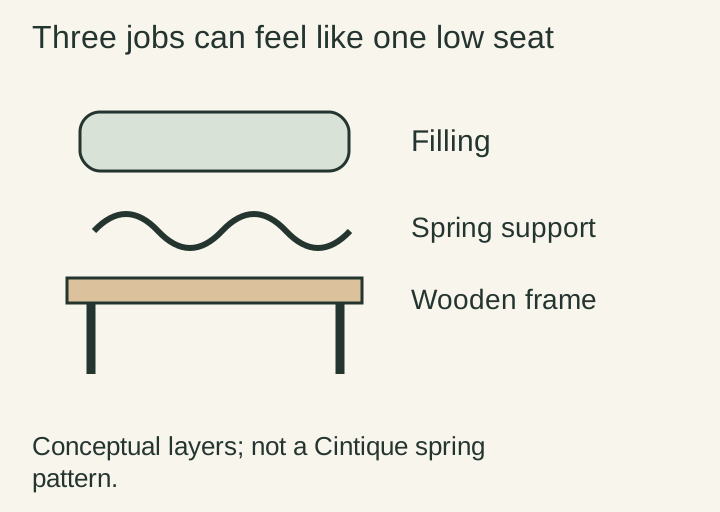
Tower Upholstery separately lists Cintique work alongside frame and spring repairs. That separation is useful when requesting a quotation: a cushion service and a repair to the supporting structure are different jobs, even if both are proposed to cure a sagging seat.[2]
Ask for the chair without removable cushions, its underside and the attachment points of the support. Have the seller disclose substituted webbing, added boards or missing springs. A board beneath a cushion may hide the symptom while changing the intended sitting experience.
Describe how the chair feels when occupied
If the structure appears sound, sit normally and notice where your hips settle, whether the front edge supports your thighs and how easy it is to stand. Compare with a chair that already suits you. An unoccupied cushion height alone says little about where you end up sitting.
| You notice | Ask them to distinguish |
|---|---|
| You sink into the wooden surround | Filling collapse, support movement and intended seat depth. |
| One side sits lower | Uneven support, cushion condition and frame alignment. |
| A hard edge beneath the cushion | Insufficient filling, support changes or a mismatched cushion. |
| The chair feels low even with sound support | Its proportions and your fit, before altering the base. |
These are observations for assessment, not remote diagnoses. Do not stretch springs, change their tension or add makeshift fixings to raise the seat. If the frame moves or the support is damaged, stop using it until the relevant repair has been assessed.
Choose the finished shape before the fabric
Ask the upholsterer to explain what seat and back filling they propose and why. Discuss firmness, occupied height and the relationship between the cushion and exposed arms. A thicker seat may raise you while leaving less useful back support; a bulky back can consume seat depth.
Bring photographs of the shape you want to retain and any documented model reference. Surviving cushions may help explain the chair’s history, but they may already be replacements. Do not call a new profile original simply because it looks plausible.
Try fabric samples against the actual wood in daylight and evening light. The open frame gives the fabric a strong role without needing a loud pattern. If you choose a repeat, have the upholsterer include matching and waste in the fabric calculation.
Compare a restored chair with a chair ready to use
Request separate costs for frame joints and finish, spring or other support work, filling, covers and transport. Ask what happens if hidden damage appears after stripping. A workshop’s old project photograph can show capability, but it cannot replace a current quote for your chair.
A useful restoration brief
I like this Cintique’s frame and want to keep its proportions. Please assess the seat support and joints, explain the low or uneven sitting position, and quote the complete cushion and cover work separately from structural repairs.
Choose the project when the completed chair will suit you and the support work is understood. The fabric is the enjoyable decision; getting the structure right is what lets you enjoy it every evening.