
Define the service before comparing carriers
Start at the two physical positions where responsibility changes. At collection, is the piece in an upstairs room, at a building entrance, on a loading bay or already packed at the kerb? At delivery, does the service end at the vehicle, threshold, room, assembled position or after packaging removal? Give the floor, stairs or lift, turns, parking distance, access restrictions, surface protection rules and named contact at both ends.
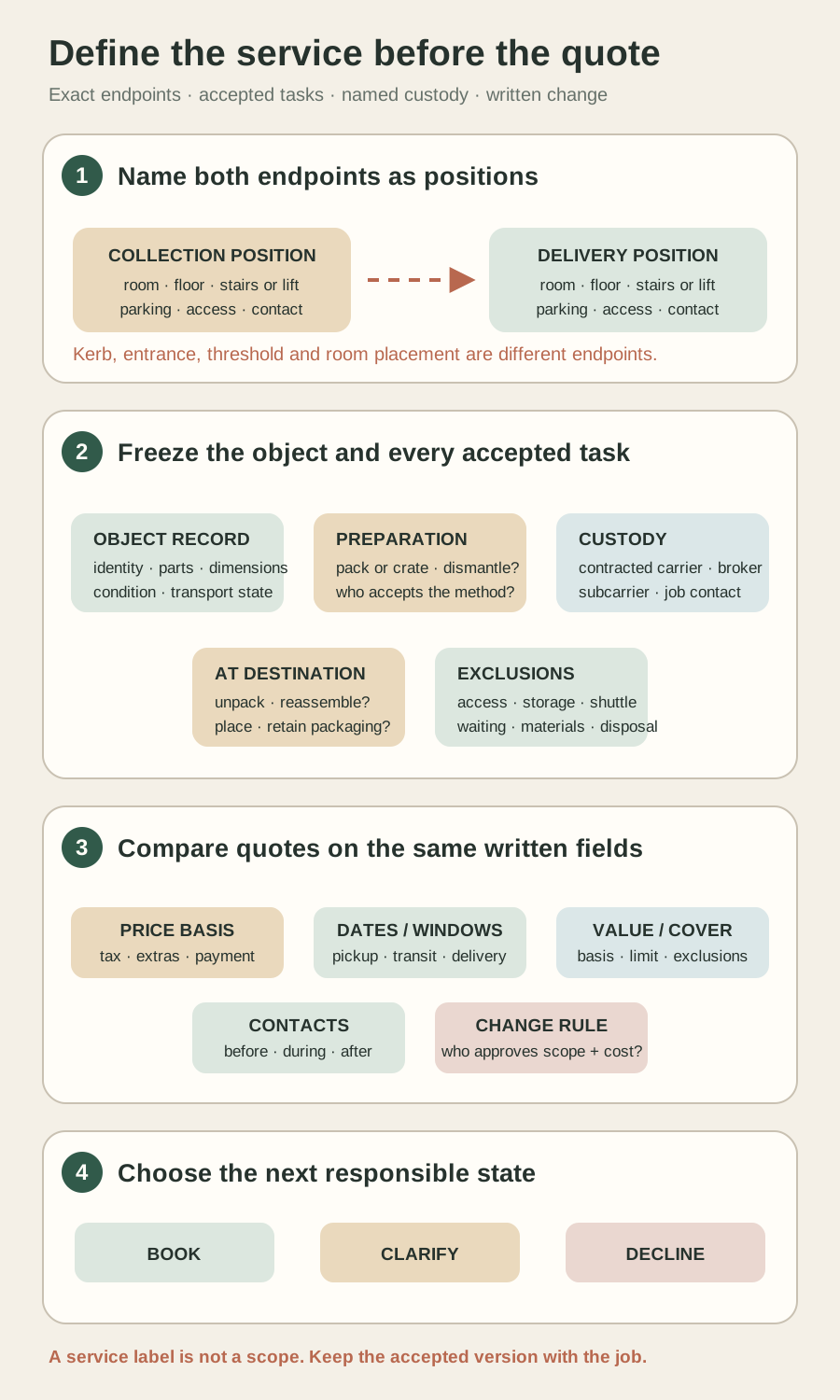
Freeze the first version of the brief
- Exact objectIdentify the one piece or labelled set, its present transport state, maximum dimensions, weight status and every loose or removable part.
- Exact endpointsName the collection and delivery positions, not only the two street addresses.
- Accepted tasksAsk who packs or crates, dismantles, labels hardware, carries, stores, unpacks, reassembles, positions and removes materials.
- TimingRecord collection availability, an agreed date or window, expected transit pattern, delivery window and the contact method for change.
- Decision boundaryMark any surface, part, access method, delay, cost or uncovered value that would make you change carrier or decline the purchase.
Scope boundary
A service label is only a prompt
‘White glove’, ‘door to door’, ‘blanket wrapped’, ‘specialist’ and ‘fully insured’ may describe different services. Keep the label, then ask for the precise endpoints, tasks, exclusions, custody and terms that apply to this job.
Build one object and access pack
The Canadian Conservation Institute recommends examining an object before movement to identify strong and weak areas, loose or movable components, surface risks, weight and the support or number of people needed. Translate that caution into a carrier pack: complete views, located condition details, known repairs, loose parts and handling limits—without prescribing a method the carrier has not accepted.[4]
| Field | Record | Keep unknown |
|---|---|---|
| Identity | Listing or invoice reference, maker or model only as supported, overall views and distinctive features | Do not upgrade a seller attribution |
| Envelope | Maximum width, depth and height in the exact transport state, including projections and agreed protection allowance | Weight as measured, seller-reported, estimated or unknown |
| Parts | Shelves, keys, cushions, glass or stone, fittings, hardware and any part the carrier agrees may travel separately | Visible screws do not prove safe dismantling |
| Condition | Whole-to-detail photographs with cracks, loose joints, fragile finish, old repairs and existing losses located | Photographs do not certify hidden strength |
| Access | Measured openings, turns, stairs, lift car and door, parking, carry distance, restrictions and destination landing zone | Flag every route that has not been checked |
Use the delivery-route Guide for object and route geometry, and the photograph Guide for complete, relationship and detail views. Ask the carrier to confirm the transport configuration and method it accepts; do not promise seller dismantling or improvised packing on the carrier's behalf.
Name every party and custody change
The business that sells the move, the carrier named in the contract, the crew that collects and the person who delivers may not be the same. Ask whether the quotation comes from a carrier, broker, marketplace or booking agent; who has accepted physical custody; whether another carrier, depot or storage facility may participate; and which company and job number the buyer should use before, during and after transit.
| Role | Record | Do not assume |
|---|---|---|
| Seller | Who releases the object, confirms included parts and signs the pickup condition record | That the seller controls packing or the delivery contract |
| Broker or booking service | Who arranged the job, who takes payment and who answers a service dispute | That the booking name is the executing carrier |
| Contracted carrier | Legal or trading name, quote and job identifiers, terms and primary contact | That every worker is employed by it directly |
| Executing carrier or subcarrier | Name when known, collection contact, vehicle or shipment ID and each transfer or storage stage | That custody remains on one vehicle |
| Buyer and delivery contact | Who may authorise a change, receive notices, inspect arrival and sign the handoff | That a building employee may accept exceptions for the buyer |
PatinaHall helps organise research and the buyer's evidence. The independent seller remains responsible for their description and agreed handoff. Each carrier, broker, insurer or service provider remains responsible for its own contract and work. Preserve those boundaries in messages and documents rather than asking one party to guarantee another party's promise.
Make every quote answer the same brief
For U.S. interstate household moves, the Federal Motor Carrier Safety Administration advises obtaining several estimates, comparing both cost and services, establishing responsibility for damage, pickup and delivery timing and contacts, and reading the completed estimate and shipment documents. The jurisdiction is specific; the useful general discipline is to compare written answers to the same job rather than compare headline prices.[1]
| Quote field | Ask to state | Common gap |
|---|---|---|
| Endpoints and access | Collection and delivery positions, floors, stairs or lift, carry distance, parking, shuttle and access assumptions | Address-to-address price with final carry unpriced |
| Object preparation | Who supplies and accepts packing or crating, labels parts, dismantles and reassembles | ‘Packed as required’ without owner or method |
| Transit service | Dedicated or shared route as offered, transfers, storage, expected contact and delivery window | A collection date treated as a delivery promise |
| Destination tasks | Unpacking, assembly, room placement, debris removal and the time allowed to inspect | Threshold delivery sold under a premium label |
| Price and payment | Price basis, tax, minimums, deposits, balance, waiting, storage and named possible extras | Low base price with material access costs excluded |
| Value and loss terms | Declared or covered value basis, limits, exclusions, excess or deductible, evidence and notice process | ‘Insured’ without the term that applies to this object |
Ask each provider to mark a field included, excluded, conditional or not offered. If two quotes use different endpoints or preparation, they are not yet competing offers for the same service. Change the common brief or obtain a written revision before selecting on price.
Read value, cover and exclusions as contract facts
Do not treat declared value, carrier liability, an optional valuation arrangement and a separate insurance policy as interchangeable phrases. Ask what instrument is actually offered; who provides it; the value basis and maximum; whether a per-item, per-shipment, weight-based, repair-cost or other rule applies; the excess or deductible; exclusions for owner packing, pre-existing weakness, fragile materials, concealed damage, storage or subcontractors; and the exact notice and evidence process.
FMCSA's U.S. interstate pickup guidance distinguishes shipment documents, valuation statements and evidence of separately procured insurance, and requires participating carriers and special services to be identified in that regulated setting. That example is a reason to ask which written term applies—not authority to transfer U.S. rights, values or deadlines to another carrier or country.[2]
Ask before relying on a value promise
- InstrumentIs this contractual carrier responsibility, optional valuation, a separate policy or another arrangement?
- Named object and amountDoes the record identify this exact piece, the supported value and any per-item or aggregate limit?
- Exclusions and conditionsWhat changes when the seller packs, a part is fragile, damage was pre-existing, storage occurs or another carrier participates?
- Evidence and noticeWhich pickup record, photographs, invoice, packaging and delivery notes must be preserved, and how and when must notice be given?
- ConsequenceIf the unsupported portion would be unacceptable, obtain qualified insurance or legal advice for the exact move before booking.
Language boundary
‘Fully insured’ is not a buyer decision
Record the exact provider, document, object value, limit, exclusions, excess, evidence and notice route. If those fields are missing, cover remains unknown; do not fill the gap with the carrier's adjective or this Guide.
Freeze pickup condition, parts and transport state
In the regulated U.S. interstate context, FMCSA describes the inventory as a record of the existence and condition of each item and advises resolving disagreements before signing and retaining a copy. For any professional furniture delivery, use that as a record principle: the exact object, parts and existing marks should be mutually legible while the piece is still at collection.[2]

Complete the pickup handoff
- Identify the pieceMatch listing, invoice or job ID to complete current views and distinctive marks before wrapping obscures them.
- Count componentsList shelves, keys, cushions, leaves, hardware, glass or stone and every separate package with a shared identifier.
- Locate prior conditionMark scratches, cracks, loose elements, old repairs, finish loss and unexamined areas precisely enough to find them again.
- Record accepted transport statePhotograph any carrier-approved dismantling, labelled hardware, support, package or crate and the final loaded state where permitted.
- Name the handoffRecord date, time, seller or collection representative, driver or crew lead, job ID and any disagreement or exception.
A seller's condition description, a carrier inventory and a buyer's purchase record have different purposes. Keep all three; do not silently rewrite one to make it agree with another. If a newly visible crack, loose part or changed access invalidates the accepted method, stop the handoff and let the responsible carrier revise or decline the plan.
Control changes and contact during transit
Write who may authorise a change and how approval will be recorded. Give the carrier one reachable buyer contact and a separate collection and delivery contact where needed. Ask what update is expected after pickup, after a transfer or storage event, when a delivery window is set and when delay, access or visible package damage changes the service.
| Trigger | Ask before work continues | Preserve |
|---|---|---|
| Access differs from brief | Can the accepted vehicle and handling plan proceed, or is a shuttle, extra carry or new appointment required? | Photograph, revised scope, price and authority |
| Object differs at pickup | Does size, weight, fragility, loose condition or an added part change the accepted method? | New observation and carrier decision |
| Packing or dismantling changes | Who owns the revised method, parts record, materials, price and reassembly? | Written change before alteration |
| Transfer or storage is added | Where, for how long, under whose custody and under which existing or revised terms? | Location, dates, provider and job ID |
| Delivery window changes | Who can receive, inspect and sign; what happens if no authorised person is present? | Notice time and agreed next step |
CCI's transport bulletin separates hazards such as shock, vibration, handling and weather and treats packaging as a designed response to the exact object and journey. The buyer should disclose changes and ask the carrier to own its revised method, not improvise a technical packing instruction during a phone call.[5]
Inspect arrival before closing the handoff
Have the pickup record, invoice, parts list and a camera ready before the vehicle arrives. Confirm the job and count first. Observe the package or outer protection for a new impact, crush, wet area, puncture or opened closure before removal. Then compare complete views and the same previously marked locations in good light, without cleaning, tightening, operating a questionable mechanism or discarding loose fragments.
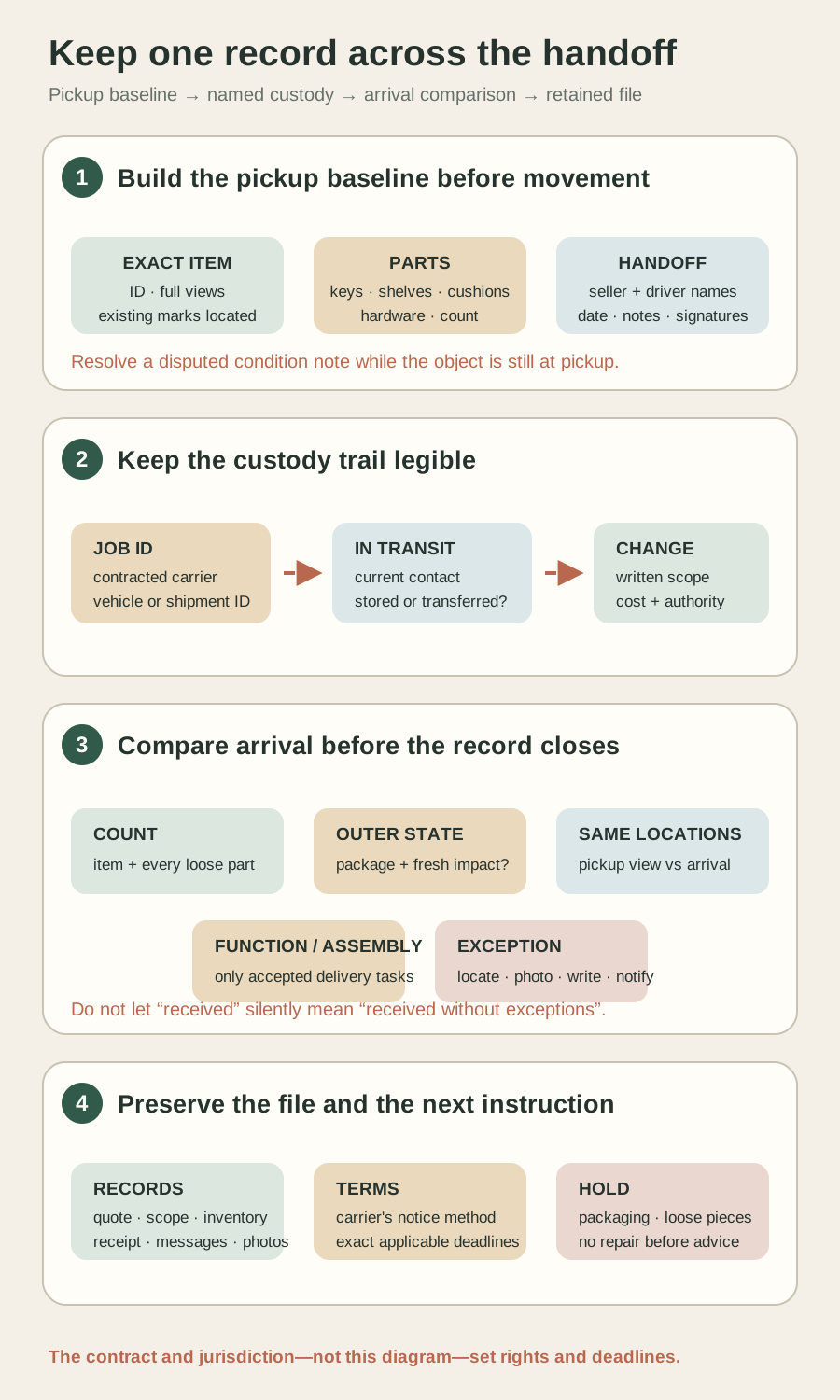
FMCSA's current checklist for U.S. interstate household moves tells recipients to supervise unloading and note damaged or missing items on the inventory before signing. Its separate delivery page discusses receipt wording in that jurisdiction. Elsewhere, do not copy a legal formula: read the actual receipt, write accurate exceptions, photograph them and follow the contract's notice route promptly.[3]
Close the handoff without losing evidence
- CountConfirm the exact piece and every labelled part, package, key, cushion, shelf and fitting.
- CompareRepeat pickup angles and locate any new loss, movement, distortion, surface change or incomplete assembly.
- Write exceptionsDescribe what and where without diagnosing cause; keep the recipient's and carrier's copies consistent where possible.
- NotifyUse the carrier's stated method and obtain a reference; do not assume telling the driver replaces required notice.
- RetainKeep relevant packaging, loose pieces, quote, accepted scope, inventory, receipt, photos and messages until the next step is agreed.
Send one complete professional-delivery request
Message to copy
Ask every provider to quote the same job
Hello—please quote professional delivery for [exact item or labelled set] from [exact collection position, floor, access and contact] to [exact delivery position, floor, access and contact]. Attached are current whole-to-detail condition photographs, maximum dimensions in the proposed transport state, weight status, included parts, known loose or fragile areas, route measurements and restrictions. Please state who contracts and who will physically carry the piece; any broker, subcarrier, transfer or storage; collection and delivery windows; who supplies and accepts packing or crating; any approved dismantling, hardware record and reassembly; unpacking, placement and packaging removal; price basis, tax, payment, inclusions, exclusions and possible access or waiting charges; the exact declared-value, liability, valuation or insurance arrangement offered, including limits, exclusions, excess, evidence, notice method and applicable deadlines; contacts before, during and after transit; and who may approve a written change. Please also describe the pickup inventory and condition handoff, the time and process for arrival inspection, and the records each party retains. Mark an unknown or unavailable service explicitly rather than assuming it is included. Thank you.
Book when the exact endpoints, object, accepted tasks, custody chain, timing, price, exclusions, value terms, pickup record, change authority and arrival process are coherent enough for the consequence of loss or delay. Clarify when a label, missing role or conditional charge prevents comparison. Seek qualified insurance, legal, conservation, rigging or other specialist advice when the uncovered value, object fragility or route consequence warrants it. Decline when the job depends on an unrecorded handoff, unsupported promise or improvised method.
If the complete job is within your own people, vehicle, access and restraint capability, use the self-collection Guide instead. Do not combine the two responsibility models: once a carrier accepts the service, let that carrier confirm its method and preserve the buyer's role as accurate briefer, decision-maker and recipient.