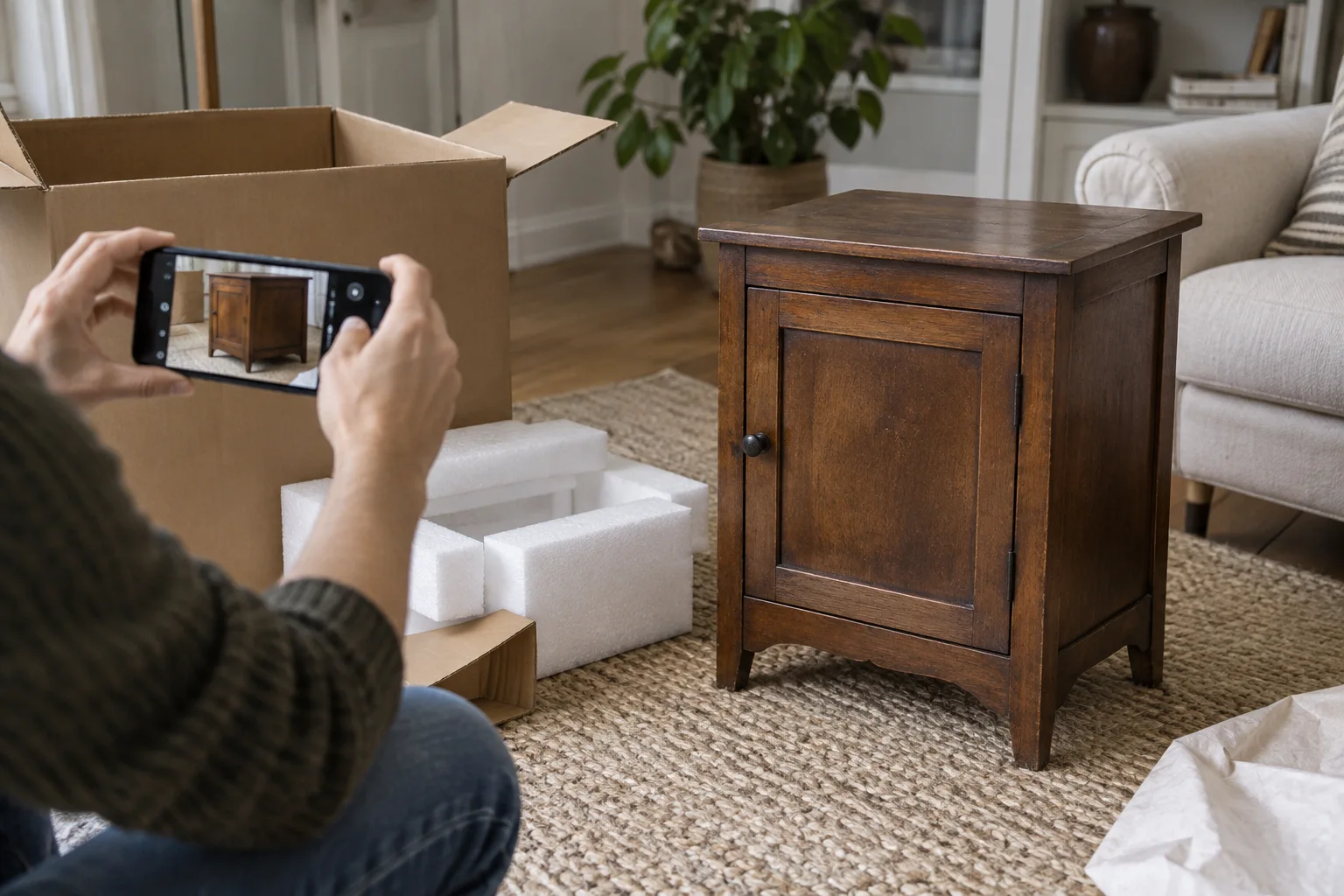
Pause the unpacking where necessary
If there is broken glass, a detached support or an unstable cabinet, keep people and animals away and arrange safe handling. Do not sit in a damaged chair to demonstrate the problem. If it is safe to do so, photograph the position in which the piece arrived before moving packaging out of the way.
When the carrier is present, ask them to record specific visible damage on the delivery record and keep a copy. Do not sign a statement you know is inaccurate. If inspection was not possible, say so accurately; adding a generic phrase is not a substitute for reporting the actual problem through the required process.
Whole object, location, detail, packaging
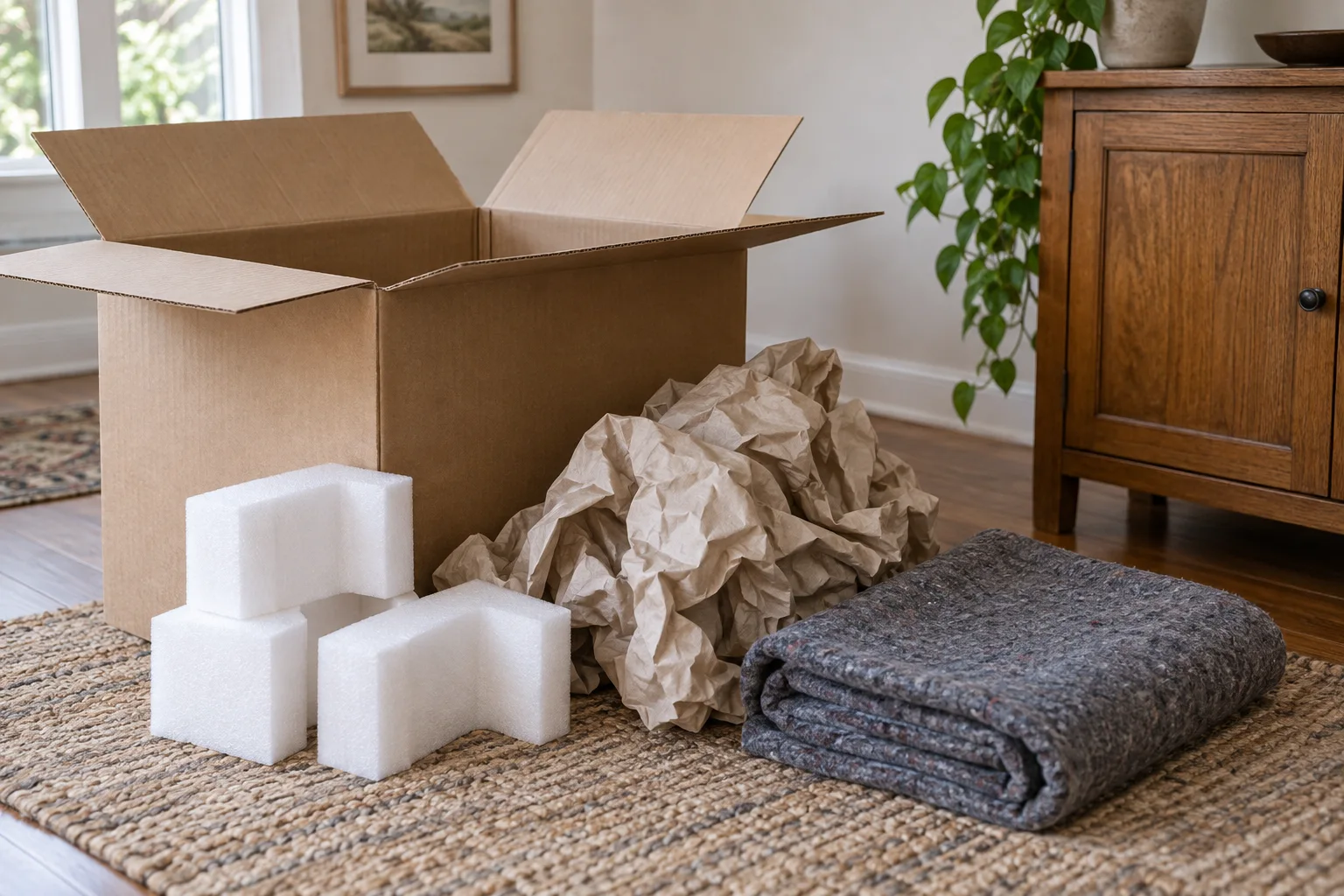
Start with the entire item so its identity is clear. Move closer to show the damaged component and its location, then take a detail with scale where that can be done safely. Keep ordinary lighting and retain the original files. A single dramatic close-up can leave everyone unsure which part it shows.
| Record | What it establishes |
|---|---|
| Full item and included parts | What arrived and whether anything is missing |
| Location and detail photographs | The visible problem in context |
| Outer packaging and inner protection | The packing condition and arrangement you received |
| Delivery record and timestamps | When and how delivery was recorded |
| Saved listing and agreed description | The condition and components you bought |
Photograph a shipping label for the claim if necessary, but do not post addresses or tracking details publicly. Keep the packaging until the seller or carrier has explained whether inspection or return will require it.
The seller, platform and carrier have different roles
For an EU consumer purchase from a trader using delivery arranged by that trader, Your Europe says the trader is responsible for damage until receipt. An independently commissioned carrier or a private sale can change the contractual position. Identify who arranged transport and keep the purchase and transport contracts together.[1][3]
Contact the seller with the evidence and the remedy you are asking them to consider. If a platform provides a formal dispute or delivery-problem button, use it as well as messaging. A friendly chat may not open the claim or stop a payment-release clock.
For example, Catawiki’s help page checked on 10 September 2026 asks buyers to report an order problem within three days of delivery and describes payment release after that period. That is a platform process deadline, not a statement that every statutory claim disappears after three days. Check the current order flow immediately.[2]
Make the first message easy to act on
First damage report
Order [reference] was delivered on [date/time]. The [component] arrived with [specific visible condition], which differs from [listing/agreed condition]. I have stopped using it and retained the packaging. Attached are the complete item, location, detail and packaging photographs. Please confirm the case reference, any further evidence needed and the proposed inspection, collection or remedy process.
Avoid “the driver must have dropped it” unless you witnessed that event. Say “the left rear leg was detached on unpacking” and include the relevant photograph. A factual report is more useful to an insurer, seller or mediator than a theory that can be disputed.
If the seller asks for another view, add it without altering the object. Keep messages and original files in date order. Record any telephone agreement in a written follow-up.
Do not spend the refund before it is agreed
A local repair, return, partial refund or another remedy may be appropriate, depending on the contract and damage. Obtain agreement before commissioning work that changes the evidence or creates a cost nobody has accepted. A cosmetic repair proposal also needs to address any structural concern.
For a return, agree packing, collection, access and who bears the cost. Do not improvise a pallet shipment for a fragile piece because the seller said “send it back”. If the process stalls, use the platform escalation or appropriate consumer-advice route with the record you have assembled.
The immediate goal is a safe object, a preserved record and a live claim in the right place. Once those are secured, you can choose the remedy on its merits.