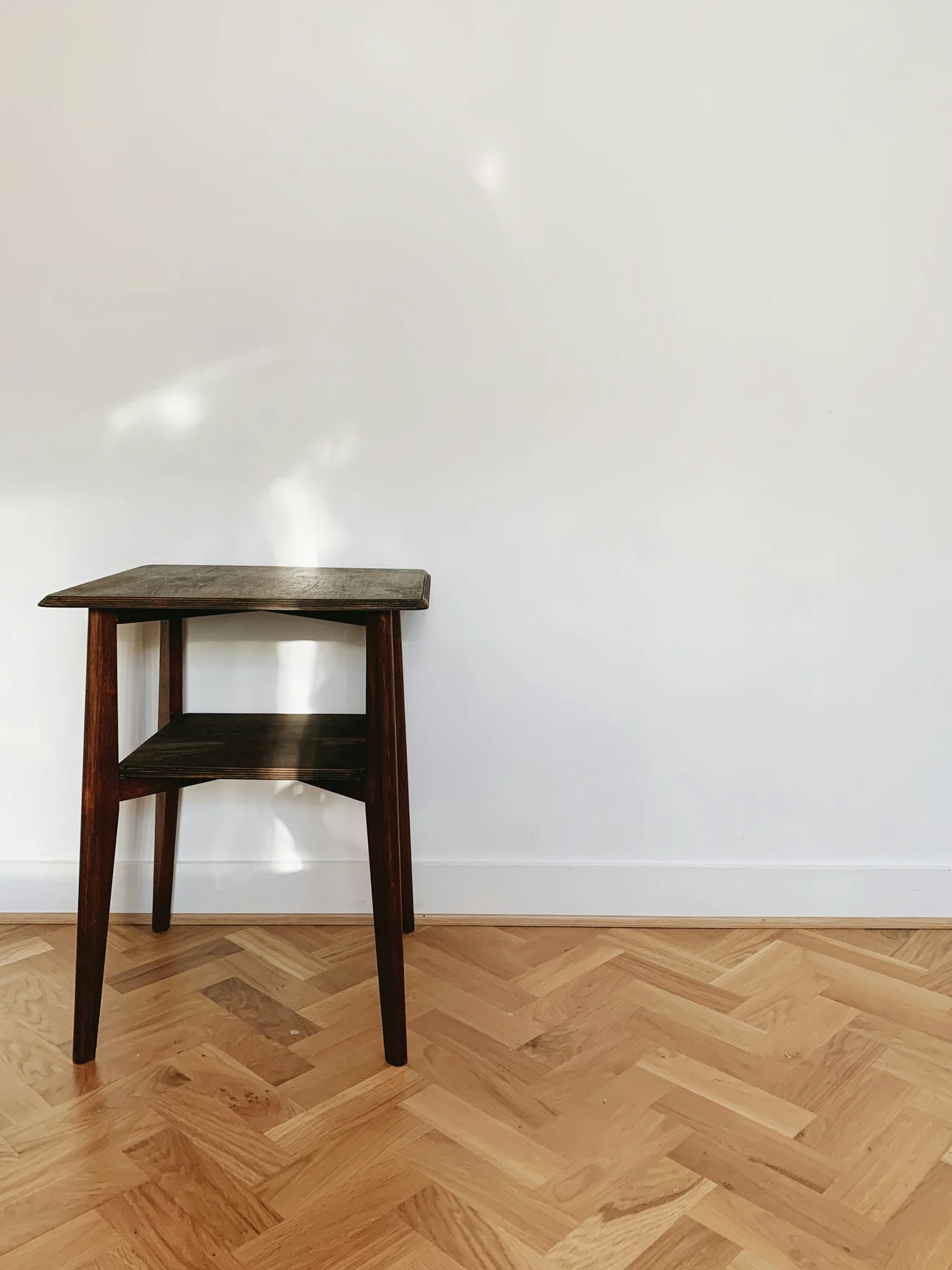
Find out what is under the furniture
Start with the floor’s own information: product and finish, care instructions and, for a recently finished floor, the installer’s return-to-use guidance. “Oak floor” does not tell you whether the surface is oiled, lacquered or recently recoated. In a rented home, ask for the existing care information before choosing something that will remain in prolonged contact with it.
Ask the floor supplier which pad, cup or mat materials it accepts for that surface. Include the backing that actually touches the floor, not just the soft-looking upper face. A label saying “for hard floors” is not the same as confirmation for the particular finish in your room.
Bona’s homeowner guidance recommends felt pads and non-marking feet for furniture. Treat that as a useful starting point for scratch protection, then confirm the exact product and your floor’s instructions. It does not establish that any pad can support any piece without leaving a mark.[1]
If the finish is unknown, a floor professional can help identify a compatible approach. This is especially worthwhile for a heavy cabinet you intend to leave in one position for years. Guessing from the floor’s colour provides little information about its surface.
Look underneath the actual feet
Ask the seller for clear, safely obtained photographs of every different foot type and any damaged or repaired example. Look for exposed metal tips, missing glides, protruding fixings, rough edges and old pads that have shifted or worn through. Do not assume four similar-looking legs have four identical contact faces.
Record the shape and size of the part that meets the floor. A round leg may end in a small metal button; a splayed leg may bear on one edge; a plinth can rest on hidden feet. This is the dimension needed for choosing protection, rather than the width of the leg higher up.
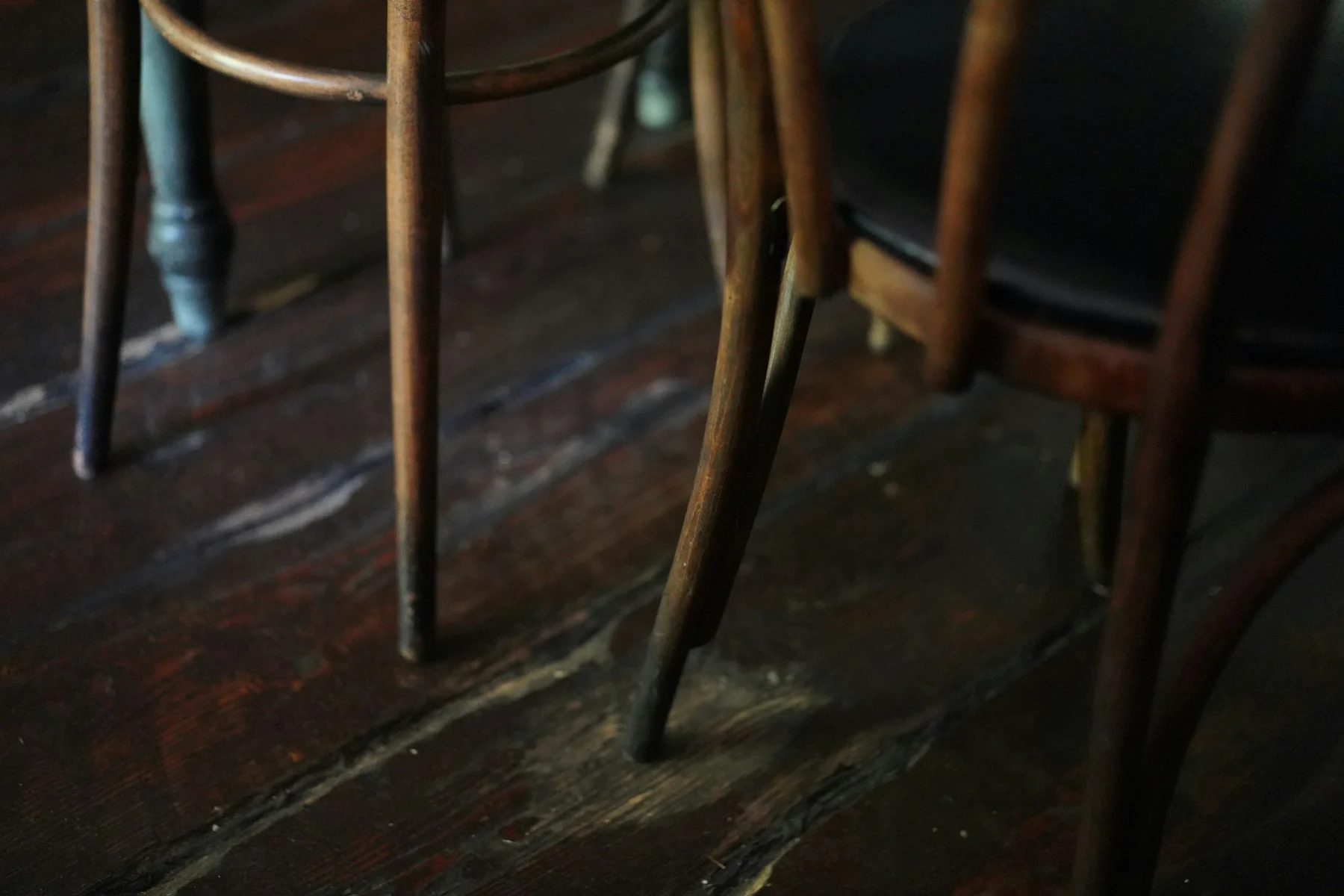
Resolve a loose, broken or unequal foot before selecting pads. A stack of soft discs used to disguise a wobble is not a repair or a reliable levelling plan. With heavy furniture, arrange inspection and fitting with people equipped to support the piece safely. Do not tip a loaded wardrobe or reach beneath an unsupported cabinet.
Choose an attachment that suits the furniture too. Do not sand an old foot, apply solvents to an unidentified finish or drive in a nail simply because a packet’s generic instructions suggest it. Ask a furniture specialist about a sound, compatible attachment or removable support where original surfaces or repairs make this consequential.
Separate scratching from indentation
Scratching concerns what moves against the surface: a hard edge, a protruding fixing or grit trapped beneath a protector. Indentation concerns the load carried through the contact area. A material can feel soft in your hand and still provide little useful load spreading beneath a small, heavily loaded point.
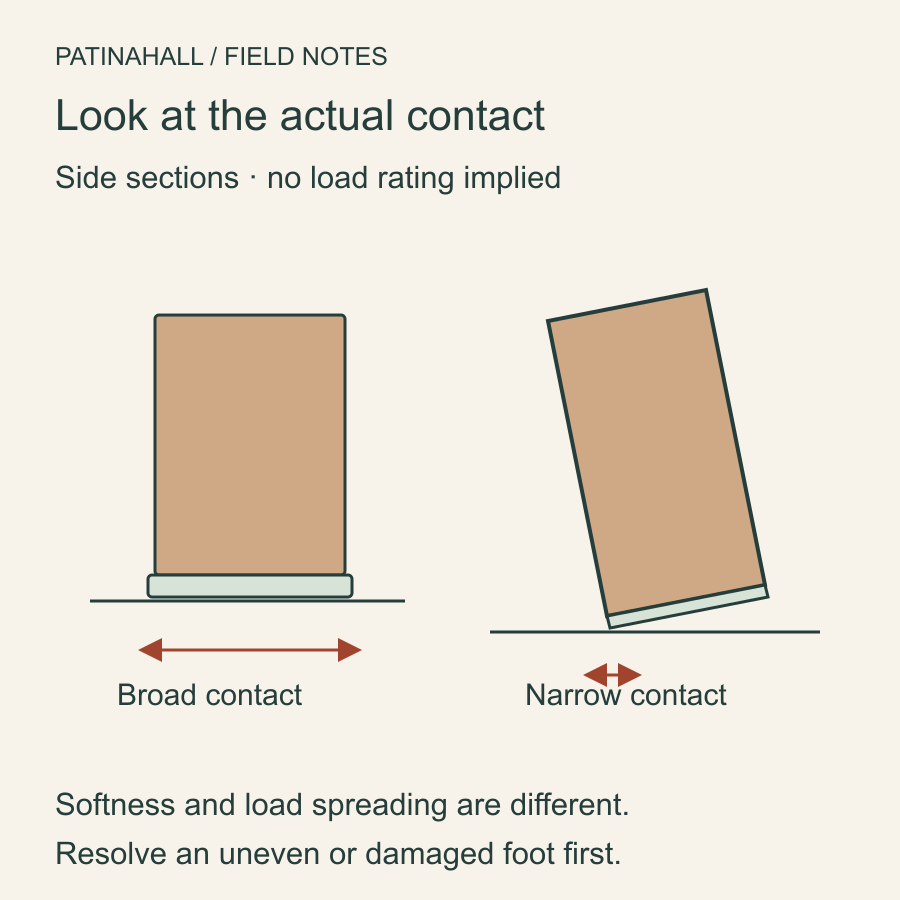
For example, a 30 mm pad partly hanging over a 15 mm contact face is not automatically giving the floor a firm 30 mm support. The unsupported portion may do little to distribute the load. Have the pad or support assessed as an assembly, including its fit, stiffness and the way the foot bears on it. The dimensions here illustrate the question, not an approved product size.
| Furniture situation | What needs confirming |
|---|---|
| Dining chair moved at each meal | Compatible scratch protection, secure fit and easy inspection |
| Heavy cabinet on small feet | Suitable load spreading and compatibility during prolonged contact |
| Old metal castors under a stationary piece | Whether appropriate cups or another assessed support suit both surfaces |
| Office chair used on its wheels | Compatible wheels, protected rolling area and mat backing |
| Wobbly or damaged foot | Furniture repair or support assessment before choosing protection |
For a heavy piece or a soft or uncertain floor, ask the flooring professional about the proposed contact and loaded weight. A castor cup may be an option, but its material, size and support must suit the furniture and floor. Avoid promising that a particular pad thickness will prevent dents on every wooden surface.
Give castors their own plan
A vintage castor can be an attractive surviving detail without being suitable for repeated rolling over your floor. Check its material, condition and whether it turns freely through the intended movement. A seized or damaged wheel needs assessment; putting a mat beneath it does not restore the mechanism.
For normal office chairs on its wood floors, Quick-Step recommends soft Type W castors and describes a protective mat intended for hard floors without a profiled backing. It particularly advises combining suitable castors and a mat for intensive use. These are instructions for that flooring context; confirm your floor and the chair’s compatible replacement parts before applying them.[2]
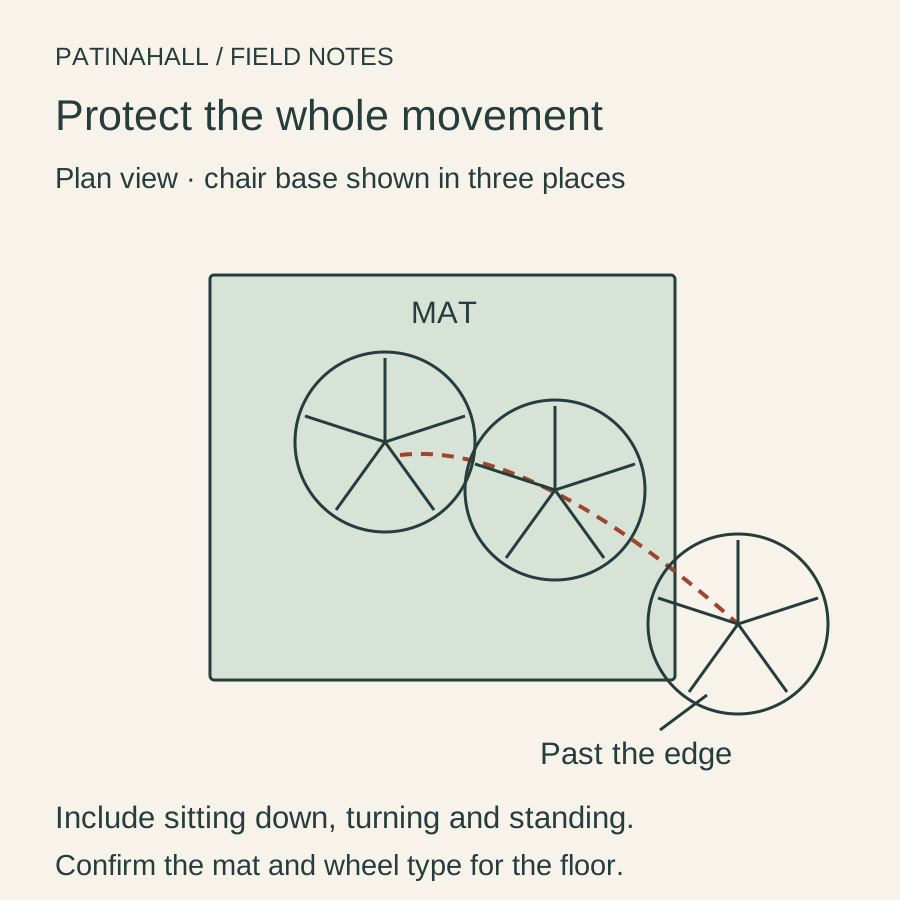
Mark the area used when you sit down, turn, reach a drawer and stand up. A mat that fits neatly beneath the parked base may end exactly where the wheels travel as you leave the desk. Check the edge in the room as well: it should not create an awkward transition in a walking route.
Do not treat an office-chair wheel specification as a retrofit instruction for an antique sofa or cabinet. If preserving old castors matters, discuss stationary support with the furniture and floor specialists. The answer may be to retain the fittings while changing how the piece is supported, provided the arrangement is suitable and stable.
Keep the protection clean and in place
Before fitting approved protection, clean the relevant surfaces using their own care instructions and allow them to be ready for attachment as directed. Check that the protector covers the intended contact and stays where it belongs. A shifted pad that exposes a metal edge has stopped doing its job, however new it is.
Inspect after the first few ordinary uses and build checks into cleaning. Look for grit, worn edges, exposed fixings, adhesive migration and mats that have moved. Remove debris and replace unsuitable or worn protection using the agreed method. Do not deliberately rub a loaded chair across the floor to test whether it scratches.
CCI advises lifting furniture rather than dragging it, because dragging can stress legs and joints. Agree suitable lifting points and enough help for the piece. Floor protection is not permission to pull a heavy cabinet across the room.[3]
For a room rearrangement, consider the route as well as the destination: thresholds, grit and changes in level can defeat an improvised move. Have the carrier or mover plan protection appropriate to the floor and object. Keep temporary moving equipment separate from whatever supports the furniture in everyday use.
If the object’s own surface needs care, use our wooden-furniture care Guide. A new mark on the floor needs the floor’s care advice; applying furniture polish or a home remedy is not an interchangeable treatment.
Ask about the pair, not just the pad
Message to copy
I want to place [furniture and approximate loaded weight, if known] on [floor product/finish]. The contact points are [material, shape, dimensions and photographs], and the piece will [stay still/move daily/roll]. Please confirm suitable protection, backing and attachment, whether load spreading needs assessment, any restrictions for this finish, and how to inspect and maintain the arrangement. Known foot damage or repairs: [details].
A good result is easy to live with: the furniture stands properly, the protection stays in place and cleaning gives you a chance to check it. Choose the arrangement that fits the actual pair of surfaces, then keep it working. The oldest chair and the newest floor need not be at odds.