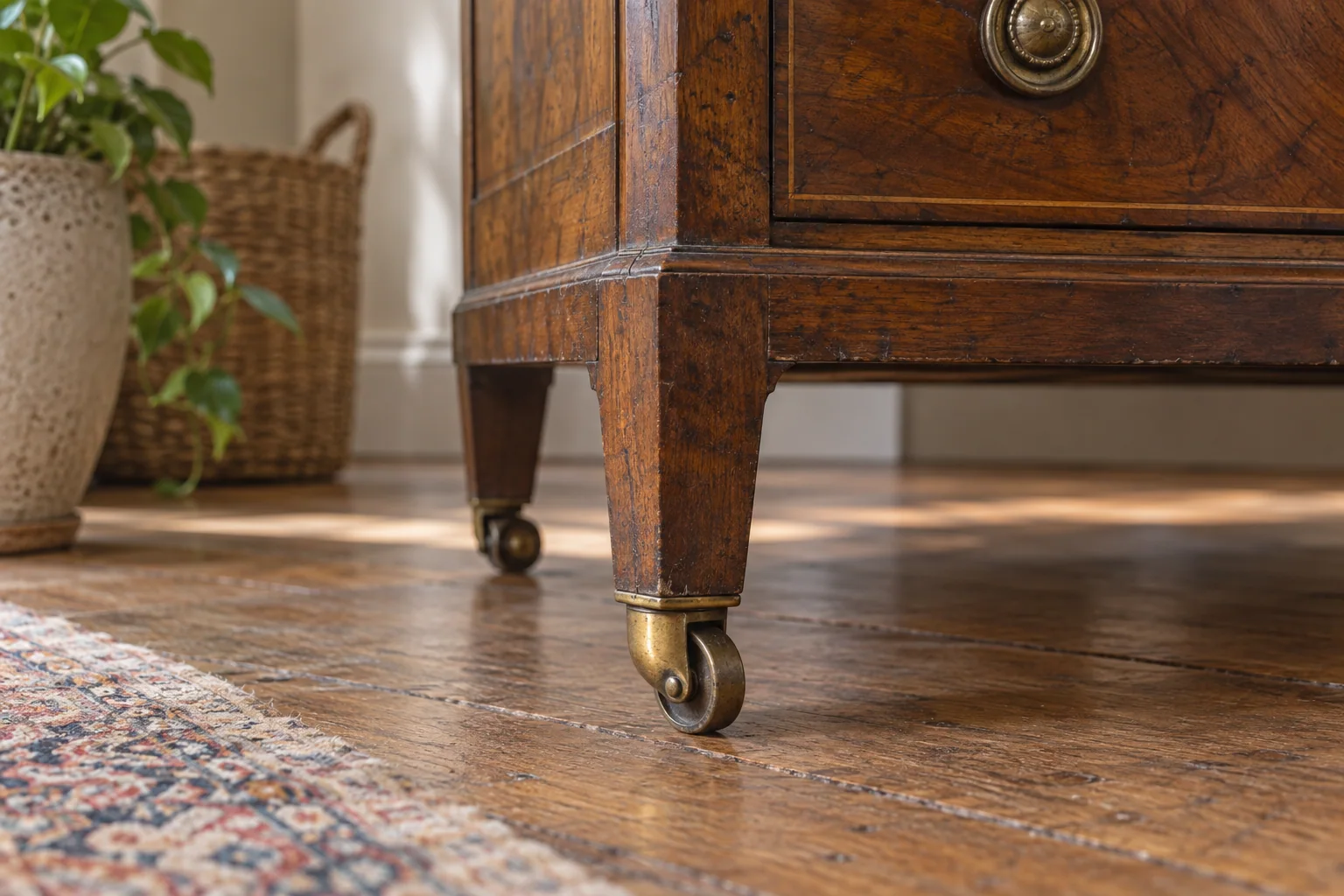
A 32 mm wheel does not mean a 32 mm lift
Heico’s listing for a brass grip-neck castor specifies a 32 mm wheel and a 40 mm overall height to the top of its arm, supplied with a fixing socket. That is a concrete example of two different dimensions on one fitting. Use the supplier’s drawing and measuring points when comparing it with the old component.[1]
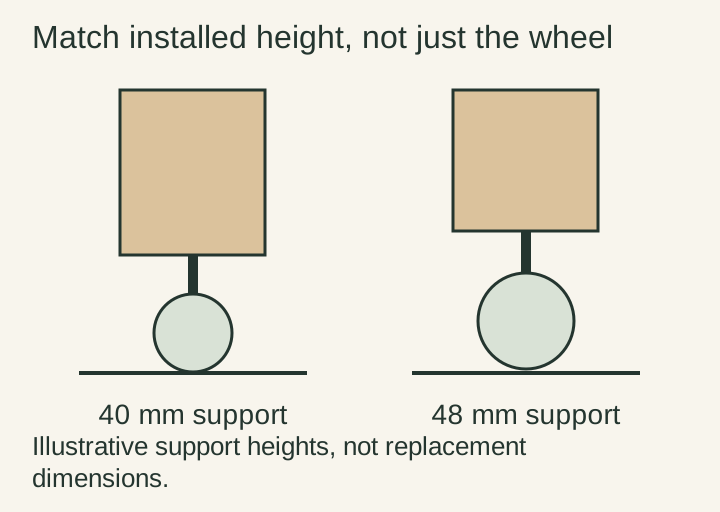
Imagine an original arrangement supporting the leg 40 mm above the floor and a proposed replacement supporting it at 48 mm. That illustrative difference raises one corner by 8 mm if only one is changed. Buying four may level the piece again, but it also changes its overall height and appearance.
Measure the actual installed relationship, including any cup around a tapered leg. Do not assume the catalogue’s overall height includes a stem that disappears inside the wood. Ask the supplier to mark the dimension that matters for your furniture.
The hidden connection decides the order
Record whether the castor uses a cup, plate or stem-and-socket arrangement. Photograph it in place, the adjacent leg and a matching intact castor. Removal can damage an old fixing or leg; have a restorer expose what is needed if it is not straightforward.
| Dimension or detail | Reason |
|---|---|
| Installed support height | Keeps the furniture’s stance and working height. |
| Wheel size and material | Affects appearance and contact with the floor. |
| Cup, plate or stem geometry | Determines how the castor attaches. |
| Socket and surrounding wood | Shows whether fitting repair is part of the job. |
Antique finish in a new hardware listing describes the appearance of the new part, not its age. That can be a perfectly reasonable repair when disclosed. Retain original components where practical, and distinguish one replacement from a claim that all the fittings survive.
Two surfaces need to be right
Ask a furniture repairer to assess splitting, softness or movement around the fixing. A larger screw or stem is not automatically a sound solution for an enlarged hole. The repair should preserve enough sound structure and leave the castor seated as intended.
Tell the supplier about the floor and how the furniture will be used. A hard metal or ceramic wheel can interact differently with a delicate finish than a modern softer wheel. Do not choose a replacement solely because it rolls freely on the shop floor.
Decide whether you need movement at all. A sideboard may retain its castors as part of its design while being moved by a planned, supported lift when necessary. A small chair or table that shifts unexpectedly under normal use needs an appropriate stability solution.
Replace the minimum that gives a coherent result
For one missing castor, compare a confirmed matching replacement with repairing the original or changing a full set. Discuss the visual and height consequences before ordering. Mixing wheel sizes may be acceptable only if the installed support and use have been properly resolved, not because the furniture happens to stop rocking on an uneven floor.
Send to the supplier or restorer
This is the castor in place and a matching intact one. Please confirm the fixing, installed support height and suitability for this furniture and floor. Does the leg need repair, and will the replacement change the height?
After fitting, check the empty furniture’s stance and normal operation before returning its contents. The successful repair is the one you stop noticing because the piece stands and works as it should.