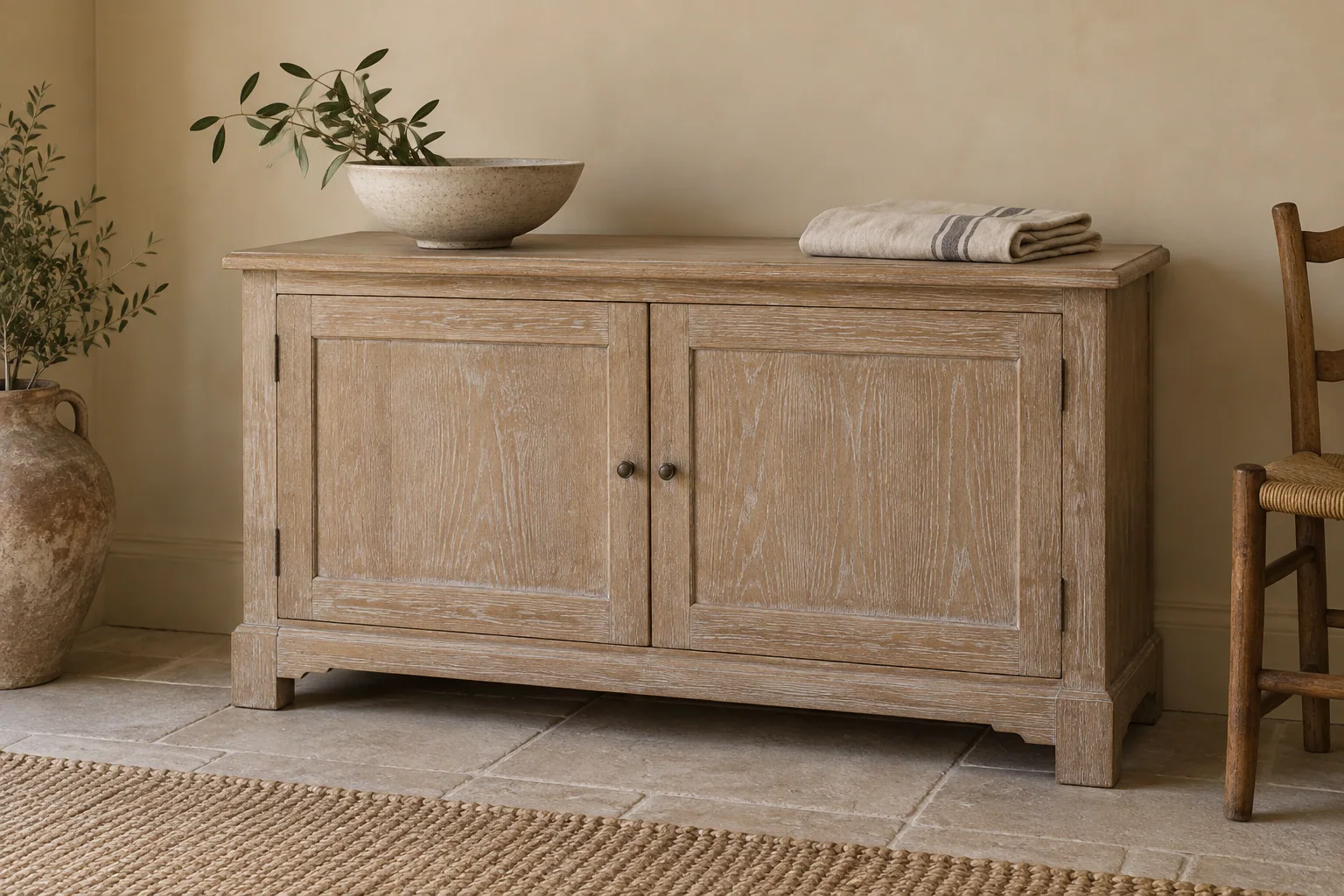
What liming is trying to show
Liberon describes its liming wax as a white product used to highlight the grain of woods including oak. Its application instructions concern creating that effect on prepared wood. They explain why white in open grain can be deliberate; they are not instructions for diagnosing or cleaning an unknown old cabinet.[1]
Look at the whole piece, including areas protected by doors or hardware. Is the pale effect consistently part of the design, or concentrated in a recent mark? Ask for its finish and restoration history. A later decorative treatment may be attractive without being the original finish.
Use terms carefully in an enquiry: visible white grain, loose powder, a cloudy patch and lifting flakes describe different things you observe. Do not turn the listing word limed into a diagnosis of every white area.
Record what changes before applying anything
Photograph the same area in even daylight and note where the material appears. Include a wider view so the repairer can see how it relates to the grain, joins and wear. Avoid rubbing away the very evidence they need to assess.
| What you see | What to establish |
|---|---|
| Stable white following the grain | Whether this is an intentional effect and what seals it. |
| Loose material on the surface | Its source and whether cleaning or treatment is appropriate. |
| A cloudy patch over the grain | The coating and history of the local mark. |
| Flaking or lifting finish | Why adhesion is failing and what can be preserved. |
The table does not distinguish wax, paint, deposits or biological growth by appearance alone. If material is spreading, shedding or associated with damp, have the cause assessed before routine cleaning. An old finish and a new problem can occupy the same surface.
Say what must survive the cleaning
The Canadian Conservation Institute’s furniture guidance emphasises caution around finishes and cleaning. For a pale grain effect, the practical brief is especially important: cleaning that removes embedded decorative material can change the appearance even if the underlying wood remains intact.[2]
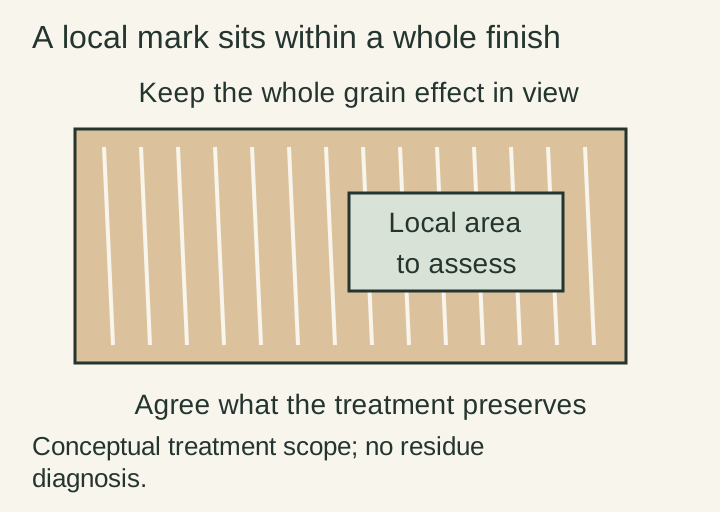
Ask the restorer to propose a small appropriate test and explain what it establishes before treating a visible area. Agree whether the aim is to preserve the existing look, reduce surface dirt or reconstruct a missing local effect. Those are different amounts of work.
Do not follow new-finish instructions involving grain-opening brushes or stripping on a cabinet simply because its seller called it limed. Likewise, adding fresh white wax can conceal a mark while leaving the underlying problem unresolved. Identify the existing coating and compatible treatment first.
Decide how much variation you can enjoy
A local repair can leave a difference in whiteness, sheen or grain contrast. Ask to see the expected result in ordinary room light, and decide whether you want a discreet repair or a more extensive change. Perfect uniformity may require more alteration than the original mark justified.
For a purchase, compare the complete cabinet in context. A small pale patch can look dramatic in a close-up and barely matter beside a chair and lamp. On the other hand, a repaired drawer front may stand out across the room. Judge the result at both distances before committing to more work.
Send with the photographs
I want to preserve the pale grain effect. Please identify what can be established about the coating and this white material, propose a small test if appropriate, and explain what cleaning or repair would remove or change.
The useful outcome is a clear decision about what to keep. White grain is not automatically dirt, and an attractive pale finish does not need to be made uniformly new to belong in a lived-in room.