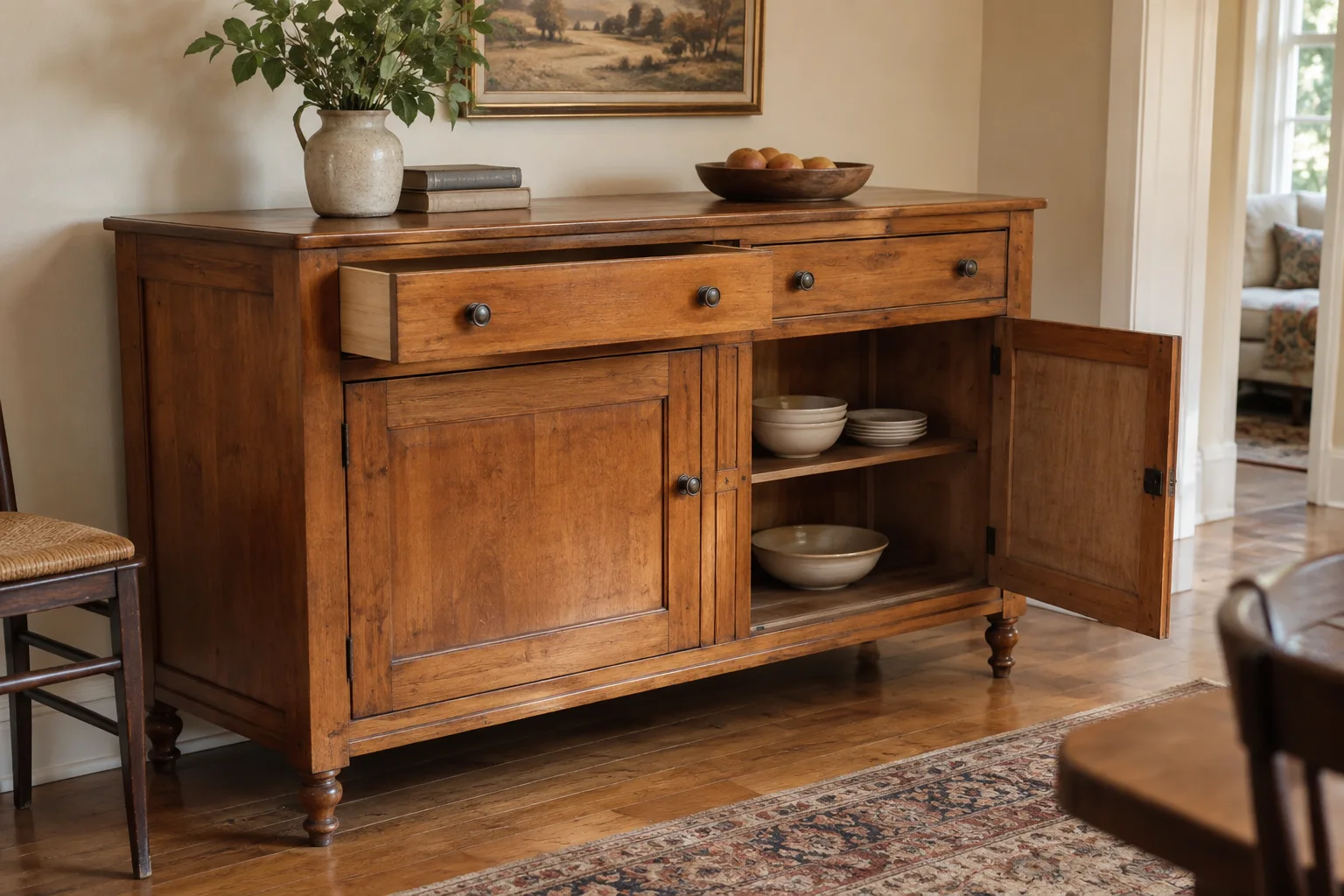
Three names, several different appearances
For a first comparison, teak heartwood commonly falls in a golden to medium-brown range. Black walnut can run from lighter brown to deep chocolate, sometimes with darker streaks. East Indian rosewood can range from golden brown to purplish brown with dark streaking. These ranges overlap. They are starting descriptions of specified woods, not a colour chart that can authenticate a polished cabinet.[2][3][4]
| Claim | Useful observation | Next check |
|---|---|---|
| Teak | Follow the long grain through an uninterrupted panel. | Does documentation identify this panel or just the range? |
| Walnut | Compare figure, board boundaries and lighter areas. | Which walnut is claimed, and has the surface been stained? |
| Rosewood | Record dark streaks and the underlying construction. | What supports the trade name, species and legal history? |
The Wood Database’s black-walnut entry describes a gradation in pore size that helps distinguish it from unrelated woods sold under other “walnut” names. That is an anatomical distinction. It cannot be read reliably from a distant phone photograph of varnished furniture.[3]
A cross-section is not a tabletop
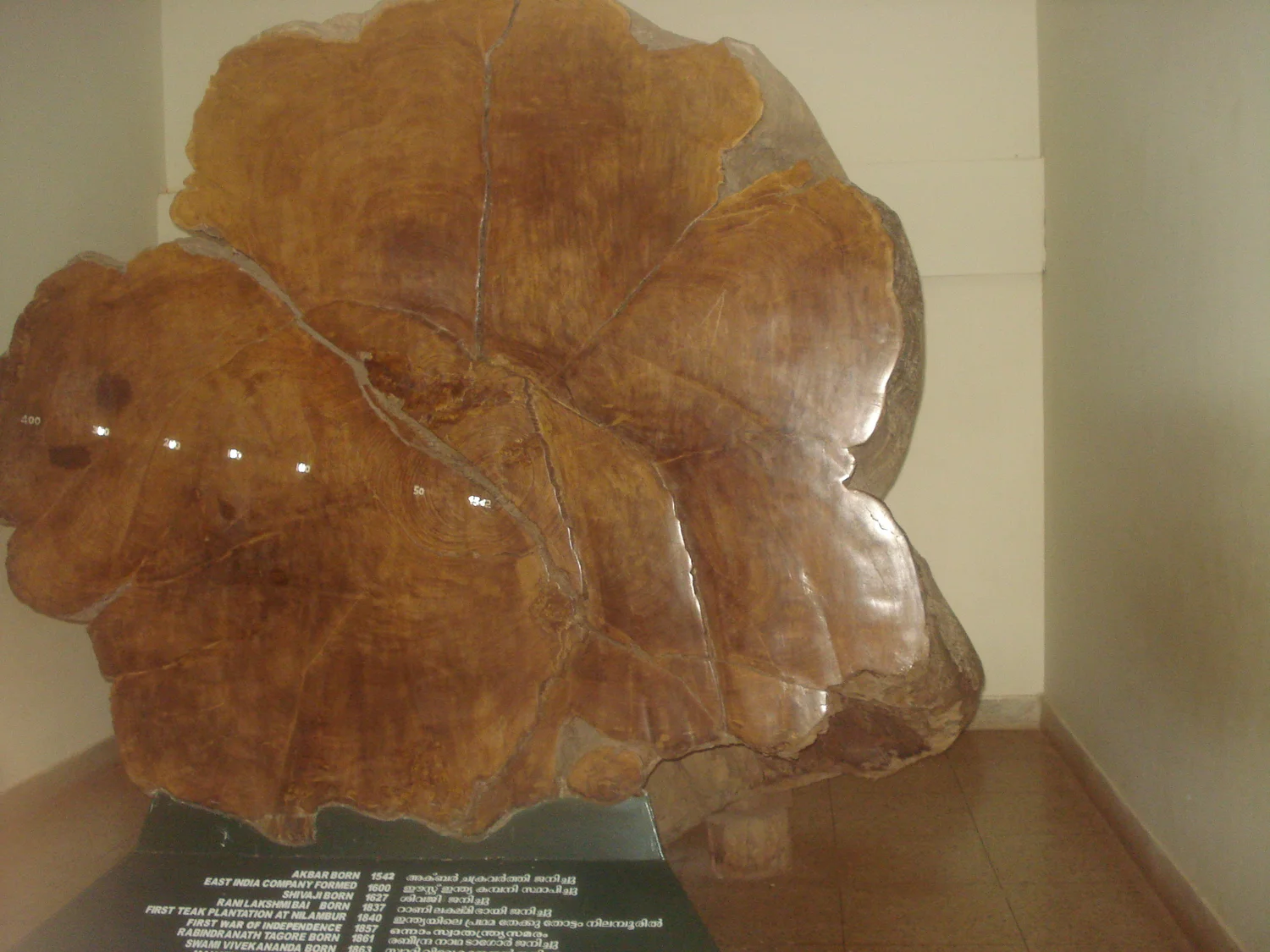
Reji Jacob’s photograph records a teak cross-section displayed at the Nilambur museum. You are looking across the tree, with growth visible around the centre. A long board or sliced veneer presents a different view of that structure. The glossy display surface and indoor light also change its appearance. Use this photograph to understand orientation, not to match the brown on your screen to a seller’s brown.[5]
On the actual furniture, start with existing exposed edges, the underside and a drawer opening. Ask for daylight photographs with the whole piece and location shown. Do not scrape off the finish, cut a fresh sample or pull off an edge strip to get a better look. Identification should not become the first damage you cause.
Walnut can look different within one panel
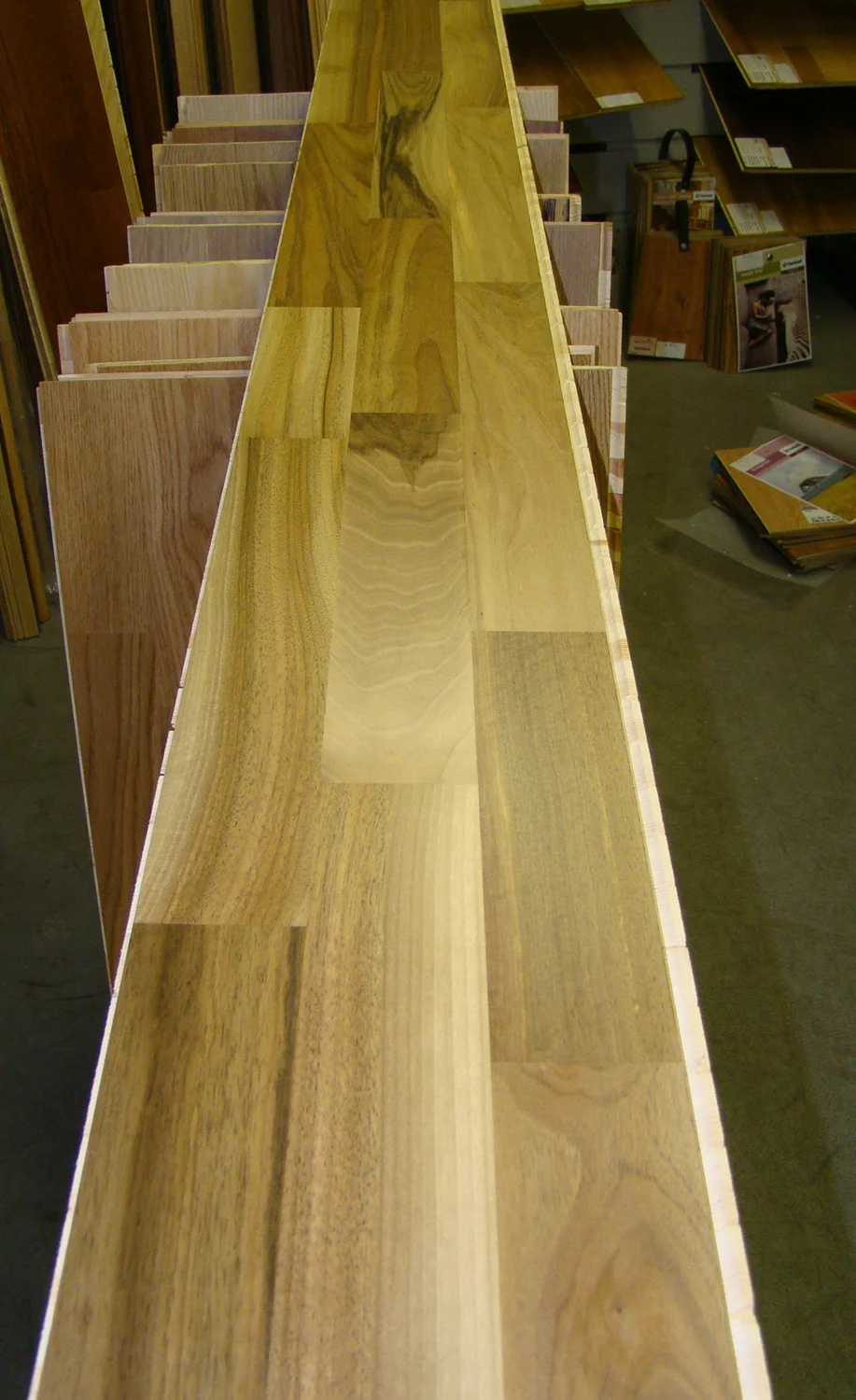
This contributor-identified walnut parquet sample contains contrasting strips and changing figure. Its record calls it walnut; it does not establish a particular Juglans species. The room lighting is visibly warm. The useful lesson is the variation between adjoining pieces, not a supposedly definitive walnut colour.[6]
Bookmatched veneer creates a further trap: mirrored figure can look like a striking botanical fingerprint, yet the arrangement comes from how adjacent slices were opened and laid. Photograph a repeated pattern across the whole door. Then ask whether the material specification belongs to the exact model and finish option being sold.
A darker top can also reflect stain, an old coating or a later repair. Compare sheltered areas only as evidence that colour differs. A protected drawer interior may be another timber altogether; it is not automatically the original colour of the front.
A rosewood record can be stronger than a colour photograph
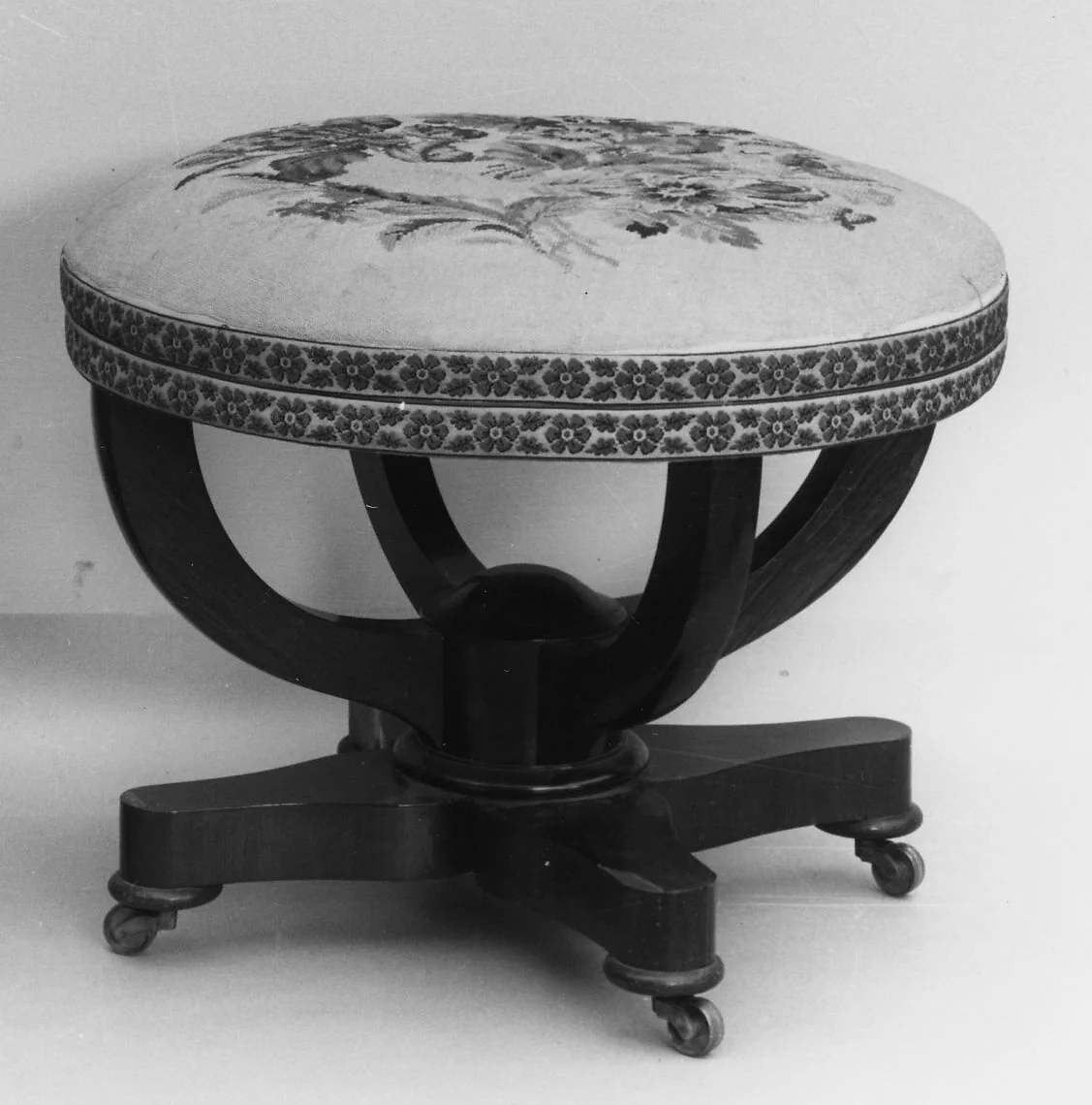
The Met records its American stool, about 1840, accession 47.147.2, as rosewood. Its monochrome photograph cannot show the wood’s colour, yet the institutional material record still supplies useful evidence about this exact object. It does not specify a Latin species or establish the identity of a similar stool in a listing.[7]
Try the same method on a modest sideboard. Observation: the doors show a repeated dark figure. Document: a dated catalogue names rosewood veneer as an option for the range. Conflict: the catalogue also offers walnut, and the seller has no finish code. Conclusion: the range is documented, but the veneer option remains unresolved. Ask for an order label or another object-specific record before paying a rosewood premium.
Decide how certain the answer needs to be
USDA’s Forest Products Laboratory explains that scientific wood identification principally uses cellular anatomy, viewed with magnification. Colour, odour and texture are variable and less diagnostic. Its sample service has particular eligibility and specimen requirements; do not send pieces of furniture or assume photographs are sufficient.[1]
For arranging a room, liking the actual colour and agreeing the condition may be enough. For an expensive attribution, a sensitive repair or cross-border rosewood purchase, uncertainty has a larger cost. Ask a suitable specialist what can be established without damaging the object and whether a species-level conclusion is possible.
Ask the seller
Which components are described as [teak/walnut/rosewood], and what supports that description? Please send the complete piece, a daylight panel view, an existing exposed edge and any model, finish or purchase record. Has the wood been stained, refinished or replaced? If the species is unconfirmed, please keep that uncertainty in the invoice description.
Buy the furniture you can describe honestly. A well-made cabinet with an unresolved timber name can still be a good purchase; an unsupported name should not do the work of evidence.