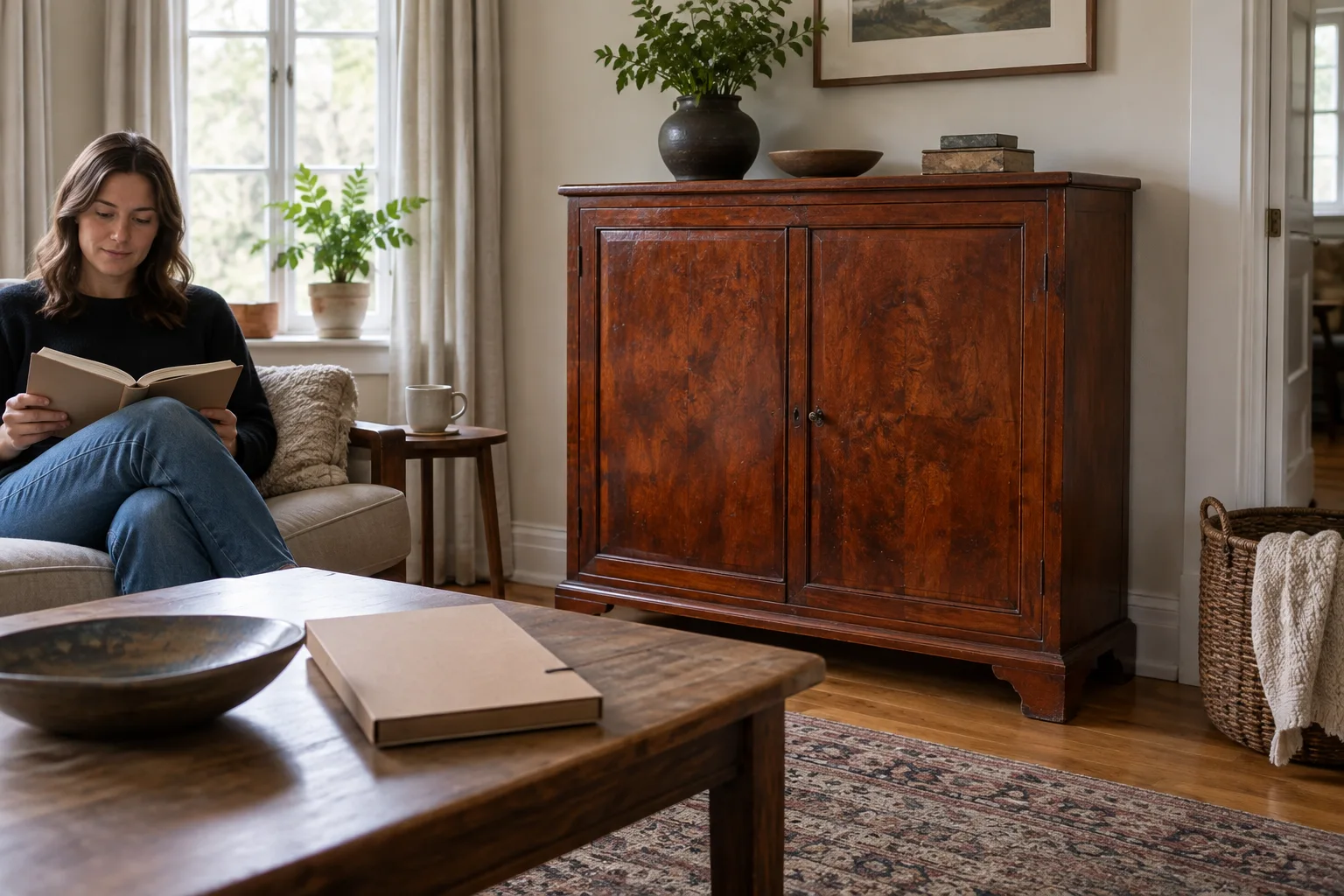
Start with the wood and the route
Record the complete item, dimensions, maker or model if known, the parts described as rosewood and the source of that description. Veneer, solid components and secondary timber are different parts of the inventory. Ask for old invoices, import documents, catalogue references or other records that can be connected to this exact object.
Also write the collection country, destination, any transit countries and whether the shipment is for personal ownership or trade. “Delivery to Europe” is not a route. Great Britain to the Netherlands crosses an EU external border; a movement between two EU member states raises a different set of questions.
If botanical identity matters, ask an appropriate wood specialist what the evidence can establish. USDA’s identification service explains the importance of anatomical features and the limits of colour and texture. A phone-image match is not a species certificate.[3]
Dalbergia nigra needs particular care
RVO identifies Dalbergia nigra as Annex A / Appendix I, with stricter controls than other Dalbergia species. Its guidance describes EU-certificate requirements for relevant trade within the EU and restrictions on import for resale, with specific exceptions. Other Dalbergia species are generally addressed under Annex B / Appendix II, with legal-acquisition evidence and border requirements depending on the case.[1]
| Situation | Question for the competent authority |
|---|---|
| Claimed Dalbergia nigra | Which commercial-use certificate and import/export rules apply to this object and history? |
| Another identified Dalbergia species | What evidence of legal acquisition and border documents are needed? |
| Rosewood trade name only | What identification and provenance are needed before the shipment can be assessed? |
| More than one object travelling together | How is the relevant wood quantity calculated for the complete shipment? |
This table is an enquiry map, not a permit decision. An old date in a listing is only useful if it is supported and relevant to the legal provision being considered. Do not relabel an uncertain object as another timber to simplify the paperwork.
The finished-product exception is not a cabinet-weight shortcut
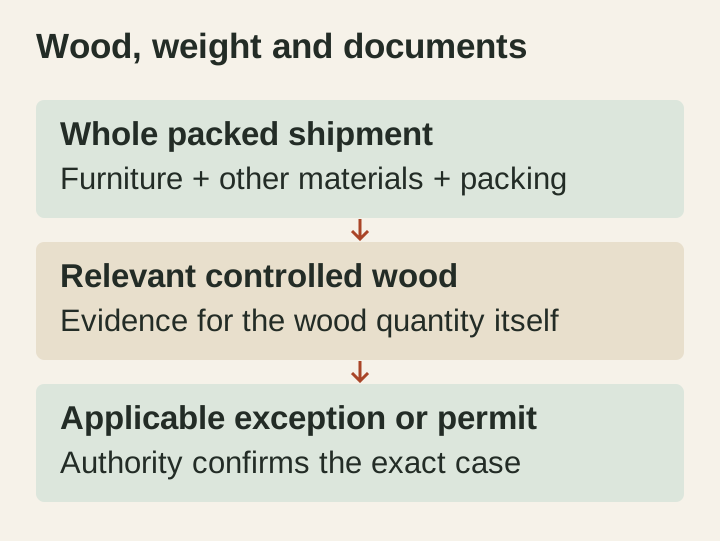
RVO’s discussion of annotation #15 includes an exception for finished products containing at most 10 kg of the relevant Dalbergia wood per shipment, alongside other species-specific provisions. That is not a general exemption for all rosewood, and it does not cover Dalbergia nigra in the same way. Confirm the current annotation and applicability with the authority.[1]
The relevant quantity is not simply the furniture’s shipping weight. A cabinet contains other timber, hardware and packing; conversely, several small items may travel together. Ask how the wood quantity will be evidenced for this case. Do not estimate veneer weight from a photograph and present the calculation as accepted customs documentation.
An exemption from one permit requirement also should not be treated as proof of lawful acquisition, accurate species identification or exemption from every other requirement. Keep the authority’s answer with the object record.
Match documents to the shipment
RVO’s document guide is the appropriate starting point for Dutch certificate and permit enquiries. Other countries have their own management authorities. Ask who applies, which documents must exist before shipment, what originals accompany the object and what information the carrier needs.[2]
Make the invoice description agree with the evidence. Check identifying details, quantities and the relationship between any document and this furniture. If a dealer gives you a permit number for an earlier import, ask how the current object is linked to that consignment.
Send to the seller and relevant authority
I am considering [object], described as [wood/species], moving from [country] to [country] via [route] for [personal use/trade]. Attached are the full photographs, component description and available acquisition/import records. Which identification, certificate, permit or exemption evidence is required for this exact movement, and what must be completed before dispatch?
Guidance checked on 10 September 2026. Wait for the necessary evidence before committing the transport. If the purchase only works when the species is guessed or an exception is assumed, it is not yet a resolved purchase.