A colour difference is the start of the question
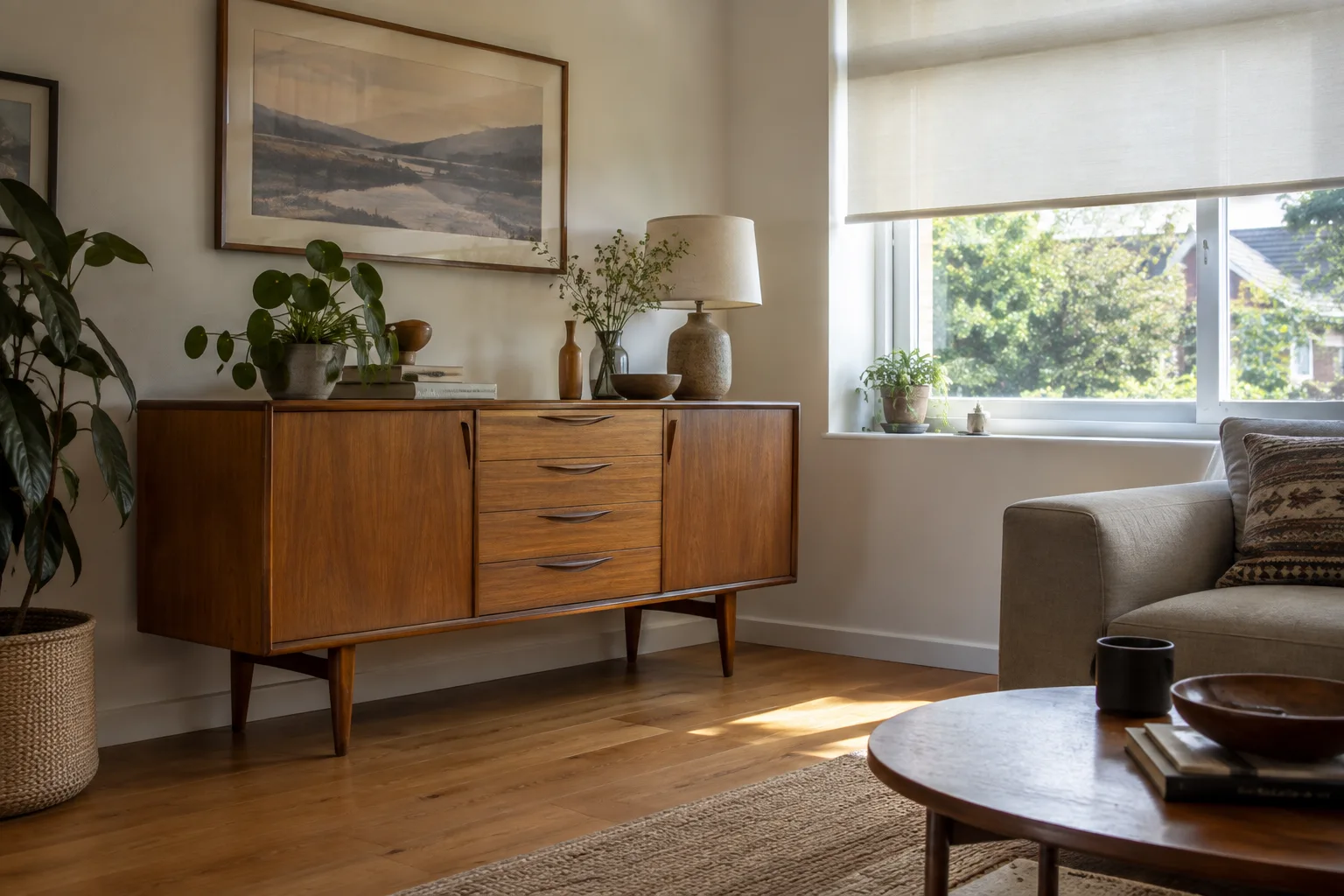
You lift a vase from a sideboard and find a darker circle underneath. Suddenly the cabinet looks wrong, although you were happy with it five minutes earlier. Before trying to make that circle disappear, look at the whole piece from the doorway and from where you normally sit. Decide whether you are responding to a visible problem or a newly discovered part of its history.
The Canadian Conservation Institute explains that light-related changes in wood are cumulative and irreversible. Both wood and its surface treatment need consideration. A difference between an exposed top and a protected area can be informative, but a photograph alone cannot separate all effects of light, coating, past cleaning and repair.[1]
Record the surface in even daylight without filters, then note where the difference sits. Include adjacent edges, doors or leaves, and ask what work has been done. Do not use solvent, scraping or sanding to find a supposedly original colour. That experiment changes the surface before you have decided what you want to preserve.
A protected patch is one reference, not a command. It may have its own coating history, and making every visible area match it may require more intervention than you want. If the finish is lifting, sticky or losing material, that condition takes priority over a purely cosmetic colour comparison.
Let the room do some of the work
Start with the actual path of sunlight. Look at the room at the times the cabinet is exposed, and consider a blind, curtain or a better position. A small relocation can be more useful than a carefully applied polish if the piece would otherwise return to the same strong light.
The aim is to reduce further uneven exposure, not to “even it out” by deliberately giving the protected area more sun. CCI’s finish-care guidance emphasises limiting light and moisture as preventive measures. A treatment that changes the appearance does not remove the need for that room plan.[2]
Try removing visual competition: a pale wall, a quieter rug or a different object on the cabinet may let the existing colour feel intentional again. Use the wood-and-floor and wall-colour Guides for those decisions. Keep drinks and plants appropriately supported while experimenting; uncovering the surface should not create a new water problem.
Carl Hansen & Søn’s solid-wood care guidance describes colour differences beneath objects left in one position. Its advice is specific to the surfaces it discusses. Use the principle to notice uneven exposure in your room, rather than transferring a new-table maintenance recipe to an unknown vintage finish.[3]
Choose between three realistic outcomes
| Choice | What you accept or need |
|---|---|
| Keep the surface | Visible colour differences remain; reduce light exposure and use the piece with its existing history. |
| Change the setting | Retain the finish but alter background, placement or controllable light so the whole piece works better. |
| Discuss surface treatment | Agree what can be retained, what colour change is achievable and which original or later material would be removed. |
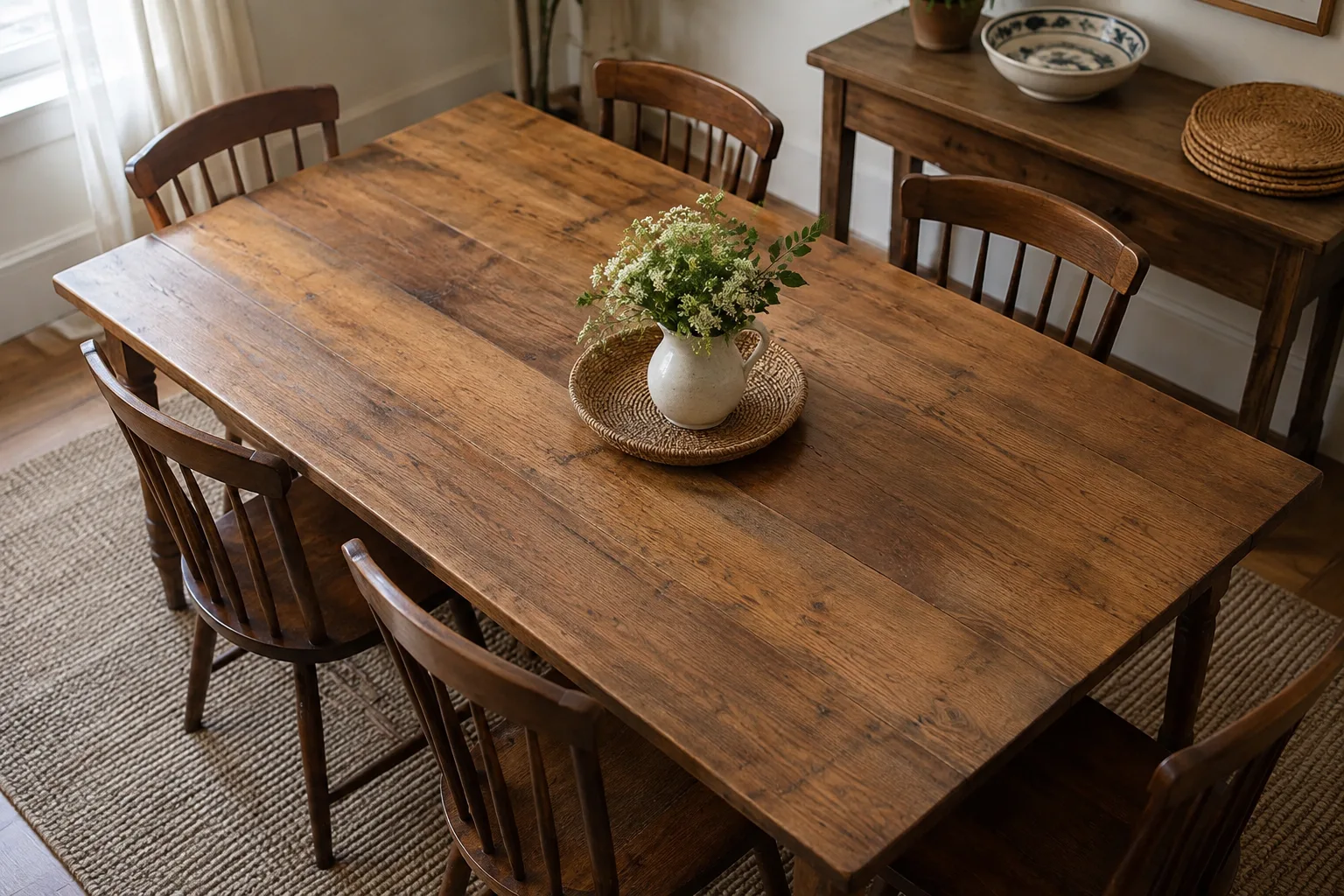
For an extension table, compare the main top and stored leaves in the arrangement you actually use. A darker leaf that appears only for an occasional dinner may be a variation you can happily accept. If the table will stay extended, the complete surface becomes the more relevant comparison.
For a sideboard with a lighter top and darker front, ask whether the real goal is a less abrupt contrast rather than an exact colour match. That distinction gives a restorer room to explain proportionate options. It also helps you reject a full strip-and-refinish proposal if it would remove much more surface than your aim requires.
Keep a proposed colour sample connected to the real piece and its existing material. Do not assume a sample on new wood predicts an old veneered cabinet. Ask how the work will be trialled, where a limited test is appropriate and what uncertainty remains before the whole surface changes.
Write the result, not just “remove fading”
A useful restoration brief
I want the table to work with its leaves fitted most days. The main top is lighter than the leaves, but I would prefer to retain the existing finish where possible. Please identify the surfaces, explain realistic options and expected colour differences, and state what material each option removes or replaces. Include future care and the limits of any sample.
That example is a decision brief, not a treatment recommendation. Let a qualified restorer examine the coating, veneer and earlier work before proposing a method. Ask for alternatives and their finished appearance, rather than requesting the strongest procedure that might make the colours uniform.
If you are still buying, compare the present piece at its full proposed cost with one whose colour already suits you. A good vintage surface can have age, repairs and variation. The right choice is the one whose appearance and future care you understand, rather than a promise that every sign of light exposure can be erased.