Start with the floor you have
A wooden floor is a large part of the room’s colour. A small sample on a screen can seem quiet; the same colour across twenty square metres can dominate. Look at an exposed area beside the place the new furniture will occupy, with rugs and movable objects out of the way.
Describe what you see in ordinary language: pale and sandy, medium and honey-coloured, reddish, or deep brown. Then notice whether the grain is calm or busy and whether the surface reflects a lot of light. Those observations are more useful for arranging a room than deciding every object must be oak.
Two pieces sold as walnut may differ because of finish, age and lighting. Conversely, different woods can sit comfortably together. Room & Board’s own room examples combine several woods and show light flooring and cabinets alongside darker walnut furniture. Treat that as a way to explore relationships, not a formula that requires another purchase.[1]
If you need to establish how the piece is made, use the separate wood, veneer and laminate Guide. Here, the decision is whether the visible surfaces work together in your room.
A light floor can carry a warmer sideboard
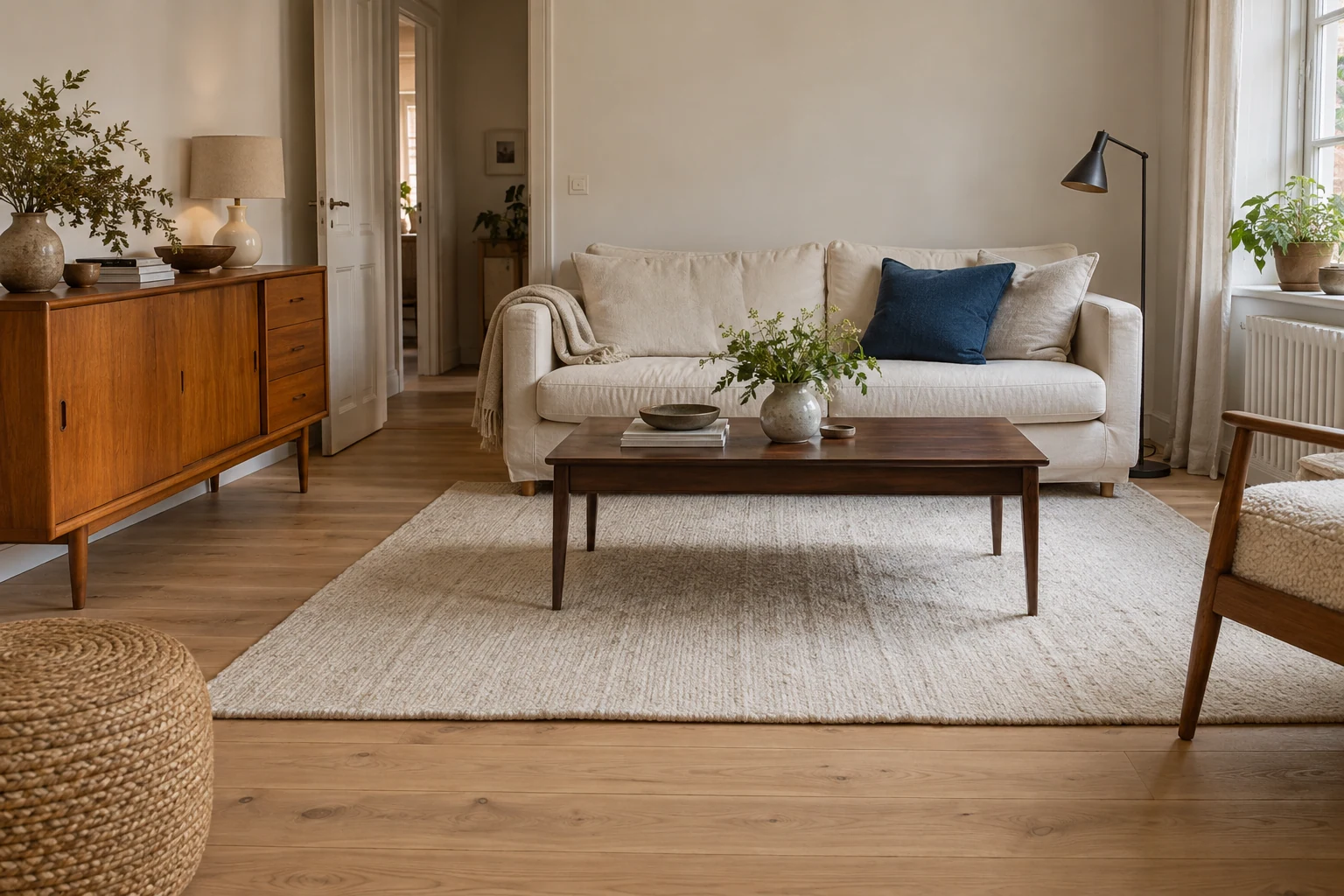
In the opening room, the pale floor supplies a quiet base. The honey-coloured cabinet brings warmth along the wall, while the darker coffee table gives the centre a more distinct shape. They are three different visual notes, rather than three attempts at the same brown.
The cream rug matters because the coffee table sits against fabric instead of directly against another wood grain. The sofa continues that lighter area. A small blue accent gives the room another colour to look at without adding a fourth timber finish.
Try this when your floor is light and you want a substantial teak-coloured sideboard. Keep the largest surrounding textiles relatively quiet at first. You can add colour later; buying several small wooden accessories to “tie it together” often creates more decisions than it solves.
On a dark floor, let the table stand forward
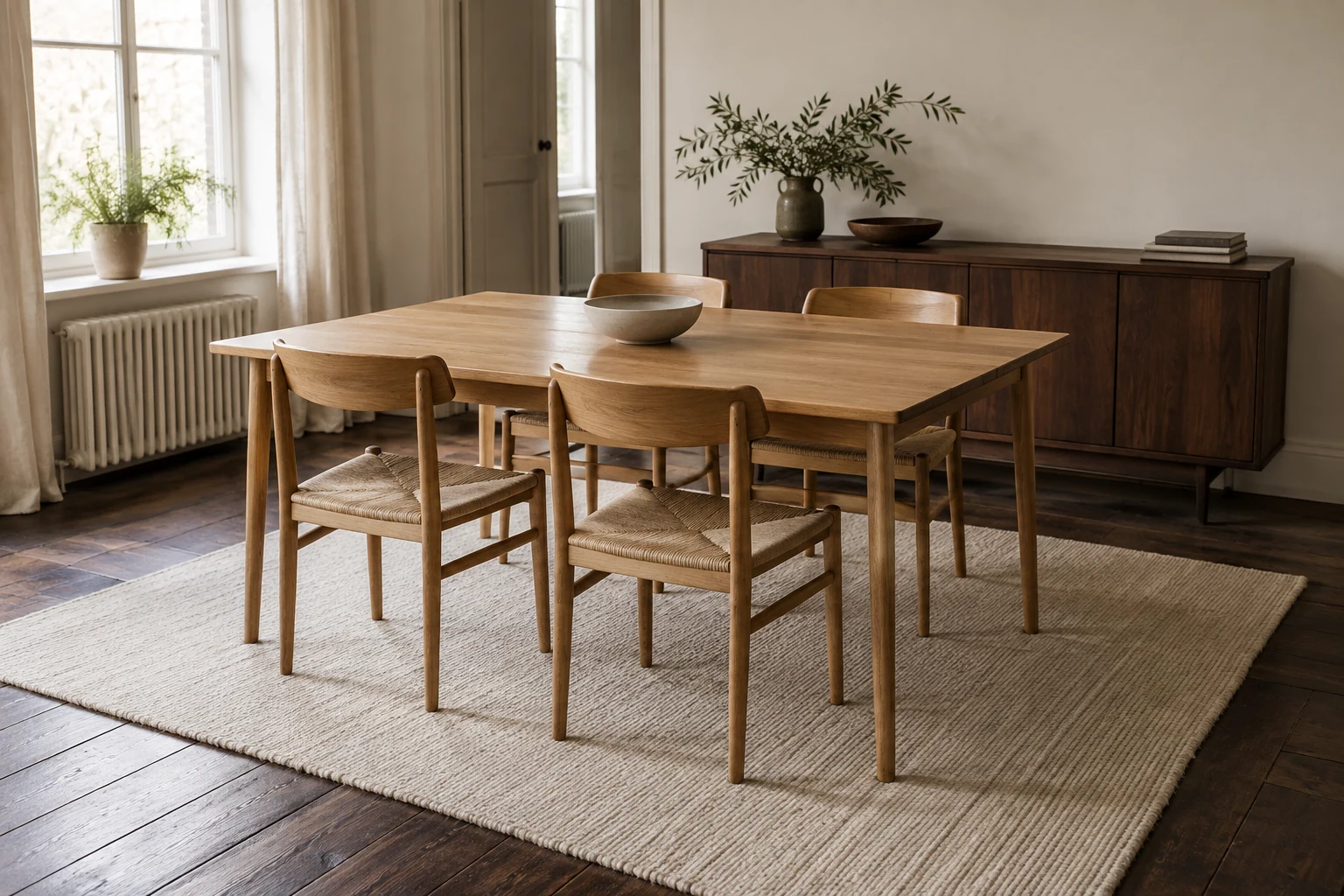
Dark floors can make a room with dark furniture feel visually full, especially when cabinet bases and table legs disappear into the same brown. A lighter table is one possible answer. A pale rug is another, particularly when you already own the darker table and want to keep it.
In this dining-room study, the light table and chairs occupy the centre. The dark cabinet stays because its silhouette is readable against the wall. The room does not need every piece to become pale.
Allow the rug to work as part of the dining arrangement as well as a colour choice. Use the dining-rug sizing Guide to check ordinary chair movement before buying one. A tiny pale rectangle under the table alone may look like a solution in a photograph and be awkward at dinner.
A reddish floor needs a considered neighbour
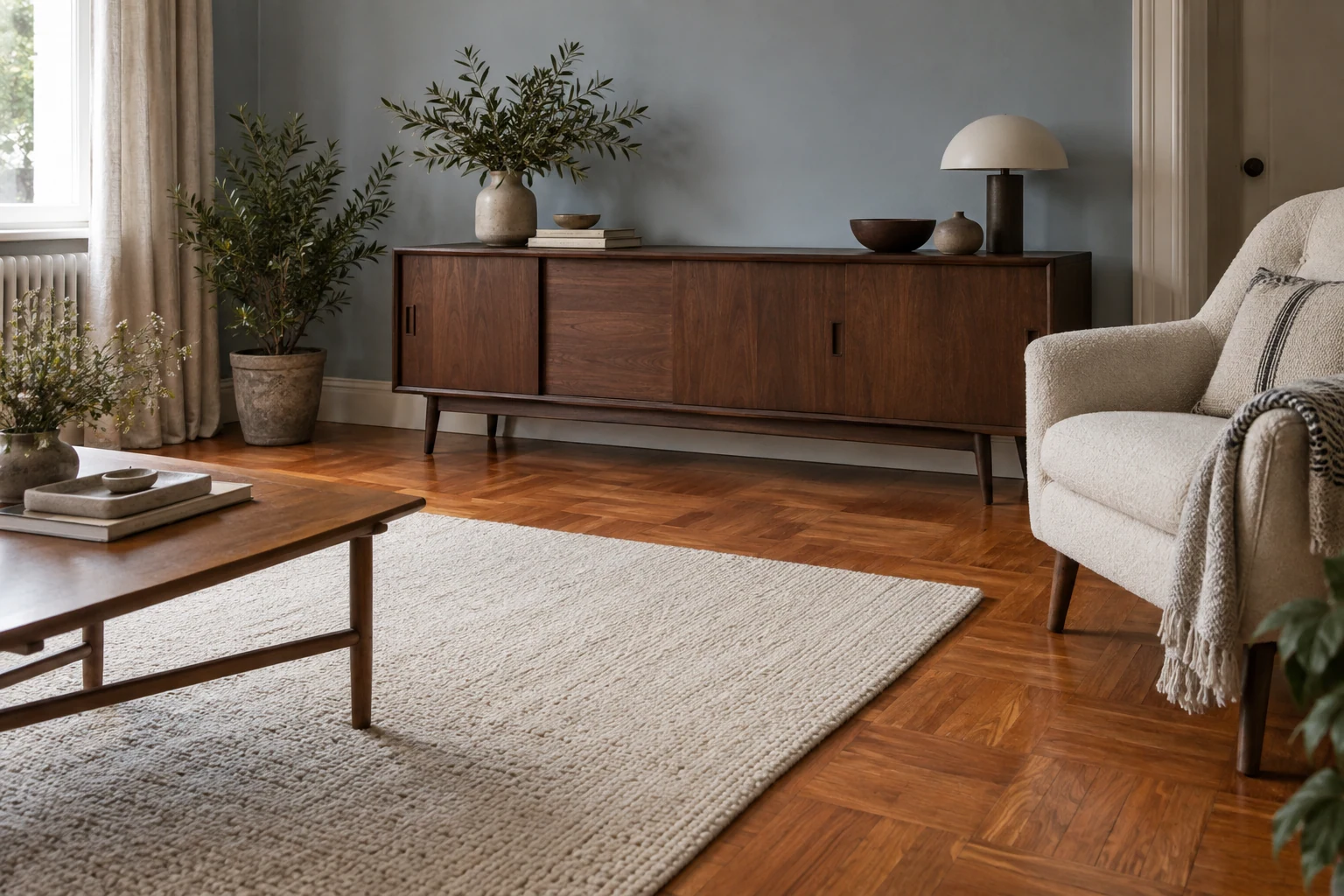
When the floor already has a strong red or orange cast, adding a similarly bright cabinet can amplify a colour you were hoping to soften. Before rejecting the cabinet, try changing what surrounds it. A muted blue-grey, green-grey or warm off-white wall gives you different starting points; test the actual paint rather than choosing by its name.
Here the darker cabinet sits against a cool, subdued wall. The rug and armchair make a broad light area, so the parquet is part of the room instead of its only strong statement. A cream wall could also work if a cooler paint feels wrong to you.
These are composition studies, not prescriptions for every home. Compare the relationship you like: clearer contrast, quieter warmth or more colour. The useful question is which combination you want to live with, not whether one wood is allowed beside another.
When the mix still feels busy
Look beyond brown. A glossy cabinet, strongly figured table, herringbone floor and striped upholstery may each be attractive while asking for attention at once. Leave one patterned surface in charge and simplify its immediate neighbours. A plain rug can calm the floor-to-table relationship; plain upholstery can give lively timber more space.
If two woods are almost the same colour but look slightly wrong together, try separating them. Move the small table away from the cabinet, put fabric between the table and floor, or choose a deliberately lighter or darker supporting piece. A near match is not something you have to repair.
Judge large areas first: floor, cabinet front, table top and sofa. A tiny handle or picture frame has much less influence. This keeps the task manageable and stops the room becoming a shopping list of coordinating details.
Check in your own light before buying
Keep a daylight photograph of the room and another taken under your normal evening lighting. Ask for an unfiltered photograph of the furniture and, when practical, compare the actual piece or a relevant physical finish sample. A sample supplied for a current finish will not reproduce the colour of a particular aged cabinet.
CCI’s photodocumentation guidance treats lighting, colour balance and camera settings as part of accurate image recording. For a buyer, that means a screen comparison is a useful first filter, not an exact colour match.[2]
- Place rug, paint and upholstery samples near the furniture’s intended position.
- View them from the doorway and your normal seat, in daylight and evening light.
- Cover a distracting sample or accessory and see whether the larger combination improves.
A short request to the seller
Could you send a whole view and a closer view of the top and front in neutral daylight, without a colour filter? Please tell me which areas have been refinished and whether the finish looks noticeably redder, yellower or darker in person. I am comparing it with the wooden floor I already have.
Change the surroundings first
A rug, lamp position or wall colour can be reconsidered. Stripping an old finish changes the object itself. Give the piece a fair trial in a quieter setting before deciding it needs to be paler, darker or less orange.
If a surface actually needs treatment, follow the wood-care Guide and identify its finish first. For a room that already works, the best next step may simply be to stop trying to make every brown identical.