Start with an address, not a chemical
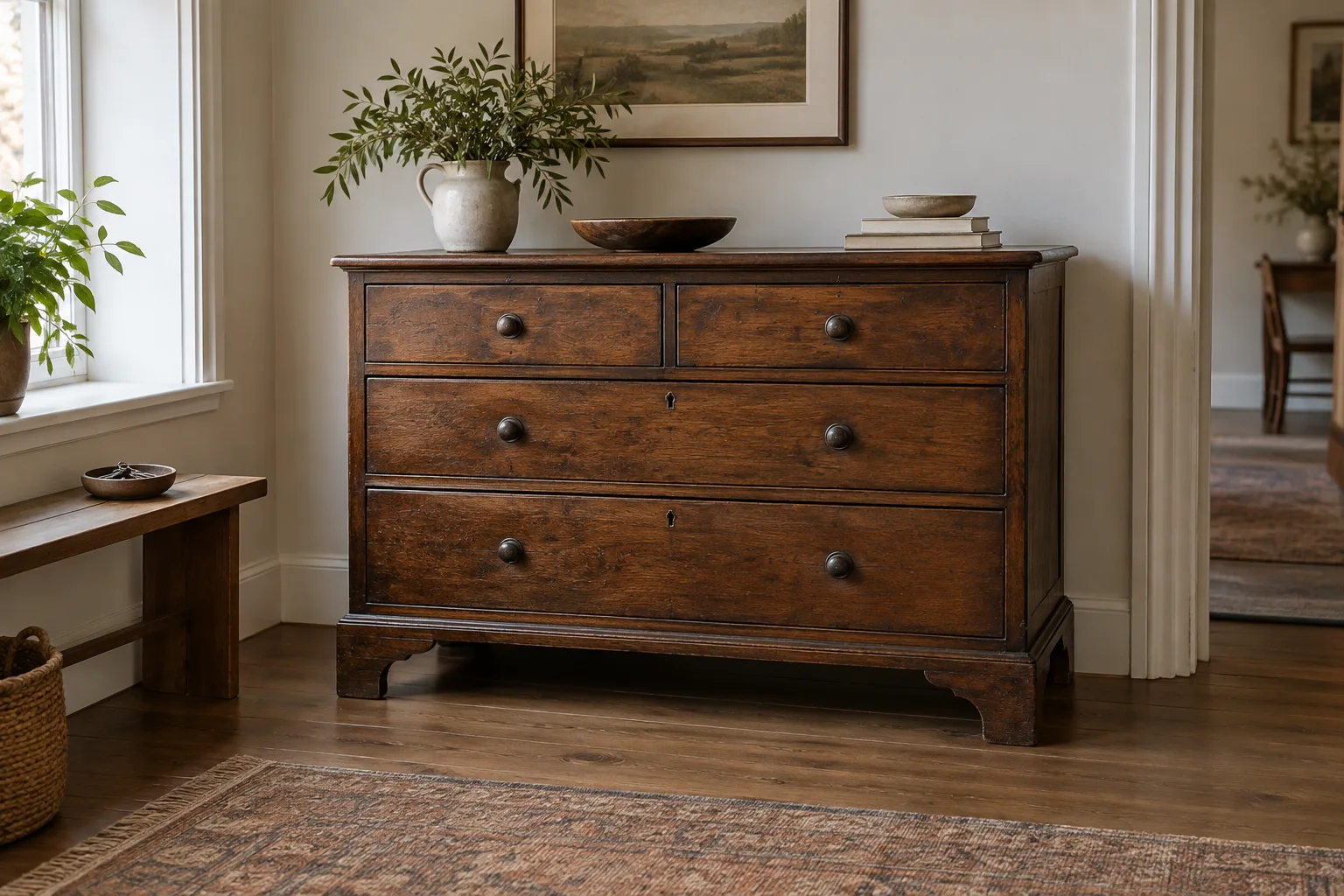
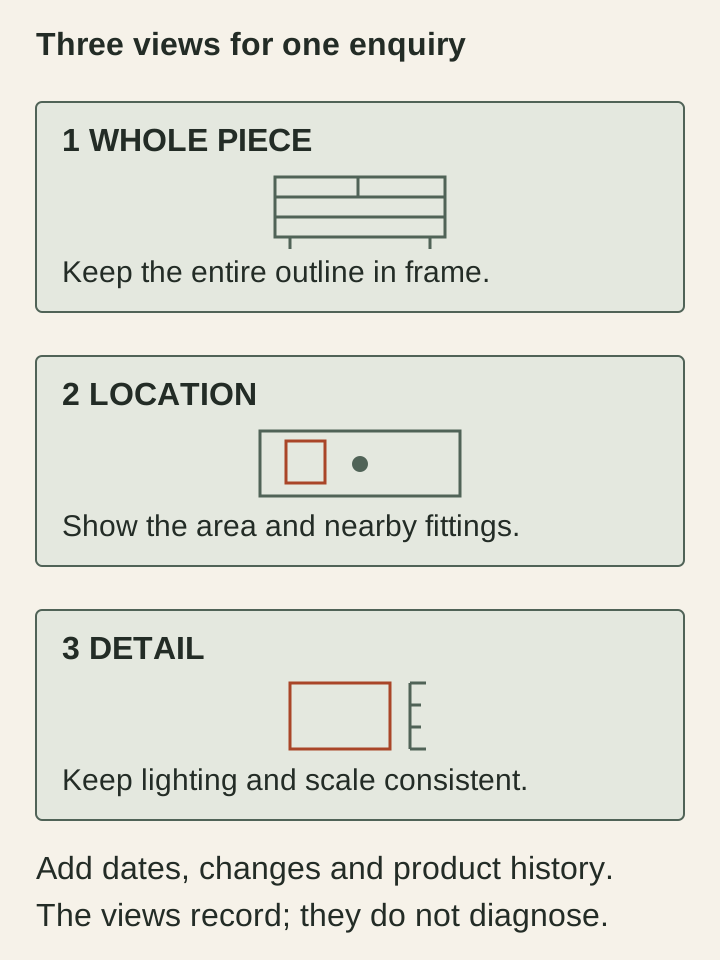
“Black spot on the top” is a weak enquiry. “Dark oval beside the rear-right corner, beneath a plant pot for several months” gives the next person somewhere to start. Photograph the complete piece, the area and a close view with a ruler beside it. Keep the same orientation in each image.
Record whether the mark crosses a joint, follows a metal fitting, lies under an object or appears in several unrelated places. Note raised edges, lifted veneer, loose finish and any change since you first saw it. Do not press into a softened area to prove that it is soft, and do not scrape a corner to see how deep the colour goes.
Several histories can end in dark colour
Osmo describes how iron-containing moisture can react with tannins in oak and cause darkening. That explains one possible mechanism, especially where a metal object or fastener and moisture are part of the history. It does not identify every black patch as an iron/tannin stain.[1]
| What you can describe | Useful next question |
|---|---|
| Darkening beside a metal fitting | Was there moisture, corrosion or a previous replacement? |
| An outline beneath a pot, mat or tray | What rested here, for how long, and was moisture trapped? |
| Dark material around handles or carved recesses | What cleaning, oiling or waxing has been applied? |
| A mark with lifting, softening or repeated dampness | Does the object need a material-condition assessment before cosmetic work? |
| A stable dark streak continuing through the visible figure | Could this be part of the material or intentional finish rather than a removable deposit? |
A seller may know exactly when a pot leaked, or may have inherited the piece with the mark already there. Keep that difference in the record. A confident story without a date, photograph or first-hand observation should not become your treatment specification.
Look beyond the darkest point
A stable colour difference and ongoing material damage lead to different decisions. If the area is becoming damp again, its surroundings are lifting or a musty smell is present, address that condition before choosing a cosmetic remedy. Do not identify mould, decay or its absence from colour alone.
Ask a conservator or suitably experienced furniture restorer to examine the affected area when its condition is uncertain. Tell them whether you need ordinary daily use, preservation of an old finish or a more uniform appearance. The answer may be to stabilise the surface while retaining some colour difference.
The rest of the object matters too. A top can be veneered even when the legs are solid. A locally repaired patch can respond differently from the surrounding finish. This is why an apparently successful test on a hidden leg does not authorise treatment of the tabletop.
Read the exclusions before the success story
Osmo’s Tannin Spot Remover is specified for untreated or oiled wood surfaces. That scope matters: a product intended for those surfaces is not a universal instruction for lacquered, painted, veneered or unidentified furniture. First establish whether its intended substrate and finish match the actual piece.[2]
CCI notes that old finishes can include earlier interventions and that oil applications can themselves darken and disfigure furniture. The finish is part of what needs to be understood, not simply an obstacle to be removed on the way to the wood.[3]
Do not combine bleach, abrasives, heat or solvent experiments because the first attempt seems slow. Each can change the surface and make the original problem harder to assess. If a professional proposes local colour reduction, ask what it can leave behind: a pale patch, a changed sheen or a wider area that also needs treatment.
Would you still enjoy the piece with the mark?
Try the decision in the actual room. A dark area near the back of a usable cabinet may stop dominating once the piece is at its normal viewing distance. You can accept that mark without pretending it proves desirable patina. Equally, a large contrast in the centre of your dining table may be something you do not want to live with.
Write the acceptable outcome plainly: retain the stable surface; reduce the contrast without stripping the whole top; or request a separate proposal for refinishing. Ask what is achievable rather than demanding an invisible result. If your purchase only makes sense after a guaranteed perfect removal, wait for the assessment before paying.
Message to a restorer
This [piece] has a dark mark at [location], first noticed [date/history]. I have attached whole, area and detail photographs and the known contact, moisture and product history. The surface shows [observations, not diagnosis]. Could you assess the affected layer, whether anything is still changing, and the likely result and limitations of retaining or treating it? Please keep local treatment and complete refinishing as separate proposals.
The useful outcome is a decision about this surface. It may be a treatment, a changed purchase price or permission to leave a stable mark alone.