Separate what happened from what you can see
A ring left after a cold glass and a cloudy patch noticed beneath a hot serving dish can look frustratingly similar in a listing. Start with the event if anyone witnessed it: the liquid or object involved, roughly when it happened, and what was applied afterwards. Keep “the seller says a cup caused it” separate from your own description of a pale circle.
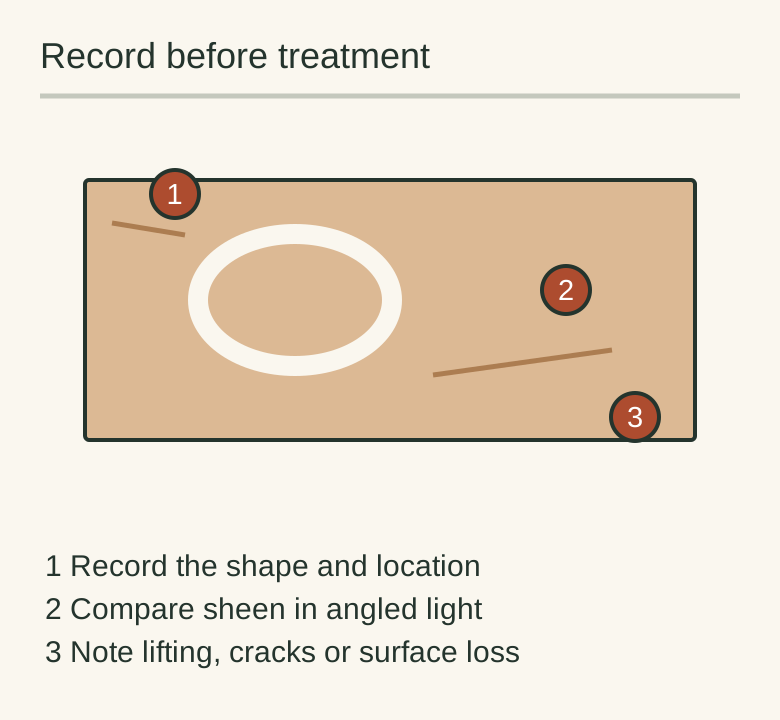
Use a full-top photograph to locate the mark, then a close view in ordinary light and another with light travelling across the surface. Include an edge or other fixed feature so you can find the same place again. Do not wet or polish the area to improve the photograph.
Colour does not identify the finish
CCI explains that old natural-resin coatings can be difficult to characterise and that repaired and original areas may react differently. Water can produce cloudy whitening on susceptible finishes. The same visible whitening can therefore occur on surfaces that need different treatment.[1]
Look for a change in texture as well as colour: a smooth cloudy area, raised edge, flake, blister, open crack or missing coating. If the surface is loose, sticky or lifting, stop touching it. A ring across a veneered top also needs checking for raised seams; improving the sheen would not repair a loose veneer.
What to do while the cause is uncertain
For a fresh spill on a sound surface, lift liquid with a clean absorbent cloth without rubbing it around, then leave the area free of objects. A fragile, powdering or lifting finish needs more cautious professional handling. Record the event and avoid repeatedly testing whether the mark has disappeared.
Keep hot dishes and wet containers off the piece. Choose an appropriate protective arrangement after the finish is understood; a flowerpot placed over the ring can introduce another source of moisture. For an existing dry mark, leaving it alone while you obtain advice is a useful action.
Before a treatment quote
- Photograph the whole topShow other repairs, colour changes and the relationship to edges or inlay.
- List previous attemptsInclude oils, polishes, cleaners and heat, even if they seemed ineffective.
- Describe your aimIs the goal a less visible mark, retention of the existing finish, or preparation for daily dining?
A small mark can mean a large intervention
A seller may say a ring will “polish out”. Ask who has examined it and what that phrase means. Cleaning, local retouching and refinishing a whole top are very different offers. A quick demonstration on an unseen corner cannot promise an even result on the marked area.
For example, a quiet pale ring on an otherwise coherent top might be acceptable to you exactly as it is. A freshly glossy patch that interrupts the whole surface could bother you more. Judge the piece from normal sitting and standing positions before deciding that visual perfection is necessary.
If you commission work, ask the conservator or restorer to explain the likely appearance, materials retained, risk of a visible boundary and what happens if the initial treatment does not work. Agree the point where further work requires your approval.
Buy the surface you can actually accept
Ask the seller
Please send an overall top view and two close views of the mark in different light. What caused it, if known, and what has been applied or tried? Has a furniture conservator examined it, and is any proposed treatment included in writing?
If the piece only appeals to you with an invisible repair, wait for an assessment and a realistic proposal. If you like it with the mark, keep that decision separate from speculation about how easily somebody might remove it later.