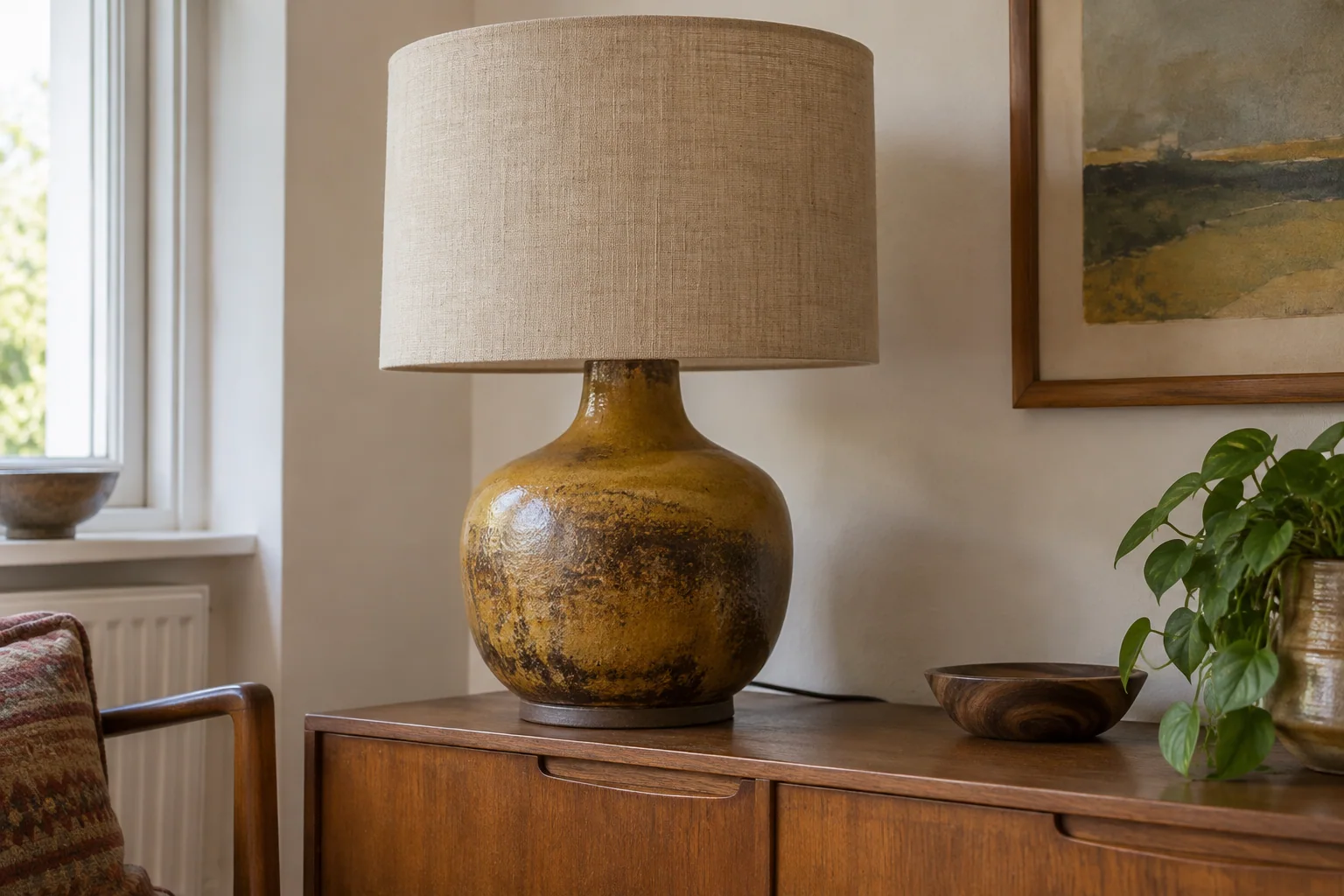
A ceramic attribution does not date the whole assembly
A dealer listing on Pamono describes a lamp mounted on a numbered terracotta base attributed to Scheurich, with a brass lamp support and no shade included. That is a useful example of a description separating the ceramic base, fittings and offer. It is a dealer’s attribution, not factory documentation for every similar pot.[1]
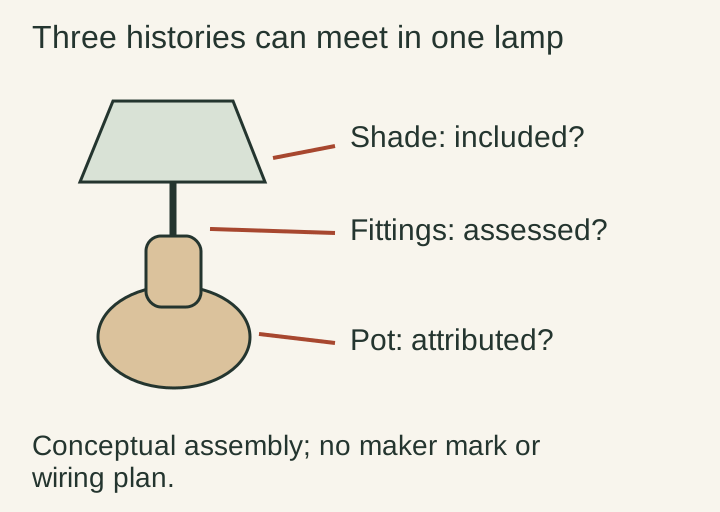
Ask for the complete base, underside and marks in place, along with the cable exit and the connection beneath the lampholder where safely visible. A form number can help research the pottery; it is not necessarily a lamp model number or a date. A textured brown glaze alone cannot establish a maker.
If the seller claims an original factory lamp, ask for a catalogue or other record showing the same assembly. If that cannot be supplied, a careful description might be “ceramic base attributed to Scheurich, lamp conversion date unconfirmed”. You can still like and buy it on those terms.
Inspect the pot where the fittings meet it
Look at the neck, base edge, handle attachments if present and areas around fittings. Ask whether there are cracks, filled chips, repaired breaks or later holes. Photograph a suspect area from both sides where visible, without undoing the assembly.
A fitting can cover the very area you need to understand. Ask whether an electrician or repairer has examined the concealed connection and what they found. Do not ask the seller to tighten a wobbly fitting by twisting against the ceramic or to dismantle it for an attribution photograph.
Keep condition language specific. “No chips” does not answer whether the neck is repaired; “working” says little about either the ceramic structure or the electrical assembly. Stable surface wear may be easy to accept, while a structural crack near a fitting changes the project.
Put the missing shade into the budget now
Confirm the shade’s inclusion, dimensions and attachment. Ask for the lamp photographed complete, with the shade’s upper and lower openings and its fitting shown separately where normally removable. The listed overall height may include a shade you are not receiving.
Tell a shade supplier the actual fitting, base height and width, and the role of the lamp. A tall sculptural base beside a sofa needs a different viewing check from a low bedside lamp. Try the silhouette from seated eye level so the bulb is not simply visible beneath a shade chosen from a front photograph.
Electrical Safety First advises using the correct bulb and avoiding damaged cables and fittings. For an old assembly with uncertain history, ask a qualified electrician to assess the complete lamp and specify suitable use. Do not treat a plug adaptor or a successful switch-on as that assessment.[2]
Compare two complete lamps, even when one starts as a base
Ask the seller
What evidence identifies the pottery, and what is known about the date of the lamp assembly? Please show the base, marks, cable exit and fitting area, describe cracks or repairs, confirm whether the shade is included, and provide details of any electrical inspection or work.
Add the confirmed shade, fittings, electrical service and transport to the asking price. If the maker remains uncertain, decide whether the pot itself is worth that complete cost. The colour and form can be the reason to buy; they need not carry a stronger history than the evidence allows.