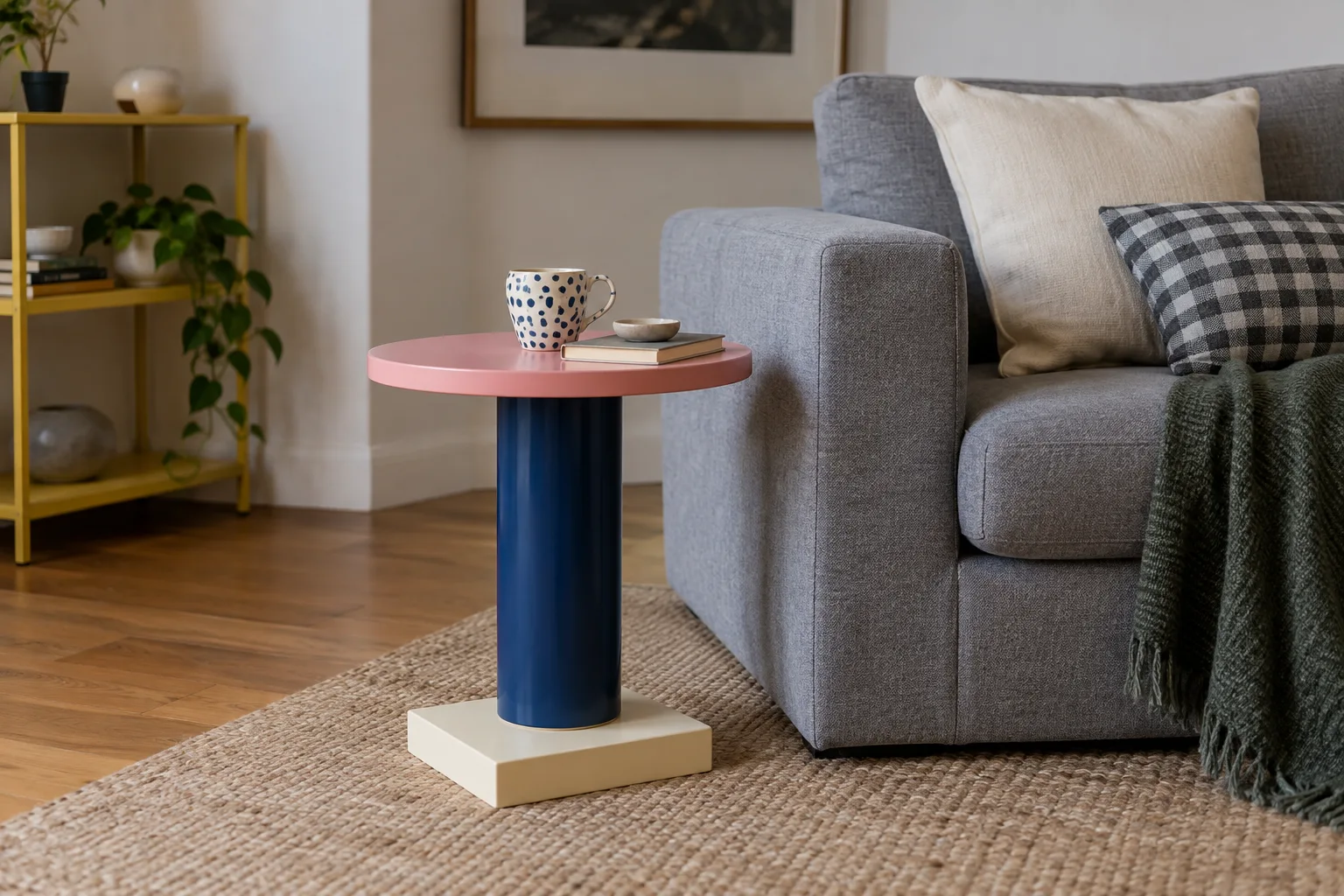
Three labels, three different purchases
A listing can use “postmodern” as a broad description of form and attitude. “Memphis-style” usually signals resemblance. A claim such as “Carlton by Ettore Sottsass, Memphis” names a particular design and asks for a much more specific comparison. Do not let those levels blur as you move from search results to the payment page.
| Listing claim | A useful basis for the purchase |
|---|---|
| Unattributed postmodern or Memphis-style piece | The actual form, material, dimensions, condition and price suit you. |
| A named design in a documented later edition | The producer, edition and components are supported; later manufacture is stated. |
| An early example of a named design | Evidence connects this physical piece to the claimed production period, not merely to the design year. |
You can like the first object as much as the third. The problem is paying for a documented identity while receiving only a resemblance. Ask the seller to state the strongest claim they can support and leave the rest qualified.
A worked example: Carlton is more than its colours
Memphis Milano’s current Carlton page identifies Ettore Sottsass, the design year 1981, a wooden bookcase covered in decorative laminate and dimensions of 190 cm wide, 40 cm deep and 196 cm high. It also describes documentation supplied with a current purchase. Those are reference facts for that product page, not authentication of a second-hand example.[1]
Suppose a listing calls a small colourful shelf a “1981 Carlton”. Begin with its complete dimensions and arrangement, then compare the named source. If the object is materially different, ask whether the seller means a different design, a later variation or simply an inspired piece. A label cannot explain away a conflicting whole object.
The historical Memphis furniture catalogue gives another kind of reference: named designs in a dated publication. Compare the exact entry and configuration, not just a page of colourful furniture. A design appearing in a 1984 catalogue does not prove that the offered example was made by 1984.[2]
Documents need to belong to this piece
Request photographs of any labels or marks in place, the whole object, joints, back and safely visible underside. Ask for invoices, production details and repair history that can be connected to it. An unrelated certificate or a photograph of a catalogue page supports less than it may appear to.
For a later authorised example, ask the producer or relevant specialist about the actual identification evidence. Do not assume today’s certificate wording or stamp arrangement existed throughout production. Equally, missing paperwork is not an automatic declaration that an object is fake; it may mean the seller cannot support the premium claim you are being asked to pay for.
Look closely where the surfaces meet
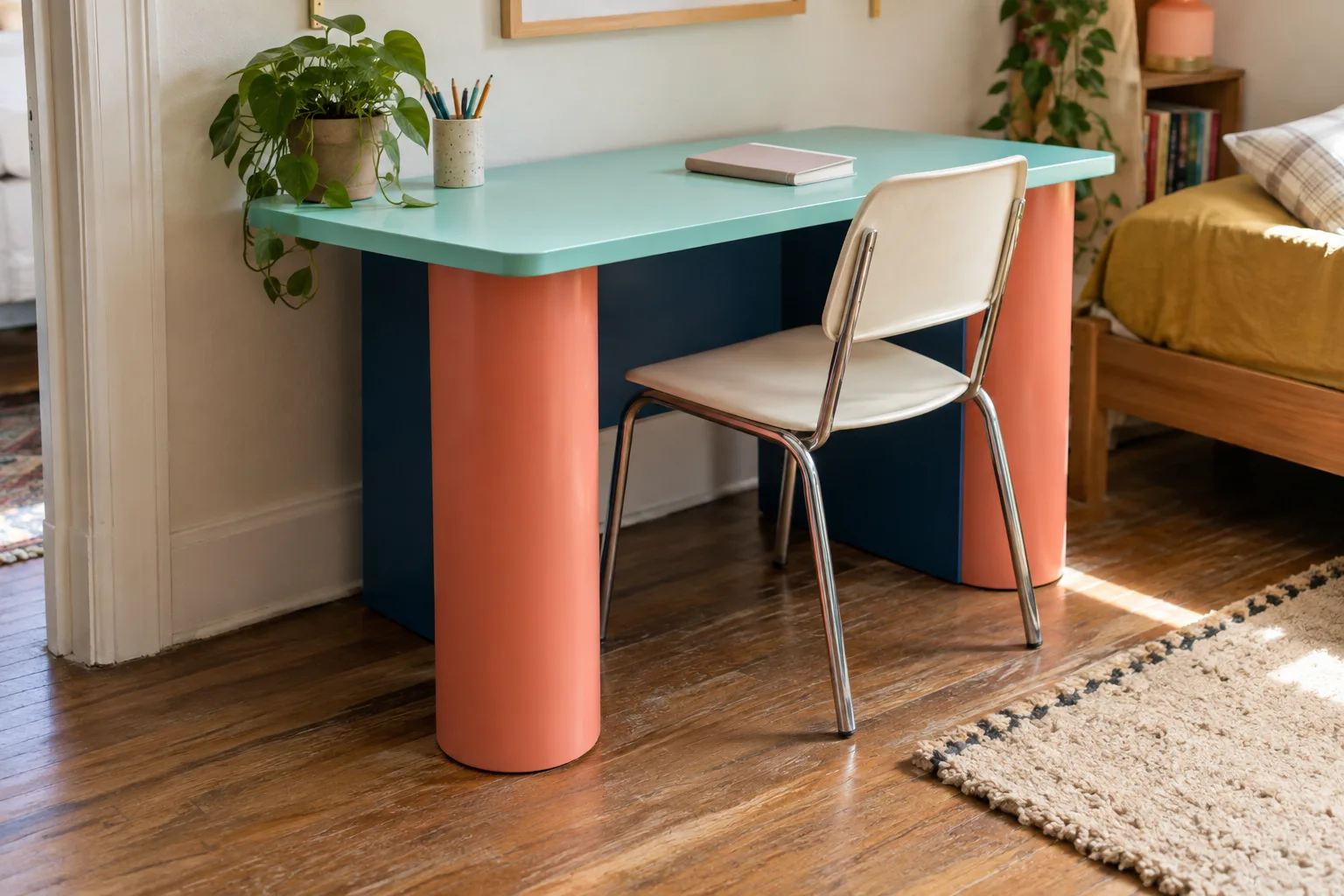
Inspect edges, corners, seams and the places where panels or supports join. Ask whether any laminate has lifted, chipped or been replaced, and whether the piece moves under ordinary use. A neat broad face can conceal a vulnerable edge or an added brace behind it.
A replacement in a nearly matching colour may become obvious beside the original surface. Ask how the repair was made and whether it changes the description. Do not treat all visible plastic-like surfaces as the same material, and do not propose painting or polishing before establishing the construction.
For a piece with repeated components, photograph all of them together. Confirm what is supplied and how the item is safely dismantled, if dismantling is actually intended. A visually simple object can still depend on a particular connector or sequence.
Will it hold your books, knees or morning coffee?
Measure the usable surfaces rather than the maximum outline alone. Sloping shelves, deep plinths and projecting supports may leave less working room than the external dimensions suggest. For a desk, sit with the intended chair if the condition allows; for storage, measure the objects it needs to hold.
Keep the delivery route in the calculation. A dramatic one-piece silhouette is not much use if it cannot enter the room, and you should not assume it comes apart because the shapes look modular. Ask the seller or maker about an accepted transport method.
Message to the seller
Which claim are you making for this piece: a named design and producer, a documented later edition, or an unattributed style? Please send full dimensions, the complete object, marks in context, component and repair photographs, and any records connected to this example. I also need usable measurements, a complete parts list and the safe transport or dismantling method.
Buy the colour because you enjoy it. Pay for a name or early production only when the evidence supports that additional claim.