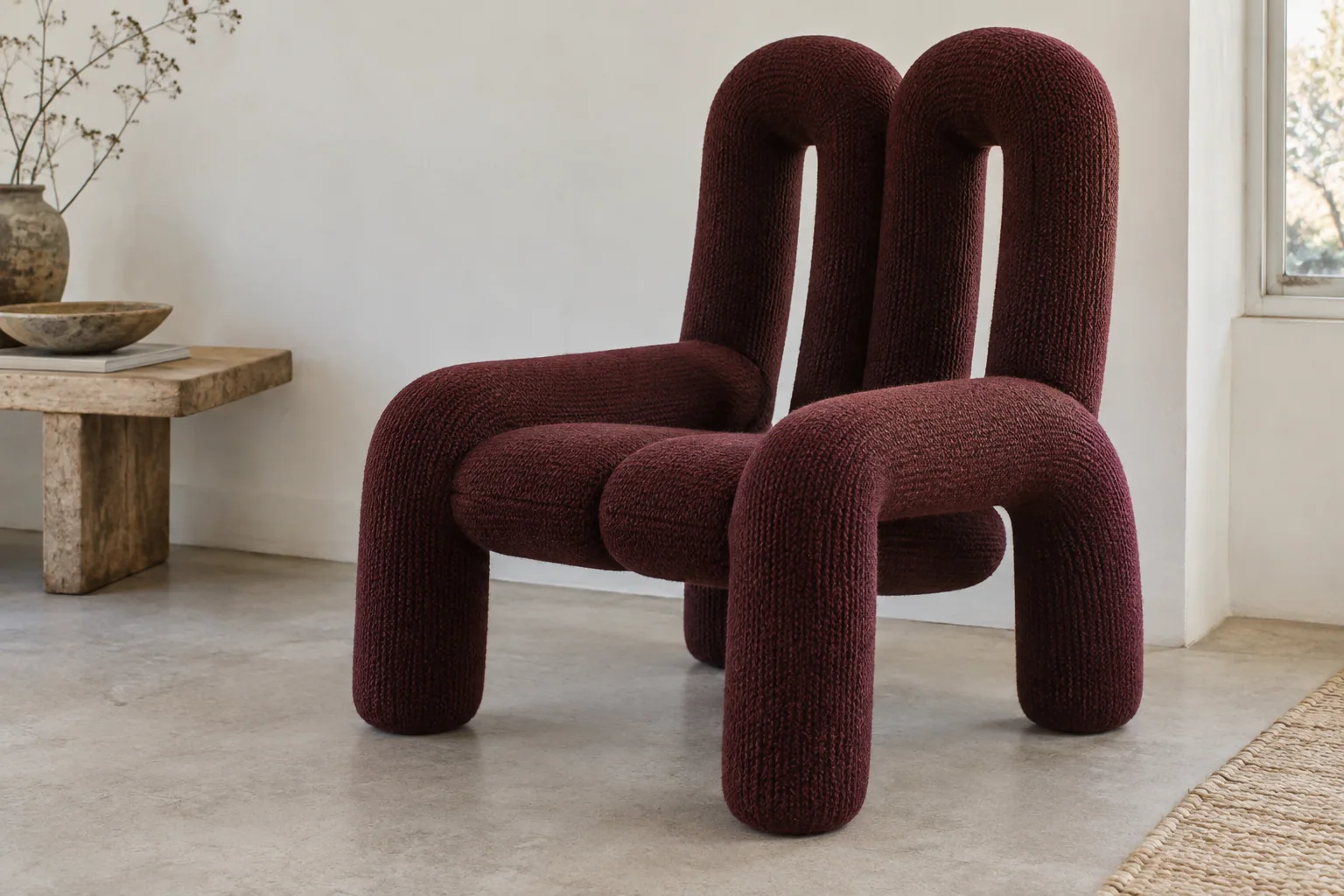
The upholstery helps make the sculpture
Varier identifies Ekstrem as Terje Ekstrøm’s 1984 design. The maker’s account of its construction describes a steel structure, foam formed around it and specially knitted covering. That is a much more particular task than putting a rectangular cushion inside a zipped case.[2]
Record the offered chair’s producer evidence and repair history. Ask whether the fabric is an older cover, a later supplied replacement or an upholsterer’s adaptation. A successful later restoration can be a good everyday purchase; an early-production claim needs evidence beyond the design year.
Photograph the whole front, back and sides in ordinary light. Notice whether corresponding curves have a similar fullness and whether any area looks flattened, angular or newly bulky. Those observations guide an inspection; they do not identify the hidden cause by themselves.
Ask which layer the quote actually renews
| Observation | Question for the repairer |
|---|---|
| Snag, worn patch or open seam | Can this covering be repaired, and how visible would the repair remain? |
| Flat or uneven profile | Does the foam need local work or a more extensive renewal? |
| Unexpected movement or distortion | Does the structure need assessment before upholstery proceeds? |
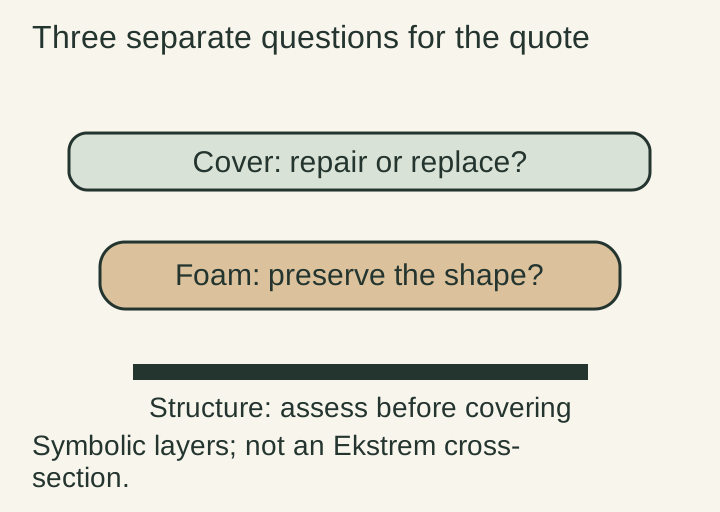
Ask the repairer to name their experience with this model and show a completed example of comparable scope. Establish whether the quote includes removing and refitting the cover, any new foam, correcting the shape, examination of the structure and transport. A supplier’s cover price alone is not a restoration quote.
Agree which contours, openings and seams the work should preserve. Covering the chair in a different textile may be an intentional adaptation, but ask how it will be fitted and what happens around the tight curves. Keep a written record of that change for any later sale.
Avoid ordering fabric first. A material you love may be unsuitable for the proposed method, or the repairer may need to settle the foam work before they can confirm the covering.
Try the position you will actually use
If the chair is sound, sit in it as you would at home: facing a person, reading, reaching a nearby table and standing up again. You need not use every playful sitting position shown in publicity. One position that feels good and works in your room is enough.
Mark the whole footprint, including the projecting upholstered curves. Look at the chair from the doorway and leave space around it so those curves do not constantly brush a wall or passing clothing. If it is mainly a sculptural extra seat, make that choice deliberately.
A useful enquiry
Please show the whole chair from each side, the most worn areas in context, and any label or repair record. Has the covering or foam been replaced? I would like an assessment separating cover work, foam shaping and any structural work, with the intended finished profile described.
Keep mild, stable wear when you enjoy it. Pause when the purchase only makes sense if an unfamiliar specialist job turns out to be cheap. The appeal of an Ekstrem lies partly in its shape; make that shape the promised outcome.