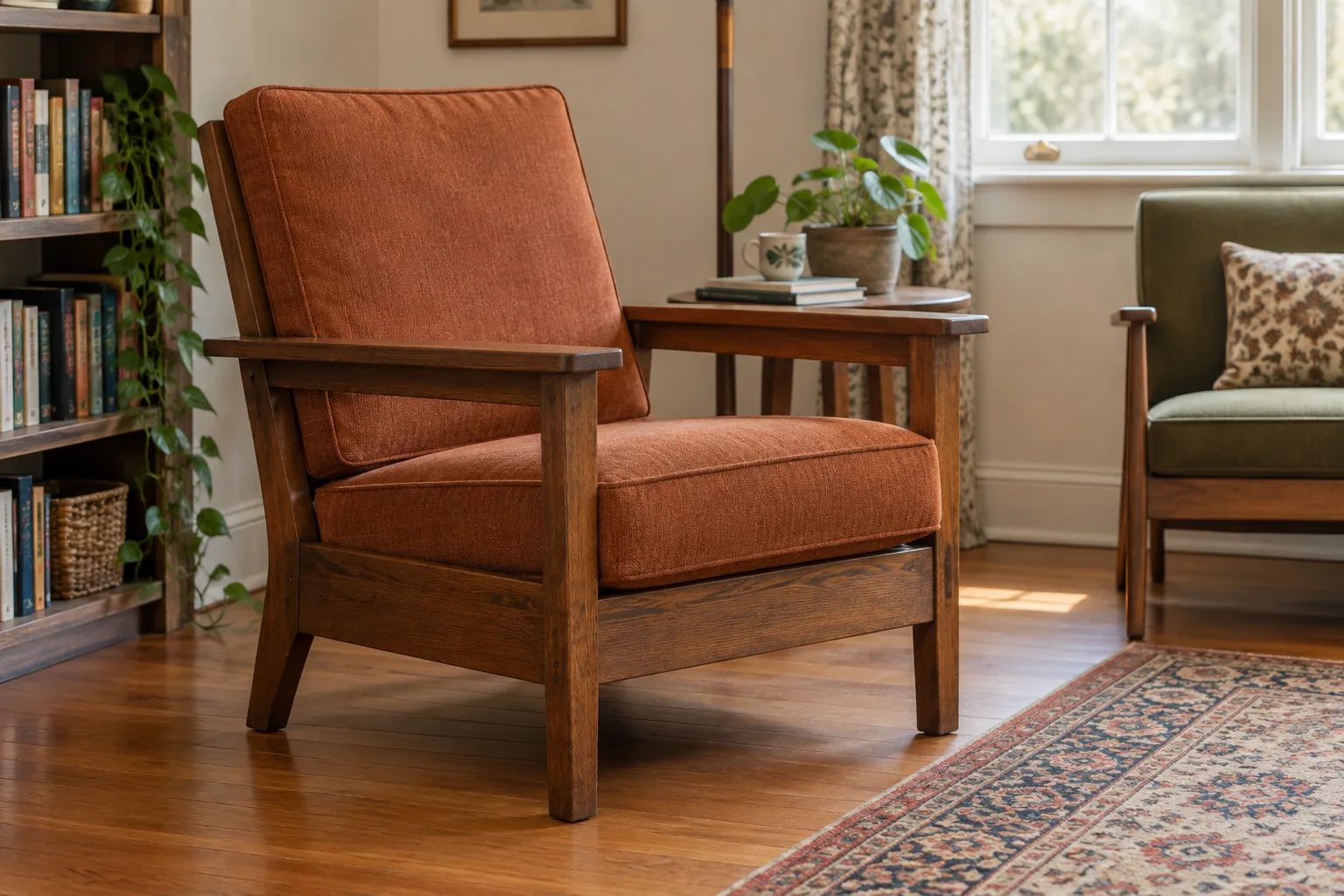
Start with the chair you leave without thinking
Some chairs are lovely to sink into and an effort to leave. Others let you stand for another cup of tea without planning the manoeuvre. Find one you already use comfortably and write down why it works: where your feet rest, whether you can reach the arms naturally and how far you settle into the cushion.
Compare like with like. Use the footwear you normally wear indoors and the same cushion arrangement. A chair that suits a tall visitor may feel entirely different to its owner. A catalogue’s “comfortable lounge chair” is a description of an intention, not a personal fitting.
East Sussex Healthcare’s chair-selection guidance considers height, depth, width, arms and the seat base together. It is written for people advised by a health professional about specialist seating. Its useful lesson here is to compare those features together; it does not turn one measurement into a prescription for every buyer.[1]
Choose the job as well. A chair for upright conversation, long reading or occasional reclining can call for a different sitting position. For this purchase, make easy everyday entry and exit an explicit requirement rather than a pleasant surprise after delivery.
Measure the seat you occupy
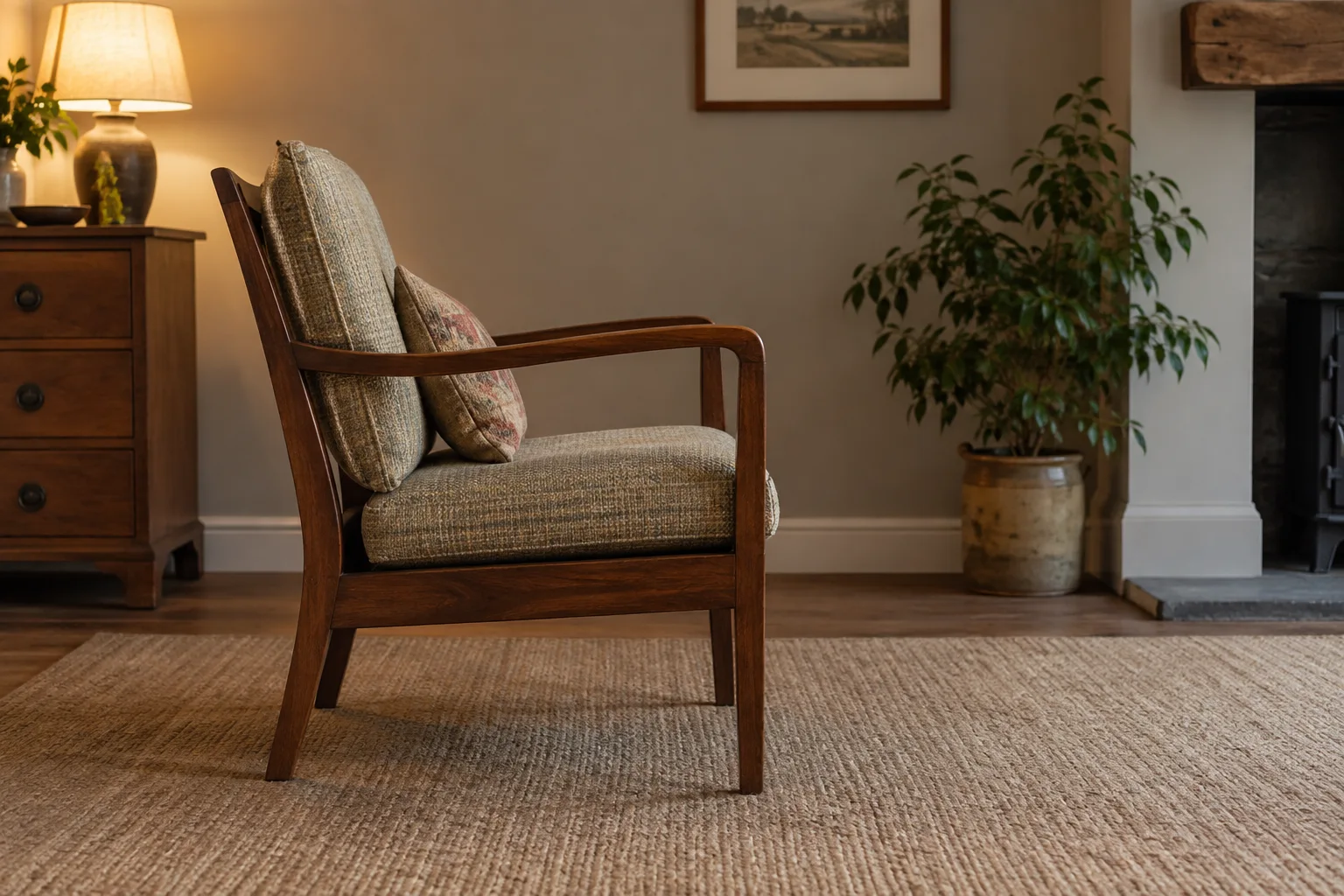
Ask for the height to the top of the seat cushion at the front, with the cushion in its normal position. Then observe what happens under ordinary sitting. A deep, soft cushion can lower the occupied position substantially even when two chairs have the same unoccupied height. A thicker replacement cushion can change the relationship with the arms and back.
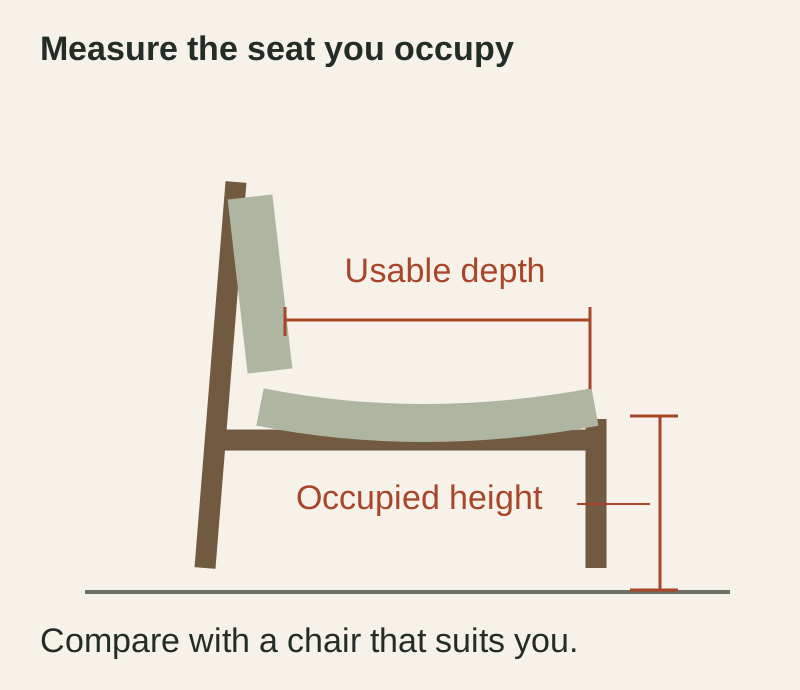
Measure usable depth from the front of the seat to the supporting face of the back or back cushion. Do not use the outside depth of the frame. During a trial, notice whether you can use the back support while keeping your feet comfortably on the floor, or whether you repeatedly slide forward to find a workable position.
Cambridge University Hospitals advises choosing seating around supported posture, feet and a comfortable arm position. Use those observations to describe your trial rather than trying to force yourself into a chair because its dimensions looked promising. There is no single vintage model that fits everyone.[2]
| Feature | Observe during normal use |
|---|---|
| Seat height and compression | Where you settle once the cushion is occupied. |
| Usable depth | Whether the back can support you without an awkward reach to the floor. |
| Arms | Whether you can rest or place your hands naturally without hunching. |
| Width | Whether you have usable space while still reaching the arms comfortably. |
Take these observations back to your familiar chair. The useful comparison might be “same frame height, much deeper sink” or “shallower seat, but the arms are too far apart”. That is a better shopping brief than simply searching for a high chair.
Try the real chair through ordinary movements
Ask to sit in the actual example, once its condition is suitable for normal use. Sit down, settle for a while and stand in your usual way. Do not bounce, strain or repeat an uncomfortable movement to prove a point. If you feel pain or unsteadiness, stop the trial and seek individual advice.
Notice the chair as an object too: movement in a joint, a loose arm, a shifting cushion or an uneven base needs attention. A shape that suits you cannot compensate for a frame that needs repair. Ask what has been done to the upholstery, support and legs, and have consequential uncertainty assessed before use.
If the chair has been reupholstered, the named model’s published seat height may no longer describe the offer. Ask whether the trial is before or after the proposed cushion work. Approving a new filling is partly a fitting decision, so discuss the intended occupied feel with the upholsterer rather than specifying thickness alone.
For an online purchase, request a side view, the relevant measurements and a description of the cushion and repairs. A seller’s demonstration can explain the piece, but another person getting up easily does not establish that you will. When this requirement is important, an in-person trial or a clearly agreed opportunity to return it has real value.
Do not buy a chair that depends on an unassessed fix
An extra cushion can change height, depth and the way you meet the arms at once. A loose cushion that moves is not an agreed solution. If a change is needed, ask a suitable professional to assess the complete chair and the person’s requirements before paying for it.
Kingston and Richmond NHS guidance treats chair raisers as assessed equipment and excludes use with unsuitable or damaged furniture. They are not a general repair for a low, weak or uneven vintage chair. If raisers or specialist seating are part of your needs, get an occupational therapist’s advice on that particular arrangement.[3]
A useful viewing request
I am looking for a chair I can use comfortably and get up from easily. Please give the normal seat height, usable depth, inside arm width and any cushion or frame changes. Can I try this exact example in its offered condition, and is any repair needed before normal use?
Sometimes the right answer is to admire a low lounge chair and choose another for daily sitting. That leaves plenty of appealing older armchairs to explore. Buy the one whose ordinary use feels right now, with any necessary work understood before it reaches your home.