Separate the dates inside one object
Furniture accumulates events. A form may be designed in one year, first produced later, manufactured for decades, sold after storage, reupholstered twice and refinished recently. Begin by writing the event you need to date and the component it covers. ‘Circa 1960’ is incomplete when it could refer to the model, the frame, the seller's estimate or a later fabric.
| Date event | Question | Evidence that may help |
|---|---|---|
| Design | When was this model, mechanism or ornamental design documented? | Drawing, archive, patent, registration, exhibition or catalogue |
| Manufacture | When was this physical frame or component made? | Production record, serial scheme, construction, dated material or object-linked document |
| Sale or distribution | When and through whom did the object enter a market? | Invoice, receipt, retailer catalogue, import or shipping record |
| Ownership | When can this exact object be placed with a person or place? | Dated photograph, inventory, correspondence or accession record |
| Alteration | When was upholstery, finish, hardware, base or another component changed? | Treatment invoice, repairer's note, materials, earlier image or component mark |
Dating rule
One object can responsibly carry several dates
Write ‘frame likely [range]; upholstery later; current finish date unresolved’ when that is what the evidence supports. Do not average component dates into one false year.
Record construction without relying on a dating trick
The V&A's furniture-making overview describes varied structural, shaping and decorative techniques, including changes in how makers cut, joined, bent, veneered and finished furniture. Such methods can constrain a date when they are correctly identified and historically documented, but no isolated joint or tool mark supplies a universal year.[1]
Build a component-level record
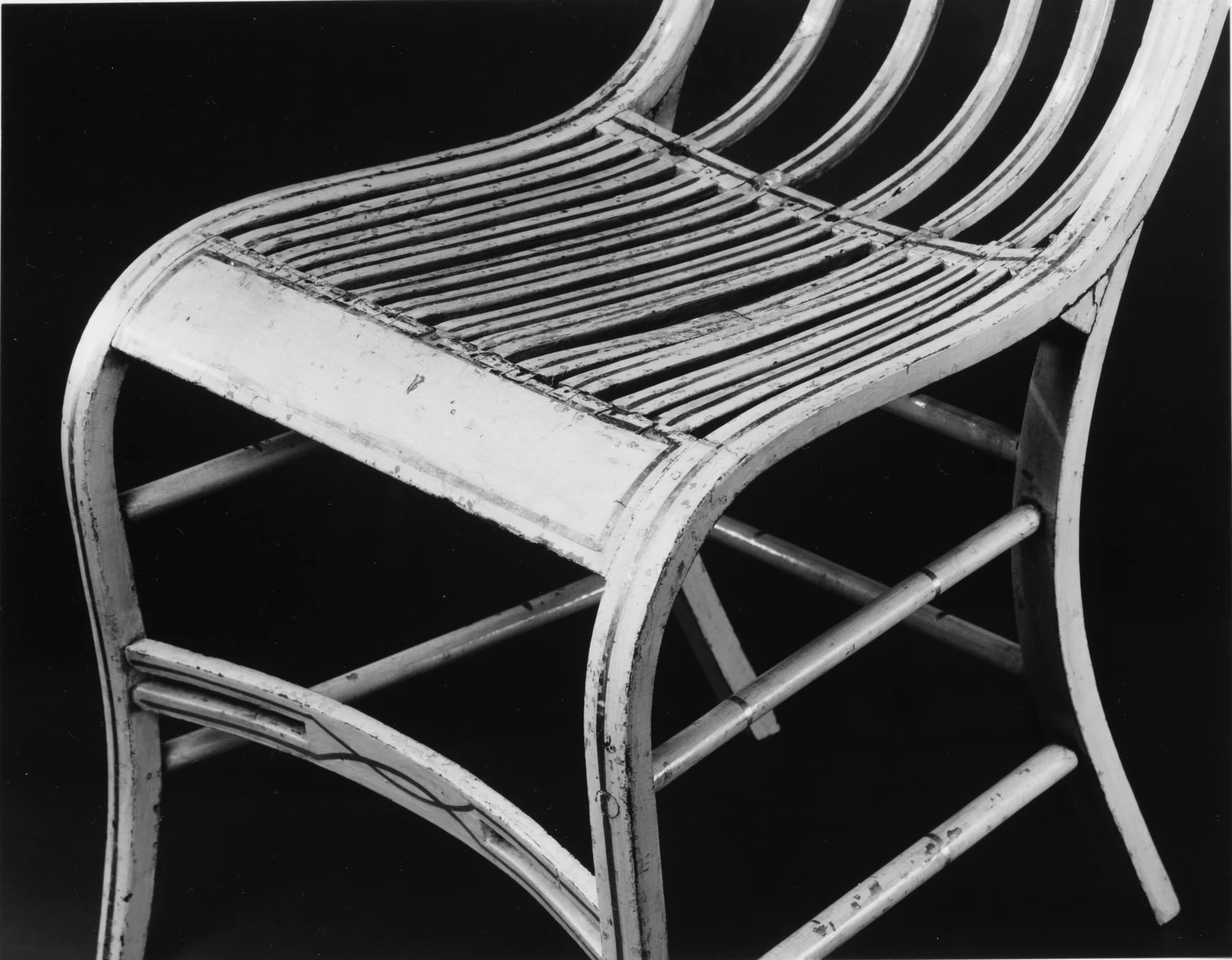
- StructureFrame, case, supports, load path, joinery and the sequence in which components appear to meet.
- HardwareHinges, locks, pulls, screws, nails, glides, casters, shelf supports and signs of moved or replaced fittings.
- MaterialsObserved substrate, veneer, metal, glass, plastic, textile, filling and coatings, with uncertain names kept qualified.
- Making evidenceSaw, plane, machine, moulding, lamination, casting and finishing evidence located on exact components.
- AlterationsFilled holes, different fasteners, cut-down elements, added rails, renewed upholstery, refinishing and repair.
Use whole, context and detail photographs and preserve marks with the marks and labels Guide. Do not scrape a finish, remove upholstery, take a sample or dismantle the object to expose a supposed dating clue.
Build earliest and latest plausible bounds
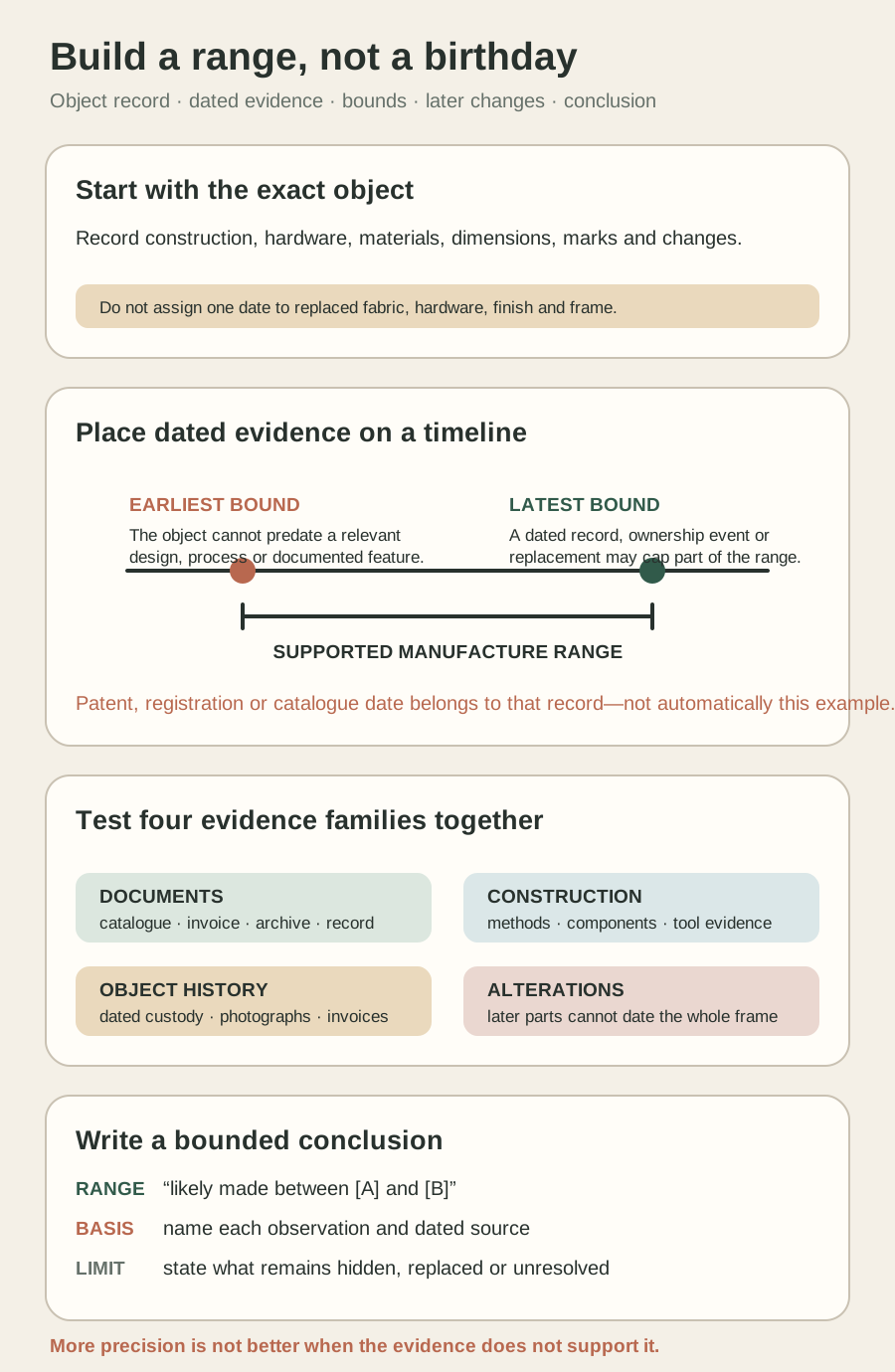
An earliest bound is the first date after which the named object or component could have been made. A documented design, production technique, company name, standard or material may help establish it. A latest bound comes from evidence showing that the exact object or component already existed by a particular date, such as an object-linked invoice, inventory or photograph. Each bound must be tied to a source and to the component it actually covers.
| Evidence | Possible dating use | Limit |
|---|---|---|
| First documented model appearance | The example cannot predate the documented design in its matched form | It may have been made much later |
| Company or label wording | May constrain trading period, market or distribution | Label can be later, reused, replaced or misunderstood |
| Dated invoice linked to the object | The object likely existed by the transaction date | Invoice identity and later component changes still need checking |
| Dated family or interior photograph | The visible object or component existed by that image date | Image date, object match and hidden details may remain uncertain |
| Later replacement hardware | Dates that hardware or repair no earlier than its own evidence | Does not necessarily date the original frame |
Range boundary
A clue should move one edge of the range
If a dated fact cannot explain whether it changes the earliest bound, the latest bound or only a later component, it is not yet functioning as dating evidence.
Use catalogues and archives as dated records
The Library of Congress trade-catalogue guide identifies uses including dates of design or manufacture, original price, materials and specifications, and notes that several search strategies may be necessary. Match the exact page, publication and model fields to the object rather than dating furniture from a detached catalogue image.[2]
Smithsonian Libraries and Archives explains that historical trade catalogues are used to investigate manufacturers and intended uses and to establish manufacture dates. In buyer research, a dated catalogue is strongest when the object matches the documented dimensions, component structure and variant—not merely the outline.[3]
Keep the document context
- Publisher and editionRecord the company, retailer, archive or institution and the exact catalogue or record edition.
- Document dateDistinguish publication, filing, issue, printing, sale and later digitisation dates.
- Page and identifierKeep page, model, stock, patent, registration or archive numbers with the image.
- Matched fieldsList dimensions, materials, components, mechanism, mark and variant fields that agree.
- Conflicts and silenceRecord differences and important fields the document does not describe.
Read patents and registered designs carefully
The UK National Archives guide to registered designs explains that records can identify a proprietor, registration date and design number, while also noting that registration was not compulsory. A registration can therefore document one design event; the absence of a record does not prove that an object was not made, and the registration date is not the manufacture date of every example.[4]
The USPTO's design-patent guidance defines a design patent around the visual ornamental characteristics embodied in or applied to an article. Treat that legal record as evidence for the claimed design and its dates, not as a production ledger for a furniture object.[5]
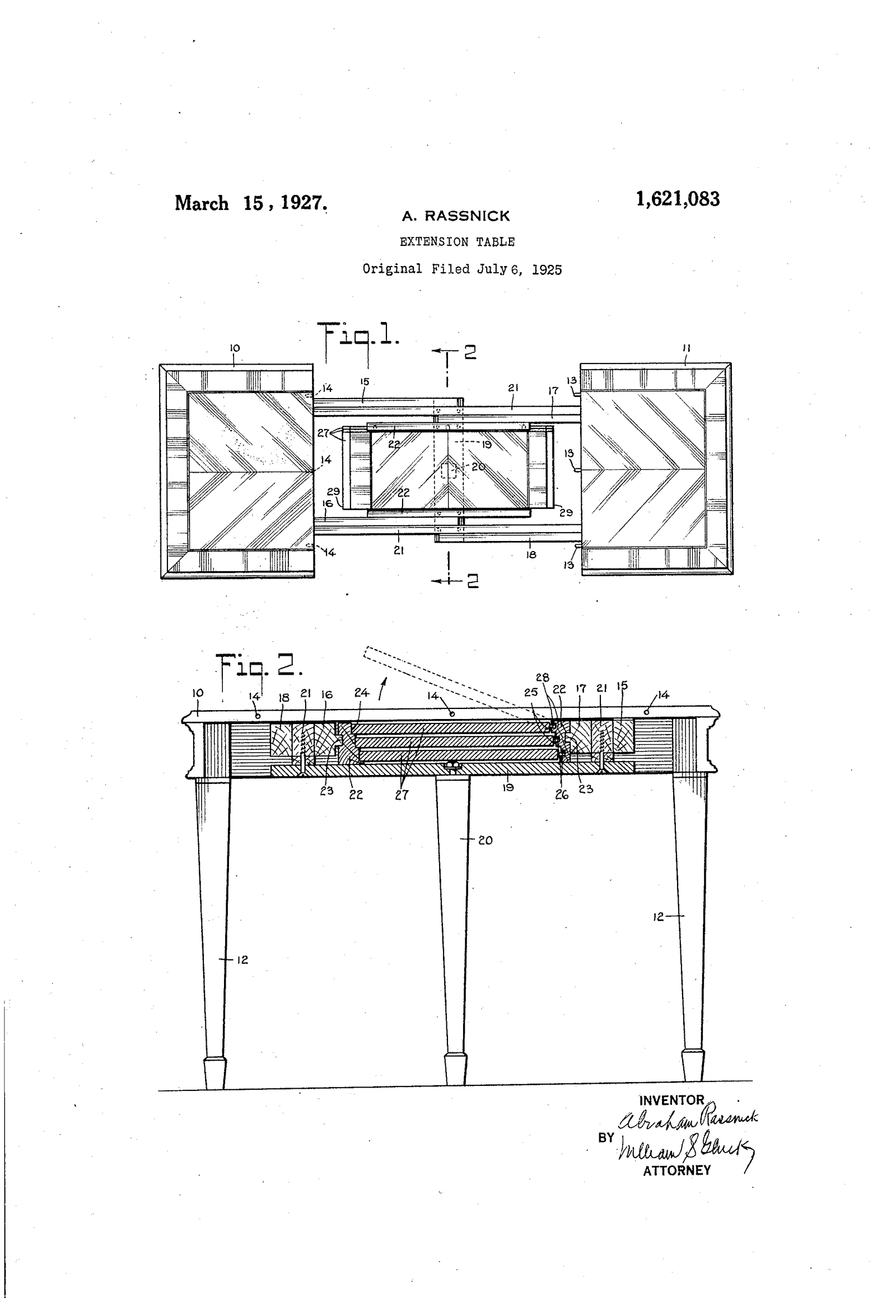
U.S. patent 1,621,083, issued in 1927, documents one extension-table mechanism and its inventor's claimed arrangement. It can date that patent record and support comparison with its drawings. It cannot show that another table was made in 1927, that it was made by the patent holder, or that its parts remain original.[6]
Document boundary
Design date, publication date and object date are different
Write the exact event: ‘design registered on’, ‘patent issued on’, ‘catalogue published by’ or ‘invoice dated’. Only then explain how it constrains manufacture of the named component.
Map the date range
| Conclusion field | Record | Example structure |
|---|---|---|
| Object or component | The exact frame, shell, base, finish, fabric, hardware or repair being dated | ‘Main cabinet carcass’ |
| Supported range | Earliest and latest years the evidence can carry | ‘Likely made between [A] and [B]’ |
| Evidence | Observed fields and dated records that set each bound | ‘Model page dated [A]; object-linked image dated [B]’ |
| Alterations | Components known or suspected to be later | ‘Pulls and finish later; dates unresolved’ |
| Confidence and limit | What was inaccessible, ambiguous or not independently linked | ‘Provisional pending underside and label context’ |
Request the dating evidence and decide
Message to copy
Ask what the date applies to
Hello—you date this piece as [claimed date or range]. Does that refer to the design, this manufactured frame, the sale, finish, upholstery, hardware or another component? Could you say which observation or dated document sets the range and send its complete publisher, date, page, model or record context? Please also send whole, rear, safely visible base, construction, hardware, mark, repair and replacement photographs with dimensions, and mark inaccessible areas and unknowns. Please do not dismantle, scrape, remove upholstery or alter the piece for my request. Thank you.
| Decision | Appropriate when | Record |
|---|---|---|
| Accept the range | Independent evidence coherently sets both bounds for the named component | Range, basis, alterations, confidence and limits |
| Keep the date provisional | One useful boundary exists but the other or the object connection remains uncertain | Supported edge, unresolved edge and next useful source |
| Specialist before purchase | Consequential construction, material or component questions require examination | Named dating question, evidence packet, access and written limits |
| Ignore the date premium or decline | The price depends on precision the evidence cannot support | Fallback object and the unsupported premium |
Keep the seller's exact wording with the listing-claims Guide and use comparable prices from the same evidence level. A broad supported range is useful; an unsupported exact year is not added value.