Define what MCM means in this claim
The V&A frames its Mid-Century Modern design teaching around diverse European and American work from approximately 1940 to 1965. MoMA's account of ‘Good Design’ traces a related modern design conversation from the 1930s through the post-war period. These are useful historical frames, not a universal authentication window for every country or object.[1]
MoMA's ‘What Was Good Design?’ exhibition describes the museum's evolving design message between 1944 and 1956 and places celebrated furniture beside useful everyday objects. That context is a reminder that mid-century modernism concerned production, function and public ideas of good design as well as a recognisable look.[2]
MoMA's later ‘The Value of Good Design’ exhibition revisited design initiatives from the late 1930s through the 1950s, including the aim of making well-designed contemporary products available to a broad public. Use this as period context for function, manufacture and market—not as a checklist that identifies an object.[3]
| Possible use of MCM | Question to ask | Responsible wording |
|---|---|---|
| Historical period | What region and date range does the seller mean, and what dates this example? | ‘Claimed as a [place/date] period piece’ |
| Design tradition | Which modernist ideas, functions and production choices are present? | ‘Consistent with [named] mid-century modern design context’ |
| Contemporary style label | Is this later furniture using selected MCM visual cues? | ‘Later MCM-inspired furniture’ |
Definition boundary
A date bracket is context, not a stamp
Do not reject or authenticate an object because one remembered year sits inside or outside a retail-style definition. Establish the relevant place, institution, maker or design history first.
Record the complete form before searching for icons
Describe the object without MCM vocabulary first. Record overall and component dimensions, stance, profile, massing, open and closed states, intended use, interior organisation, structure, materials, hardware, edge treatment and repairs. Photograph the rear and base as carefully as the front. A cropped view can make unrelated furniture share the same outline; the complete construction often separates them.
Follow the neutral-record method in How to identify vintage furniture. Use the material construction Guide before calling a dark surface teak, rosewood or walnut, and keep every material name qualified until the evidence supports it.
Capture the style evidence
- Whole silhouetteHeight-to-width relationship, visual weight, stance, voids and how the object meets the floor.
- FunctionHow seating supports a body, storage opens, a table extends or a modular system changes.
- Component logicWhether shell, top, case, frame, base, handles and fittings appear conceived as one system.
- Production evidenceMoulding, bending, lamination, casting, machining, hand finishing and the relationship between repeated and fitted parts.
- ContradictionsDetails that belong to a different period, region, component generation or later alteration.
Look for a coherent cluster, not a single sign
| Evidence family | Questions to ask | Weak shortcut |
|---|---|---|
| Proportion and stance | Does the complete object express lightness, solidity, horizontality, sculptural mass or another deliberate relationship? | All low furniture is MCM |
| Function | How are comfort, storage, movement, assembly or compact living resolved? | Simple appearance proves functional modernism |
| Materials | How do timber, veneer, plywood, plastic, metal, glass, textile or foam work together? | One fashionable species or material proves period |
| Production | Which elements appear industrially repeated, workshop fitted, hand finished or structurally experimental? | Machine-made means modern; handmade means earlier |
| Detail | Do edges, legs, pulls, joints and upholstery support the same design logic? | Tapered legs equal MCM |
| Documentary context | Can the complete form be placed in a dated catalogue, archive, exhibition or producer history? | Many similar listings prove the identity |
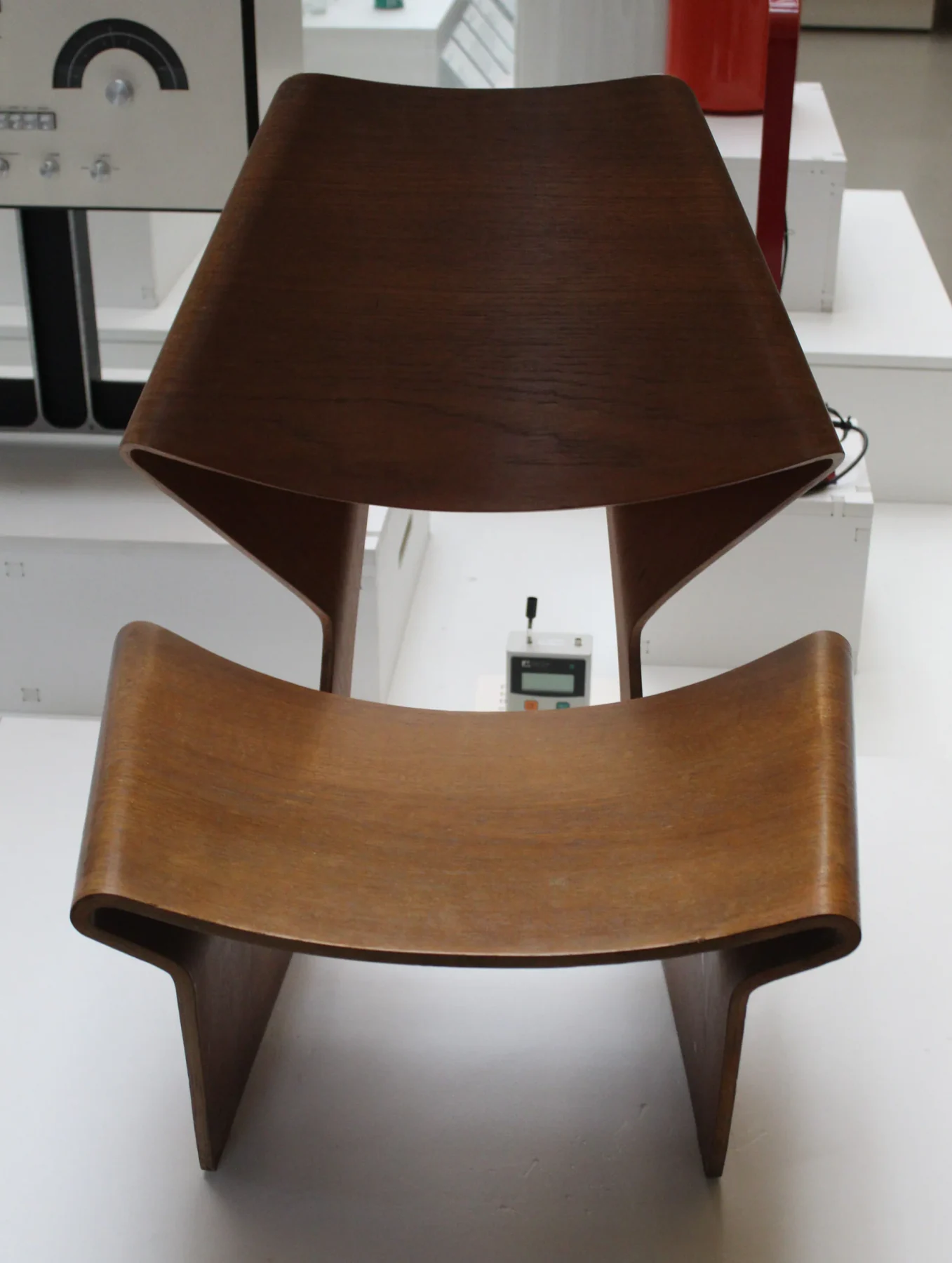
The cluster does not need to look identical across countries or materials. A Danish cabinet, an American moulded chair and an Italian lighting design may respond differently to the same period's questions. Name the specific design context you can support rather than treating ‘MCM’ as one borderless silhouette.
Style boundary
Mixed evidence is not automatically a fake
Long production, later upholstery, replacement feet, regional manufacture and revival design can create mixed records. Identify which component carries which evidence before deciding what the mixture means.
Separate model history from this example
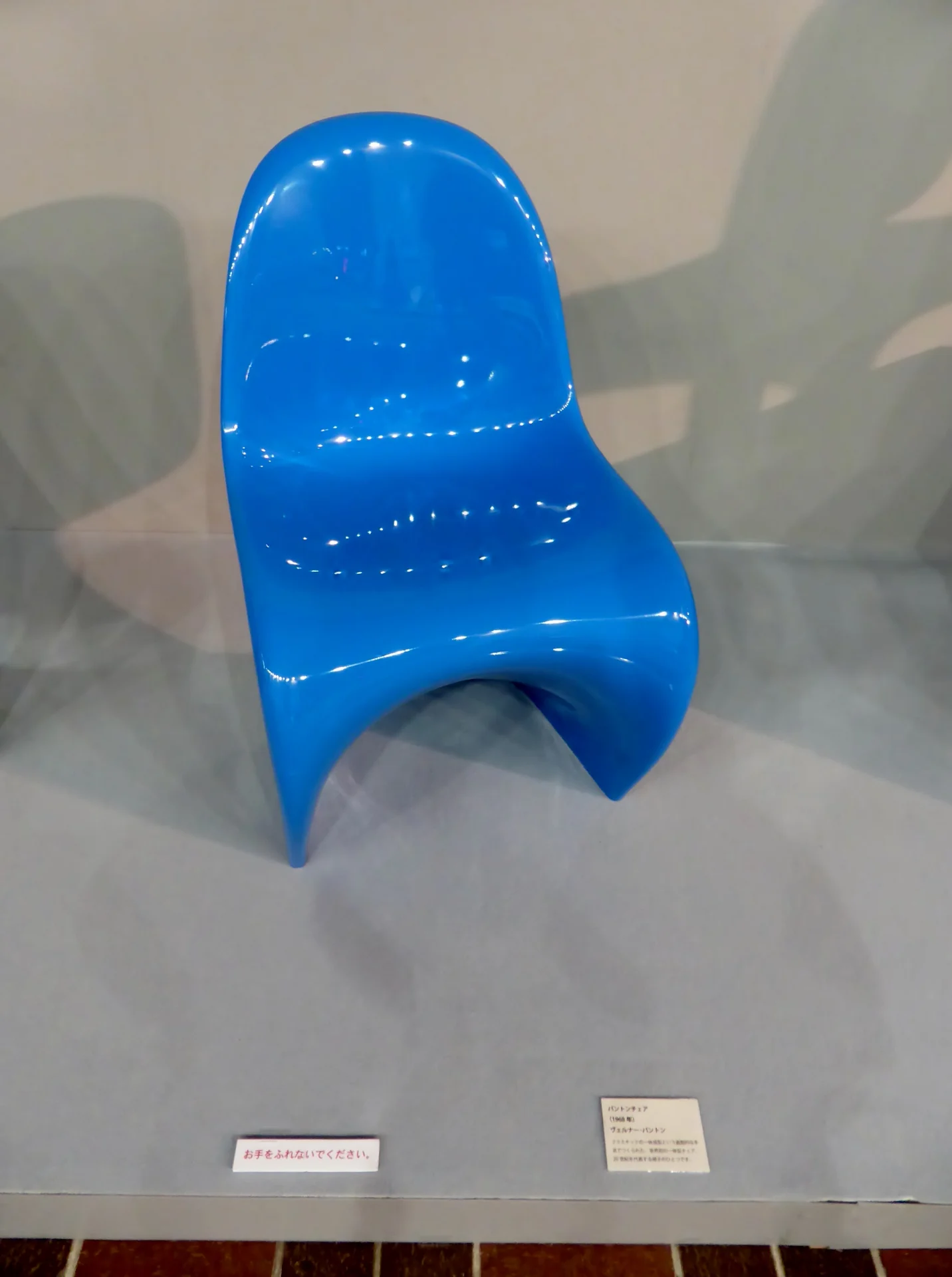
Vitra's documented Panton Chair history spans a glass-fibre-reinforced polyester pilot series, rigid polyurethane production, a later thermoplastic version that was discontinued, and polypropylene production from 1999. The exact material history belongs to that documented model, but it demonstrates the general problem: a recognisable design can have materially different production generations.[4]
Read that design's documented sequence in the Panton Chair Furniture Library story. For a piece for sale, begin again with the exact shell, base, material claim, marks, dimensions and production evidence.
| Layer | What it can answer | Evidence needed |
|---|---|---|
| Style classification | Which design context best describes the complete object? | Coherent cluster plus relevant documented comparisons |
| Model identification | Does the object match a documented design and variant? | Dimensions, structure, details and model records |
| Production identity | Who made this example, where and in which generation? | Object-specific marks, documents, construction and chain |
| Current integrity | Which components, surfaces and finishes belong to which stage? | Condition, intervention and replacement record |
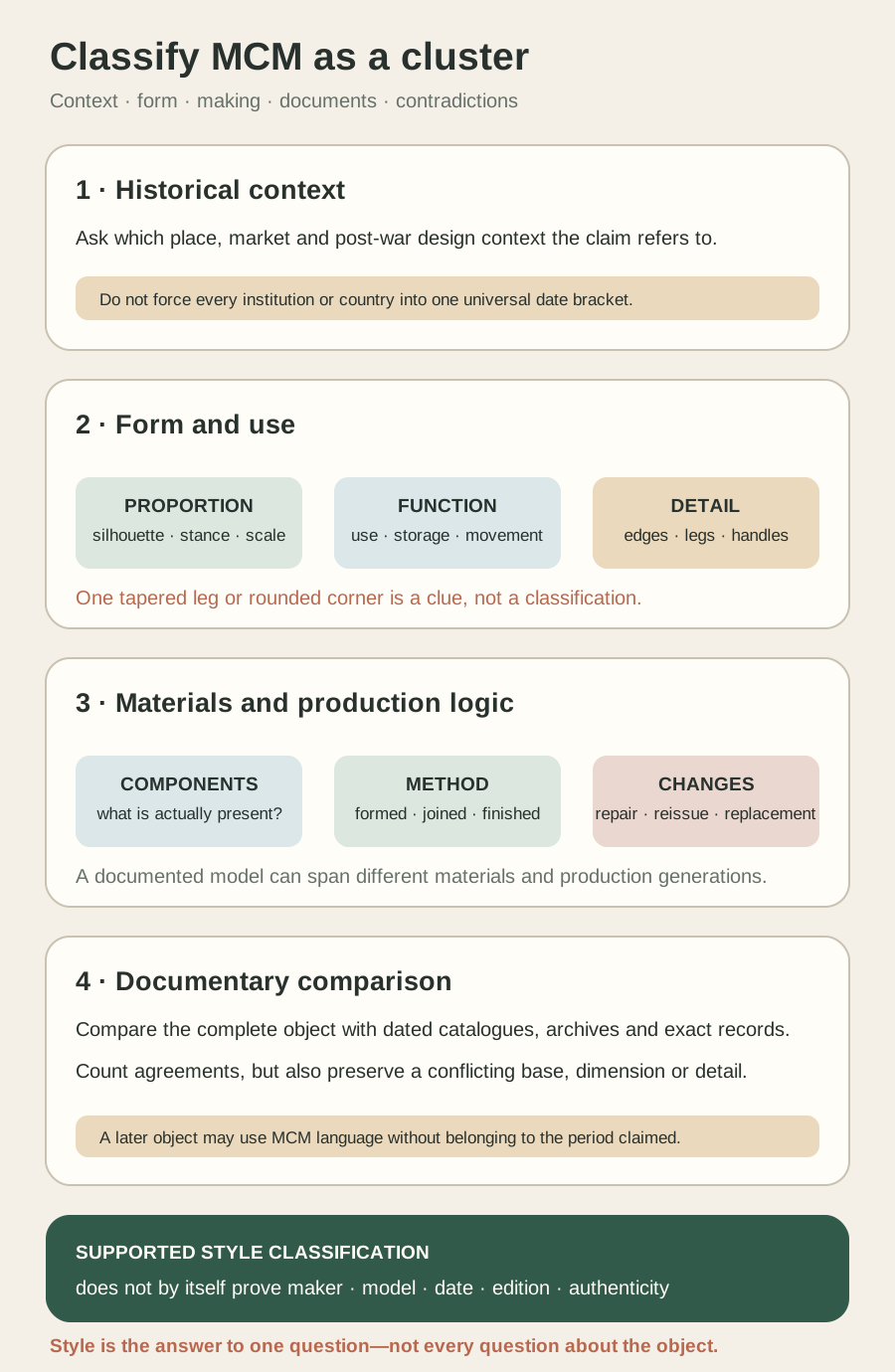
Use the style evidence map
Try to disprove the classification
- Check the rear and baseDo their construction and detail support the same reading as the public-facing surfaces?
- Compare exact dimensionsDoes a proposed model match overall and component measurements, not only a photograph?
- Find the production generationCould a later licensed edition, revival or reproduction explain the complete record better?
- Separate alterationsWould removing later upholstery, handles, feet or finish change the style conclusion?
- Preserve the conflictIf one consequential feature remains inconsistent, keep the result provisional rather than inventing a rare variant.
Request the evidence behind an MCM listing
Message to copy
Ask what the MCM claim covers
Hello—when you describe this piece as Mid-Century Modern, do you mean a period example, a documented model, a regional design context or a later MCM-inspired style? Could you copy the exact designer, maker, model, date, material, production and originality claims and say what supports each? Please send complete front, side, rear and safely visible base views; dimensions; open-state and component photographs; and close and location views of all marks, joins, hardware, repairs and replacements. Please mark unknown or inaccessible areas and do not dismantle or alter the piece for my request. Thank you.
If the seller has a catalogue page, invoice, label or producer record, ask for enough context to identify the publisher, date, model, page and connection to this furniture. A screenshot of a similar object is a lead. A period advertisement may document the model. Neither automatically proves that the offered example is the same production.
Make a bounded MCM decision
| Result | Appropriate when | Keep separate |
|---|---|---|
| Supported MCM classification | Context, complete form, function, making and documentary comparisons cohere | Maker, model, date, production and authenticity |
| Provisional MCM classification | The cluster is persuasive but a material conflict or context gap remains | The unresolved feature and the next useful source |
| MCM-inspired | Later furniture deliberately uses selected mid-century visual language | Any claim of period manufacture |
| Unresolved | The evidence is too generic or mixed to distinguish a useful style context | A plain description of the object that remains supportable |
Before paying for a designer or maker name, use the listing-claims Guide and compare prices at the same evidence level. A style classification may help you find furniture you like; it should not quietly carry a name-led premium.
The useful answer may be modest: ‘a later MCM-inspired cabinet’, ‘consistent with post-war Danish modern design’ or ‘style unresolved’. Precision comes from naming the context and the limit—not from choosing the most valuable label.