Turn “brutalist” into a useful description
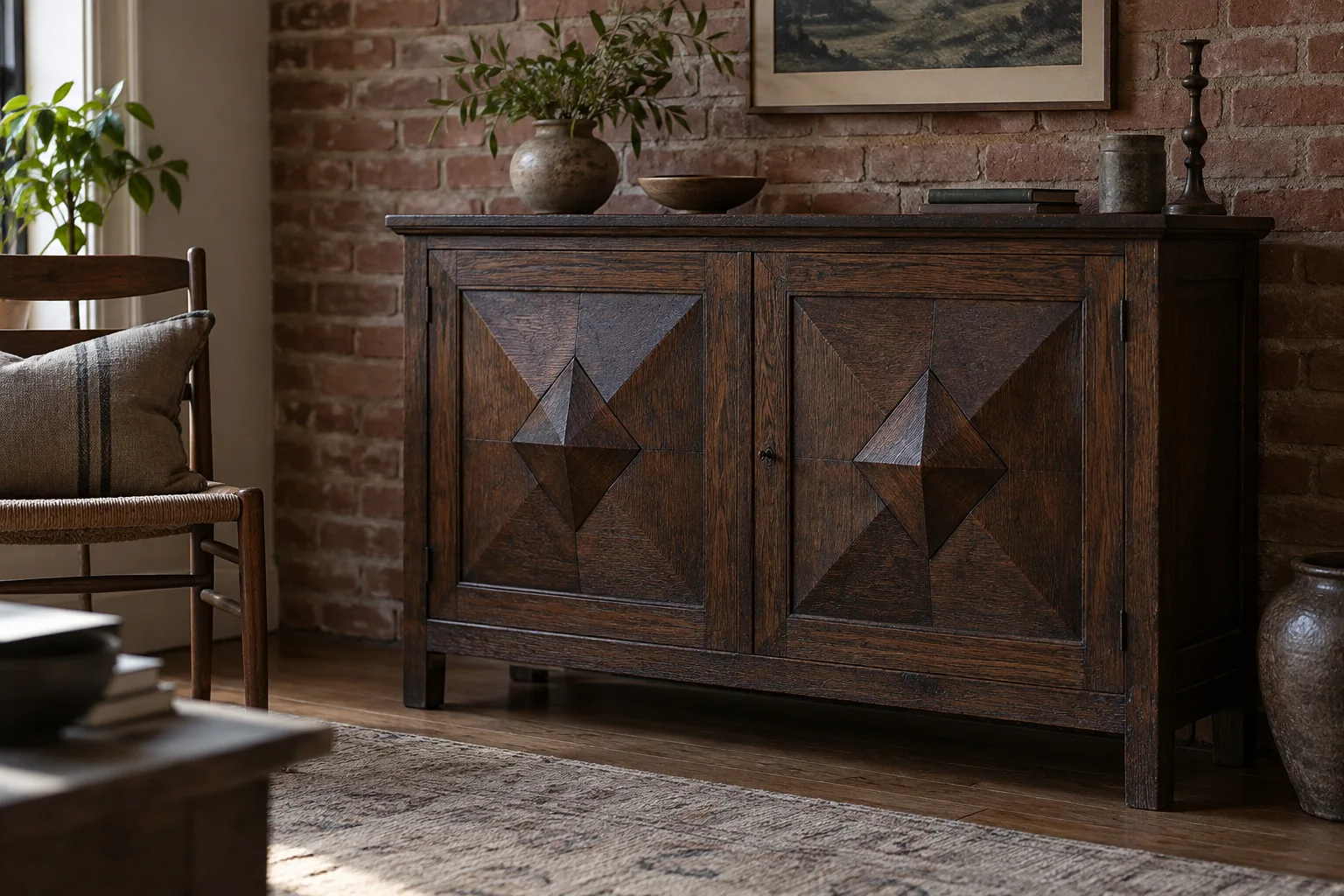
Look at the feature that made you stop scrolling. Is it a door cut into large angular blocks? A dark panel with a rhythmic relief? A welded-looking base? A cabinet can combine a dramatic front with a straightforward rectangular carcass. Describing that combination tells you more than repeating the listing’s style tag.
| Listing phrase | What you can observe | What still needs support |
|---|---|---|
| Brutalist oak cabinet | Faceted doors and an angular silhouette | Timber, maker, age and whether the relief is solid or applied |
| Sculpted bronze table | Irregular metallic surface and substantial-looking base | Actual material, fabrication, maker and production record |
| Paul Evans style | A seller’s comparison with a known designer | Any claim of authorship or connection to his workshop |
These phrases can help discovery, but they are not interchangeable descriptions of the same historical category. Buy an unnamed piece at a price that makes sense without upgrading the attribution in your imagination.
Paul Evans is a research trail, not a surface effect
The Michener Art Museum’s survey describes Paul Evans’s experimental approach to sculptural furniture and distinguishes several bodies of work, including sculpted steel, verdigris copper, sculpted bronze and Cityscape. Those distinctions matter: “metallic and irregular” is not enough to identify a particular technique, let alone an individual object.[1]
A worked comparison might begin with an advertised “Evans-style bronze cabinet”. The photograph supplies the overall form and a brown metallic appearance. The museum source establishes that Evans worked across different materials and techniques. It does not connect your cabinet to him. The useful next evidence is an exact model or documented comparable object, measurements, construction views and provenance.
If the seller has none, keep the result as an anonymous cabinet with an expressive surface. A signed-looking mark also needs context: where it is, how it is applied and whether the object agrees with the proposed attribution.
Deep relief creates practical inspection work
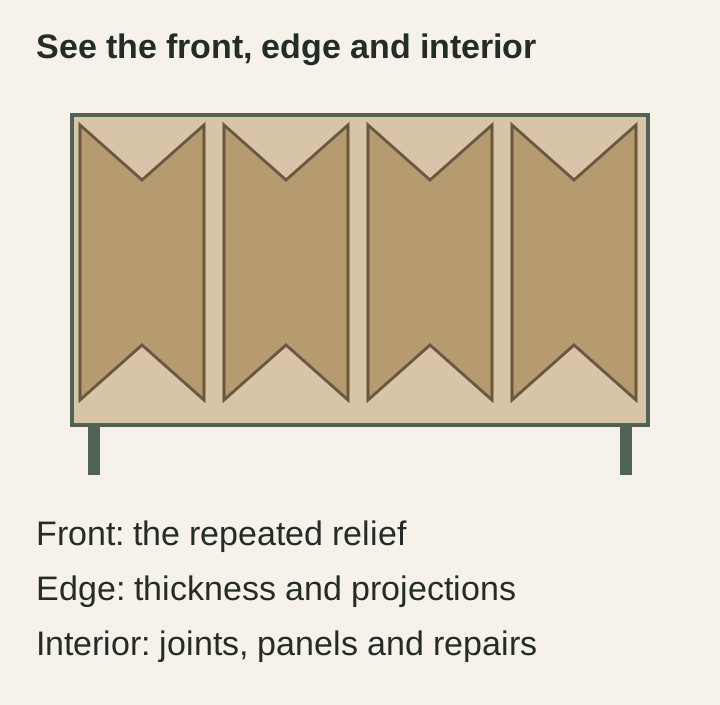
Ask for straight-on and side-lit views of the front, then open doors and drawers. Applied pieces can conceal joints or old repairs. Recesses can retain dirt; a dark patch is not automatically intentional patination. Record loose elements, sharp projections, missing sections and any reported movement without probing or stress-testing them.
For metal, establish the layers. A bronze-coloured surface might not be solid bronze, and an apparently rusty finish may be deliberate, deteriorating or both in different areas. CCI’s metal guidance makes material identification and the condition of coatings part of appropriate care. Avoid ordering aggressive polishing from a glamour photograph.[2]
Give the object enough room to be useful
Tape the footprint onto the floor, including projecting handles and the swing of doors. Ask for the weight and a realistic handling plan. A heavy-looking cabinet may be manageable; a genuinely heavy one may require a different carrier, route or floor assessment. The adjective provides neither answer.
In a small room, one deeply textured piece can be enough. Try it against a plainer wall and keep the adjacent furniture easy to read. This is a composition choice, not a rule that the whole room must become a period set. Keep the useful storage and viewing distance in the plan.
Ask for the object behind the adjective
Please confirm dimensions including projections, weight, materials and the basis of any maker or date attribution. I would like the complete front, back, underside, open doors and close views of the relief in ordinary light. Which decorative elements or finishes have been repaired or replaced?
Choose it for the form you will live with and the evidence available. The strongest listing can explain its appeal even after you remove the word “brutalist”.