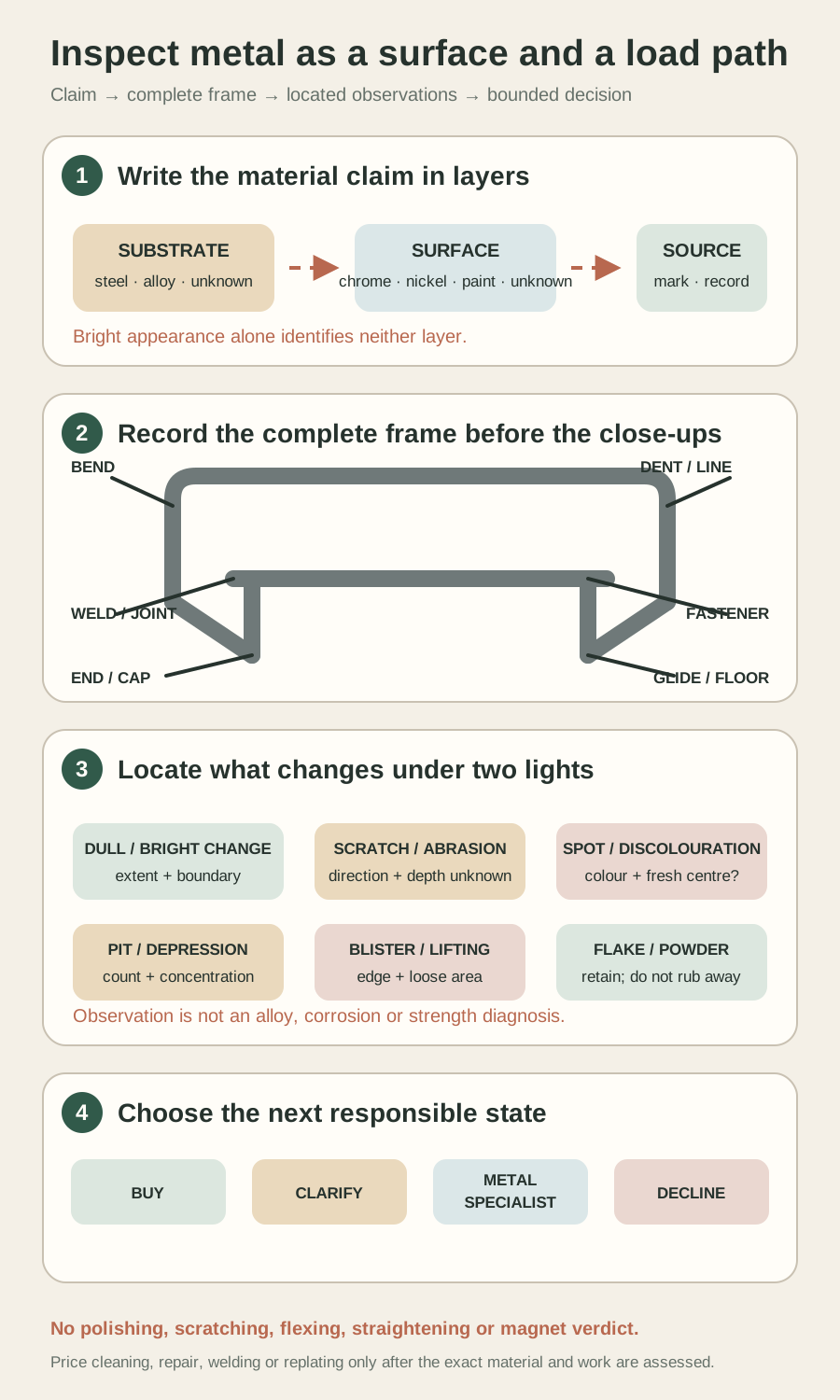
Write the material and finish claim in layers
The Canadian Conservation Institute explains that plating is a thin layer of one metal over another and notes that steel is commonly plated with chromium or nickel. The protective effect depends on the layer remaining continuous. For a buyer, ‘chrome’ therefore describes only the claimed surface until a mark, maker record, treatment document or appropriate examination supports more.[1]
| Layer | Record | Keep open |
|---|---|---|
| Substrate | Steel, another metal or alloy, or unknown; source of the claim | Exact composition, wall thickness and internal state |
| Surface | Chrome, nickel, paint, lacquer, bare metal or unknown; where it changes | Sequence, thickness and continuity outside the visible area |
| Construction | Round, oval, square or formed section; solid or hollow only when evidenced | Internal reinforcement and concealed connections |
| Earlier work | Replating, coating, local touch-in, welding, added fastener or replacement tube as reported | Date, method and extent unless documented |
Material boundary
Do not turn shine, colour or a magnet into a verdict
Several metals and coatings can look similar in seller photographs. A magnet response can vary with substrate, thickness, geometry and nearby parts; it does not identify a finish, date a component or establish usable structure.
Build one complete frame record before judging the surface
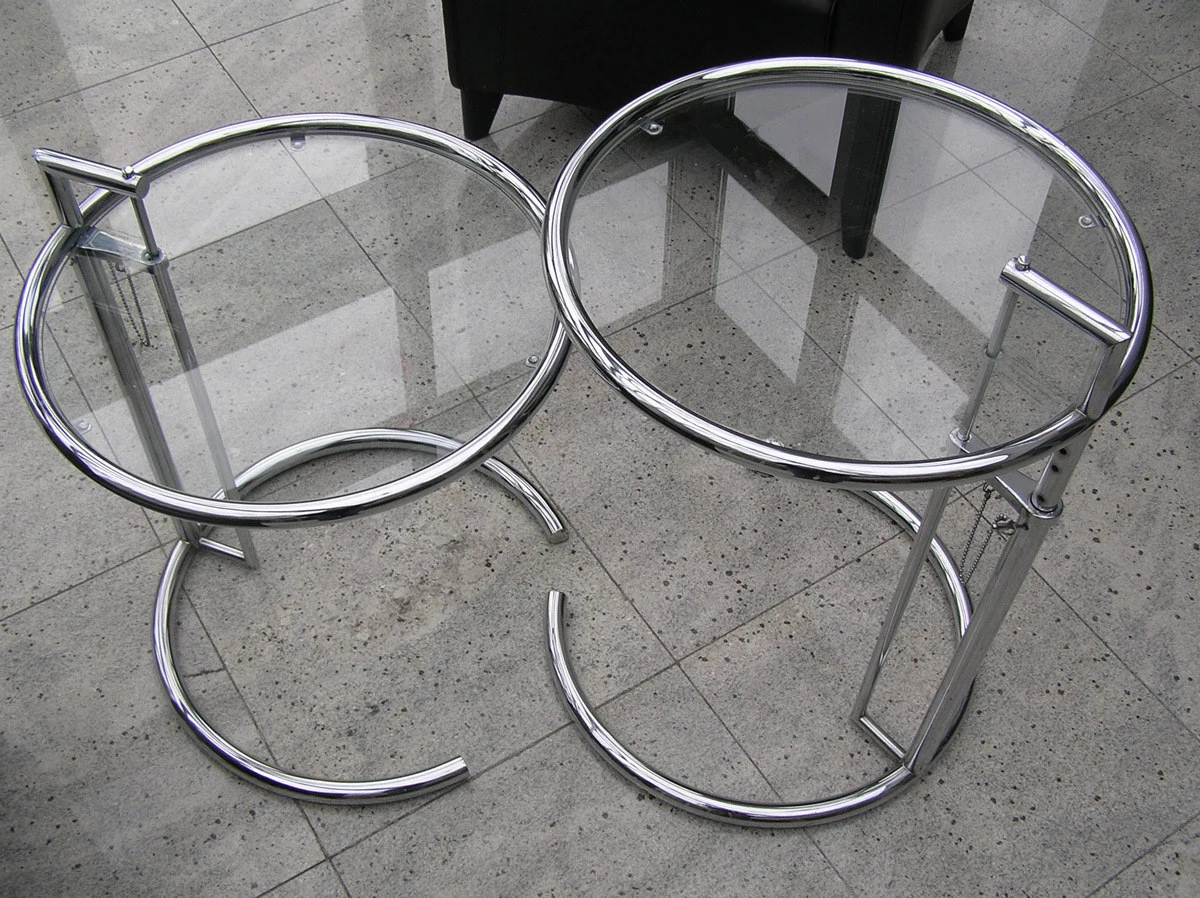
MoMA records its exact Adjustable Table E 1027 as chrome-plated tubular steel, sheet steel and glass, designed in 1927 with that example made in 1976. The record shows why design date, object date and several metal forms belong to one identified object. It does not transfer those facts to another table with a similar outline.[3]
The public-domain view of two later E-1027 tables is useful because each tube can be followed from an open ring base through an upright to the glass support. It is still only a whole-object photograph: reflections conceal parts of the surface, and the image cannot prove stability, plating continuity or whether a component was replaced.[4]
Request the complete frame
- Whole viewsFront, rear, both sides and a three-quarter view with every leg, rail, arm, support and projection uncropped.
- Level-floor stanceThe complete piece on a hard level surface, unloaded and without a hand concealing movement or forcing contact.
- Safe undersideA view from floor level or an already accessible underside; do not ask the seller to balance or invert an uncertain piece.
- Stable mapNumber legs, rails and sides in a simple sketch so every close-up, dimension and seller answer has one location.
- Normal use stateSeat, top, shelf, upholstery and moving positions installed as sold, including any separations required for delivery.
Use the photograph-request Guide for whole, relationship and detail views. The metal sequence begins only after the close-ups can be returned to the complete object.
Inspect each location in diffuse and reflected light
Ask for a neutral daylight whole view first. Then ask the seller to move a broad light source or the camera gently until one soft reflection travels across the same tube. Keep exposure and colour treatment consistent. A direct flash can turn dust into sparkle and erase shallow changes; a dramatic dark-room highlight can make ordinary wear look catastrophic.
Pair every detail
- Location viewShow the entire numbered tube, bend or joint so the detail cannot migrate to a less consequential area.
- Diffuse viewRecord overall colour, broad dulling, stains, repairs and the relationship with adjacent materials.
- Reflected-light viewMove a broad reflection across the surface to reveal waves, scratches, pits, lifting edges and local polishing.
- Scale viewPlace a clean ruler beside—not on—a stable accessible area and retain one image without the ruler obscuring the boundary.
- Change recordAsk whether powder, flakes, spots, movement or sound have changed during the seller's custody and when they were first noticed.
Handling boundary
Observation does not require rubbing or testing
Do not ask for polish, solvent, abrasive pad, scratch test, tape pull, flex, impact or load. Do not wipe away loose material before it is photographed and retained with its exact location.
Describe the surface without diagnosing it
CCI's corrosion note distinguishes stable-looking iron surfaces from changes such as orange spots with fresh centres, depressions, loose fragments, blisters and lifting on plated metal. It also explains that plated objects can be difficult to identify by appearance. These are useful observation categories, not a remote diagnosis or a remaining-strength calculation.[2]
| Visible observation | Record next | Do not conclude |
|---|---|---|
| Dull or bright patch | Boundary, extent, reflection from two directions and reported cleaning history | That the plating is intact, absent or safely polishable |
| Scratch or rubbed line | Direction, length, nearest bend or contact and whether another colour appears | Depth, substrate or structural consequence from glare |
| Brown, orange, green, white or dark spot | Colour under neutral light, centre, edge, moisture history and whether it changes | Metal identity or corrosion activity from colour alone |
| Pit or depression | Concentration, widest field, nearest joint or floor contact and both-light views | Remaining wall thickness or whether replating alone resolves it |
| Blister, lifting edge or flake | Whole affected field, loose material, underlying colour and recent change | A cleaning method or how far separation continues unseen |
| Dent, flattened tube or changed line | Whole silhouette, opposite side, nearest bend or joint and normal-use report | That it can be straightened without consequence |
Record smell, residue and seller-reported damp separately from the image. A dry-looking photograph is not an environmental history, and one clean close-up cannot clear hollow interiors, concealed sleeves or the underside of a floor contact.
Follow the load path through every connection
Start where the intended load enters the object—a seat, back, arm, tabletop or shelf—and follow each support to the floor. Compare left with right and front with rear, but do not assume symmetry proves originality or soundness. A tube can look clean in the middle while a bend, weld, sleeve, screw hole or floor end carries the consequential change.
| Location | Ask to see | Question it answers |
|---|---|---|
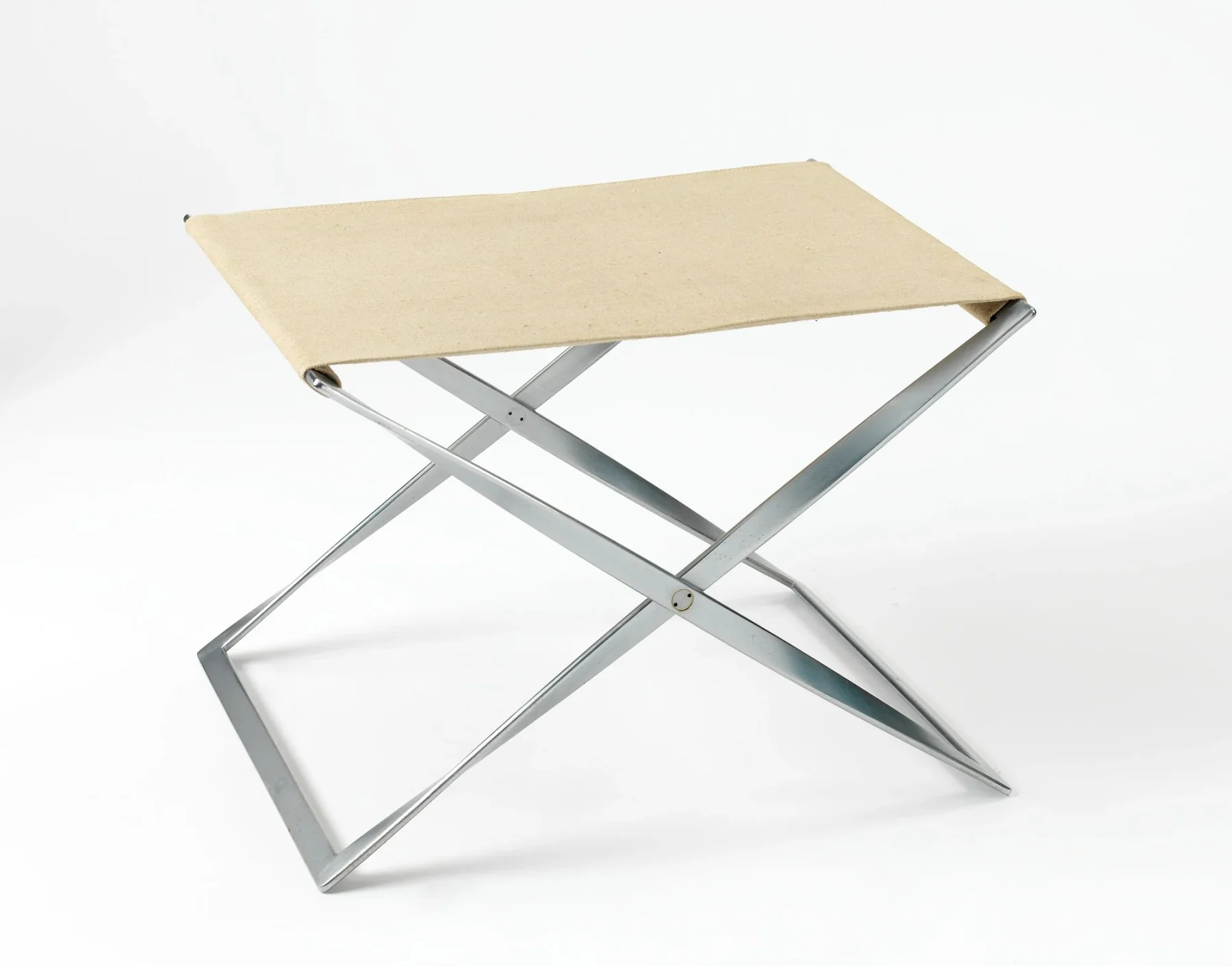
| Bend or return | Complete curve, inner and outer radii, adjacent straight runs and any flattening or line | Does the geometry change where the tube was formed or later stressed? |
| Weld or brazed area | Whole joint, surrounding finish, both sides and any later bead, grind mark or paint | What is original, reported repair or still unknown at this connection? |
| Sleeve or fastener | Alignment, complete hardware, enlarged holes, washers, spacing and movement report | Is the joint complete and seated as sold? |
| Seat, top or shelf support | Every bracket, pad, tab and attachment without removing the component | How does the supported material transfer load into the frame? |
| Open end, cap or glide | Presence, fit, loss, residue, deformation and matching floor contact | Is the tube protected and does the piece meet the floor as intended? |
Check stance and reported movement without stress testing
Ask for the unloaded piece on a hard level surface and one continuous ordinary-use video only when the seller is comfortable and the furniture is already considered usable. The seller can show normal sitting, opening, swivel or height movement without bouncing, rocking beyond design, levering an arm or applying an improvised load. Record where motion begins rather than calling the whole object wobbly.
Locate movement
- Floor contactWhich glide, foot or ring lifts, and does the observation remain after the seller confirms the floor is level?
- JointDoes visible relative movement begin at a fastener, sleeve, weld, bracket or another identified connection?
- TubeDoes a long member appear permanently bent, locally dented or different from its opposite member while unloaded?
- Attached materialDoes movement come from a seat shell, glass pad, wooden rail, upholstery platform or attachment rather than the metal frame?
- Designed movementSeparate intended spring, cantilever, swivel, fold or adjustment from play that the seller cannot locate.
Use boundary
A normal-use clip is not a capacity test
It records present behaviour under the seller's ordinary demonstration. It does not certify load capacity, fatigue life, weld integrity or suitability for another user. Pause when current use, movement or geometry remains consequential and unexplained.
Keep composite materials and contact points separate
CCI advises identifying all components of a metal object and choosing care that does not damage attached materials; a method acceptable for one metal can harm another metal, a coating or an organic component. For a buyer, the same discipline keeps one clean-looking frame from obscuring leather, textile, plastic, wood, cane or glass condition.[1]
| Interface | Record | Keep separate |
|---|---|---|
| Metal and upholstery or leather | Tabs, screws, clips, folds, stains, abrasion and any contact residue | Cover condition, internal support and frame condition |
| Metal and plastic or fibreglass | Fastener holes, spacers, edge contact, cracks, repairs and movement | Exact polymer or composite identity and repair method |
| Metal and wood | Mounting points, washers, splits, dark contact marks and later hardware | Wood movement, finish and metal corrosion diagnosis |
| Metal and glass or stone | Pads, clips, holes, bosses, projection and transport relationship | Top specification, edge condition and replacement evidence |
| Metal and floor | All caps or glides, matching height, trapped residue and floor marking | Level-floor stance and suitability for the buyer's surface |
For a glass assembly, continue with the glass-table Guide. For leather or upholstery, inspect their own layers and attachments rather than extending a metal verdict across the object.
Record repair, cleaning and replating claims as work
Ask whether the piece has been polished, chemically cleaned, coated, painted, replated, straightened, welded, brazed, drilled or fitted with replacement hardware or tubing. Record where, when, by whom and with what material if known. A later surface can be acceptable, but it changes which observations belong to the original manufacture, earlier use and subsequent work.
Ask what the intervention changed
- ExtentWhole frame, one component, one face, a local joint or an unspecified area.
- PreparationWhat was removed, abraded, filled, masked, dismantled or left in place before the new work.
- Added materialCoating, plating system, weld or braze, insert, fastener, cap, glide or replacement tube.
- GeometryWhether a tube, joint, attachment or stance was changed and what record exists from before the change.
- AftercareAny cleaning restriction, environmental advice, cure time, inspection interval or unresolved area.
If work is still proposed rather than completed, use the restoration-budget Guide to obtain a professional scope. Do not price replating as a cosmetic line item when dents, pits, joints, dismantling or attached materials remain outside the brief.
After inspection: retain, clean or replate?
Once the material and condition have been assessed, define the result you want. Cleaning a stable surface, reducing the appearance of corrosion and stripping and replating a component are different projects. A bright finish does not restore weakened tubing, and replating is not a substitute for assessing joints or structural loss.
| Option | Possible reason to choose it | Limit to resolve |
|---|---|---|
| Retain the existing surface with appropriate care | The frame is suitable for use and you accept stable wear. | Distinguish stable appearance from ongoing deterioration. |
| Professional cleaning or limited polishing | Deposits can be addressed without an unacceptable loss of coating. | Specify abrasiveness, protected areas and the appearance that will remain. |
| Strip and replate selected components | The original coating cannot provide the agreed result and the substrate is suitable. | Confirm dismantling, preparation, repairs, finish and reassembly. |
Ashford Chroming / Douglas Metal Finishing advertises restoration of metal components and household fittings, with project-specific enquiries. That establishes an available type of service, not a standard chair-frame tariff or acceptance of your exact assembly. Ask a plater whether the dimensions, underlying metal and joining methods can be processed.[7]
Compare complete scopes, not the plating line alone
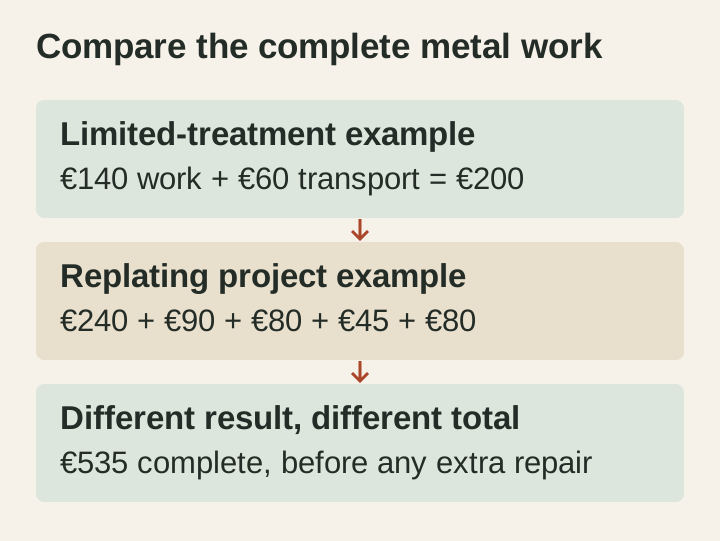
Here is a hypothetical comparison, not a workshop quotation. Proposal A allows €140 for a defined professional clean and protective treatment, retaining visible wear, plus €60 transport: €200 in total. Proposal B lists €240 for plating, €90 dismantling and reassembly, €80 preparation, €45 replacement glides and €80 transport: €535. Assume those are final customer amounts and there is no separately required structural repair.
The plating line looks only €100 dearer than the cleaning line, while the complete projects differ by €335 and produce different surfaces. If preparation or reassembly is already included in the plating price, remove the duplicate charge. If a joint repair remains unpriced, the total remains conditional. These amounts demonstrate scope comparison; they are not typical market costs.
Ask what will happen to existing stamps, dimensional fits, threaded parts and components that should not enter the process. Agree the expected finish, areas that may retain pits, parts to preserve and the point at which newly discovered damage pauses work. Keep any removed original hardware identified.
Request a comparable metal-work quote
Please assess whether this frame is suitable for continued use and compare limited cleaning with any proposed replating. Separate examination, dismantling, coating removal, substrate repair, preparation, plating, protected features, new parts, reassembly, tax and transport. What appearance will remain, and which additional findings require my approval?
Choose replating when you want the specified result and accept both the cost and the change to the old surface. Choose retention when the assessed condition supports it and you value the existing finish. Neither choice should depend on pretending that new shine proves structural soundness.
Send one evidence request for the exact metal frame
Message to copy
Ask for layers, locations and current behaviour
Hello—I'm considering this piece for [daily/occasional/display] use. Could you tell me what the frame metal and surface finish are described as, and what record or marking supports each claim? Please send uncropped front, rear, both-side and three-quarter views on a hard level floor; a safe underside or floor-level view; and paired diffuse and reflected-light views of every bend, weld, fastener, dent, pit, spot, lifting area, hollow end, cap, glide and attached-material contact. Please number those locations on a simple whole-object image. Has any part been polished, coated, painted, replated, straightened, welded, drilled or replaced, and has any movement, flaking or residue changed during your custody? Please do not clean, scratch, flex, load or dismantle it for the photographs. Thank you.
PatinaHall helps the buyer ask for an exact record. The independent seller remains responsible for their description, sale, payment, handoff, delivery and returns. A chosen metal or furniture specialist remains responsible for examination and any proposed treatment; the Guide does not identify material, corrosion activity or remaining strength remotely.
Buy when the claim is bounded, the whole load path is recorded, the present geometry and use suit the intended job and any surface change is acceptable without an imagined repair. Clarify when one whole view, location, mark or repair record would change the decision. Seek a relevant specialist before purchase when lifting, pitting, deformation, movement, a repaired connection or intended load remains consequential. Decline when the decision requires destructive testing, unsupported structural reassurance or work whose scope you cannot accept.