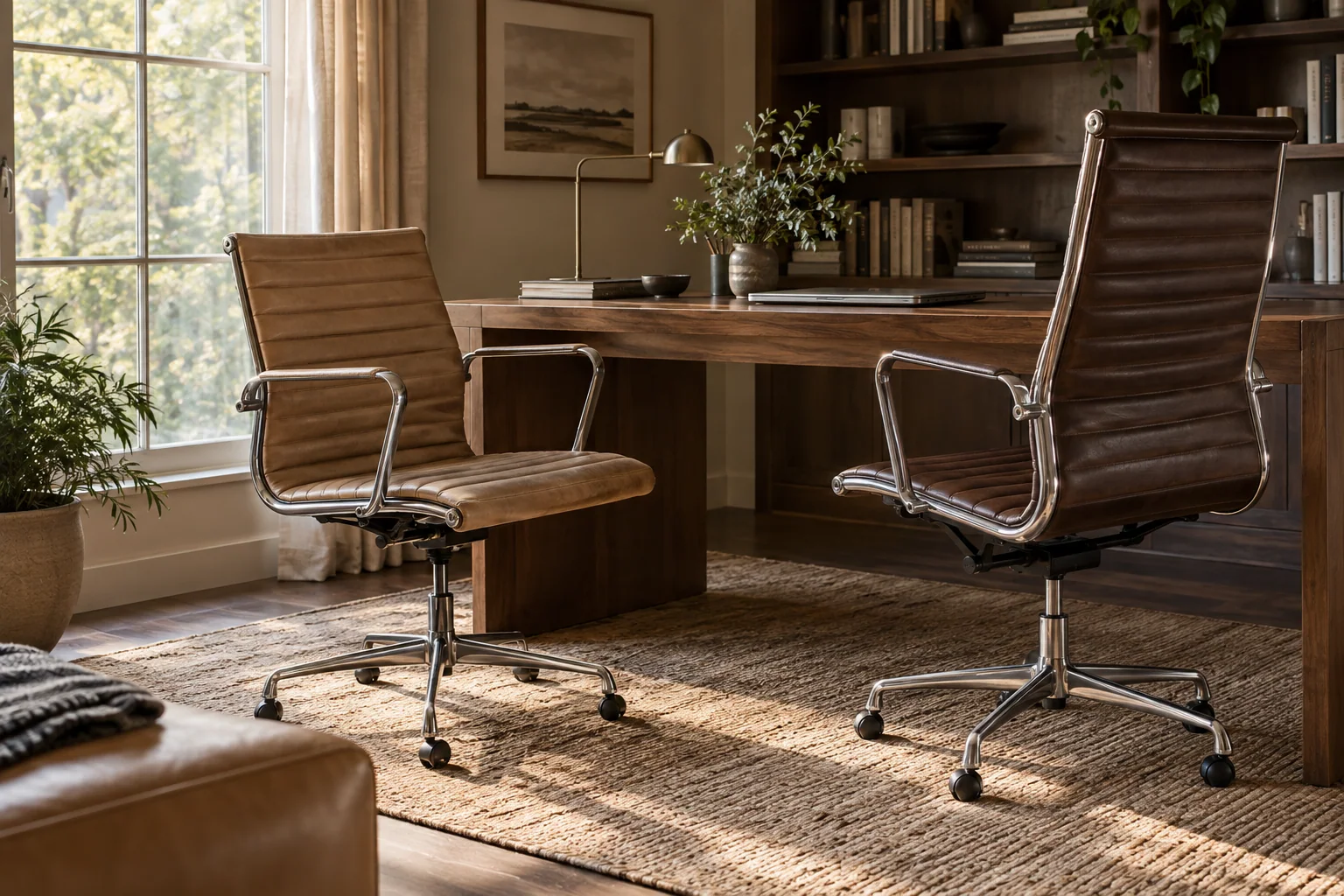
The back is the obvious difference, not the whole choice
Vitra describes EA 117 as the medium-height back and EA 119 as the high-back option within this Aluminium Chair group. The current range also includes the narrower EA 118. Establish which model is being offered before comparing overall dimensions or replacement components.[1]
For desk work, try typing or writing with the chair adjusted appropriately. Then lean back in its normal supported movement. Notice where the upper edge meets your back and whether you prefer the more open feel of the shorter chair. A higher back only helps if its contact and movement suit you.
The narrow horizontal ribbing is different from the separately padded cushions of the Soft Pad family. Ask the seller to use the supported model designation, rather than combining several well-known names in one listing title.
A beautiful office chair still has to approach the table
Measure the arms against the underside of your desk, including a drawer or apron. If the arms stop the chair far from the working edge, raising or lowering the seat may not solve the relationship for your body. Try the whole arrangement before assuming the desk and chair are a pair.
| At the viewing | At home |
|---|---|
| Seat and back contact during ordinary work | Your desk height and the position of the working surface. |
| Arm height and width | The desk opening, apron and drawers. |
| Normal swivel and tilt movement | Clearance from a wall, cabinet or bookcase. |
| Base spread and castors | Floor surface and space beneath the desk. |
Watch the base while the chair swivels and tilts normally. The important question is whether components move as intended, not whether all movement can be eliminated. Unexplained looseness, slipping or structural damage needs a service assessment before use.
The ribbed surface belongs to a larger assembly
Examine the upholstery at its edges and where it meets the metal frame, as well as the broad central panels. Ask about tears, previous recovering and any work to the supporting assembly. A worn surface and a failed attachment require different repairs.
A fresh cover can change the feel and appearance of an older chair. Ask the upholsterer what they propose to retain, what material is appropriate and how the assembly will be re-established. Do not assume that a general loose-cushion quotation covers this construction.
Inspect the metal and its connections separately. Have cracks, distortion or loose attachment areas assessed, and distinguish cosmetic finish work from structural work in the quote. Polishing a visible frame does not resolve movement at a damaged joint.
Use current specifications as a starting point
Vitra’s current EA 117 and EA 119 descriptions include adjustable tilt, gas-lift height adjustment and a five-star castor base. These are specifications for the described current products, not a checklist proving that every older example has the same mechanism or fittings.[1]
Send whole-chair views, labels, control details and base photographs to the appropriate manufacturer or specialist. Ask them to identify a repairable configuration before ordering a lift, wheel or upholstery part. If a chair has changed base or other major components, retain that information in its description.
A complete comparison
Price the chosen chair with any necessary mechanism service, upholstery work, suitable castors and transport. Compare it with a sound example in the back height you actually prefer.
The polished frame and slim profile can be a welcome change from a bulky office chair in a domestic room. Let that be a bonus to a seat that works at your desk; the best-looking silhouette is of little use if you cannot get close enough to write.