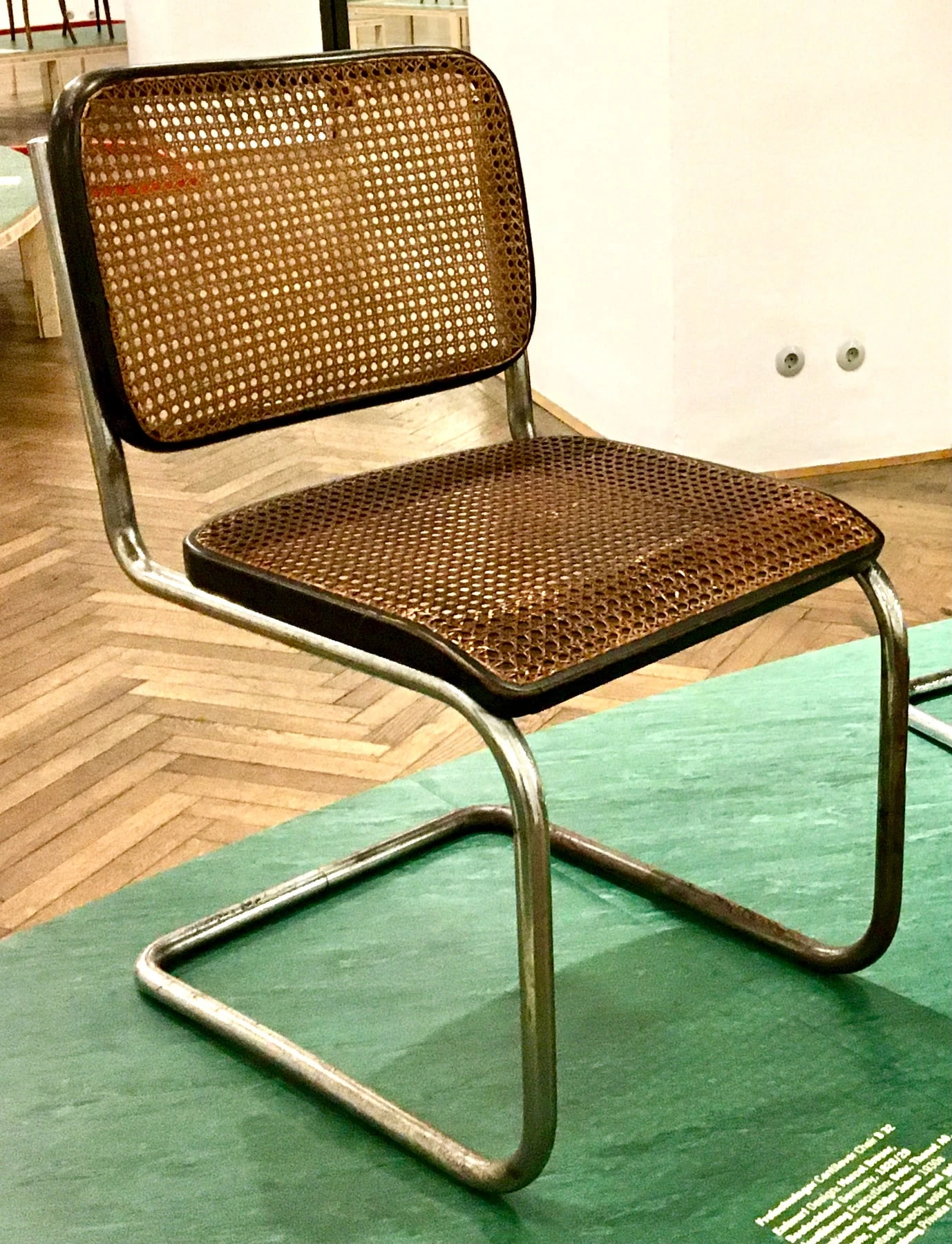
A 1928 design is not a 1928 chair
The first trap is an impressive date placed beside a familiar name. MoMA records Marcel Breuer’s B32 side-chair design as 1928, with chrome-plated tubular steel, wood and cane. Its collection record names Gebrüder Thonet as manufacturer. That documents the museum’s example and the design; it does not give an online listing its birthday.[1]
Knoll’s history describes the later Gavina chapter and dates Cesca’s introduction into the Knoll collection to 1968. A chair produced much later may be a genuine example from that maker while answering a different collecting question from an early Thonet.[2]
Ask the seller to distinguish “designed in”, “made by” and “made around”. If the answer is only “Breuer, 1928”, the manufacturer and production period of the actual chair remain open. That is a research gap, not a reason to invent a conclusion.
The Library story on Cesca follows the design’s production history in more detail.
Make the mark belong to the chair
A useful identification photograph shows the mark in place as well as close up. Ask for the complete underside, the frame, the seat/back attachments and any label, stamp or invoice. A cropped logo floating in a listing cannot show which component carries it or whether the whole set matches.
Current Knoll documentation describes a stamped Knoll logo and Breuer signature. It also lists cane and upholstered options, chairs with and without arms, and newer frame finishes. Use those details for the versions they describe. Do not turn today’s specification into a universal test that every older example must pass.[3]
Count the evidence that agrees: the documented producer and period, dimensions, frame shape, panel construction, attachments and marks. Ask about conflicts. A replacement seat does not explain who made the steel frame, and a vintage-looking frame does not date its present cane.
The frame has to do more than shine
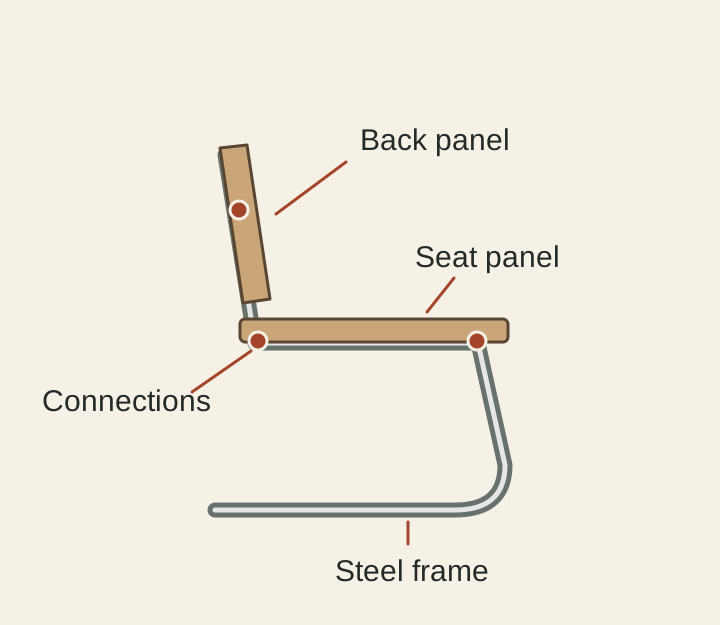
The absence of rear legs is the chair’s great visual pleasure. It also means you should follow the whole steel line, from floor contact through the bends and up towards the seat. Request both side views on level ground. Do the base and seat appear level, or does one side sit differently?
Locate rust, pitting, flaking chrome, sharp edges, distortion and repairs rather than accepting “good for its age” as a complete description. A reflection can resemble a dark patch, so ask for the same area in another light. Check the floor glides too: missing or unsuitable ones change how the chair meets your floor.
Knoll describes the cantilever’s flexibility as part of the design. That does not make every wobble normal. If the frame is distorted, cracked, repaired or moves at a connection, ask an appropriate furniture or metal specialist to assess it. Bouncing harder is not a useful test.[3]
Read the cane and its border together
Look across the sitting surface, around its working edge and underneath the wooden border. Photograph broken strands, sagging, splits in the wood and the actual attachment. The edge matters because the woven field and the frame have to work together.
A recaned seat can make a chair useful again. Find out who did it, when, and whether the wooden surround was repaired or replaced too. If work is still needed, send the whole seat and underside to a chair weaver before buying; a loose panel and damaged wooden frame may require different work.
Avoid the tempting shortcut “this weave means genuine”. The relevant question is whether this panel and its attachment agree with the claimed production example, allowing for disclosed replacements. A specialist can assess the material and work; an isolated weave photograph cannot authenticate the entire chair.
Four chairs are four purchases
Give each chair a number in the seller’s photographs. Compare the back height, seat outline, finish, frame, glides and any marks in the same views. A set can contain different production dates or replacement panels without being unusable. It should simply be described and priced as the group it is.
Imagine an offer described as four matching chairs, two recently recaned. That may be a sensible everyday set. If the other two now need the same work, get their repair quote before comparing the lot with four ready-to-use chairs. Divide the complete cost by four usable seats, not four attractive fronts.
At your table, check the seat height, knee space, chair depth and withdrawal space. With arms, measure their highest point against the underside of the table apron. Current Knoll dimensions are a useful reference for current models; measure the vintage set rather than assuming it is identical.[3]
Buy the evidence and the seat
Ask the seller
What supports the maker and production-date description? Could you number each chair and show its complete frame, underside, seat/back attachments and marks? Please identify any replaced panels, recaning, frame repairs or refinishing, and measure seat height, overall width/depth and arm height where relevant.
For a documented collectible, the provenance and period need to justify that description. For everyday dining, comfort and understood repair needs may matter more to you. An unmarked cantilever chair should be offered on the evidence available, without borrowing a maker’s name to explain its price.