
Begin with the exact set and the job it must do
Choose the everyday seat count before comparing styles. Separate the chairs that must remain around the table from occasional seats that may live elsewhere. A set of four, six or eight changes the usable table edge, room circulation and total restoration budget.
Confirm exactly which chairs are included. Styled photographs may show another chair, and a pair of armchairs may differ from the side chairs. Ask whether every photographed chair belongs to the offer, whether there are additions or replacements and whether any chair is already reserved, unavailable or used only as a prop.
Define the intended use
- Everyday quantityHow many people normally sit, and which table sides must remain usable?
- Occasional quantityCan extra chairs be stored without blocking another room or route?
- Actual usersConsider children, mobility needs, preferred seat depth and whether arms help or obstruct.
- FrequencyDaily dining asks different questions from occasional decorative use.
- Tolerance for workDecide whether the set must be ready to use or can enter a reviewed restoration plan.
Record the working dimensions of every chair
Request the dimensions of each chair when the set contains armchairs, visible replacements or natural variation. One representative measurement is useful only when the seller has confirmed that the other chairs match closely enough for the decision.
- Maximum overall width at the widest arms, rails or back—not only the upholstered seat.
- Maximum overall depth and the depth occupied when someone sits normally.
- Overall height and seat height from the floor to the usable top of the seat.
- Seat width and depth at the usable area, noting a curved or tapered shape.
- Arm height at the highest point that must pass beneath the table.
- Any stretcher, front rail or projection that affects feet, knees or neighbouring chairs.
Soft upholstery compresses and hand-shaped frames are not laboratory-identical. Ask where the measurement was taken and use the largest relevant figure when testing fit. A centimetre value can describe geometry; it cannot promise comfort for every body.
Compare the chairs with the actual table
Measure the table rather than relying on a standard dining height. Record its underside, apron or rails, leg positions and any mechanism beneath an extending top. The companion table-measurement Guide explains the complete table record; the chair decision uses those numbers together.
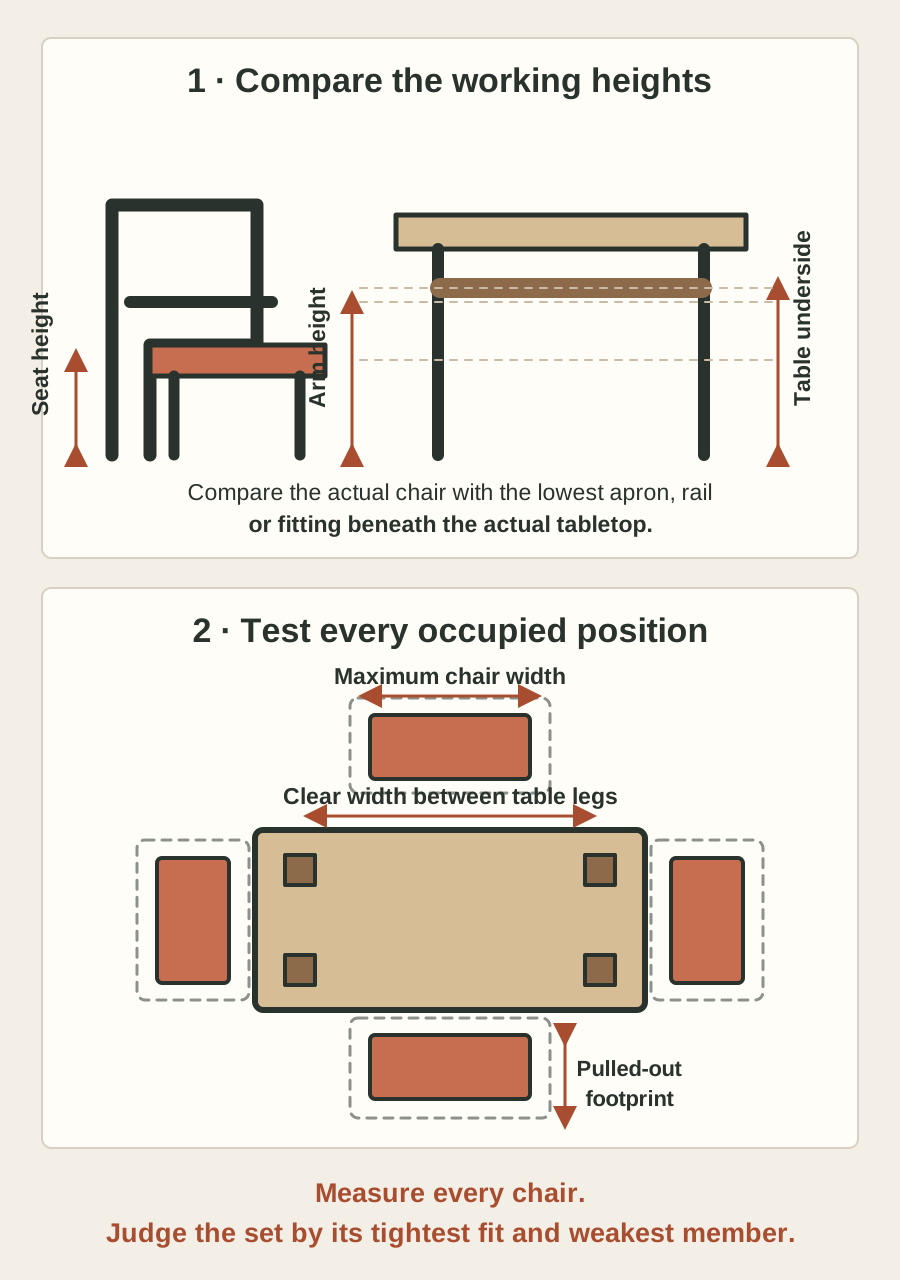
| Decision | Record from the chair | Record from the table or room |
|---|---|---|
| Sitting position | Seat height and usable seat depth | Lowest underside, apron or fitting above the sitter's knees |
| Pushing in | Highest arm point and maximum chair width | Underside height, table overhang and clear width between legs |
| Neighbouring chairs | Widest point and where it occurs | Usable edge between legs, corners, pedestal or table mechanism |
| Occupied room | Overall depth plus the pulled-out position | Wall, door and circulation route behind the seated person |
Comfort boundary
Fit is more than one gap
Two chairs with the same seat height can feel different because of seat depth, angle, back shape, upholstery and the person using them. Measurements narrow the risk; trying the chair remains the strongest comfort check when it is practical.
Map the full table and the occupied room
Tape the tabletop and leg positions on the floor. Mark every chair first where it sits pulled in, then where it will stand while occupied. Repeat the actual maximum chair width around the complete table rather than testing one generous side.
Check table corners, splayed legs, a central pedestal, radiators, doors and the route people use behind seated diners. An armchair may work at an open table end but fail along a side with a low apron. An extension leaf may add top length while moving—or not moving—the table legs, so test every configuration you expect to use.
No single circulation number works for every chair, room and household. Use the real chair footprint, open the nearby doors and walk the route as it will be used. If one side remains deliberately tight, decide who will use it and how often rather than hiding the compromise.
Judge the set by the weakest chair
A group photograph can make a set look coherent while hiding one loose back, shortened leg, failed cane panel or different underside. Ask for every chair to be shown from the front, side, back and underside, with extra context for any repair or movement.
Review every member of the set
- Floor contactAsk whether each chair stands evenly on a known level surface and whether any rocking changes when moved.
- Joints and railsLook for openings, displaced parts, added blocks, screws, brackets, glue residue or seller-reported movement.
- Back and armsCheck attachments and repairs where leverage from normal use is concentrated.
- Seat supportReview cane, webbing, upholstery, boards or other support on every chair, not only the top fabric.
- Feet and legsCompare length, shape, wear, repairs and any glides or additions across the group.
- AlterationsAsk which finish, upholstery, cane, fasteners or structural parts were changed and by whom if known.
Inspection limit
A photograph cannot prove a chair is structurally safe
Images and seller observations can expose questions, but movement, old repairs and load-bearing condition may require in-person assessment by someone suitably experienced. Do not treat age, a maker name or a clean photograph as a safety test.
Separate set character from a practical problem
Small differences in colour, finish, wear or hand-shaped parts can belong to the life of a vintage set. A disclosed historic repair or replaced cover is not automatically unacceptable. The useful questions are whether the differences are understood, stable enough for the intended use and acceptable across the whole group.
Treat active movement, split load-bearing parts, failed seat support, missing components and uncertain alterations separately. One compromised chair can change the usable quantity even when the other five are excellent. If the seller excludes a chair from use, count the functional set accordingly.
Mixed sets can be deliberate and useful, but do not let shared upholstery erase meaningful dimensional or construction differences. Record which chairs match, which differ and whether those differences change table fit, comfort or likely work.
Review upholstery, cane and comfort honestly
Ask what is known about the seat layers and previous work, but keep unknown internal materials labelled as unknown. Photographs may show tears, sagging, stains or broken cane; they cannot reliably establish odour, hidden dust, internal condition or comfort. Ask directly about what matters to your household and inspect in person when possible.
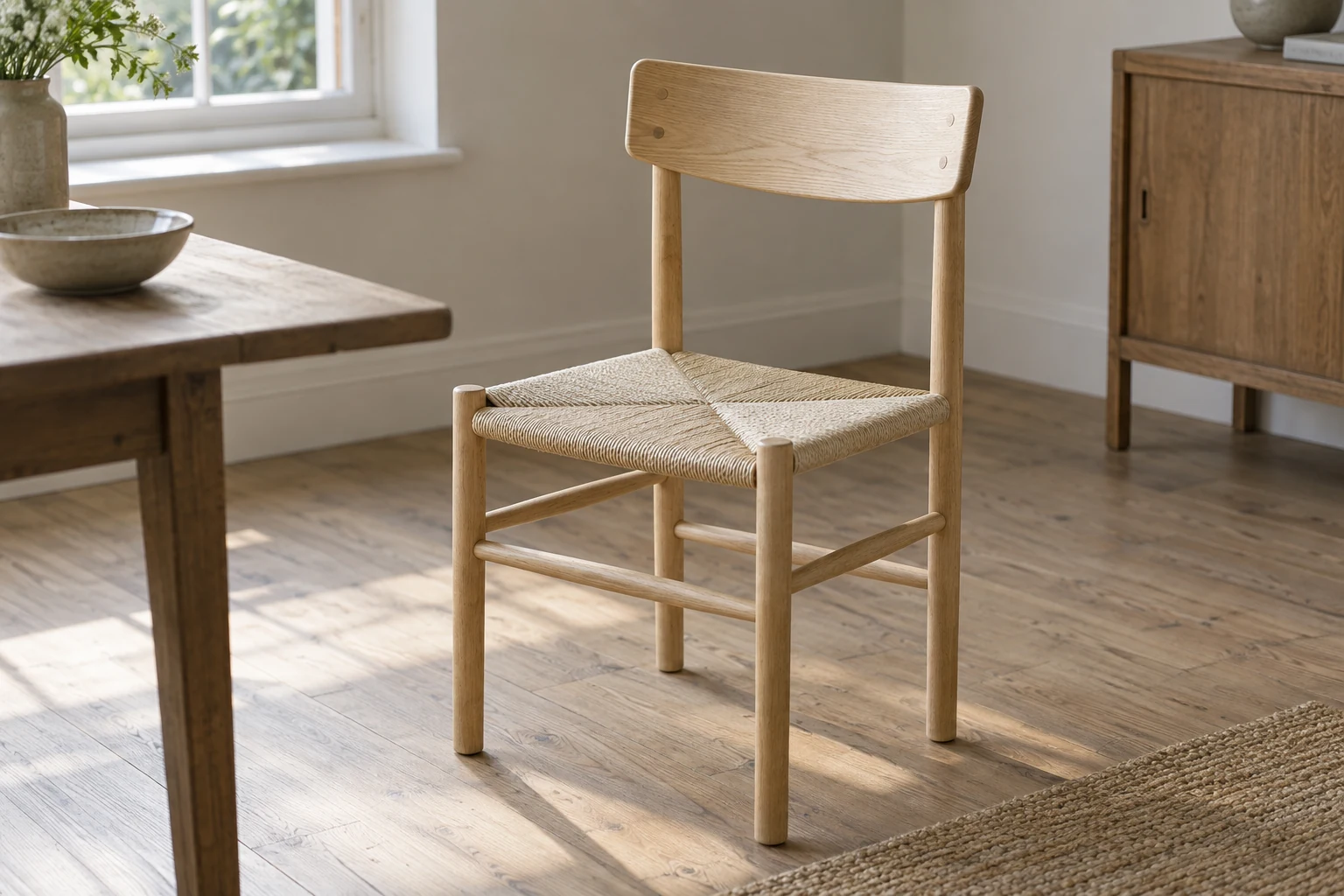
For cane, rush, cord, webbing or upholstery, compare every panel and edge. A single failed seat can make a nominal set of six temporarily a set of five. If one cover must change, decide whether you are comfortable with a partial match or whether the coherent plan involves the complete set.
Do not ask an ordinary editorial Guide for repair instructions or a promise that old seating will support a particular person. Obtain an appropriate professional assessment when structural, upholstery or conservation work affects the buying decision.
Price the whole set and the weakest outcome
Compare the asking price with the exact usable quantity and disclosed condition. Add likely transport and the reviewed work you would actually choose: one repair, all seat covers, a full cane programme or finish work across the group. Do not subtract imaginary restoration merely to create a bargain, and do not assume every intervention adds value.
A missing chair is rarely guaranteed to appear later in the same dimensions, timber, finish and condition. If the everyday plan needs six, decide whether five usable chairs plus one project chair genuinely meets it. The total decision is stronger when it remains acceptable under the weakest disclosed outcome.
Send one set-specific message
Ask the seller to confirm
- Quantity and differencesExactly which chairs are included, including arms, replacements or chairs not intended for use.
- Complete measurementsSeat, arm, overall and usable dimensions, with any meaningful variation across the set.
- Every-chair conditionMovement, repairs, seat support, altered parts and the weakest chair.
- Known interventionsUpholstery, cane, finish, glue, fasteners and structural work.
- Current offerAvailability, price, what is included, delivery method and applicable return terms.
Adaptable message
Ask about the complete set
Hello—I'm considering these chairs for regular use with a table whose underside is [height] and clear space between the legs is [width]. Could you confirm the exact number included; the seat height, arm height, maximum width and depth of each chair or any variation; and whether every chair stands evenly and has no seller-known movement? Please also identify any repaired, replaced, reupholstered or re-caned parts and show the weakest chair from the back and underside. Thank you.
Use the photograph-request Guide when one chair needs a whole-view, context and close-up sequence. For wear, restoration and active problems, continue with the condition Guide. Neither continuation turns a photograph into a structural guarantee.