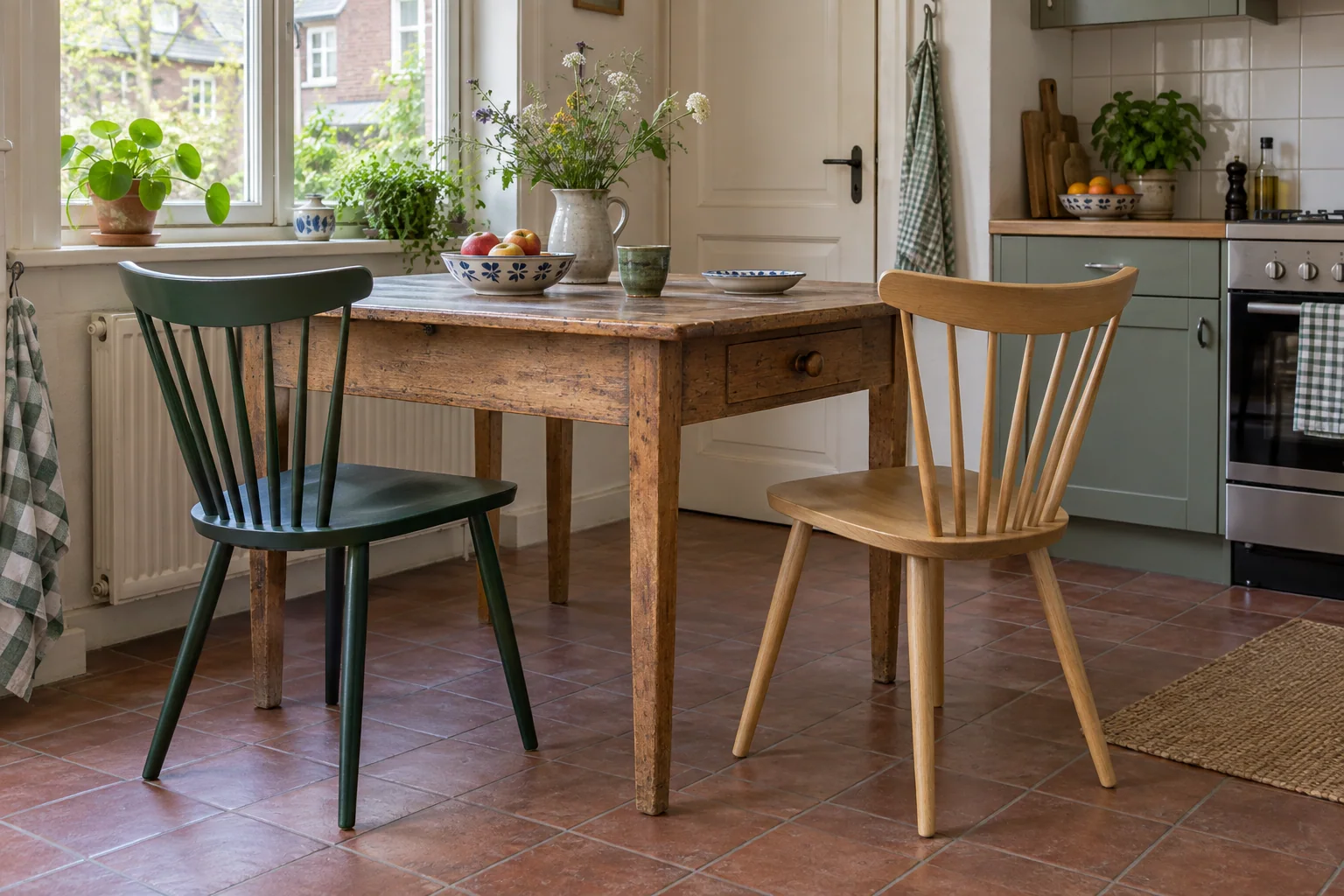
An old design can be a much newer chair
FDB Møbler identifies the J46 as Poul M. Volther’s 1956 design and continues to offer it. On its current painted-beech page, the seat is 41 cm wide and 38.5 cm deep, with a 44.5 cm seat height. These are useful current reference measurements, not an inspection of a vintage example.[1]
A second-hand bottle-green J46 listing at 2nd home attributes the design but leaves the measurement fields empty. That gap matters more to a tight kitchen arrangement than the evocative model name. Ask for the offered chair’s dimensions rather than filling the blanks from today’s catalogue.[2]
Request any surviving labels and purchase records if age matters to your choice. A launch year in an advertisement may describe the design. Paint colour and wear do not establish when the individual chair was made, and a later example can still be a good everyday purchase when described honestly.
Measure where the chairs meet each other
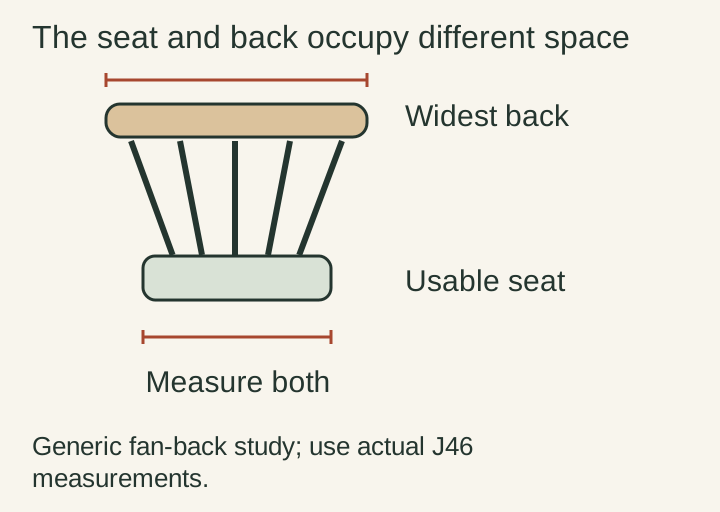
Measure usable seat width and depth, the widest back, overall depth and seat height. At the table, check the relationship between your body, the seat and the underside of the apron. A photograph of four empty chairs neatly tucked in cannot show how four people will sit.
| Measurement | What it helps you decide |
|---|---|
| Usable seat width and depth | Whether the sitting surface suits you. |
| Widest back | Whether adjacent chairs crowd each other when moved. |
| Seat height | How you sit relative to your table and its apron. |
| Overall depth, then occupied position | How much room remains behind the chair. |
Try two chairs next to each other, then pull one out at the angle you normally use. A spreading back can catch a neighbour or a wall even when the seat fits neatly. For a narrow kitchen, test that movement with a full-size paper outline or a comparable chair before arranging collection.
A mixed set can work without pretending it is a matched set
Ask the seller to number each chair and show the backs and undersides together. Compare the shapes, dimensions, finish and disclosed repairs before comparing shades of green. Differences can be attractive, but they should be visible in the condition record rather than discovered around your table.
Consider keeping a mixed set when its geometry works and the surfaces are serviceable. Repainting everything to the same colour adds work and can cover useful information. If repainting is necessary or wanted, have the existing coating and preparation assessed, and retain photographs of labels and previous finishes.
Look closely at the joints where the back, seat and legs meet. Ask whether any have been reglued or otherwise repaired. A loose joint is a repair question; tightening an unrelated screw or applying a thicker finish does not establish that the underlying connection is sound.
Try the chair before planning accessories
Sit long enough to notice the front edge, back support and position of your feet. If you want a cushion, try the proposed thickness: it raises your sitting position and changes how the back meets you. Do not order a cushion solely because its listing mentions J46; compare its template and fastening with your chair.
For four or six chairs, price any necessary joint work and finish treatment for the whole group. One attractive price can become several separate workshop jobs. Equally, sound chairs with honest surface wear may need only an appropriate routine of care.
Ask before travelling
Please measure the seat, widest back, overall depth and seat height of each chair, and show labels and repaired joints. Are these a documented matched set or chairs assembled over time?
A good J46 purchase leaves you with a kitchen you enjoy using. Exact colour matching is a preference; comfortable seating and a sound, understood set are the essentials.