Choose the CH24 you actually want
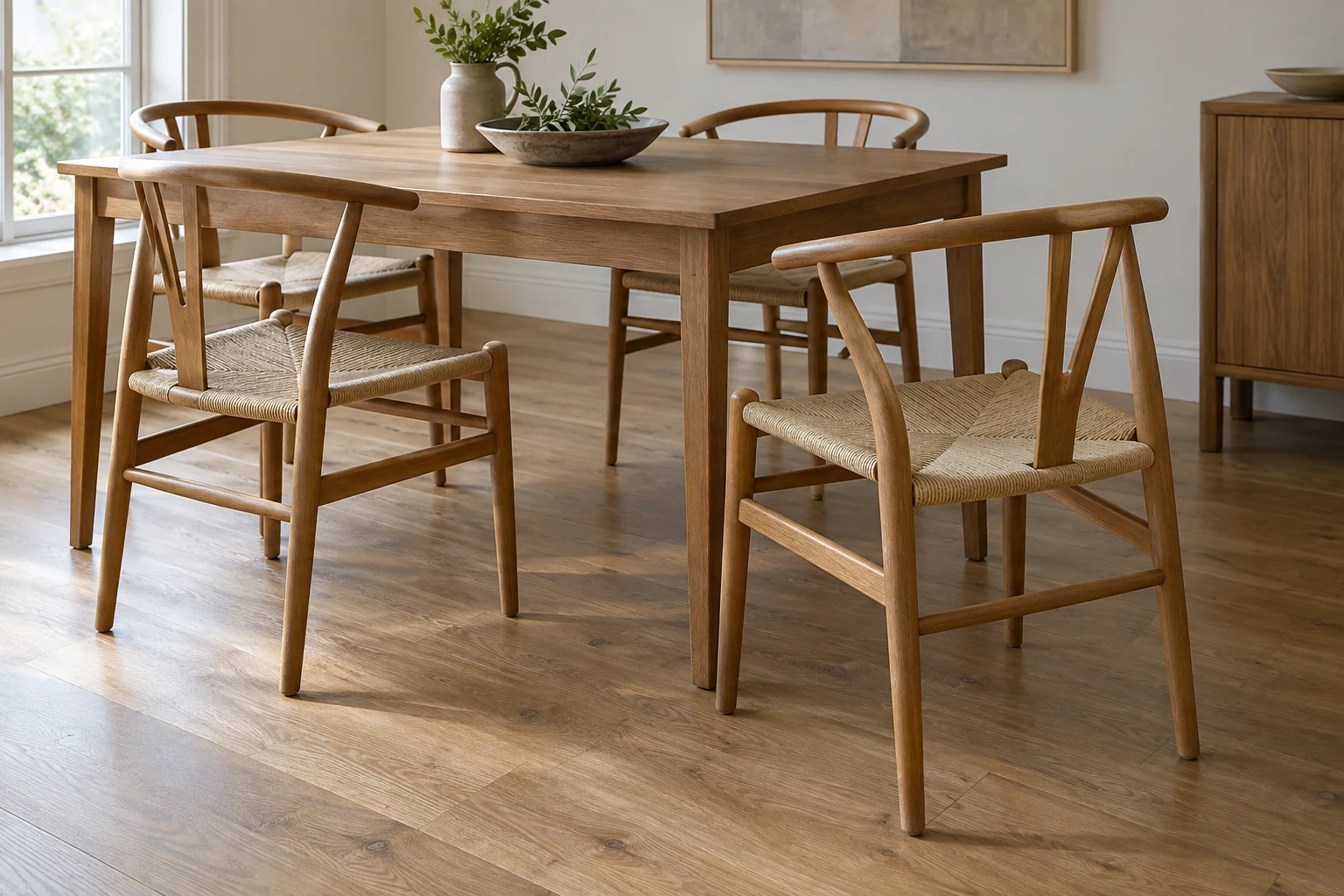
The appeal is easy to understand: an open back, a curved rail that gives the arms somewhere to rest, and a woven seat instead of a thick upholstered pad. In a small dining area, that openness can matter as much as the designer’s name. Try the chair at a table before deciding that the look is enough.
Wegner designed CH24 in 1949 and Carl Hansen & Søn began producing it in 1950. The Met distinguishes those facts from the production date of its own beech-and-paper-cord example, recorded as around 1950–79. That is a useful model for reading a seller’s date: the year of the design cannot date the chair for sale.[1]
Ask whether you want a documented older example, a later used set or simply this design for everyday dining. Later production is not a defect. A vague “mid-century” description is not the same evidence as a production record, and it should not silently become a premium for age.
The Library’s CH24 story follows the design and construction. This Guide concentrates on choosing the chairs you will bring home.
Check the curve against the table apron
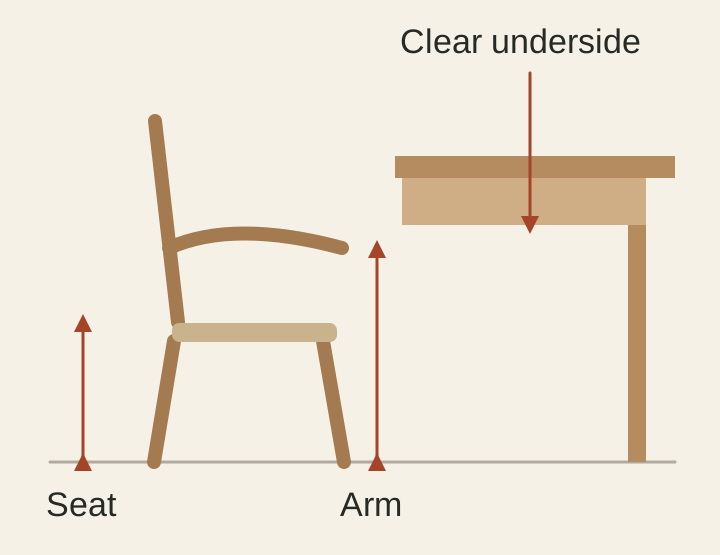
The CH24’s top rail wraps around from the back into the arms. It can meet the table edge or the apron beneath it before the seat is as far under the table as you expected. Measure the floor-to-arm height at the relevant point, the floor-to-seat height and the clear underside of the table apron.
Then check width between the table legs, not only table-top length. Set out the intended number of chairs and allow people to sit and leave normally. A picture of six chairs arranged tightly for a listing does not demonstrate a comfortable six-place table.
A cushion changes the seated relationship again. If you plan to use one, include it in the trial instead of relying on the bare-seat measurement. Notice support under your thighs, elbow position and whether the curved back suits how you sit during a long meal.
For the rest of the room, follow the dining-chair fit Guide. The model-specific question here is where that curved arm meets your particular table.
A set can have several histories
Ask for one photograph of the entire offer, followed by comparable views of each chair. Number them in the seller conversation. Compare dimensions, feet, top rails, finish colour and cord, then ask which differences come from production, use or later work.
A dining set assembled over time can be perfectly useful. What matters is whether you want its differences and understand the claims attached to it. A newly woven seat may look lighter beside older seats; one repainted frame may change the appearance of the group.
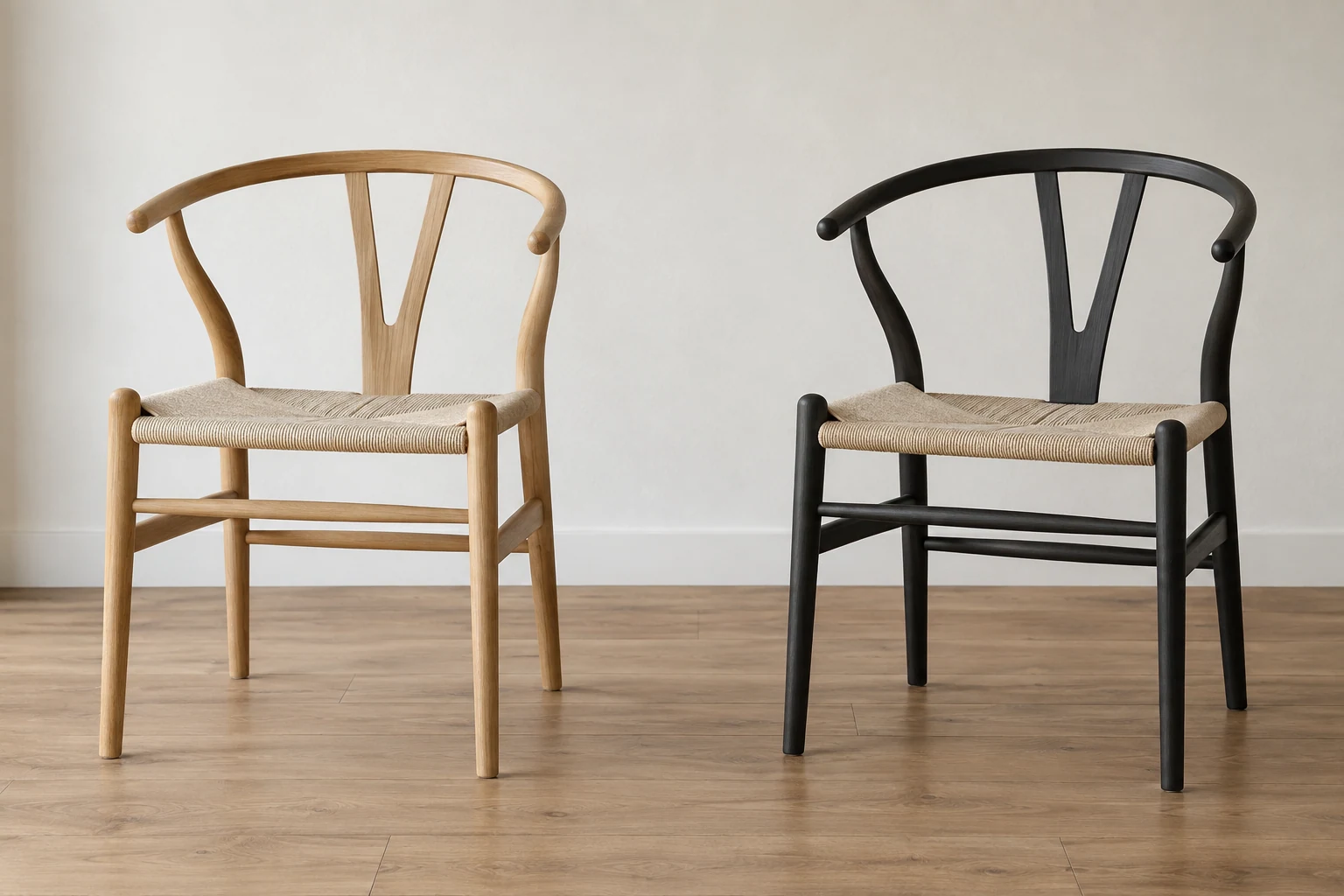
Carl Hansen & Søn currently offers the model in multiple woods and finishes. Its production account describes oil, soap, lacquer and paint. A current finish option is a research starting point, not evidence that the same combination was supplied in every earlier decade.[2]
If age or maker affects the price, request labels and stamps in place, any purchase documents and the source for the claimed production period. Keep the description provisional where it remains uncertain. Neither a Y-shaped back nor a neat weave can authenticate a chair on its own.
What the paper seat is telling you
Paper cord is twisted paper, not cane webbing. Carl Hansen & Søn’s material description explains that construction and the natural and coloured cord it uses. The distinction matters when requesting a replacement: “new cane” is too vague a scope for a chair intended to have a paper-cord seat.[3]
Inspect the complete seat, the front edge and where the cord turns around the frame. Note broken strands, gaps, local patches, unevenness and staining. Ask when a replacement was made and who wove it. A whole-seat photograph helps you understand the pattern; a close-up needs that context.
Colour change can be acceptable if you like it and the seat is serviceable. The maker’s care guidance recognises staining and colour transfer, advises against vigorous cleaning and notes that a skilled weaver can repair or replace cord. A stain is therefore a choice to assess, rather than an automatic instruction to replace the seat.[4]
Avoid buying on a promise that a deeply stained seat will wash back to an even new colour. If a clean, uniform group is essential to you, obtain a reweaving proposal that covers the affected chairs and the intended cord. Do not disguise an uncertain or broken seat with a cushion before assessing it.
Settle the frame before paying for new cord
The maker describes CH24 as glued traditional joinery with shaped timber components, including a built-up Y support. That construction makes the condition of the frame part of the reweaving decision. A fresh seat does not tell you whether the joints and rails were assessed.[2]
Ask about movement, cracks, glue repairs and added fixings at the legs, stretchers, seat frame, curved top rail and Y support. Locate a reported issue in a whole-chair view. Have a furniture specialist assess consequential frame concerns before relying on the chair or booking the weave.
The manufacturer describes about an hour of weaving in new production. Do not turn that into a one-hour restoration quote. Removing an old seat, checking or repairing the frame, selecting material and handling the chair are a different job. Ask the weaver what their service includes.[2]
Also separate frame treatment from seat work. A soaped frame, a lacquered one and a painted one should not all receive the same “refresh”. Record the known finish and any later treatment, especially when a seller has recently made the set look more uniform.
Compare two complete sets
Imagine two offers: an older set with three seats you would keep and one needing replacement, and a later set with all four seats professionally rewoven. Neither description wins by itself. Compare what you will have after the required work, with the evidence supporting each claim.
| Question | Older set with one tired seat | Later rewoven set |
|---|---|---|
| Appearance you want | Can you enjoy the different cord colours after one seat is replaced? | Do you like the uniform new cord with the existing frames? |
| Work still needed | Price the affected seat and any necessary frame work. | Confirm what the completed weaving service included. |
| Reason for the premium | Check the production evidence if age is part of the price. | Check documented service and actual condition rather than assuming new cord settles both. |
Add collection or delivery and the time without the chairs. If you need a working dining set immediately, a cheaper offer awaiting weaving may be a poor fit for your plans. If you enjoy the older set’s appearance and have a clear work proposal, one replacement seat may be an entirely reasonable compromise.
A message to copy
Could you number the chairs and show each front, side, underside and maker mark in place? Please list the actual seat/arm heights and widths, any frame movement or repairs, the known finish, and which seats have been replaced or need work. I also need the total price and delivery plan for the complete set. My table’s clear apron height is [measurement].