Write the exact relationship claim
Begin with the sentence the price and description ask you to believe. “These two are sold together” is a sale fact. “They look related” is an observation. “They were intended as a pair” and “they survive from one documented set” are historical claims that need their own evidence. A seller can be completely honest at the first level without proving the last.
Getty's Art & Architecture Thesaurus defines a pair as two objects of the same or similar type that are associated or complementary in use, purpose or position. That relationship is broader than perfect visual identity, but it is stronger than simply placing two unrelated objects in one listing.[1]
Getty defines a set as items the creator intended to be kept or seen together. Use that disciplined meaning when a listing implies an original or historic set; use “group offered together” when that is all the seller can currently establish.[2]
Language boundary
Matching is a question, not an upgrade button
A common colour, fabric, maker label or model shape can support comparison. None automatically proves that the exact members left a workshop together, remained together or retain the same parts. Keep the listing wording at the strongest level the evidence supports.
Give every member and part an identifier
Name the objects A, B, C and onward before requesting close photographs. Put the identifier in the frame or filename, and give removable cushions, leaves, keys, shelves, shades, bases or hardware a linked sub-label. This prevents an attractive detail from drifting away from the member it belongs to and makes omissions visible before payment.
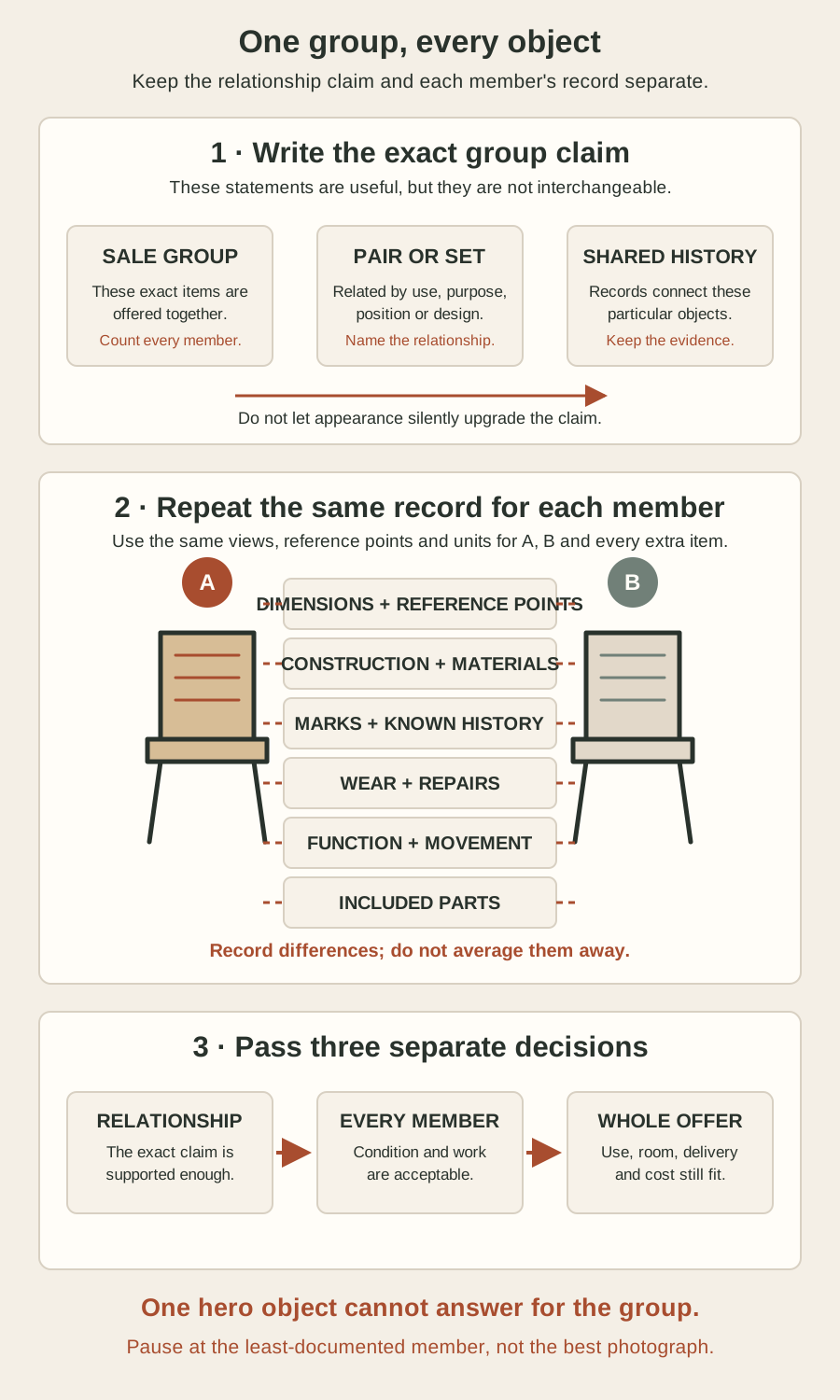
Getty's Object ID guidance notes that a related group can be documented as a whole while its individual components remain described. For a buyer, that becomes a simple two-level record: one offer sheet for the group and one item row for every physical member.[3]
| Record | Keep with it | Question it answers |
|---|---|---|
| Group offer | Seller wording, total count, total price, whether splitting is allowed and every included accessory | What exactly is being sold together? |
| Member A, B, C… | Whole views, exact dimensions, construction, marks, condition, repairs and function | Is this particular object acceptable and correctly described? |
| Removable part | Parent member, dimensions, attachment, condition and whether original, replaced or uncertain | Can a cushion, key, leaf, shade or fitting be assigned to the right object? |
| Relationship evidence | Invoice, numbered parts, early photograph, provenance, matched interfaces or specialist record | What supports the claimed pair or set beyond appearance? |
Request the same photograph sequence for every object
Comparison fails when A has a polished front view, B appears only behind it and C is described as “the same.” Ask for each member alone at the same useful distances and in similar diffuse light. A group view establishes count and relationship; it does not replace the individual sequence.
Repeat these views for every member
- Whole objectFront, both sides, back, top and safely visible underside with the identifier and a scale reference.
- Same measurement pointsShow the tape at identical structural references instead of accepting separately rounded listing dimensions.
- Construction and interfacesRecord joints, edges, undersides, attachments and the places where removable parts belong.
- Marks in contextKeep a whole view, location view and square readable detail for every label, stamp, number or inscription.
- Wear and interventionUse one whole, one close and the corresponding reverse or underside for every repair, loss, stain, split or alteration.
- Function only when safeShow ordinary doors, drawers, folds, swivels or adjustments separately; do not force, load or rock an uncertain member.
Use the furniture-photograph Guide for the whole, relationship and detail sequence. Add the member identifier to that method rather than inventing a separate visual language for the set.
Compare like with like in one matrix
Put the results side by side before deciding whether a difference matters. Use actual values and observations, not “same as A.” Measure repeated objects from identical reference points; record the smallest and largest relevant dimensions separately; and keep an unknown cell blank or marked unknown instead of copying another member's answer.
| Field | Compare exactly | Decision-changing difference |
|---|---|---|
| Dimensions | Height, width, depth, seat or surface height, opening and component geometry from the same points | Changes alignment, comfort, function, room fit or the claimed model |
| Construction | Materials, joint layout, underside, edge treatment, hardware and repeated profiles | Suggests a replacement, alteration, different production or unresolved identity |
| Marks and history | Type, wording, location, numbering, ownership record and provenance gaps | Supports different makers, dates, retailers, owners or later assembly |
| Surface and upholstery | Colour in the same light, grain direction, fabric, finish, wear pattern and documented treatment | Creates an unacceptable visual imbalance or hides incompatible work |
| Condition and repair | Same vulnerable zones, movement reports, losses, repairs and professional assessments | Makes one member unsuitable, unsafe to test or materially more expensive |
| Function and parts | Same ordinary action, orientation, keys, leaves, cushions, shades and fittings | Prevents the group doing the job for which it is being bought |
Comparison rule
Never average away the outlier
A mean height, a shared condition grade or “good overall” can conceal the one member that changes the purchase. Keep the exact outlier, its cause if known, likely work and effect on use visible.
Read differences without demanding identical objects
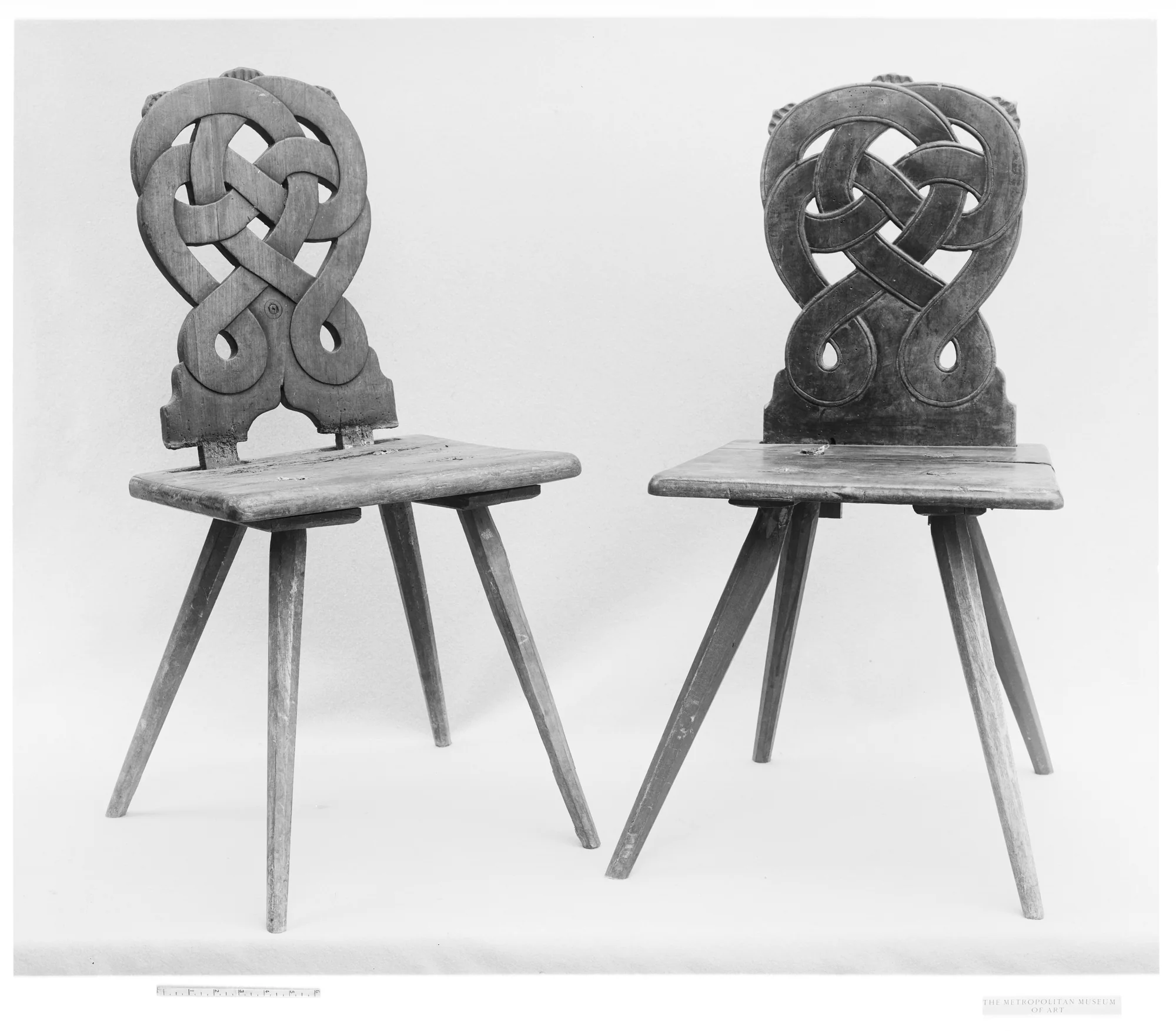
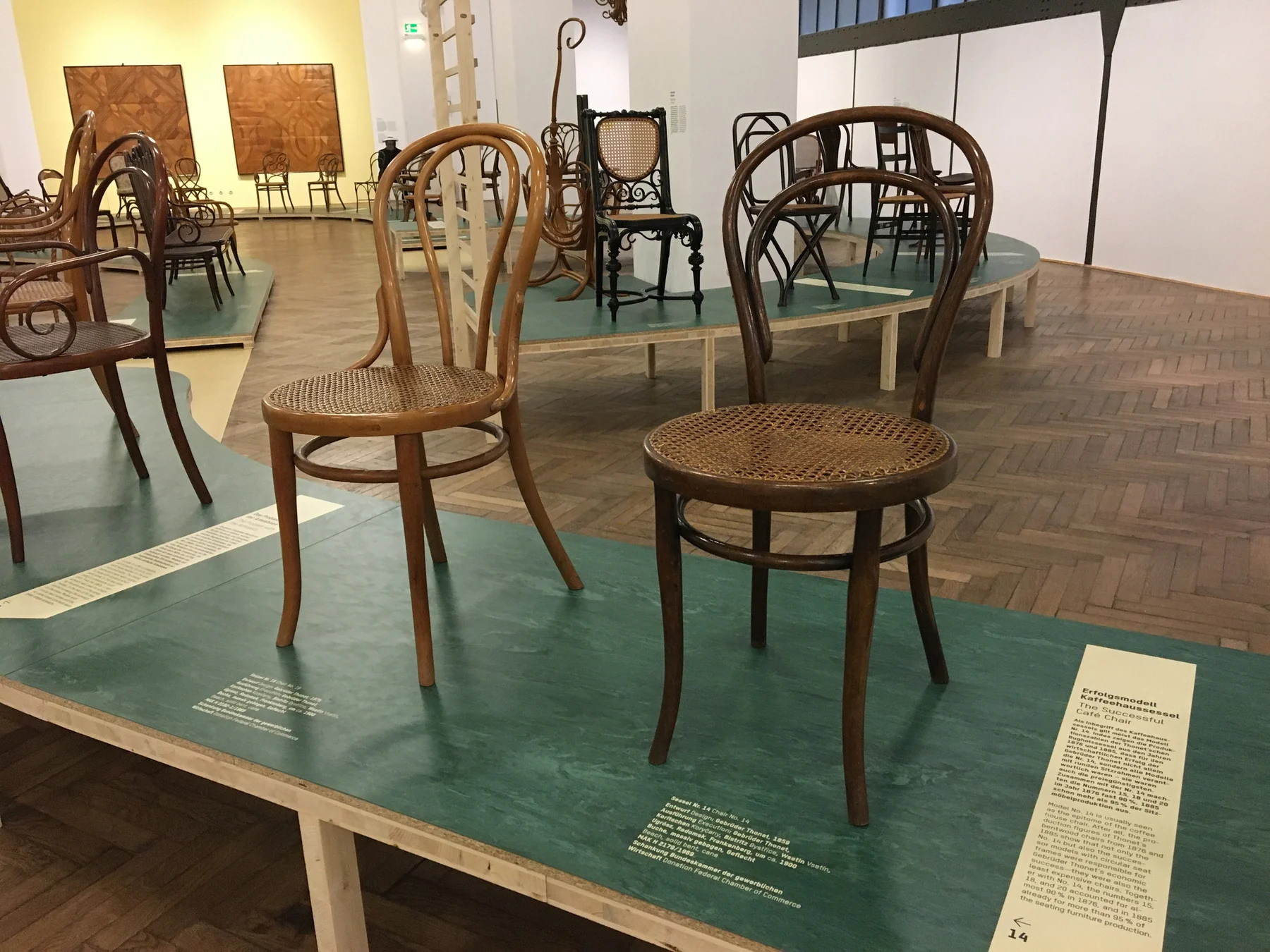
The Met records its German eighteenth-century chairs as one pair and lists the height for each, yet the shared photograph shows different surface tone, wear and carved detail. The useful lesson is not that every difference is harmless; it is that a pair remains two aged physical objects whose variations must be described rather than airbrushed into one condition statement.[4]
| Visible difference | Useful next question | Do not assume |
|---|---|---|
| Colour, grain or sheen differs | Same-light photographs, exposure history, finish and documented treatment for each member | That one is fake, faded or refinished from colour alone |
| Small handmade detail varies | Repeat pattern, tool marks, construction and whether asymmetry is intentional across the group | That hand work should be mechanically identical |
| Dimensions differ | Re-measure from the same points and inspect replacements, deformation and model or production differences | That rounded listings explain a functional mismatch |
| One mark or number differs | Record every mark in place and research what that mark actually identifies | That matching labels prove all parts, date and history |
| One repair or replacement stands out | Scope its extent, date if known, effect on structure, appearance and future work | That restoring every member to one look is necessary or appropriate |
Use the condition Guide to label observations, seller reports, unknowns and professional conclusions for each member. Normal age can remain visible while consequential uncertainty receives a real next owner.
Test the whole use, room and cost
After the objects pass their individual checks, return to the reason for buying them together. Place the measured footprints in the actual room, include doors and circulation, and test the repeated job: two bedside surfaces at the relevant mattress height, chairs at the same table, lamps in the intended positions, or nesting pieces in both nested and separated states. A historically coherent group can still be wrong for the room.
Price the group without hiding the weakest member
- UseConfirm each member can perform its intended role and that any intentional left/right, high/low or arm/no-arm variation suits the plan.
- Visual toleranceDecide which variation you welcome, which work you would commission and which mismatch would keep bothering you.
- Professional workEstimate every member separately, then include the consequence of matching—or deliberately not matching—finishes, upholstery or repairs.
- TransactionConfirm total price, whether the seller will split the group, what happens if one member is unavailable and how returns apply to a multi-object purchase.
- DeliveryCount protected objects and loose parts, not one listing; assign labels and packing positions before collection.
Use the delivery-route Guide for the largest protected member and every turning constraint. Then add the carrier's group-specific plan so objects and parts cannot be swapped, rubbed together or separated from their records.
Plan labelled handling and collection
The Canadian Conservation Institute advises checking furniture for damage and loose joints before movement, removing or securing vulnerable parts, lifting from sound structural areas and never dragging. Apply the check to every member: one stable chair does not make its partner safe to carry the same way.[6]
| Before collection | Carrier record | At destination |
|---|---|---|
| Photograph A, B, C and all parts in their agreed condition | Use non-damaging labels on packaging, not adhesive labels on the furniture | Check each identifier and part count before packaging is discarded |
| Confirm the strongest handling points and vulnerable repairs for each object | Keep objects from rubbing and protect projections with a reviewed packing plan | Compare any change with the correct member's departure record |
| Assign removable parts to the exact parent object | Use a component inventory and separate container positions | Reassemble only with the correct parts and responsible method |
Handling boundary
Do not create matching damage
Do not stack, bind, drag or lift several objects together merely because they form a pair or set. The carrier should own the protected handling method for the exact dimensions, condition, materials and route.
Send one complete pair-or-set request
Message to copy
Ask for one group record and one record per object
Hello—could you confirm exactly which objects and removable parts are included and whether the description means offered together, a matching pair/set, or a documented shared history? Please label the objects A, B, C onward and show the complete group plus each member alone from the same front, side, back, top and safely visible underside views. For each one, please give dimensions from the same reference points; show construction, marks, repairs, wear and included parts; and report ordinary function only where safe. Please say what relationship evidence is known, what differs, whether the group can be split, and how every member and loose part will be labelled and protected for collection. Please do not force, load, stack, drag or refinish anything for the inspection. Thank you.
Buy when the stated relationship is supported enough for the price, every member's exact condition and function are acceptable, the visible differences suit your intention and the complete room, work and delivery plan remains coherent. Pause when one object stands in for the rest, measurements use different references, a relationship claim outruns its evidence or the weakest member has unresolved work. Decline when a consequential mismatch, missing part, handling risk or total cost makes the group wrong—even if the hero member is excellent.