Define the job and the exact seat
Begin with what the chair must do. A dining chair used every day needs a dependable load path through the seat and frame. A bedroom chair used occasionally may tolerate more uncertainty. A display object can preserve fragile old material that would not be responsible to treat as ordinary seating.
Write the seat brief
- UseRecord daily, occasional or display use and whether the chair must be ready on arrival.
- Exact objectIdentify the chair, every chair in a set and which photographs belong to which seat.
- Seller reportAsk whether the chair is currently used, when the seat was last worked on and what remains untested.
- Work allowanceDecide whether reweaving, frame work and loss of use while work is completed can enter the purchase.
A woven pattern can look complete from across a room while one edge has begun to detach. Conversely, colour change and an honestly disclosed older reweave need not make a useful chair unacceptable. The question is whether this exact seat suits its intended work with a credible next step for what is unknown.
Keep the material name provisional
The Canadian Conservation Institute describes cane as material taken from the outer skin of rattan and distinguishes it from whole or split rattan and other plant materials. Everyday listings use terms more loosely. Record the seller's wording, pattern, colour, surface and cross-section where safely visible, but do not identify a fibre from colour alone.[1]
- Ask whether the seller knows the material from an invoice, maker record or previous craftsperson rather than from appearance alone.
- Photograph a safe loose end or existing break without pulling it; the edge may reveal more construction than the broad surface.
- Record whether the seat is hand worked through holes, wrapped around rails, fitted into a groove or held by another system.
- Keep painted, coated, fibre-wrapped, synthetic and replacement material possible when the evidence is incomplete.
Evidence boundary
A pattern is not a material certificate
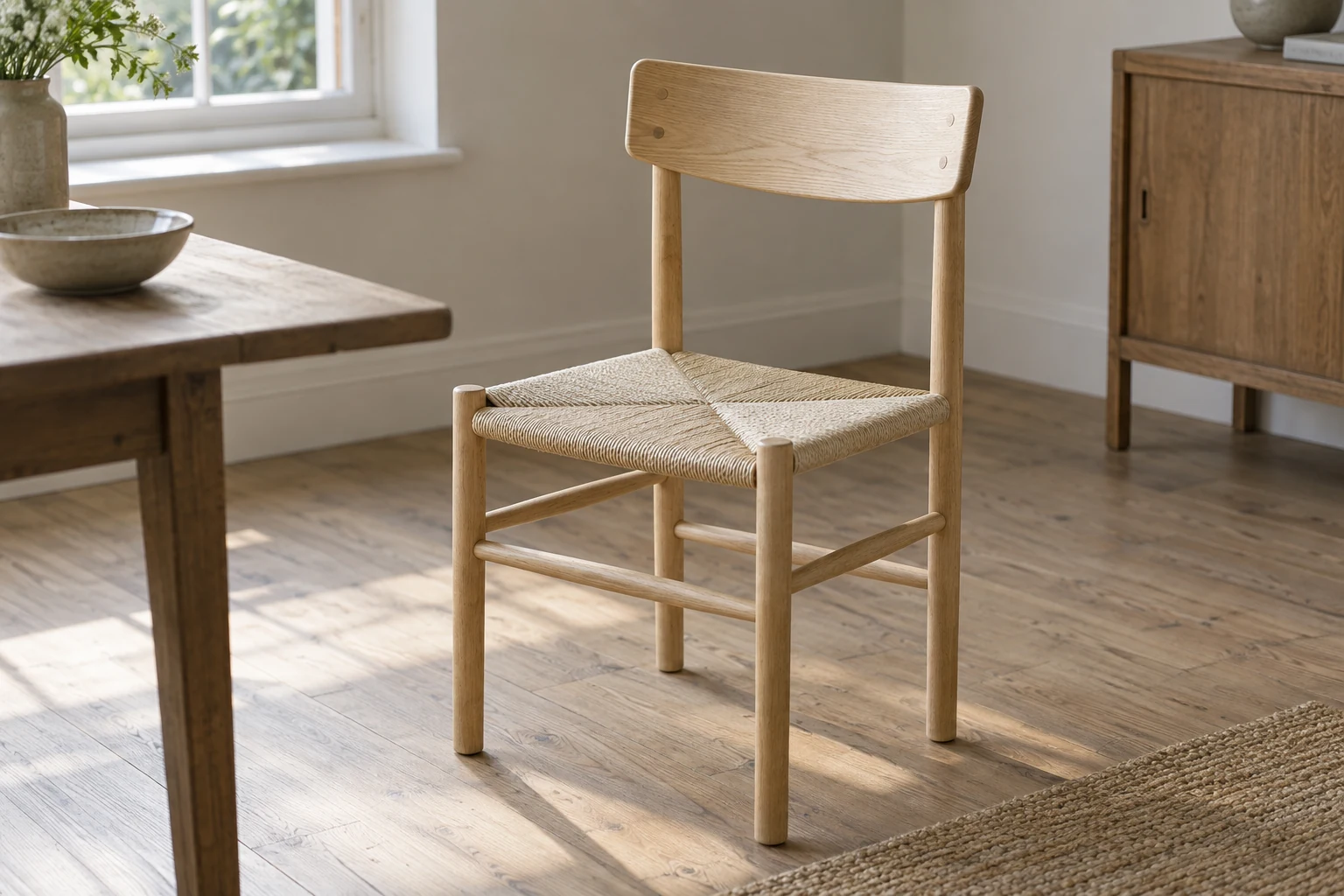
Open hexagonal cane, rush envelopes and Danish cord patterns are useful descriptions. They do not by themselves establish fibre, date, maker, originality, remaining life or the correct repair method.
Build a photograph set that keeps location
Ask first for the complete chair from the front, both corners, side and back. Then photograph the seat square-on in even light and again with light travelling across it. Finish with overlapping close views of the centre, front working edge, sides, rear perimeter, attachment and safely visible underside. Keep part of the frame in every close view so a defect retains its location.
Use the furniture-photograph Guide for the whole, relationship and detail sequence. A sharp macro of one broken strand is weak evidence if no image shows where it sits or how the rest of the chair is supported.
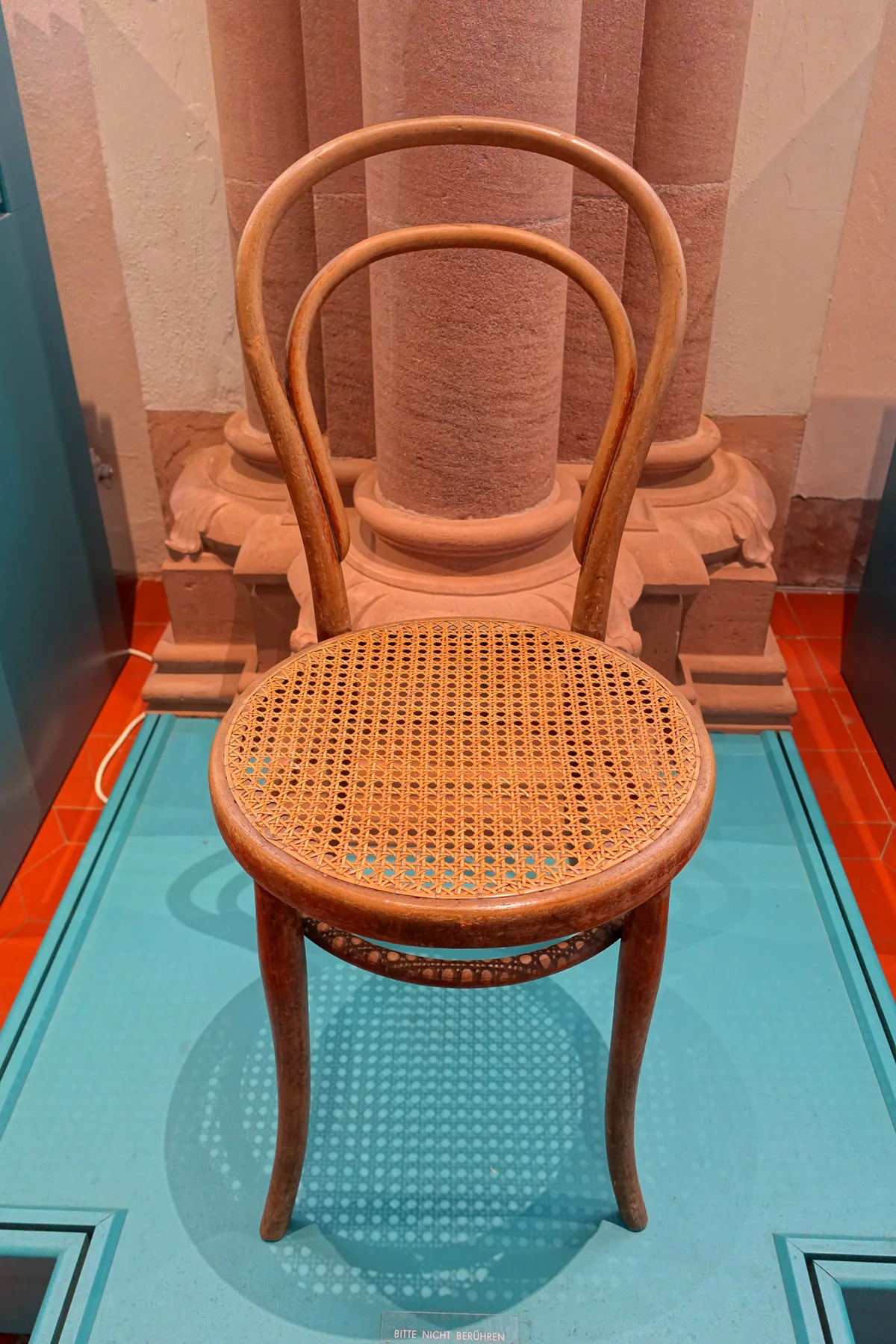
The pictured museum chair is documented as a circa-1920 Thonet No. 14 with a woven cane seat. It is useful because the seat, perimeter and bentwood frame remain visible together—not because its colour, pattern or present condition should be used to judge an unrelated chair.[4]
Map the load path from field to frame
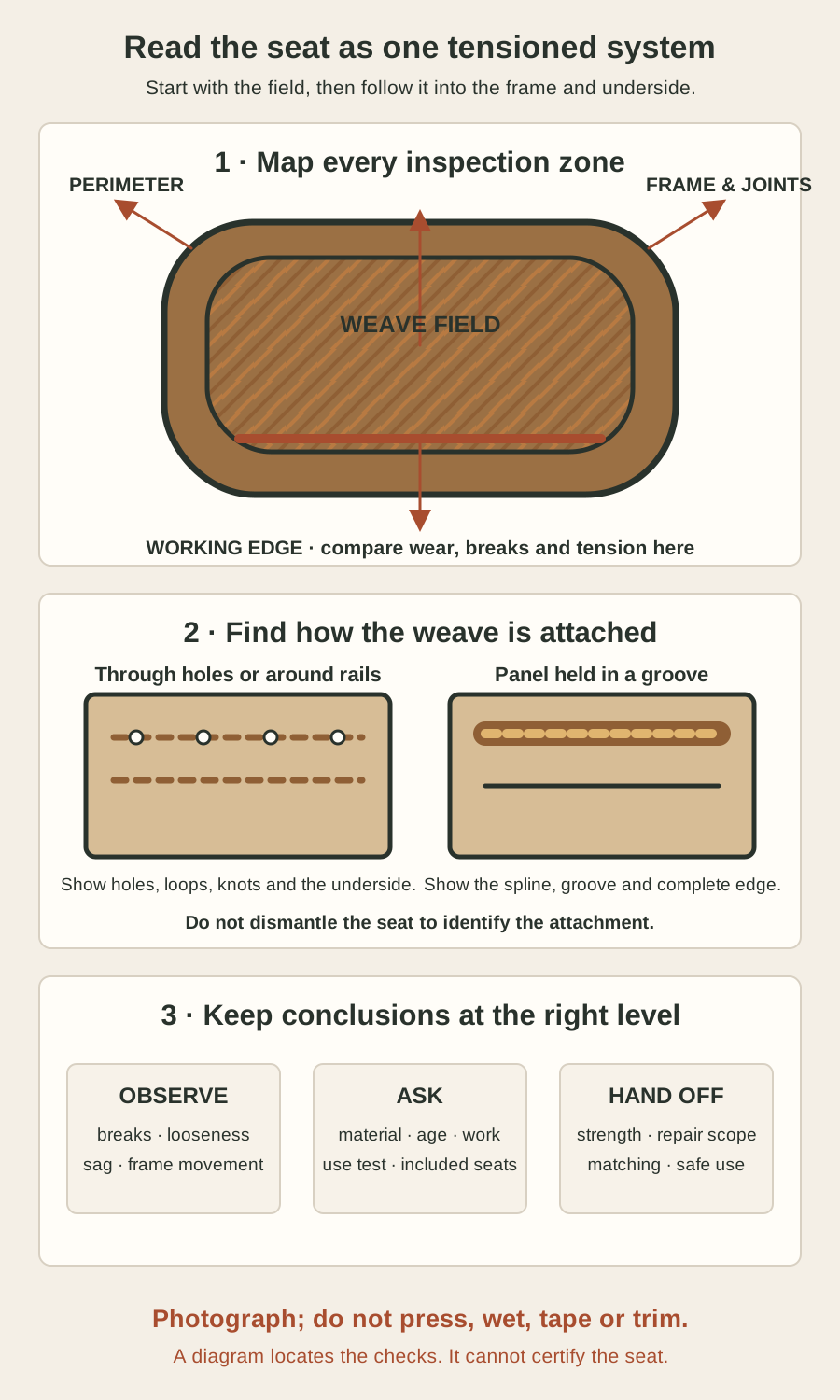
Read the seat in zones. The field carries the broad load; the front and side working edges receive repeated contact; the perimeter transfers tension; the attachment holds that perimeter; and the rails and joints carry the assembly. A complete-looking centre cannot compensate for a detached edge or moving frame.
Inspect each zone
- FieldLook for broken, missing, cut, heavily abraded or displaced strands and for local rather than general sag.
- Working edgeShow the front and sides where clothing, hands and repeated entry place extra wear on the weave.
- Perimeter and attachmentFollow the entire boundary for lifting, gaps, split holes, loose wrapping, disturbed spline or added fasteners.
- Frame and undersideShow rails, corners, joints, blocks and earlier work without removing a dust cover or dismantling the chair.
Distinguish age from a consequential question
CCI notes that plant fibres are vulnerable to physical force and that the boundary where a flexible cane seat meets a rigid frame is a common point of weakness. It also warns that distortion, water and adhesive tape can create further damage. Those risks make an existing break or detached perimeter a stop-and-scope observation, not an invitation to test harder.[1]
| Observation | Ask next | Do not conclude |
|---|---|---|
| Broad, even colour change | Whether the seat was refinished, coated or reworked and when | Fibre, age or weakness from colour alone |
| One broken or sharply abraded strand | Its exact location, nearby strands and the complete perimeter | That the rest of the seat is ready for load |
| General or local sag | A level side view, use history and specialist assessment | Cause, remaining life or a universal acceptable amount |
| Lift or gap at the boundary | Attachment method, frame condition and whether movement continues | That glue, wetting or a new spline is the correct repair |
| Different weave or colour in one area | Previous invoice, full repair extent and whether frame work was included | Originality, poor workmanship or matching strength from appearance |
Photographs are strongest at locating a question. They are weaker at telling you how brittle a strand is, how the seat behaves under ordinary use or whether an earlier intervention is structurally coherent. Keep those claims seller-reported or professionally assessed.
Compare every chair in a set
Do not let the best chair represent a set. Give every chair a temporary identifier and request the same whole-seat, perimeter and underside sequence. Record material as reported, broken strands, sag, attachment, frame movement, known repair and current-use status for each one.
Build a one-row-per-chair record
- IdentityUse seller inventory numbers or simple labels such as A–F and keep them visible in the image set.
- Seat stateRecord ready for reported use, needs assessment, known work or not tested—without upgrading the seller's words.
- Frame stateKeep rail or joint movement separate from the woven surface because different specialists may be needed.
- Work scopeAsk whether pricing is per seat, whether matching material is available and whether several chairs should be worked together.
Then use the dining-chair Guide to compare dimensions, table fit and the weakest chair in the set. A multiplied reweaving scope can matter more than a small difference in asking price.
Keep testing, handling and care conservative
CCI advises checking furniture for loose joints before movement and lifting a chair by the seat structure rather than the back or arms. If a woven seat is broken, detached, brittle-looking or paired with a moving frame, do not sit, press or bounce on it to create proof. Ask the seller to report ordinary current use only when they consider the chair safe to use.[2]
Carl Hansen & Søn publishes specific maintenance and replacement guidance for its known paper-cord seats. That is useful manufacturer evidence for those exact constructions, not a recipe for unidentified vintage cane, rush, cord or synthetic fibre. Keep cleaning, wetting, coating and strand replacement out of a buying inspection until the material and construction are known.[3]
Professional boundary
Separate weaving work from frame work
An experienced caner, rush or paper-cord weaver can confirm material and scope a seat. A furniture conservator or repair specialist should assess split rails, loose joints, altered attachment or consequential historic work. Ask who coordinates the two when both are involved.
Send one complete woven-seat request
Message to copy
Ask for the complete seat and its boundary
Hello—could you label each chair and send a whole-chair view, a square view of each seat, a low side view in raking light, overlapping close views of every edge and attachment, and the safely visible underside and frame joints? Please report the material and previous reweaving only as known, identify every break, loose area, repair or moving joint, and say whether each chair is in ordinary current use or untested. Please do not sit, press, bounce, wet, tape, clean, tighten or dismantle anything for the inspection. Thank you.
Buy when the exact seats suit the intended use, the frame and attachment evidence is coherent, disclosed wear or reweaving is acceptable and likely work has a credible scope. Pause when the weakest chair is missing, the perimeter or frame is not shown, a seller must provoke a failure to answer, or the decision depends on an unpriced specialist repair. Decline when the known condition, total work or loss of use does not fit the purpose—even if the weave is visually appealing.