
Define the use and the exact object
Begin with the job. Daily dining, an occasional lounge chair, a shelving unit, a headboard and a hanging seat do not place load in the same locations. Decide whether the piece must be ready for ordinary use on arrival, whether a specialist assessment or sympathetic repair is acceptable, and which structural, surface or material unknown would make you stop.
Write the inspection brief
- Intended useRecord daily, occasional, decorative or storage use, expected loads and whether children, movement or suspension make failure more consequential.
- Exact objectGive the piece or every item in a set a stable identifier and keep cushions or covers separate from the structure beneath.
- Seller reportAsk whether it is currently in ordinary use, what remains untested and whether any movement, noise, snag or loose material is already known.
- EnvironmentRecord indoor, covered-outdoor or exposed use; sunlight; damp or wet incidents; storage; moves and recent cleaning.
- Work toleranceDecide whether rebinding, woven-panel work, structural repair, finish work or loss of use while a specialist assesses it can enter the purchase.
Visible age is not automatically a reason to reject a piece, and a warm even colour is not evidence that the construction is sound. The useful question is whether the exact structure, known history and remaining uncertainty suit the intended use with a credible next step.
Keep rattan, cane and wicker provisional
The Canadian Conservation Institute describes rattan as a term used for several climbing palms with long, tough, slender stems; cane usually as strips of rattan's outer shiny skin; and wicker both as willow elements and as a broader term for a sturdy interworked construction made from several possible plant materials. Listings use the words even more broadly, so preserve the seller's wording without turning it into identification.[1]
| Seller word | Ask to locate | Keep possible |
|---|---|---|
| Rattan | Which main rods, split strips, wraps or woven fields does the seller mean, and what supports the claim? | Another palm or plant, wood, bamboo, reed, paper, synthetic replacement or unknown |
| Cane | Is the word being used for a frame member, binding strip, hand-caned panel or pre-woven sheet? | Trade usage that does not match a botanical distinction |
| Wicker | Does it name the technique, the complete furniture type or a claimed material? | Several plant species or synthetic wicker |
| Original | Which frame, panel, lashing, finish, fastener and cushion is claimed original, and on what record? | Later repair or replacement in another zone |
Evidence boundary
A colour, diameter or weave is not a material certificate
Record smooth or fibrous surface, round or split section, hollow-looking or solid-looking end, coating, pattern and safe visible break. Do not cut, scrape, burn, wet or pull a fibre to identify it.
Build a whole-to-detail photograph set
Ask for the complete piece from the front, rear, both sides and both corners, then a level view that shows stance or suspension. Remove loose cushions only when the seller can do so without stressing the object. Continue with overlapping views of every main member, bend, crossing, lashing, fastener, foot or hanging point, woven field, working edge, underside and known repair. Keep enough surrounding structure in each close-up to locate it.
Use the furniture-photograph Guide for the whole, relationship and detail sequence. Ask for even light and a second view with light travelling across the surface; do not ask the seller to bend a member or prise open a wrap so the camera can see more.
The editorial reconstruction keeps an oval boundary, woven enclosure, opening and suspension visible together. It is context for locating the inspection zones, not a construction drawing, material identification or condition reference. The actual attachment and complete support route need their own evidence.
Do not leave these views implied
- Back and undersideShow concealed crossings, support rails, fasteners, feet, glides and repairs, without dismantling a fixed cover.
- Every bend and jointFollow a member into and out of the curve and show the same joint before and after any wrapping.
- Working edgesRecord arms, seat fronts, shelf edges, handles and other locations repeatedly touched, loaded or snagged.
- Every item in a setThe best chair cannot represent the weakest frame, binding or panel.
Follow the whole load path
Start where the intended load enters and trace it to the floor, wall or suspension. On a chair, that may run from woven seat or cushion platform into seat rails, side members, crossings, legs and feet. On a hanging chair, include the top attachment, connector and stand or building fixing as separate systems. On a shelf or table, follow each loaded surface into its supports and bracing.
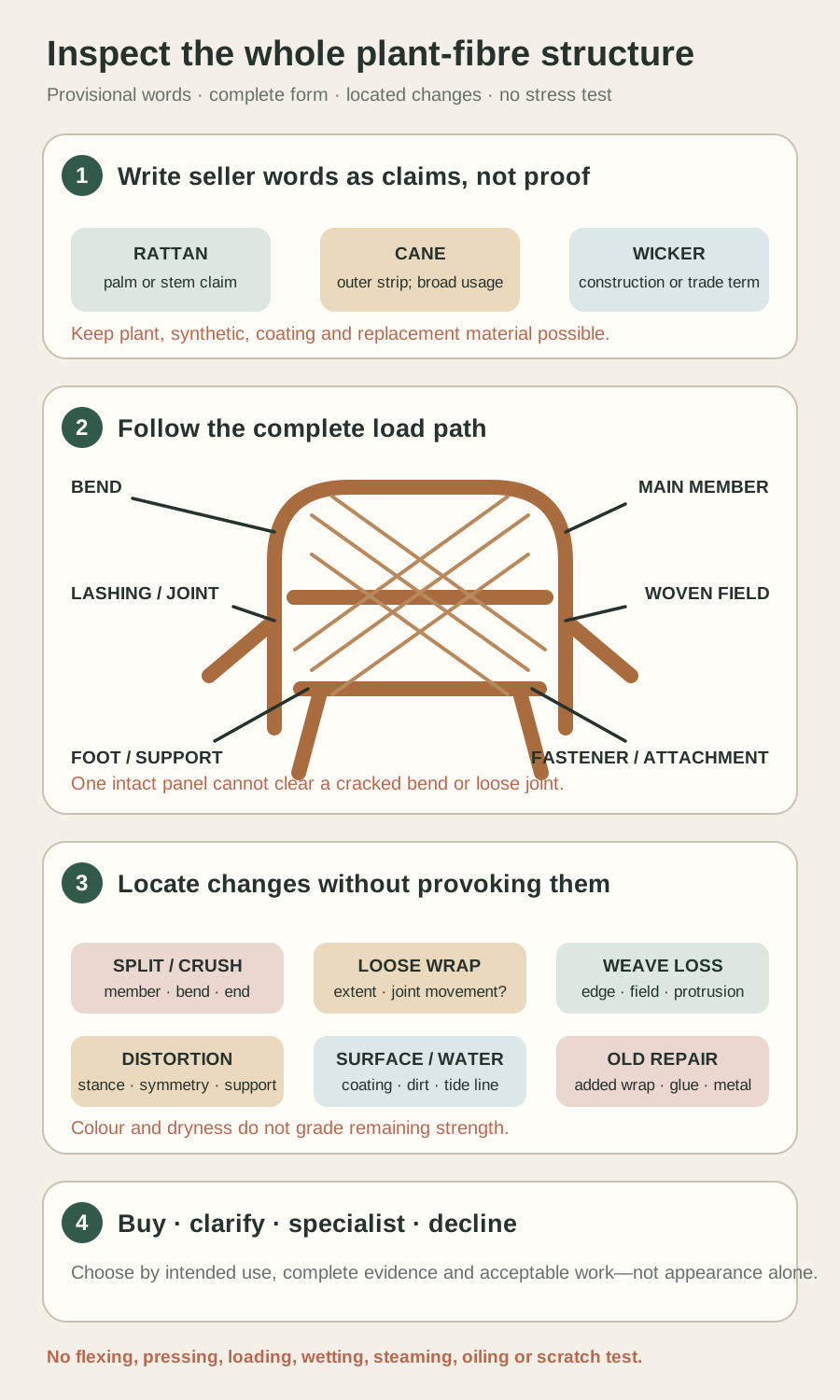
Trace six structural zones
- Main membersFollow full-length rods, poles or bundled supports for changes in section, crushing, splits, cut ends and interrupted continuity.
- BendsShow the outside and inside of each curve and the straight material on both sides; do not flex it to open a line.
- Crossings and jointsLocate what meets, whether geometry is even and what appears to hold the connection beneath or beside a wrap.
- Lashings and fastenersRecord full circumference, loose turns, gaps, broken or protruding ends, added nails, screws, wire, staples, glue or tape.
- Infill and working edgeMap missing, broken, cut, abraded, displaced or sagging strands and where the panel joins the frame.
- Floor, wall or suspensionShow feet, glides, brackets, chain, hook, stand or other support and keep building fixings outside a furniture-only conclusion.
Separate main-member, joint and binding observations
CCI identifies handles, rims, attachment points and lashings as vulnerable because repeated use and flexing concentrate stress there. It also notes that a hollow woven structure becomes more vulnerable as material fractures and that gravity and humidity can contribute to distortion. For furniture, use those principles to locate risk; do not transfer a basket example into a strength grade.[1]

| Observation | Ask next | Do not conclude |
|---|---|---|
| Line along or across a main member | Show both ends, nearby bend or joint, opposite side, full member and any earlier repair | Split depth, cause, remaining capacity or repairability |
| Flattened, dented or crushed section | Locate it in the load path and ask when it appeared and whether geometry changed | That a new wrap restores the member |
| Loose or missing binding | Show what the binding connects and whether the underlying joint is aligned or seller-reported moving | That the binding is merely decorative |
| Uneven stance or distorted curve | Use a level whole view, floor reference, matching side and history of storage or loading | Cause or safe straightening method |
| Added metal, glue, cord or tape | Ask who added it, where it begins and ends, what failed first and whether the intervention is stable | Good repair, bad repair or deliberate concealment from appearance alone |
A tidy new lashing can conceal the location of a joint or old break, while an aged but complete wrap may still be doing a clear connecting job. Do not grade workmanship only by colour or neatness. Ask what sits underneath, what changed and whether a relevant specialist can inspect the connection before ordinary use.
Inspect woven panels without losing the frame
Read each woven field from broad shape to working edge, perimeter and attachment. Look for local sag, broken or missing strands, sharp protruding ends, abrasion where people or cushions rub, gaps at the frame, disturbed edging and replacement patches. Then return to the main frame: a complete weave does not make a split rail or loose crossing sound, and a frame repair does not restore missing infill.
When the object includes a tensioned chair seat, use the woven-seat Guide for its centre, working edge, perimeter, attachment, chair frame and underside. This Guide remains responsible for the larger rattan or wicker object's members, bends, lashings, feet and other panels.
| Zone | Record | Consequence to scope |
|---|---|---|
| Broad field | Pattern, evenness, displaced rows, local or general sag and missing material | Panel work may differ from frame work |
| Working edge | Abrasion, broken ends and snags at seat fronts, arms, handles or shelf edges | An exposed end may need protection from use before assessment |
| Perimeter | Gaps, lifting, breaks, changed spacing and how the edge is finished | Do not assume tightening or wetting is appropriate |
| Attachment | Wrapping, groove, holes, staples, nails, spline, glue or another visible system | Frame and weave may require coordinated specialists |
| Replacement area | Extent, material as recorded, date, provider and connection to older work | Different colour does not establish incompatible strength |
Read surface, moisture and repair history separately
CCI explains that wet plant material can soften, weaken, swell unevenly and distort, and that uneven wetting may leave light or dark patches and tide lines. It also notes that low or fluctuating relative humidity can increase brittleness or stress thinner wrapping elements. A visible ring or dry-looking surface is therefore a history question—not a remote diagnosis of cause, mould, moisture content or strength.[1]
| Visible or reported state | Ask | Keep separate |
|---|---|---|
| Even darkening or fading | Indoor or outdoor history, light exposure, finish and previous cleaning | Age, plant species and brittleness |
| Flaking, glossy or opaque coating | Product if known, date, extent, preparation and what lies beneath | Whether removal is safe or desirable |
| Dark line, patch or tide-like ring | Wetting, leak, washing, storage, odour and current dry-state report | Mould, active damp or structural consequence |
| Compact dirt in fibres and crossings | Where it is concentrated and what cleaning has been attempted | Abrasive brushing, washing or solvent choice |
| Patch, new wrap or replacement strand | Who did it, why, material, full extent and whether the member underneath was repaired | Originality, quality or remaining life from colour matching |
If damp history, odour, residue, pests or home-entry risk matters, also use the used-furniture home-entry Guide. Keep that decision separate from the structural and craft assessment of the rattan object.
Keep handling, testing and repair bounded
CCI's handling guidance warns that apparently intact surfaces can conceal weakness and that joints, ties and attached components often need close inspection before movement. Ask the seller to report ordinary current use only when they already regard the piece fit for it; do not make a purchase inspection the first load test.[3]
CCI's Care of Basketry note treats older plant structures as potentially brittle and recommends identifying fragile parts before handling and supporting weak areas. For a furniture buyer, that supports a stop-and-refer boundary; it does not establish how much load a photographed chair can carry.[2]
Do not convert inspection into treatment
- No forceDo not press a woven panel, flex a rod, rock a joint, pull a strand, sit, bounce, hang or overload to make a line open.
- No moisture or heatDo not wet, soak, steam, heat or oil material to test whether it becomes flexible.
- No surface testDo not scratch, scrape, dissolve, sand or brush a coating or dark patch to identify what lies below.
- No temporary fix as proofTape, wire, glue, cable ties and a fresh wrap can change evidence without establishing soundness.
- No unsafe move for a photographDo not lift by an arm, rim, back, handle or woven enclosure; let a competent handler choose strong support areas.
Professional boundary
Match the specialist to the changed layer
An experienced rattan or cane furniture repairer or basketry specialist can assess material, lashing and woven work. A furniture conservator-restorer or structural furniture professional should assess consequential members, joints, historic finishes or mixed construction within their competence. A hanging installation also needs the appropriate building or suspension professional; the chair image cannot clear its hook, chain, stand or ceiling fixing.
For a set, label every item and compare the same zones row by row. Ask whether a quotation covers one binding, one panel, a complete chair or coordinated work across the set. Buy price and repair price remain separate evidence; a cheap-looking local fix may reveal a larger structural scope, while honest old colour change may require no intervention for the intended use.
Send one complete rattan-furniture request
Message to copy
Ask for the whole frame, every connection and the history
Hello—I'm considering this exact [chair/table/shelf/set] for [daily/occasional/decorative] use. Could you label every item and send complete front, rear, side, corner, level stance or suspension and safely visible underside views; then overlapping close views of every main rod or pole, bend, crossing, joint, lashing, fastener, foot or hanging point, woven field, working edge, attachment and previous repair? Please state ‘rattan’, ‘cane’, ‘wicker’, bamboo, reed, synthetic or other material only as known and say what supports the claim. Please locate every split, crushed or flattened area, distortion, loose or missing wrap, broken or protruding strand, sag, tide-like line, flaking or added coating, glue, tape, wire, nail, screw, patch or replacement. Please describe ordinary current use, movement or noise already known; indoor, outdoor, wetting and storage history; and who performed earlier work. Do not press, flex, load, sit, rock, hang, wet, steam, oil, scratch, clean, tighten, unwrap or dismantle anything for the inspection. Mark unshown or untested areas unknown. Thank you.
Buy when the intended use, complete load path, visible condition, material uncertainty and likely work are acceptable. Clarify when a missing back, underside, bend, joint, binding or environment history could change the decision. Seek the relevant specialist when a main member, suspension, moving joint, extensive panel, consequential historic surface or earlier repair cannot be evaluated responsibly from photographs. Decline when ordinary use would become the first structural test or when the total uncertainty and work no longer fit the piece's job.