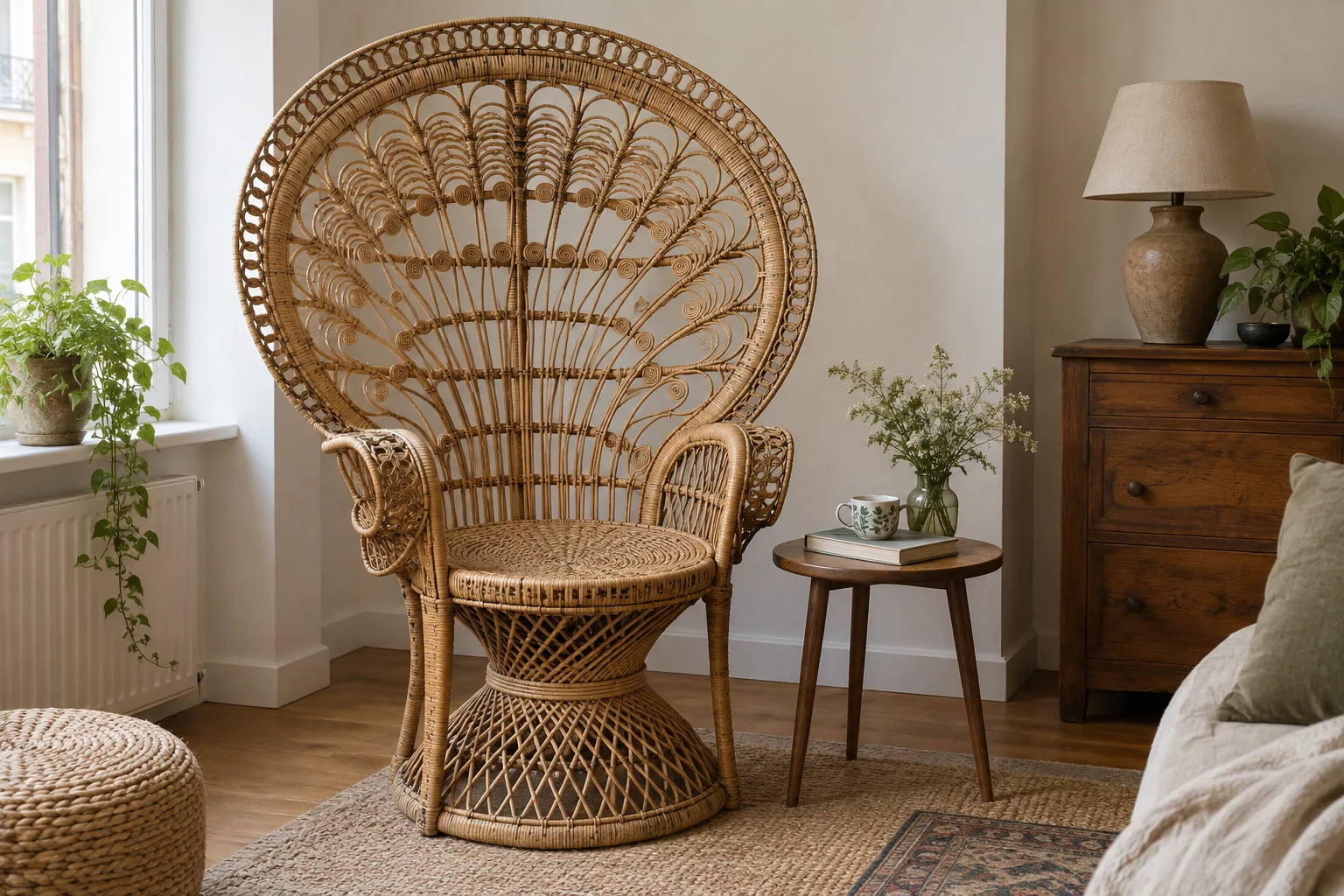
The fan is the room’s main measurement
Reconcept records a sold peacock chair at 137 cm high, 84 cm wide and 48 cm deep, with a 41 cm seat height. Those are the dealer’s measurements of one chair. The width and depth make an instructive contrast: an airy-looking chair can still occupy a broad stretch of wall.[1]
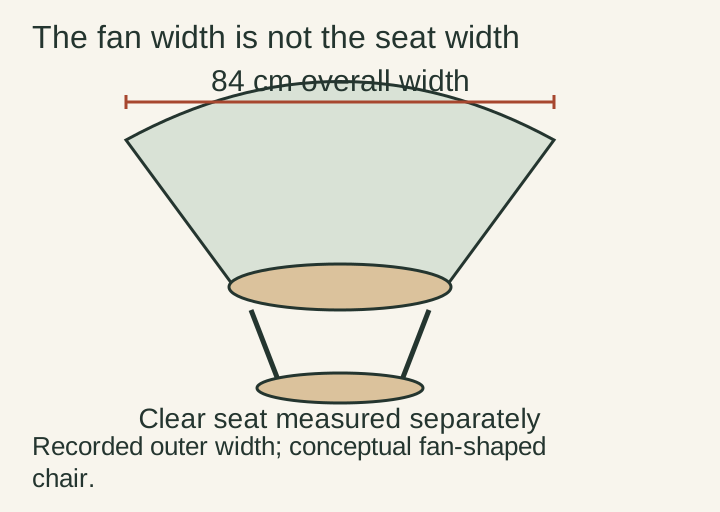
Mark the widest back on the wall with removable paper, then the floor footprint and the route past it. Include a side table and the space needed to get out of the chair. The open weave lets you see through the object; it does not let a door or another chair pass through its fan.
Ask for the seat’s clear width and depth between the arms separately. Overall width is especially misleading here. If you plan a cushion, try its effect on the sitting height and on where the back and arms meet your body.
Back, seat and base deserve separate photographs
Request the chair from behind, beneath the seat and around the base. Look for broken strands, loose bindings and movement where the main members meet. A decorative strand at the top of the fan and a failing connection under the seat are different repair priorities.
| Area | Question |
|---|---|
| Wide fan and outer rim | Is the shape intact, with damage or repairs disclosed? |
| Seat and arm connections | What carries the sitter, and are those connections sound? |
| Pedestal or legs | Does the complete chair stand securely without distortion? |
| Bindings and finish | Is a tidy-looking wrap concealing a structural repair? |
Dale’s Furniture Refinishing describes wicker and rattan work that separates bindings, broken seat areas and structural problems. That is the right kind of distinction to request from a repairer. A photograph cannot certify load capacity, and fresh binding does not by itself prove a joint underneath is sound.[2]
Try the chair for the time you expect to spend in it
Once structural condition is established, sit for a normal reading spell. Notice the contact at your shoulders, the angle of the seat and the arm position. A chair that is delightful for a short conversation may not be your preferred place for a whole novel.
Check whether you can stand without hauling on delicate parts of the fan. If you need substantial arm support, choose a chair whose construction and condition are appropriate for that use. Do not turn a doubtful vintage seat into an experiment with body weight.
Keep older natural rattan distinct from modern outdoor furniture sold under the same Peacock name. A current synthetic-rope product’s weather claims do not apply to an old woven chair. Plan a suitable indoor position and ask the restorer about care for the actual material and finish.
A broad back also needs careful transport
Get repair costs before comparing a damaged chair with a sound one. Rebuilding a shaped fan or its rim is a different job from tidying a small decorative binding. Ask which visible differences will remain and whether the chair will be suitable for your intended sitting use afterwards.
Before collection
Please give the widest back, clear seat size and base footprint, and show the underside, back and all repairs. Is it suitable for sitting as offered? How will the fan and arms be protected during the move?
Agree handling points and protection rather than lifting it by the ornamental back. The right peacock chair brings a light, generous shape to a room and still lets you forget about the furniture while you read.