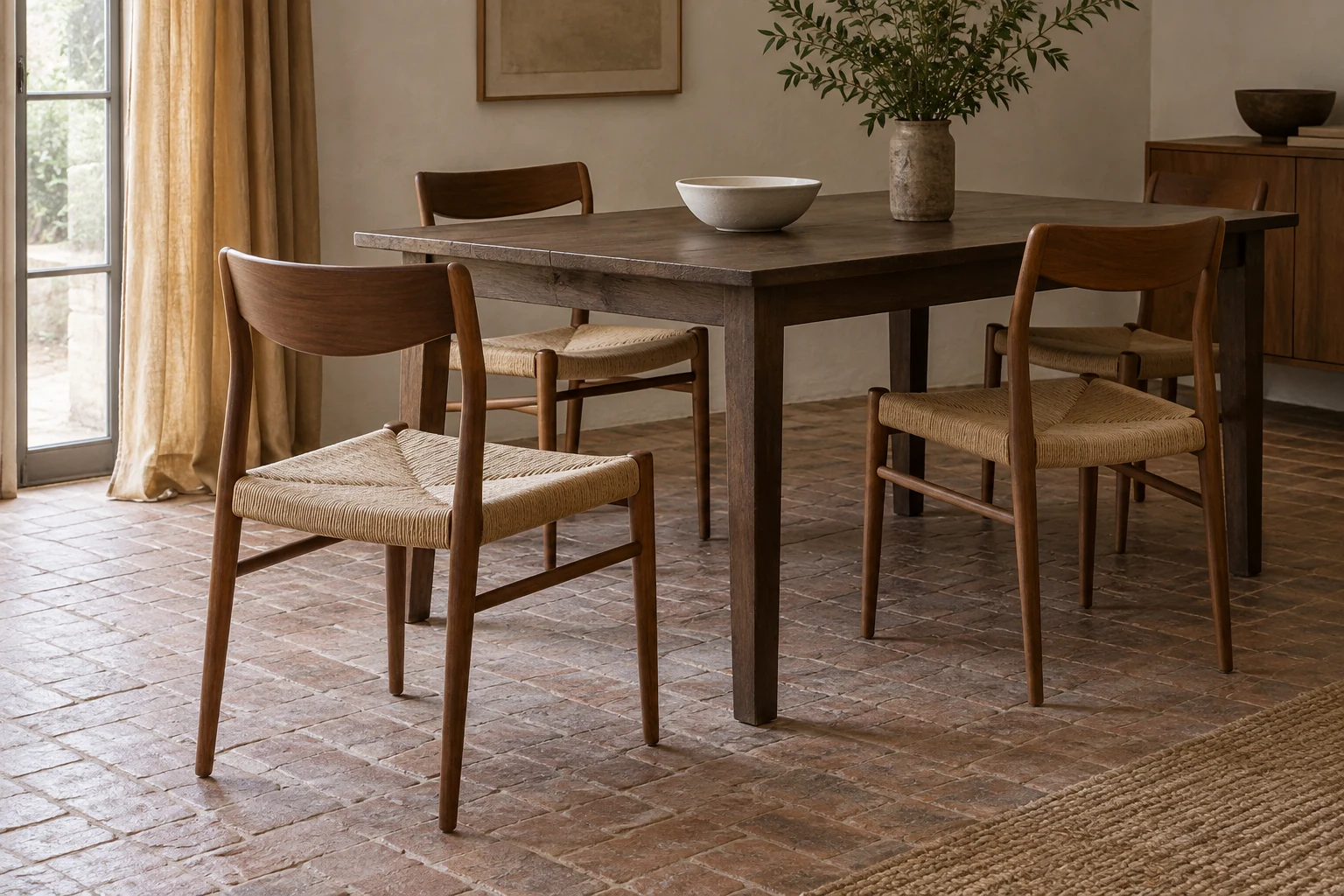
Three backs, three different presences
Model 71’s broad back is part of its appeal: it makes a continuous sculpted shape rather than a row of narrow rails. J.L. Møller specifies a solid-wood frame with a layered-veneer backrest on the current model. That distinction matters when a seller describes the entire chair as solid wood.[1]
Model 75 is visually quieter. The maker describes its backrest as steam bent; the broad band has a comparatively simple outline. In a room where the table, rug or sideboard already carries a strong pattern, that restraint may be the attraction. This is a visual preference, not a claim that 75 is the most comfortable of the three.[2]
Model 78 breaks the back into horizontal rails between pointed uprights. J.L. Møller’s photographs and description show the more angular, open silhouette. Decide whether you like that repeated outline across six chairs as much as you like a single chair in an isolated product photograph.[3]
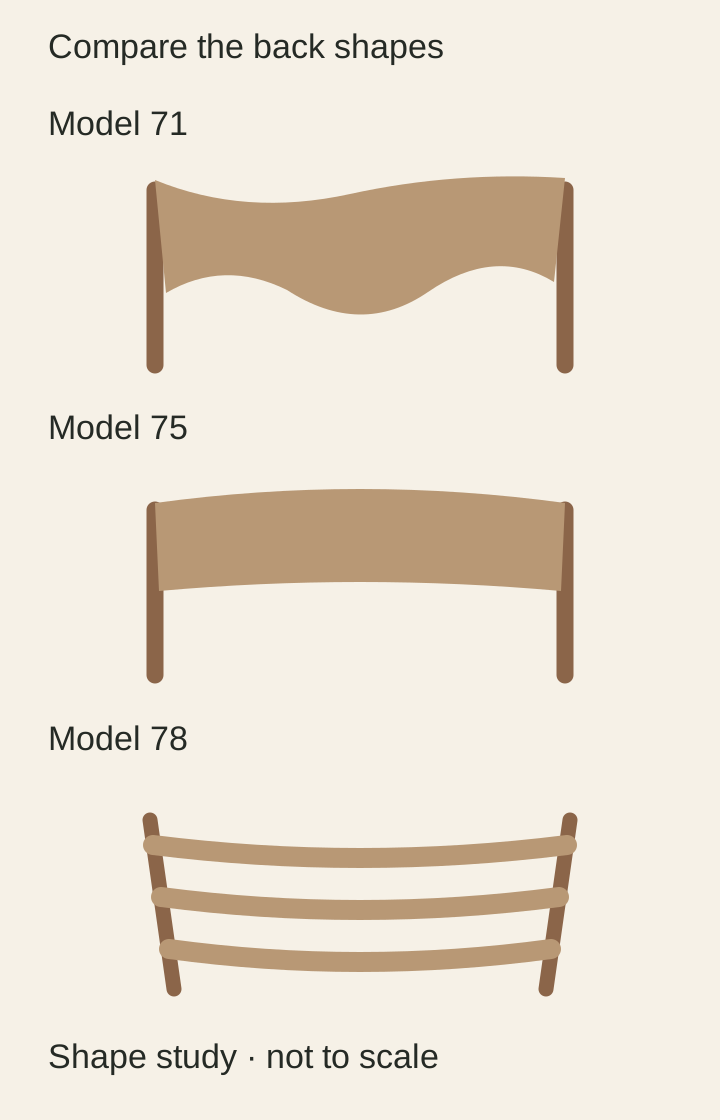
These current references help you ask better questions about an older set. They cannot establish its maker or production date on their own. Use whole front, side, back and underside photographs together, keeping marks and any purchase history connected to the particular chairs.
What the current dimensions tell you
The following measurements are J.L. Møller’s current website references, checked on 8 September 2026. They are in centimetres and describe width, depth and height in that order. Older production, replaced seats and the way a seller measures can require separate explanation.
| Model | Overall W × D × H | Seat W × D | Seat height |
|---|---|---|---|
| 71 [1] | 49 × 51 × 79 cm | 49 × 43 cm | 44 cm |
| 75 [2] | 50 × 47 × 77 cm | 50 × 44 cm | 44 cm |
| 78 [3] | 48 × 52 × 80 cm | 48 × 43 cm | 44 cm |
The useful contrast is modest. On these references, 78 is 2 cm narrower than 75 but 5 cm deeper overall. A buyer with a tight space behind the table may care about depth as much as width. None of the dimensions predicts how the back meets your body.
Suppose the clear opening between your table legs is 130 cm. Two 50 cm-wide chairs leave 30 cm in total; two 48 cm-wide chairs leave 34 cm. That remainder must cover the gap between the chairs and the gaps at the ends. It is an illustrative fit calculation, not a recommended seating allowance. Try the arrangement with people, table legs and ordinary movement included.
For a full table-and-chair fit check, use the dining-chair Guide. Here the dimensions help compare three named models without assuming a 2 cm difference settles the choice.
Try the seat you are actually buying
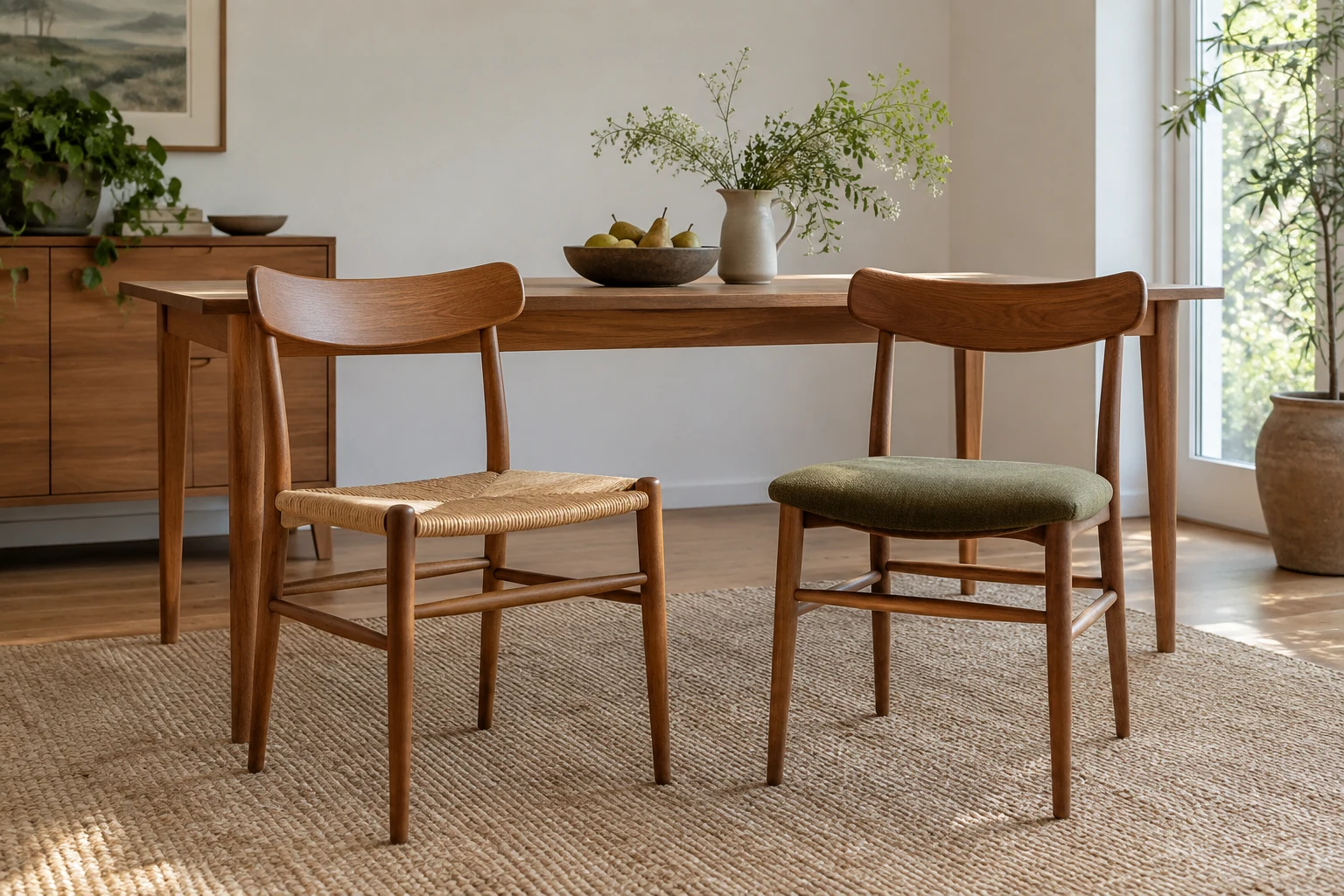
The current maker pages list paper cord, fabric and leather seat options. A fabric seat is therefore not automatically an unauthorised conversion; equally, its appearance does not prove that an older chair retains a factory seat. Ask what was fitted and when, especially when several chairs have been brought together as a set.
Try each candidate at a table of the height you will use. Sit in your normal dining position, then lean back naturally. Notice where the back makes contact, whether the front edge presses into your legs and whether the seat encourages you to slide forward. If a chair needs structural or seat repair, postpone the trial until it has been assessed.
Compare upholstery on its present condition, not the material name alone. A thick replacement pad can change the usable seat height and the relationship to the back. A tired woven seat can give a misleading impression of a model you might otherwise find comfortable. Ask what the planned renewal would change before choosing on the basis of that particular tired example.
Look at the parts that create the outline
On a 71, pay attention to the broad backrest, its edges and the places where it meets the uprights. Ask for clear photographs of any separation, patches or changes in the contour. Since the current reference includes a layered back, do not assume every visible edge line is a split in solid timber.
On a 75, look along the curved band and both ends where it joins the rear structure. On a 78, include each back rail and the pointed upper ends in the photographs. These are useful locations to show a specialist; they are not a claim that every example develops the same faults.
J.L. Møller’s production account describes joined frames assembled before sanding and seat work. In an older chair, a restored surface can tell you little about those joints. Ask what was repaired beneath the finish and whether any frame movement remains; do not twist or force the chair to create a test.[4]
Buy six chairs, not one good photograph
Number the chairs and compare them from the same angle and on the same level floor. Record actual seat heights, back profiles, marks and repairs. Ask whether they were acquired together or assembled over time. A well-chosen mixed-period set can work beautifully, but it should be described and priced as the group it is.
Look for practical differences as well as cosmetic ones. One unusually thick seat, a reshaped back or a replacement leg can matter more in use than a natural variation in colour. Make sure the condition report and restoration quote cover the least convincing chair, not just the one used for the listing’s main photograph.
If new weaving is part of the purchase, calculate the whole group with the woven-seat cost Guide. A modest asking price per chair can become a very different purchase when every seat needs work.
Finally, keep design history separate from item dating. At this review, the maker’s Model 75 narrative and collection place the design in 1954, while a product-details field says 1951. That inconsistency cannot date a seller’s chair. Use object-linked records for an age premium and ask for clarification when the evidence conflicts.
A message for the seller
Could you number all the chairs and send matching front, side, back and underside photographs? Please include actual overall and seat measurements, marks, the acquisition history of the set, and any replaced seats, legs or back parts. I would also like to know which joints were repaired and whether any movement or further work remains.