
Define the exact outdoor job
Draw the intended footprint and write the exposure beside it. Is the furniture under a deep roof, on an open balcony, moved out only for meals, left through winter or stored whenever it rains? Note the users, load, frequency, children or public access, surface below, slope, prevailing weather and the route to shelter. ‘It will live outside’ is not a specification a seller, specialist or future owner can test.
Make the site brief specific
- Rain and splashRecord direct rain, roof runoff, irrigation, splashback, standing water and whether the floor drains away from the furniture.
- Sun and heatMap hours of direct sun, reflected heat, warm glazing and whether shade moves across only part of the piece.
- Wind and movementDescribe gust exposure, movable cushions, umbrellas, folding parts and the consequence if a light or top-heavy object moves.
- Cold, salt and pollutionRecord frost or freeze–thaw conditions, coastal salt, road spray and other local exposure that a material professional may need.
- Use and consequenceName seating, dining, display or occasional use, the expected load and who could be harmed by instability or breakage.
- Shelter and routeMeasure the dry storage space, doors, steps, lift and handling route before making seasonal movement part of the plan.
Decision rule
‘Outdoor’ is a claim, not a climate plan
Ask what exact component, model, production period and exposure the seller means. A garden form, weathered surface or material name cannot promise indefinite rain, sun, frost, wind or ground contact.
Preserve the outdoor claim and its instructions
Save the complete listing and separate its claims: intended location, material, maker, model, production date, previous outdoor use, coating, restoration and current condition. Ask whether ‘outdoor’ comes from a manufacturer document, a dealer’s description, the seller’s use or appearance. Then request any period catalogue, current manufacturer instruction, label, invoice or treatment record that can be matched to this exact model and component.
| Record type | Example | Limit |
|---|---|---|
| Observation | Water mark beneath one rail; orange product at a fixing; one foot no longer sits flat | Does not name the material, cause, depth or safe repair |
| Seller report | Kept under cover; recoated three summers ago; stored indoors each winter | Useful history, but not independently verified unless records support it |
| Documentary evidence | Model-specific catalogue, instructions, invoice and dated treatment record | May not describe later parts, current condition or your site |
| Buyer inference | The underside appears less faded than the exposed top | Does not prove exposure duration, chemistry or remaining life |
| Professional assessment | Named examiner’s material, structure or installation finding with method and limits | Applies only to the inspected scope and stated conditions |
Use the listing-claims Guide when the seller’s wording combines manufacturer, material, restoration and outdoor-use statements. Preserve qualifiers instead of upgrading them in your notes.
Inventory the whole mixed-material object
The Canadian Conservation Institute treats outdoor objects as mixed material systems and recommends examining their materials, condition, location and orientation together. For furniture, apply that as an inventory method: a timber slat, metal fixing, plastic foot, stone top and coating may each respond differently while still sharing one load and one water path.[2]
| Area | Record | Question that may change the purchase |
|---|---|---|
| Load-bearing frame | Material claim, sections, bends, joints, welds, fasteners, cracks and previous work | Whether the current structure can perform the intended job |
| Seat, back or top | Slats, mesh, sheet, stone, weave, panels, gaps, drainage and attachment | Whether water, movement or local failure reaches a load path |
| Hollow sections and caps | Openings, end caps, seams, drillings, weep points and visible deposits | Whether water can enter, remain and leave |
| Feet and ground contact | Missing glides, trapped soil, corrosion, decay, rocking and interface with the intended floor | Whether the object stands and drains on the real site |
| Coatings and sealants | Layer edges, flaking, chalking, bubbles, staining, recoating and contact between materials | What the coating protects, conceals or requires |
| Textiles and loose parts | Cushions, covers, ties, umbrellas, leaves, plugs and storage state | Whether the full set has a workable dry-storage and wind plan |
Trace water and debris from entry to exit
Canadian Conservation Institute outdoor guidance identifies water and moisture as major agents of deterioration and draws attention to hollow shapes, seams, corners, holes, recesses and horizontal surfaces that can collect water and debris. It also recommends considering drainage, sunlight, materials, location and orientation. This supports a buyer’s water-path map, not a diagnosis of concealed damage.[1]
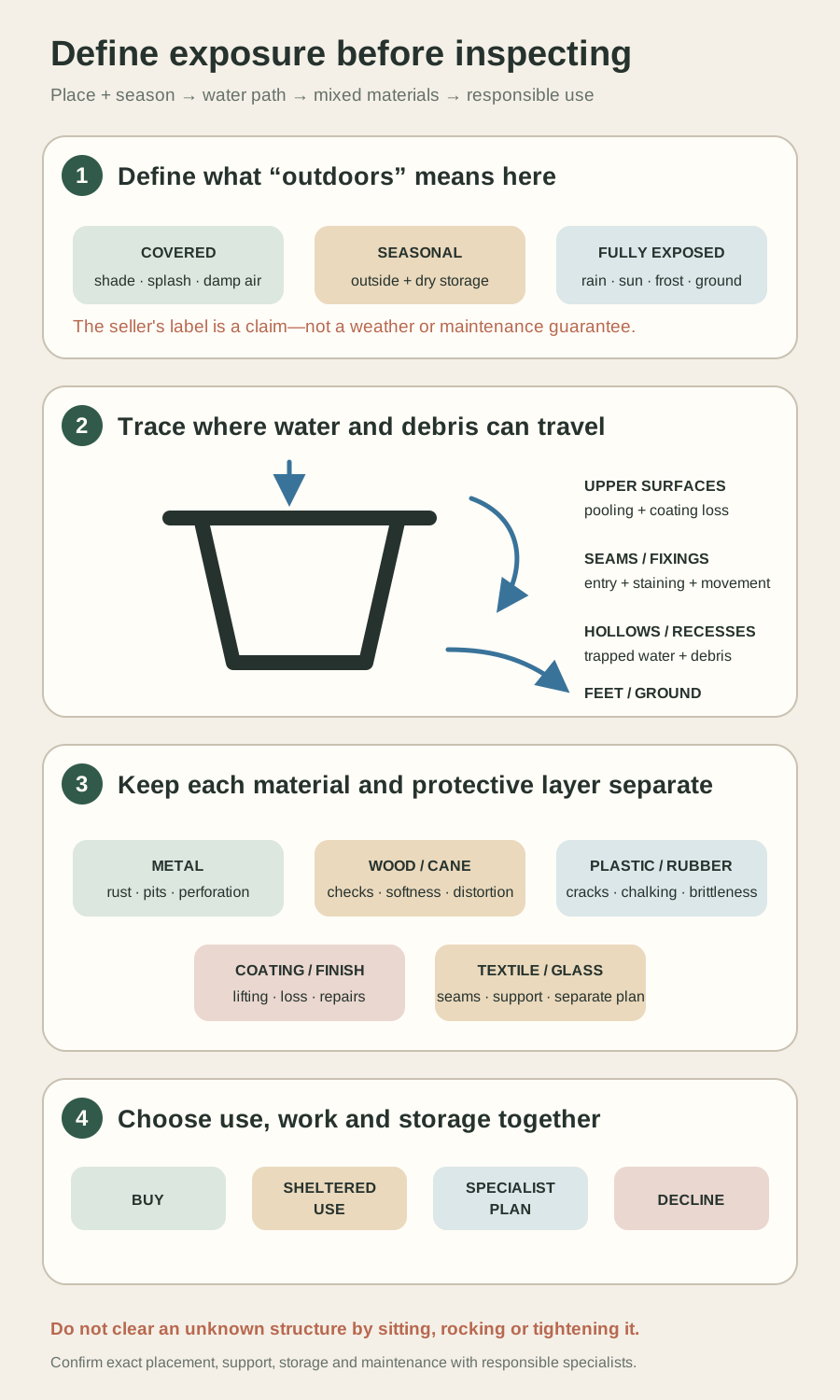
Follow one rainfall without creating one
- EntryMark upward-facing openings, seams, failed caps, loose fasteners, cracked sealant and joints where water could enter.
- TravelFollow slopes, overlaps, channels, hollow sections and contact between unlike materials; do not pour water into the piece.
- PoolingRecord recesses, sagging fabric, cup-shaped feet, flat ledges and blocked openings with stains or debris already present.
- ExitLocate visible drainage points and ask how the seller keeps them clear; absence of an opening does not prove a cavity is sealed.
- GroundMap splash, soil, planters, wet decking and low points around feet, then compare them with the proposed site.
Inspection boundary
Do not hose, flood or drill to test drainage
Use existing condition, dry photographs, seller history and a competent examiner. Introducing water or making an opening can damage the object and still fail to reveal the complete concealed path.
Separate weathered appearance from active consequence
The Canadian Conservation Institute notes that outdoor coatings can fade, chalk, embrittle and lose protective performance under weather exposure. A buyer can map those visible changes and their distribution. Deciding what the coating is, whether it still protects the substrate and how it should be treated requires material-specific assessment.[2]
| Visible area | Record | Do not infer from a photograph |
|---|---|---|
| Metal and fixings | Corrosion product, pitting, flaking coating, cracks, failed welds, seized or missing fixings and staining below | Remaining section, concealed corrosion, alloy or safe load |
| Wood and end grain | Checks, softness already reported, open joints, finish loss, discolouration and repeated wetting at feet or fasteners | Depth of decay, internal condition or treatment |
| Plastic or composite | Cracks, crazing, distortion, chalking, powdering, stickiness, exposed fibres and sheltered contrast | Polymer, strength, cause or remaining life |
| Stone, ceramic or glass | Cracks, chips, laminations, staining, prior fills, edge support and water-holding recesses | Internal crack path, frost resistance or safe support |
| Cane, rattan, cord or textile | Broken elements, slackness, staining, deposits, attachment, drying and storage history | Hidden strength, contamination identity or safe cleaning |
| Feet, joints and interfaces | Rocking, gaps, trapped debris, coating breaks, staining and movement already visible | Which concealed component has failed or whether anchoring is sufficient |
Take material-specific questions to the existing wood-care, metal-inspection, rattan, cane and wicker and plastic-furniture Guides. The outdoor decision combines their observations with the exposure and storage plan; it does not replace them.
Compare history with current condition
Ask for a timeline rather than ‘yes, it has been outside’. Record when the seller acquired the furniture; which months, climates and orientations it experienced; whether it stood under cover; how it was stored; which covers or products touched it; and when condition or repairs changed. Dated photographs of the same identifiers are more useful than a general reassurance, especially when they show wet and dry states without the seller wetting the object for your request.
Request comparable history
- Exposure periodsAsk which seasons and years it was outside, under what cover and in which broad climate; mark earlier ownership unknown.
- Orientation and siteRecord sun-facing side, slope, ground surface, irrigation, roof runoff, coast or road exposure and changes of location.
- StorageAsk whether furniture was dry before covering, where cushions and loose parts went, and whether winter storage was heated, damp or ventilated.
- MaintenanceRequest named cleaners, oils, waxes, coatings, rust treatments, sealants and pressure-washing or abrasive methods with dates.
- RepairRequest provider, scope, materials, fasteners, before-and-after photographs, invoices and any stated use or exposure limits.
- ChangeAsk when looseness, cracks, corrosion, decay, coating loss, staining or drainage problems began and whether they progressed.
A coherent history can improve a maintenance and specialist brief, but it cannot certify the present object. Compare reports against feet, underside, joints, sheltered zones and repair edges. If the furniture has been freshly painted, ask for pre-treatment photographs and surface-preparation records rather than assuming the new finish resolved what is underneath.
Price shelter, storage, movement and maintenance
The purchase price is only one part of outdoor ownership. Put the accepted site, protective strategy, seasonal routine, professional work and handling route into one budget. A cover that traps moisture, a winter room the table cannot reach or a maintenance plan that depends on an unidentified coating is not yet a resolved plan. Do not assume that a small object is safe for one person to move or that dismantling is appropriate.
| Obligation | Resolve before buying | If unresolved |
|---|---|---|
| Placement | Footprint, level support, clearance, runoff, sun, wind and contact with plants or irrigation | Change the site or ask a competent site professional |
| Shelter or cover | Model/material suitability, airflow, securing, removal and dry-storage state | Do not buy on a generic-cover assumption |
| Seasonal storage | Dry space, route, weight, helpers, equipment, orientation and loose-part inventory | Price professional handling or decline the routine |
| Initial work | Condition examination, stabilisation, coating or repair scope and accepted appearance | Carry a written contingency, not the cheapest imagined treatment |
| Inspection and maintenance | Who checks which components, when, and which model- or material-specific instructions apply | Ask the relevant specialist to define the schedule |
| Wind, anchoring and installation | Object, site, load, fixing, substrate, drainage and applicable local requirements | Use a competent installer or site professional before placement |
Check the complete moving route with the measurement Guide and give a contracted mover the professional-delivery brief. Neither Guide authorises dismantling or defines an outdoor installation.
Stop at treatment, structure and installation
Keep the inspection non-interventive
- Do not flood or pressure-washWater can enter concealed assemblies, drive debris into surfaces and make a dry condition comparison impossible.
- Do not scrape, sand or wire-brushRemoving a coating or corrosion product can erase evidence, release hazardous material or reduce already thin material.
- Do not apply oil, rust converter, sealant or paintTreatment depends on the substrate, existing layers, contamination, structure, intended appearance and exposure.
- Do not sit, rock or load uncertain furniturePermission and a low price do not turn a cracked, loose, distorted or repaired load path into a safe test.
- Do not drill or improvise anchorsThe object, fixing, substrate, drainage, wind load and local requirements form one installation decision.
| Unresolved question | Appropriate professional | Remit to record |
|---|---|---|
| Material, coating, corrosion, decay or compatible treatment | Furniture or material conservator, or relevant specialist | Exact components, exposure, previous products, examination method and treatment limits |
| Load path, joint, crack, weld or previous structural repair | Competent furniture or structural repair professional | Intended use, load, concealed access, repair evidence and written use limit |
| Wind stability, anchoring, fixing or site interface | Competent installer, engineer or responsible site professional as appropriate | Object, site, substrate, loads, drainage, local requirements and inspection plan |
| Possible hazardous coating, deposit or treatment residue | Appropriate hazardous-material or occupational-safety professional | Observed area, likely contact, sampling authority and handling boundary |
Professional boundary
Ask for limits as well as conclusions
Record what the professional examined, what remained concealed, the intended exposure and use they considered, which work is required first, and when the conclusion must be reviewed.
Request the outdoor record and make a bounded decision
Message to copy
Ask for an exposure and condition record
Hello—I’m considering this exact piece for [covered / seasonal / fully exposed setting] in [broad climate], for [use]. Could you copy the complete outdoor-use, material, maker, model, date, coating and restoration claims and say what evidence supports each? Please identify the frame, seat or top, joints, fixings, hollow sections, caps, drainage points, feet, coatings, textiles and loose parts. Could you send complete dry front, rear, side, top, base and safely visible underside views, plus whole, area and close views with a non-contact scale for every crack, loose joint, corrosion or decay area, coating loss, stain, trapped debris, blocked opening, missing foot, repair and material junction? Please describe known seasons, site, cover, orientation, sun, rain, irrigation, salt, frost, storage, cleaning, maintenance and repair history, with dates, products, invoices and earlier photographs where available. Please do not wet, pressure-wash, scrape, sand, coat, load, dismantle, drill or repair the furniture for my request, and mark every unknown explicitly. Thank you.
| Decision | Appropriate when | Record |
|---|---|---|
| Buy | The exact exposure, complete assembly, current condition, accepted weathering, storage and maintenance commitment fit | Site brief, evidence set, accepted unknowns, seasonal plan and use limits |
| Clarify | One material, junction, dry view, drainage point, history item, storage measurement or included part could change the decision | One exact follow-up tied to the component or site |
| Specialist before purchase | Structure, treatment, trapped water, progressive change, wind stability or anchoring is consequential | Named remit, object and site access, evidence, method limits and written conclusion |
| Decline | The exposure, safe use, handling routine, specialist access or total ownership commitment cannot be made tolerable | The unresolved fact and consequence without diagnosing the object |
Good vintage outdoor furniture need not look untouched by weather. A faded coating, old repair or softened colour may be part of the appearance you deliberately accept. The responsible purchase is the one where the exact setting, water path, mixed-material condition and recurring work remain coherent after the romance of the garden photograph has passed.