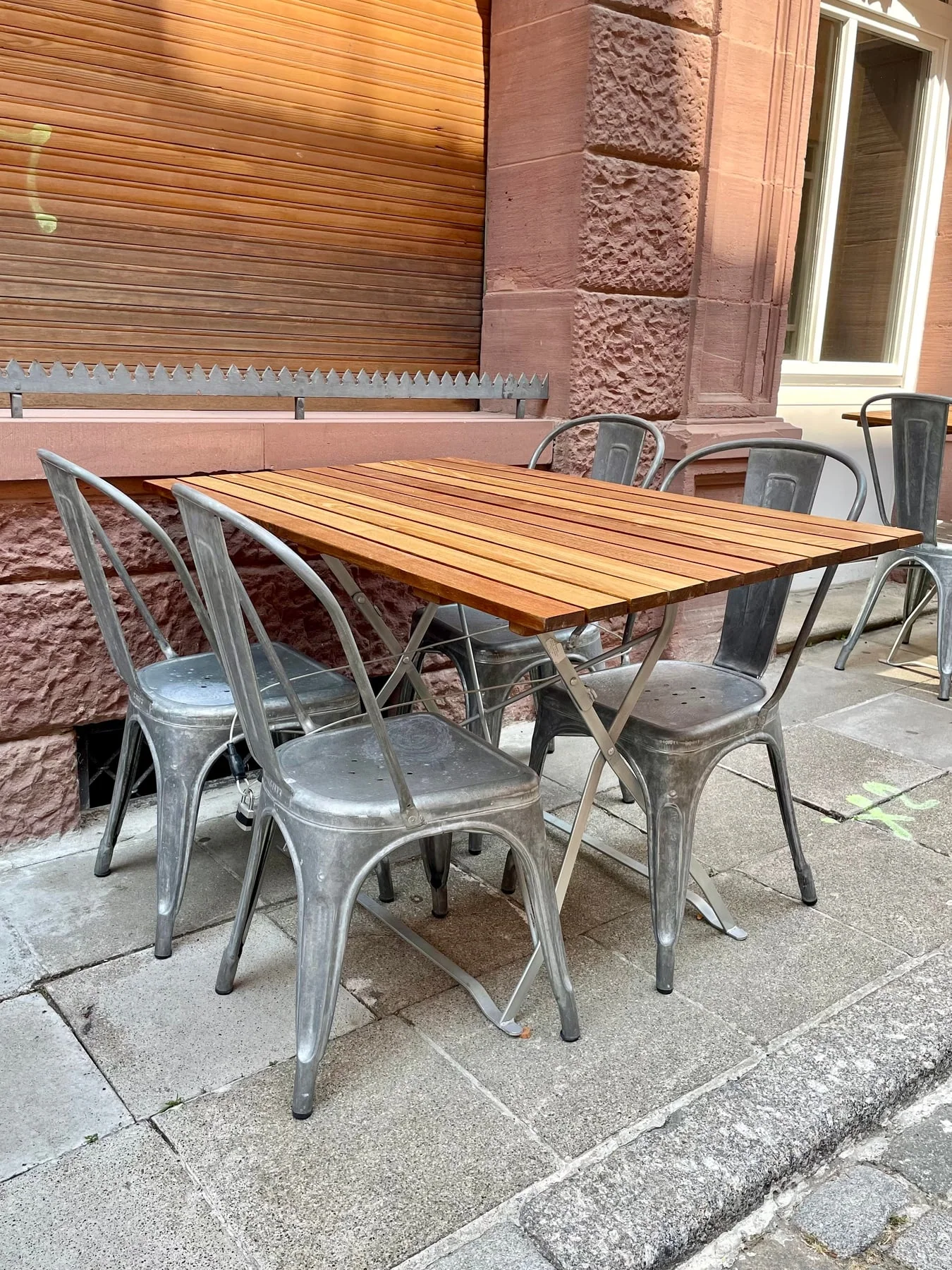
The café photograph leaves a question unanswered
A café setting makes the A chair look at home outdoors. It does not reveal whether the chairs were brought out that morning, have a particular protective finish or will be stored under cover overnight. Use a photograph for arrangement ideas, then investigate the actual product.
Tolix’s current A Chair page identifies the design with Xavier Pauchard in 1935 and notes Jean Pauchard’s 1956 refinement. It labels that current product for indoor use, including finish choices that can look industrial or unpainted. This is a useful counterexample to the assumption that all A chairs are outdoor furniture.[1]
For an older chair, ask about the original finish if known, later stripping or coating, where it has been used and how it has been stored. A seller’s description of galvanized metal still needs a use and condition assessment for that object. Do not transfer a current warranty or finish specification to an undocumented earlier example.
For the design’s background, read the history of the Tolix A in the Furniture Library.
Look under the seat as well as at the visible paint
Request underside photographs and close views of feet, joints, folded edges and any damaged coating. These are often less visible in a room photograph than the front of the backrest. Ask whether corrosion is superficial, has been treated or needs further assessment.
A chair with loose joints, sharp edges, damaged feet or uncertain metal loss needs an informed examination before ordinary use. Do not test it by rocking harder. Equally, intact older paint with small marks is not automatically a reason to strip the chair.
| What you see | What to establish |
|---|---|
| Raw or galvanized-looking metal | The actual coating and the intended conditions of use. |
| Fresh paint | Preparation, previous damage and the scope of the work. |
| Rust-coloured marks | Location, extent and whether underlying metal needs repair. |
| Different feet or glides | Compatibility, secure fitting and protection for your floor. |
If paint is flaking or the finish is unknown, have treatment and preparation assessed before sanding, blasting or using chemicals. A cosmetic refresh should follow a decision about the coating and structure, not erase the evidence needed to make it.
Try the chair at a real meal
Compare the seat height with your table and the usable seat with your own sitting position. Notice the front edge, the feel of the back and the space between adjacent chairs. A steel chair that suits a short coffee stop may not be your preferred seat for a long dinner.
If you plan to add a pad, check its shape, thickness and fastening on the actual chair. Include it in the sitting trial. For an outdoor proposal, neither a cushion nor a cover resolves an uncertain chair finish; they introduce their own storage and drying needs.
For a group, compare every chair rather than assuming the set has one history. Ask about repairs and changes to feet or coatings. If stacking matters to storage, have the seller demonstrate the intended arrangement and disclose where contact causes rubbing; do not force together chairs that do not nest correctly.
A good indoor chair can remain a good indoor chair
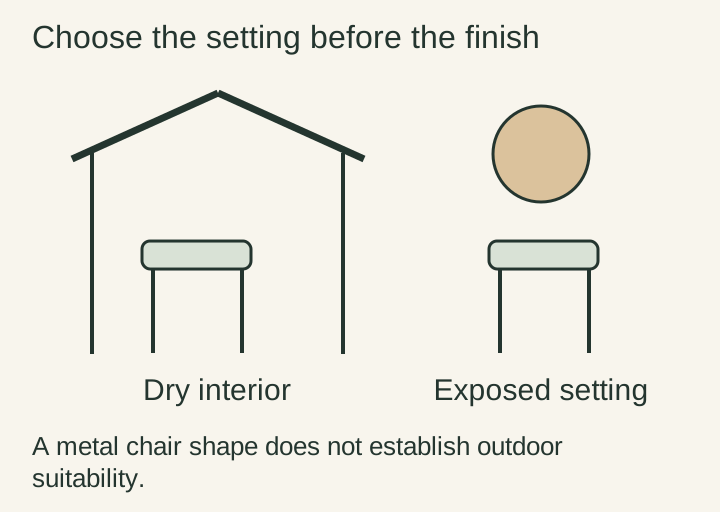
If the finish and condition support indoor use but outdoor suitability remains unknown, decide whether you still want the chairs for the kitchen. That can be a perfectly satisfying outcome. Buying them for a terrace and hoping the coating will cope leaves the important question until after payment.
A clear seller request
These chairs will be used in ___. What finish is on each chair, what coating or metal repairs have been done, and what supports the suggested use in that location? Please show the underside, feet and damaged areas.
Choose the set whose condition, seating comfort and intended setting line up. The industrial appearance is part of the pleasure; it should not have to do the work of a specification.