Design story

Tolix Chair A: sheet metal learns to be a café chair

Tolix Chair A makes its industrial construction part of the view. Its shaped metal surfaces and open frame turn the practical business of sitting, moving and stacking into a recognisable outline.

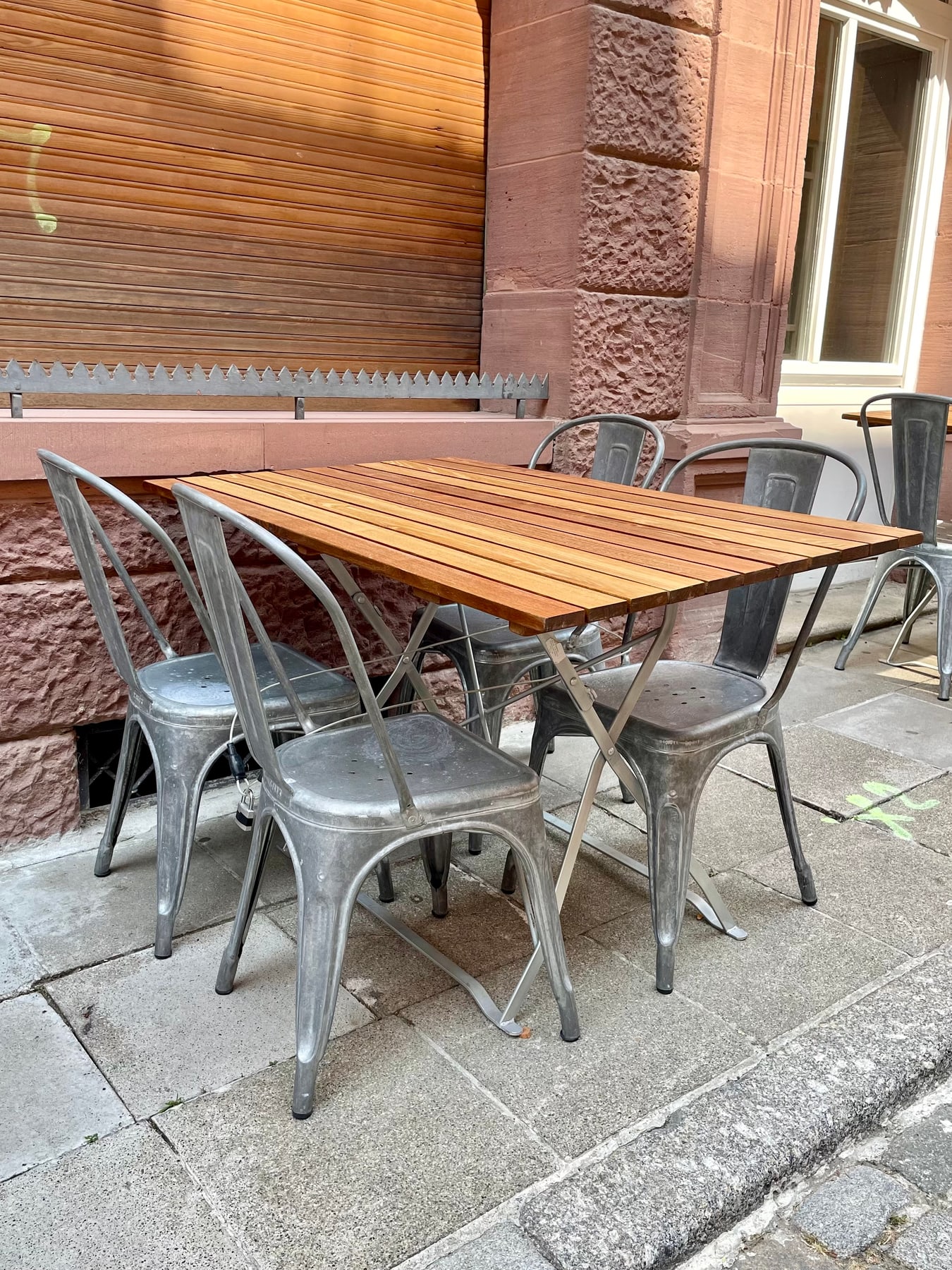
Metal Tolix Chair A chairs arranged around a wooden café table outside a brick building.
Chair A in a café setting. The pressed backs, narrow legs and braces show how a sheet-metal design works as ordinary seating. Ditigibt, Public domain.
On this page
Key facts & takeaways

At a glance

Subject
Tolix Chair A
Entry
Design story
Last reviewed
6 September 2026

Three things to remember

  1. Shaping a metal sheet changes how it works as a furniture component.
  2. Tolix’s maker account distinguishes Xavier Pauchard’s design from later refinement.
  3. An industrial appearance does not identify the finish or outdoor suitability of an individual chair.

A furniture business built around metal

Xavier Pauchard established Tolix in Autun in 1927. The company’s account connects its early furniture to galvanised steel and, by the mid-1930s, to public spaces where chairs had to tolerate repeated everyday use. Protection of the material was part of making metal furniture practical beyond the workshop.1

Tolix dates Chair A to 1935 and credits Pauchard with the design. Its familiar outline makes the material easy to read: a broad metal seat, a shaped back and legs that spread towards the floor. There is little upholstery or timber to conceal how the chair is assembled.2
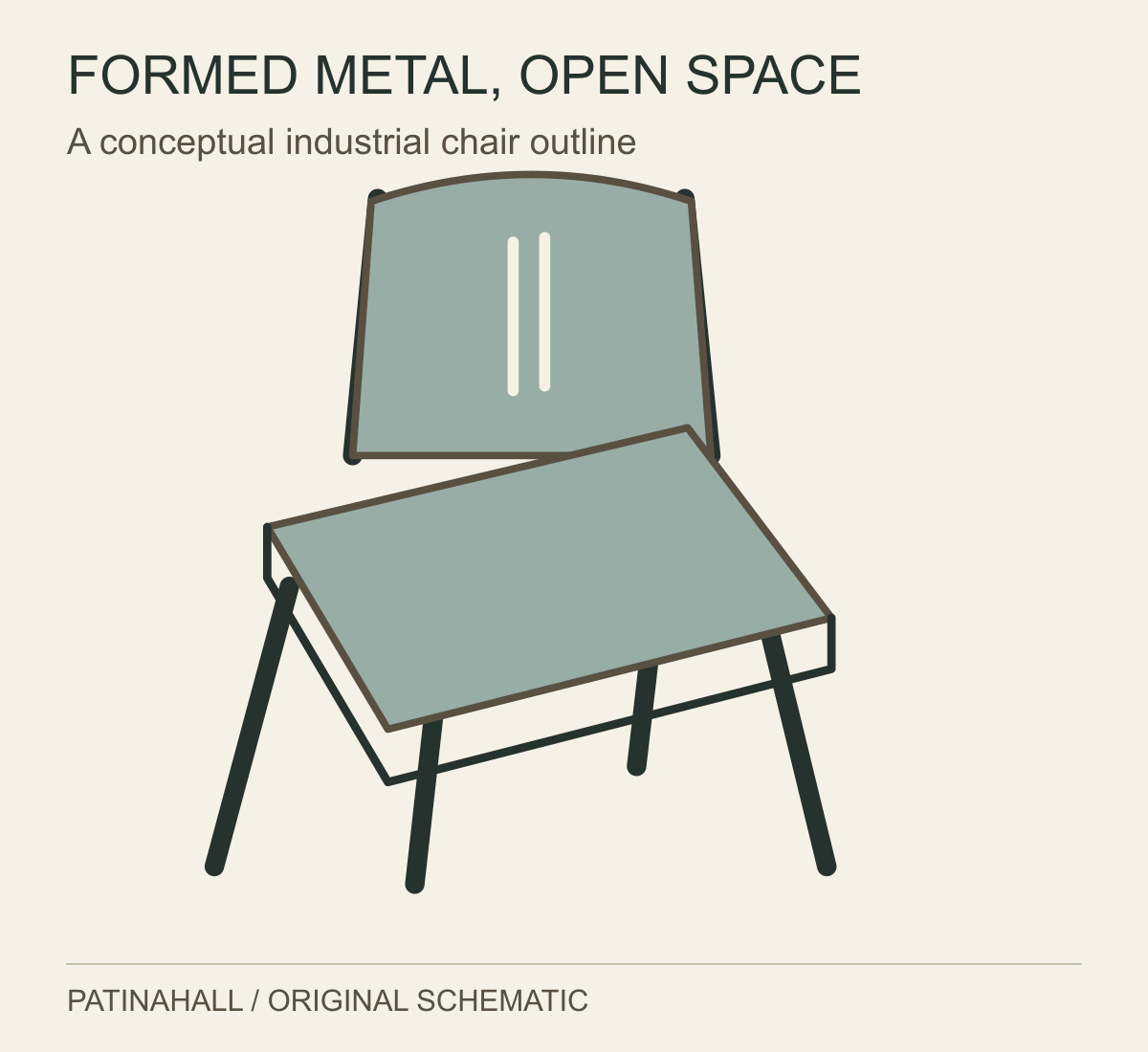
An oblique metal-chair schematic contrasts shaped seat and back surfaces with slender supports and the open space below the seat.
The drawing explains Chair A’s industrial vocabulary through shaped surfaces and open supports. It is not a measured model or a reconstruction of any particular production year. Original PatinaHall schematic, not to scale.

Why flat metal needs shape

A thin sheet is a useful starting material, but a chair needs more than flat surfaces. Curves, folds and edges give each component a section. Look at the change between the face of a leg and its turned edge, then follow the rim around the seat.

The diagram explains the basic distinction between a flat strip and a formed one. It is a way of looking at the construction, rather than a drawing of Tolix’s exact tools or a calculation of an individual chair’s strength.

That distinction is visible even through paint. Colour may make the chair conspicuous across a room; at close range, the bends and joins explain how its parts work together.
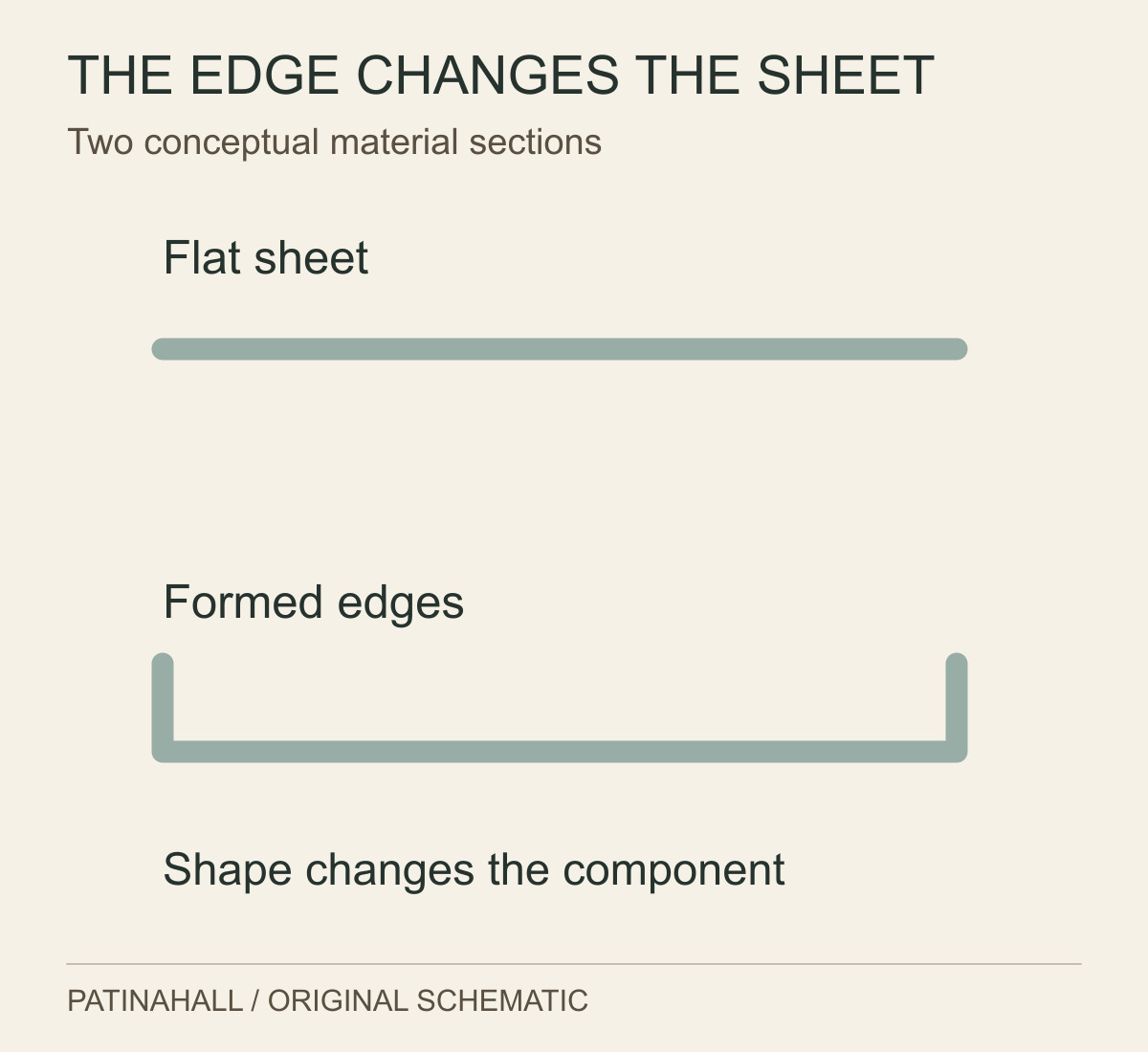
A flat strip is compared with a strip whose edges turn upwards, isolating the difference between flat and formed sheet material.
Turning edges changes the geometry of a thin sheet. This general construction principle explains how to look at formed-metal furniture; it is not a Tolix component section or strength calculation. Original PatinaHall schematic, not to scale.

Several workshop operations, one plain chair

Tolix describes a production sequence involving cutting, stamping, bending, welding, sanding and painting. These are separate operations. The chair’s apparently simple surfaces depend on both machines that shape the steel and people who assemble and finish the parts.3

Consider the seat alone: its outline must be made, its surface formed and its connection to the supports completed. A neat finished chair compresses that sequence into something a person can move to a table without thinking about the workshop at all.

The maker also distinguishes Xavier’s original design from Jean Pauchard’s later refinement in 1956. Its brief account does not specify every altered component, so that date should not become a claim about an unverified change in the legs or stacking arrangement.2

What survives across the story is the visibility of the work. Follow a fold into a joint and the everyday café chair becomes a compact lesson in turning sheet steel into furniture.

Research notesEvidence, connections and limits

The chronology is attributed to Tolix’s own history and Chair A narrative, not presented as an independently resolved first-production date. The drawings explain shaped sheet metal conceptually; they do not reproduce an exact press tool, structural calculation or weatherproofing specification.

Evidence map

Connected subjects and evidence

Reviewed connections

  • Tolix Chair Adesigned byXavier Paucharddocumented

    Tolix documents Xavier Pauchard in the designed by role for Tolix Chair A. This relation describes the design family, not the origin of an individual secondhand object.

    Reviewed 6 September 2026 by PatinaHall editorial.
    • Source 2Design, material or production account; scope described in the evidence note
  • Tolix Chair Amanufactured byTolixdocumented

    Tolix documents Tolix in the manufactured by role for Tolix Chair A. This relation describes the design family, not the origin of an individual secondhand object.

    Reviewed 6 September 2026 by PatinaHall editorial.
    • Source 1Design, material or production account; scope described in the evidence note

Research trail

Sources and further reading

  1. Tolix: historyTolixAccessed 6 September 2026
  2. Chair A, Pure WhiteTolixAccessed 6 September 2026
  3. Expertise: cutting, forming and assembling steel furnitureTolixAccessed 6 September 2026
  4. Chaise A, TOLIX, Xavier Pouchard.jpegWikimedia CommonsAccessed 6 September 2026

Last reviewed 6 September 2026. Found an error or a stronger primary source? Contact PatinaHall.