An education in how things are made
Wim Rietveld's route into design ran through technical work. Louis Kalff Instituut records his progression at Servo Balans from trainee constructor to head of the drawing office, alongside further design study. His familiar surname belongs to the story, but the drawing office explains something more useful about his working method.1
A drawing office has to connect an intention with something that can be made. A dimension, connection or piece of material is part of that agreement. Those questions return in furniture that gives its components clear, economical jobs.
Solve the construction, then consider the form
The institute reproduces Rietveld's account of a two-stage process: work through the difficult technical questions, then give fuller attention to dimensions and proportions. This was his explanation of his practice, not a rule inferred from how a chair happens to look.1
The distinction does not make appearance unimportant. It gives appearance a particular working context. Proportion can be considered with greater freedom once the designer understands how the object will be produced and assembled.
The credits reveal the working network
Museum Boijmans Van Beuningen places Result with Friso Kramer, Mondial with Gerrit Rietveld, and an armchair with André Cordemeyer among Wim Rietveld's works. The inventory makes collaboration visible across different designs.2
That is a richer way to read a career than treating every recognisable outline as an isolated invention. The named relationships can lead the reader from one production problem to another. A seat, a frame and a manufacturer may each contribute a different part of the explanation.
Centraal Museum's own inventory preserves furniture connected with De Cirkel and Gispen. Keeping those companies distinct prevents a designer's work for one firm from becoming evidence about another. 3
Beyond the scale of a chair
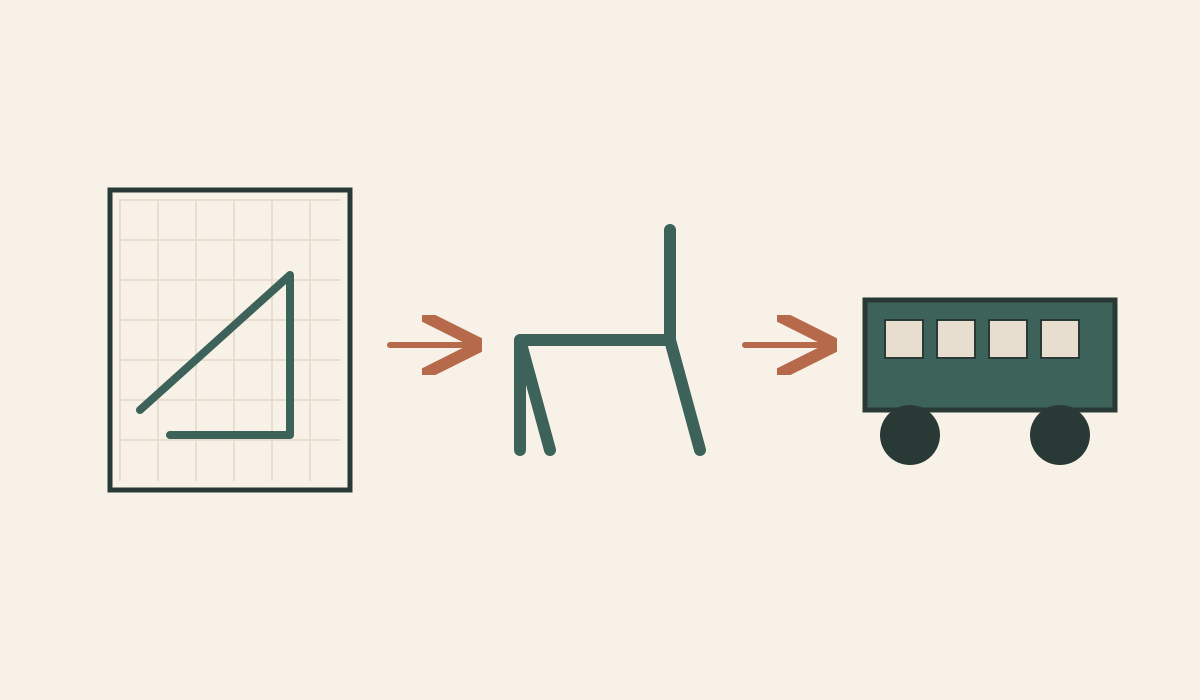
The institute's biography also records work across agricultural machinery, domestic equipment and transport. The range changes the meaning of industrial design: the furniture was one setting for a working approach that could address very different kinds of object.1
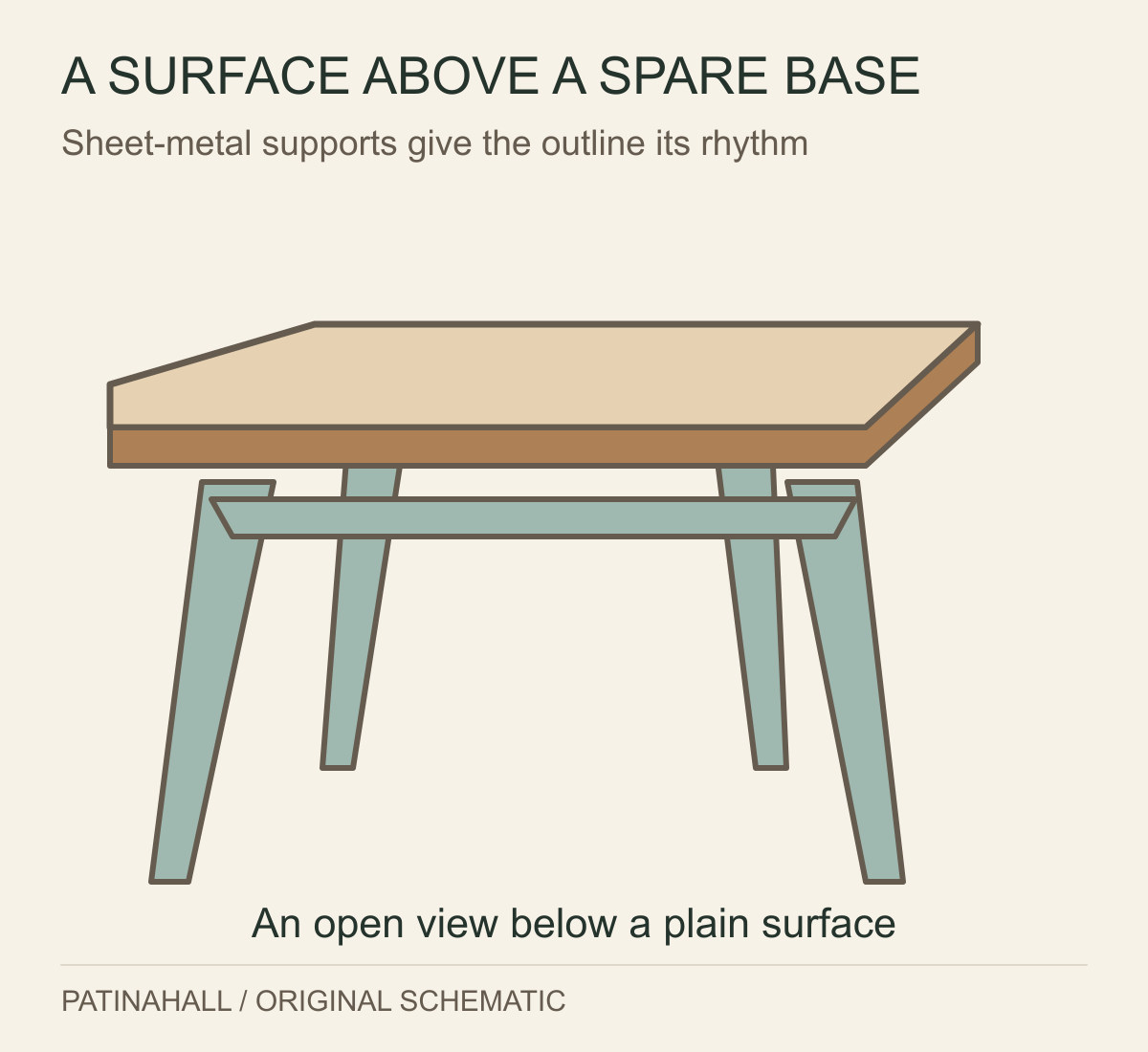
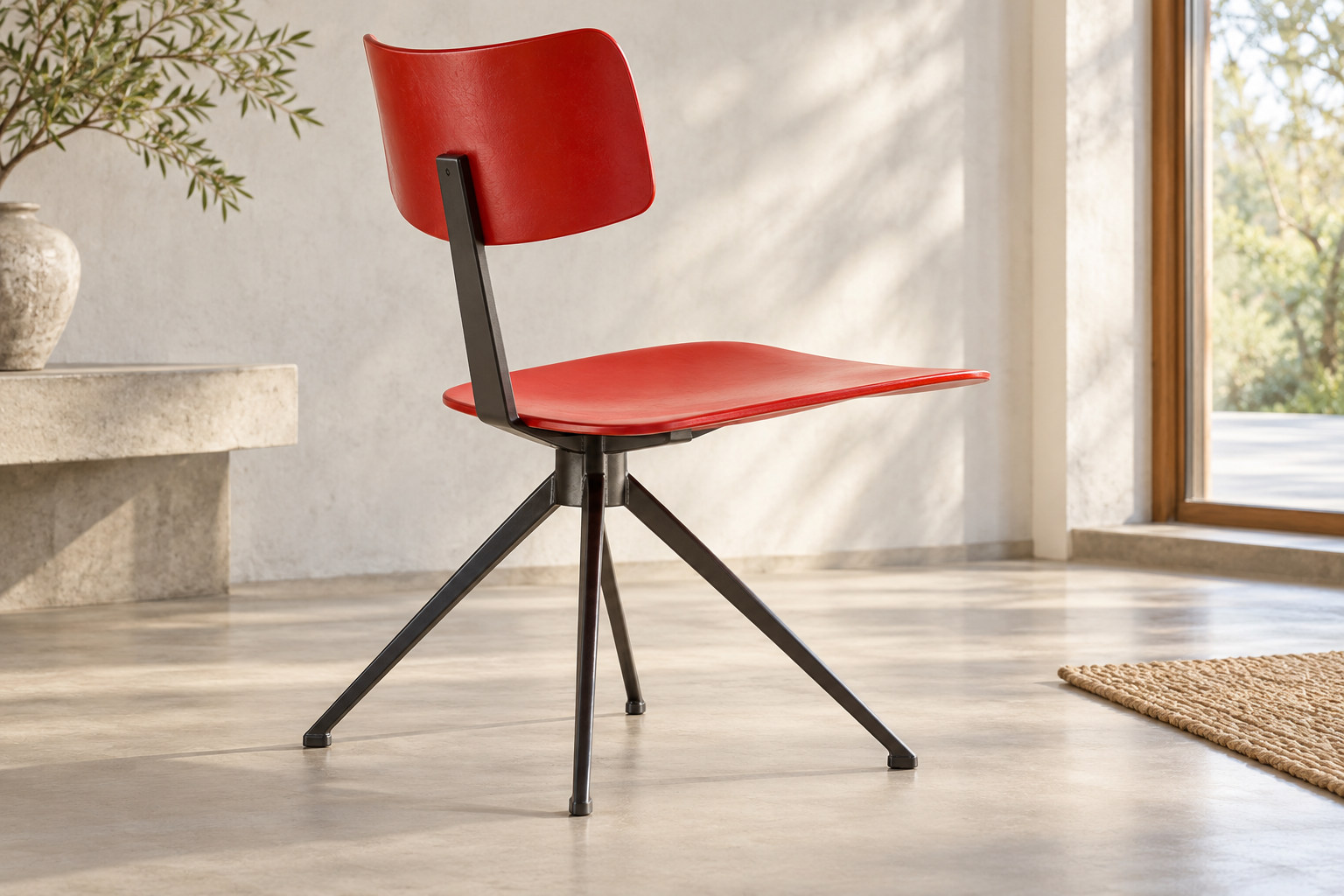
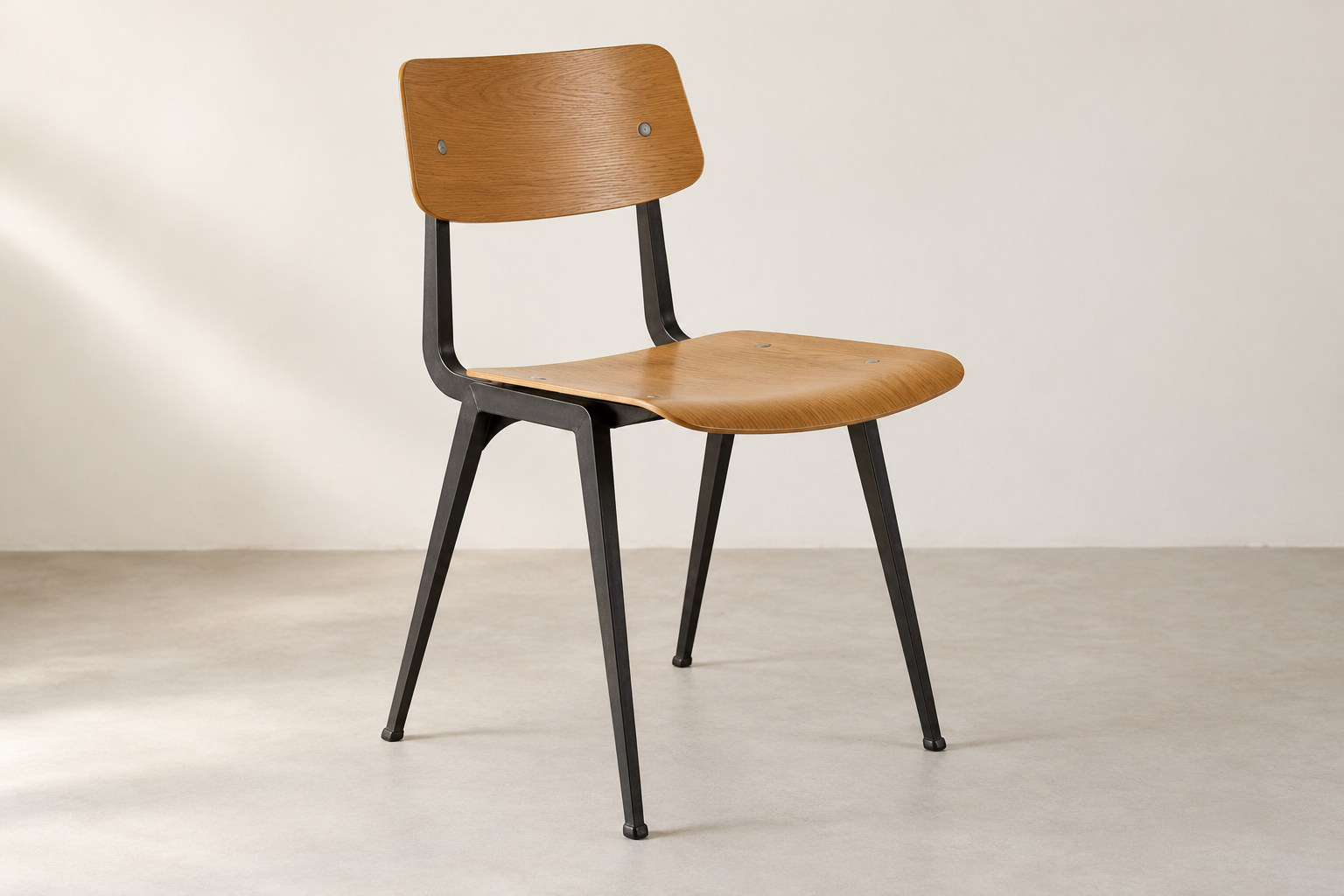
Return to a narrow steel support beneath a wooden seat. Its apparent simplicity is easier to understand when making, assembly and proportion belong to the same conversation. The drawing office remains present in the finished chair, even when none of its paperwork can be seen.