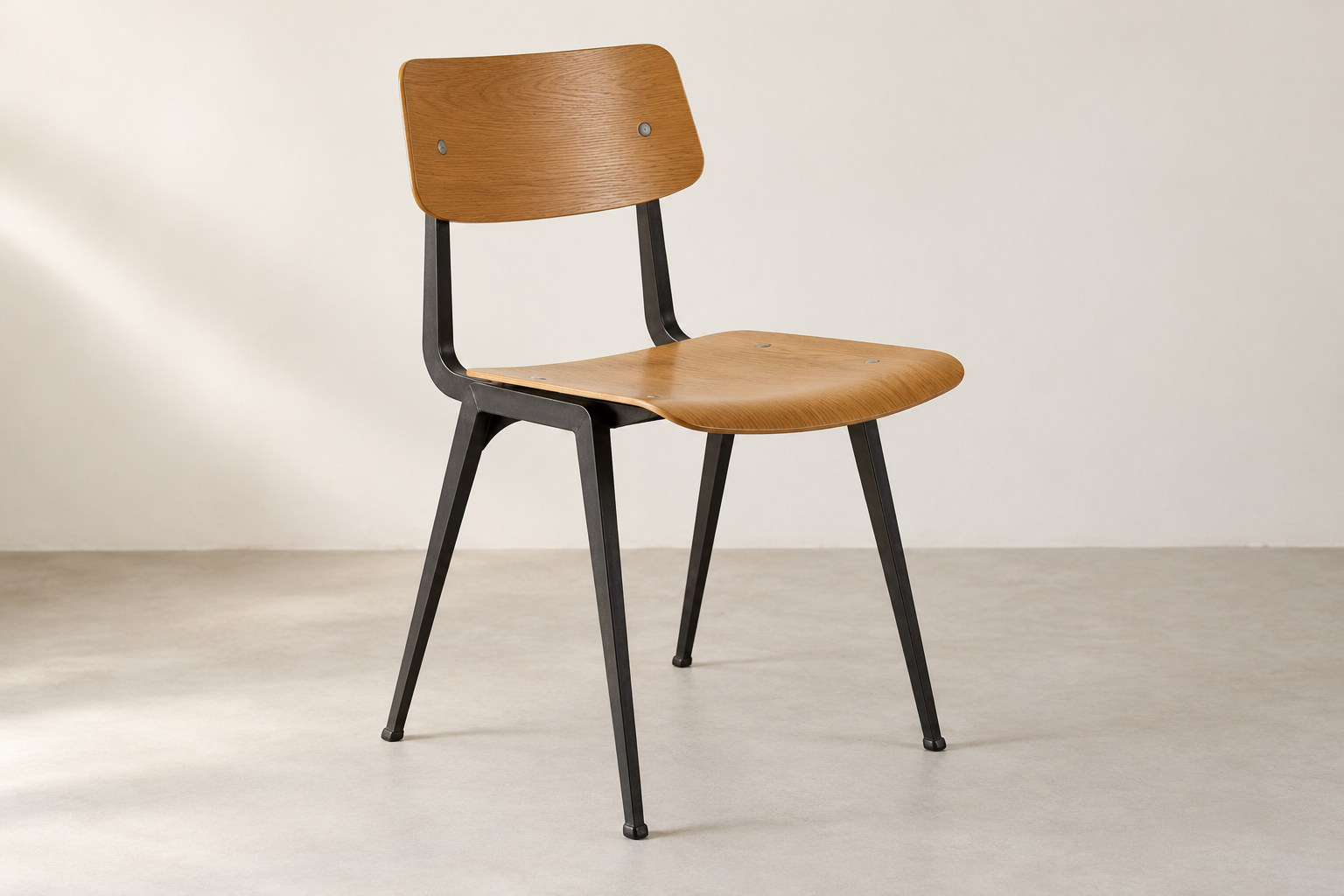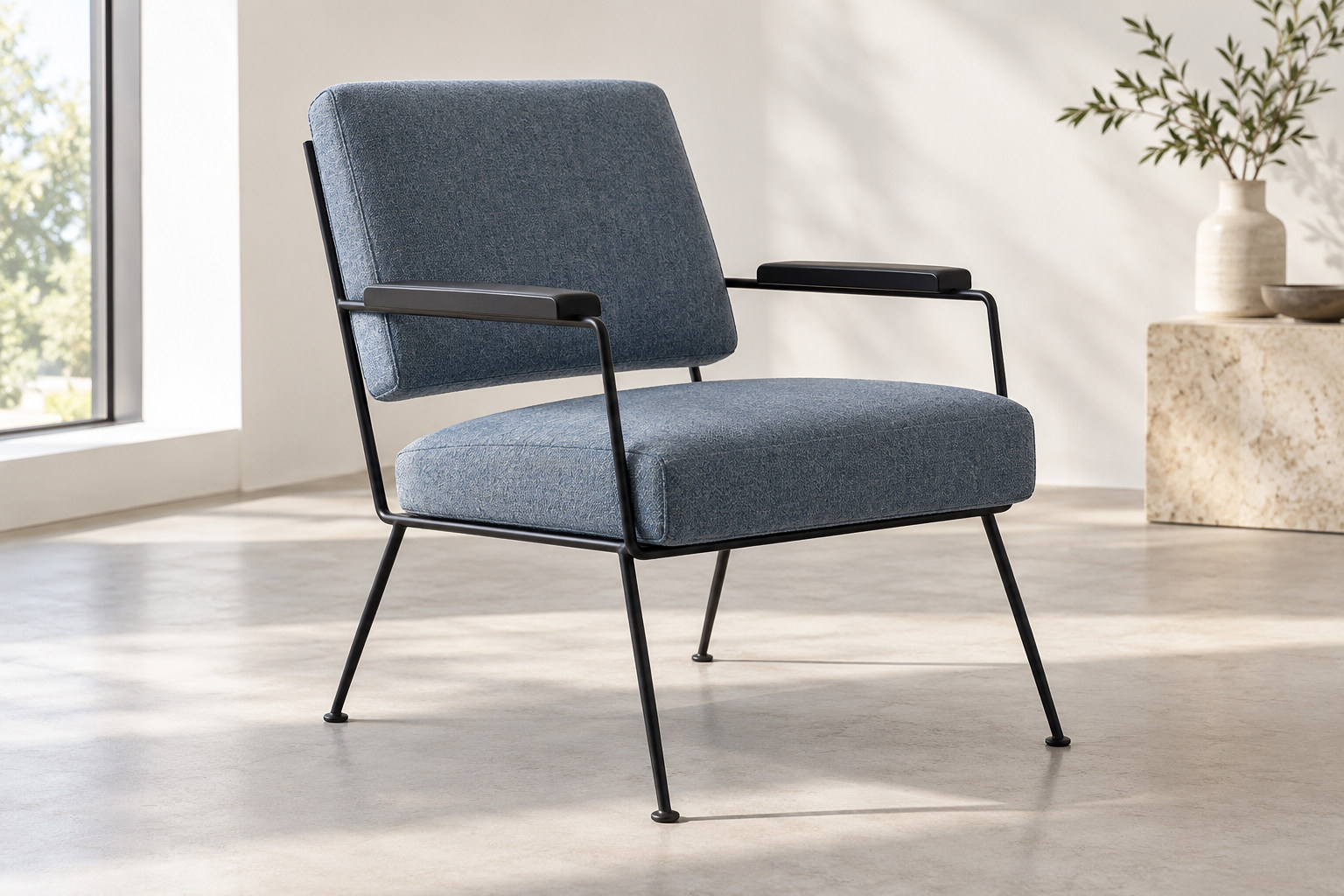
Let upholstery and frame remain separate
An upholstered chair can feel visually solid even when its actual structure is quite spare. Here the open metal frame gives the seat and back room to keep their own outlines. Gaps become part of the appearance rather than spaces to be filled.
Centraal Museum catalogues its example as Gispen 415, designed by Wim Rietveld in 1954.1 Looking at that particular record gives the chair a firm historical starting point before later model names enter the story.
A new number need not mean a new design
The museum notes that the chair was renumbered 1401 in the late 1950s without further change.1 That small detail is useful. A number can belong to catalogue administration and production history rather than mark a fresh act of design.
The physical idea remains easy to follow: distinct upholstered surfaces are held within a legible framework. The name on a later label should help locate the object in that history, rather than replace looking at the object itself.
Later designers get their own credit
Dutch Originals explains a sequence from Wim Rietveld’s 1401 to André Cordemeyer’s 1407 adaptation and a later Richard Hutten continuation.2 Those contributions deserve separate names. The existence of a later revision does not move authorship of the original to the revising designer.
The armchair’s continuing interest lies partly in that ability to invite reconsideration. A clear structural idea can remain recognisable while new versions answer different production or design questions. Keeping the credits precise lets the family history become richer.