Find the meeting point
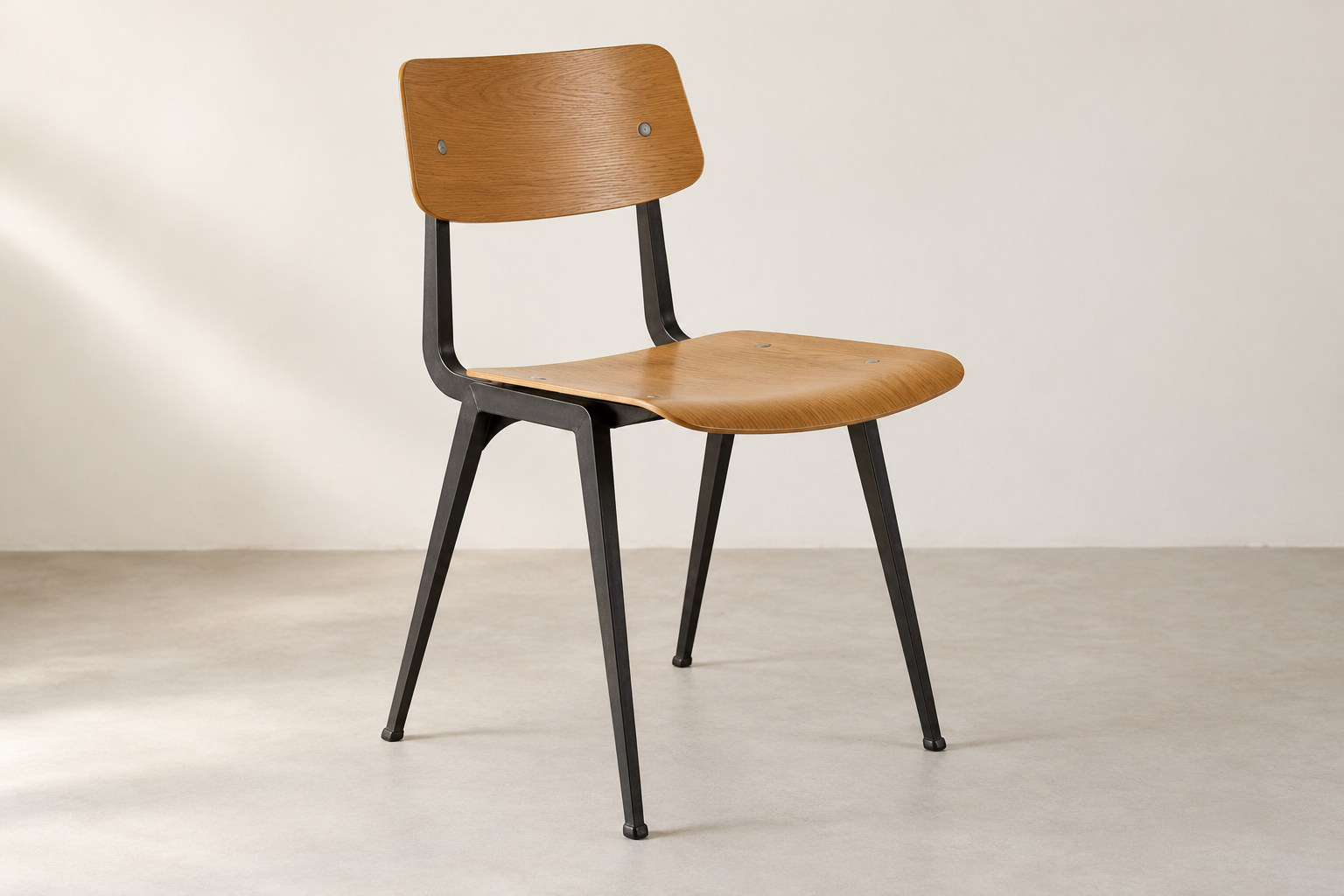
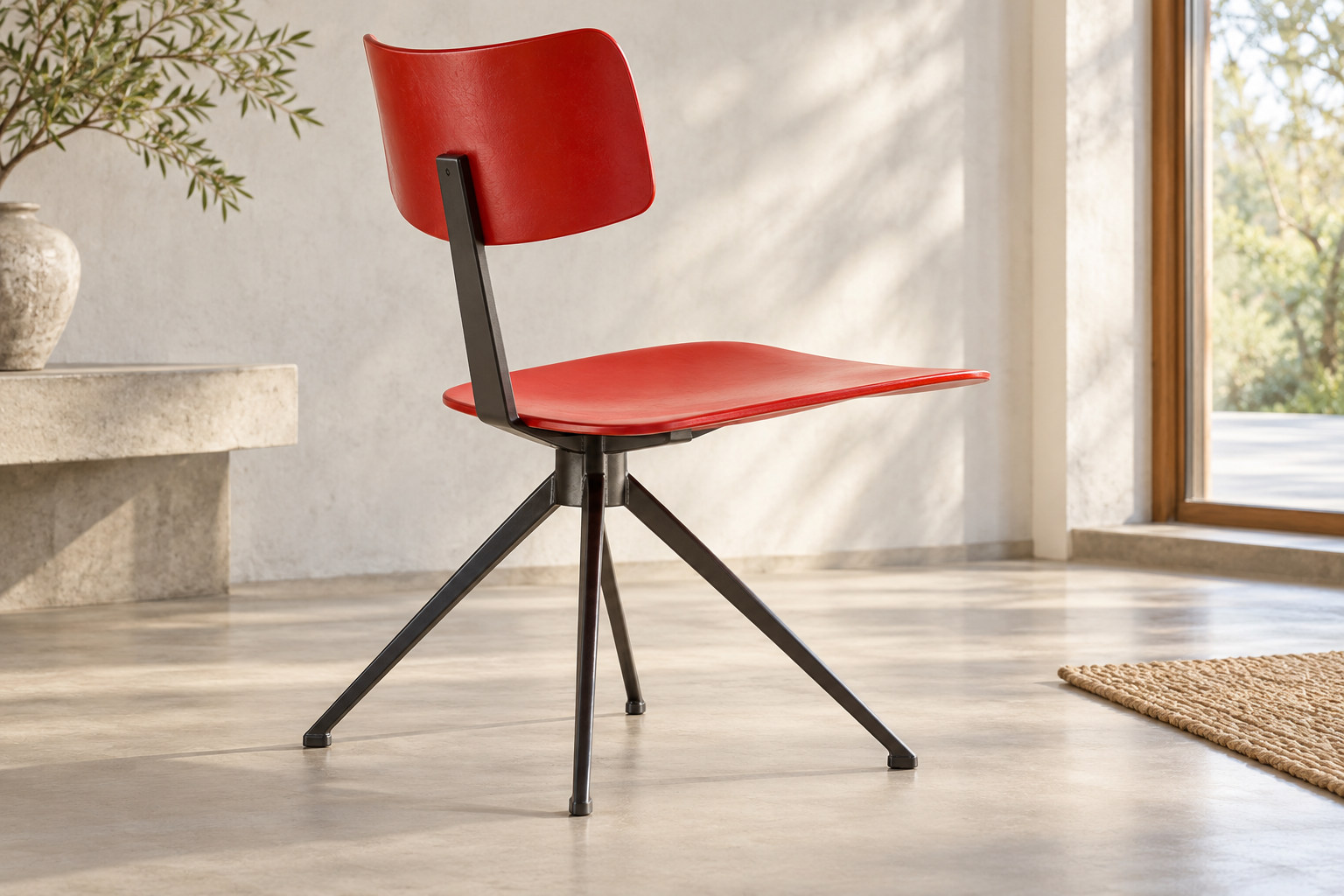
A chair can hide its structure inside upholstery or a shell. Mondial invites the eye towards a central connection. Its folded K-profile brings separate elements into a readable relationship, allowing the rest of the frame to remain visually spare.
Boijmans describes this structural idea in its record of a chair dated 1957–1958. The museum names both Gerrit Rietveld and Wim Rietveld as designers, with Gispen’s Fabriek voor Metaalbewerking as executor.1 The shared credit belongs at the centre of the story too.
Cooperation becomes visible furniture
The Foundation connects Mondial with the 1958 Brussels World Exhibition.2 It is tempting to turn a father-and-son collaboration into a contest between two approaches. The chair offers a more useful question: how can several furniture parts meet with clarity and economy?
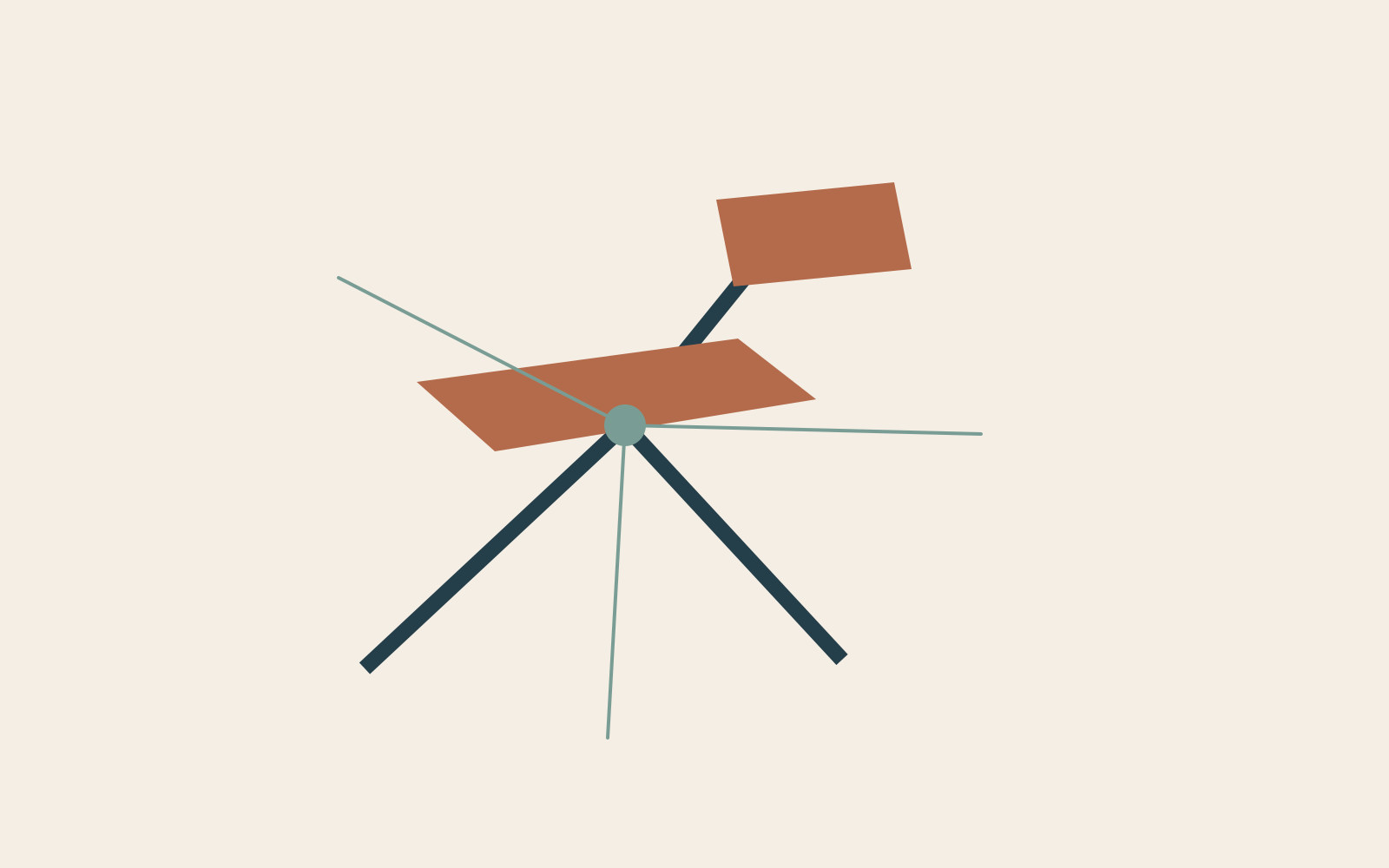
The answer is visible in the relationship between frame and seated surfaces. They remain distinguishable, yet the compact junction gives them one organising centre. The chair’s memorable feature is a connection rather than an elaborate outline.
Follow the version as well as the name
Boijmans catalogues a glass-fibre-reinforced-plastic example.1 Later versions use other materials and finishes, so the name alone does not identify one construction. The Foundation also distinguishes the 2006 reintroduction, the 2013 exclusive Gispen licence and a production stop since 2022.2
Those changes should sharpen the act of looking. Start with the specific example, then return to the shared idea: an everyday chair can become interesting through the careful arrangement of the place where its parts come together.