Design story

Oase: room around the seat

An upholstered chair need not become one solid mass. Oase gives the body a place to settle while leaving the support visually open. Its museum records are useful because they name different materials for different jobs, allowing the chair to be understood as a set of relationships.

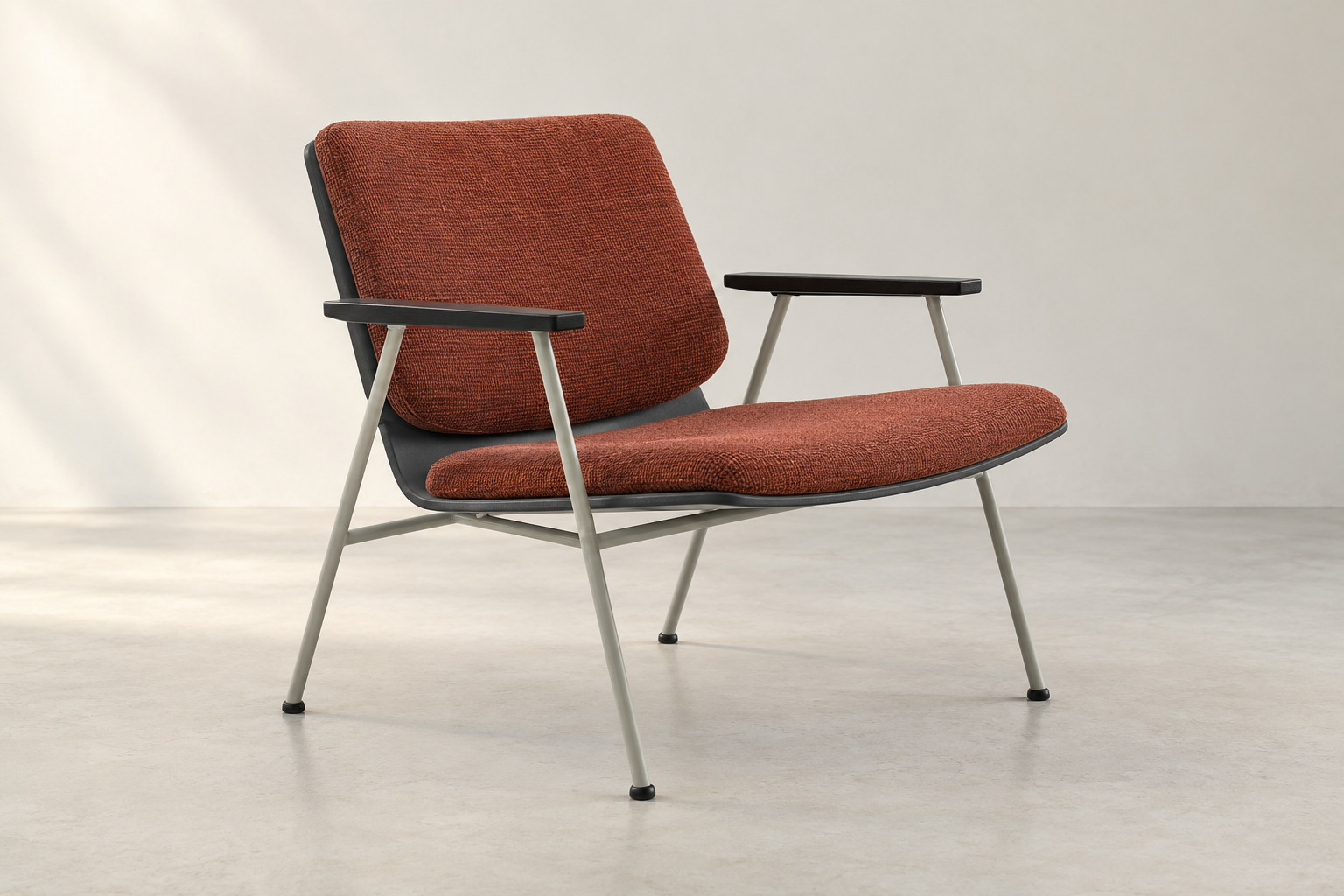
Editorial reconstruction of an orange upholstered lounge seat raised above a slender open light-grey metal support.
PatinaHall editorial reconstruction. It is not a documentary photograph. A substantial seating surface appears above a separate open support. The invented upholstery and forms do not establish Oase’s original covering, material distribution or frame geometry.
On this page
Key facts & takeaways

At a glance

Subject
Oase lounge chair
Entry
Design story
Last reviewed
23 October 2026
Designed
1958documented

Three things to remember

  1. Centraal Museum dates Oase's design to 1958.
  2. Its records credit Wim Rietveld and De Cirkel.
  3. Centraal Museum lists plastic, upholstery and tubular steel for its examples.

A lounge chair with air around it

Oase separates the part that receives the body from the structure that supports it. An upholstered seat and back sit above an open tubular steel support. The result is a lounge chair with room around and beneath the seat, rather than a large upholstered mass.

Centraal Museum dates the design to 1958 and credits Wim Rietveld with De Cirkel as the executing manufacturer. Its material record is unusually helpful: plastic, upholstery and tubular steel each belong to the account. 1

Read from the edge inwards

The outer edge gives the seating body a boundary. The fabric meets the sitter; the support remains below and around it. At the side, an armrest creates another, narrower horizontal surface. Those changes in thickness and position give the chair much of its character.

This is a useful way to look at an industrially made object. Start with the surfaces that touch a person, then trace how they reach the floor. A chair can look unified while allowing its components to retain very different forms and purposes.

The complementary museum record lists textile, plastic and tubular steel again. It does not map each material to a particular component or specify an exact plastic formulation. The difference matters: a list of materials does not identify the construction of an unseen part.2
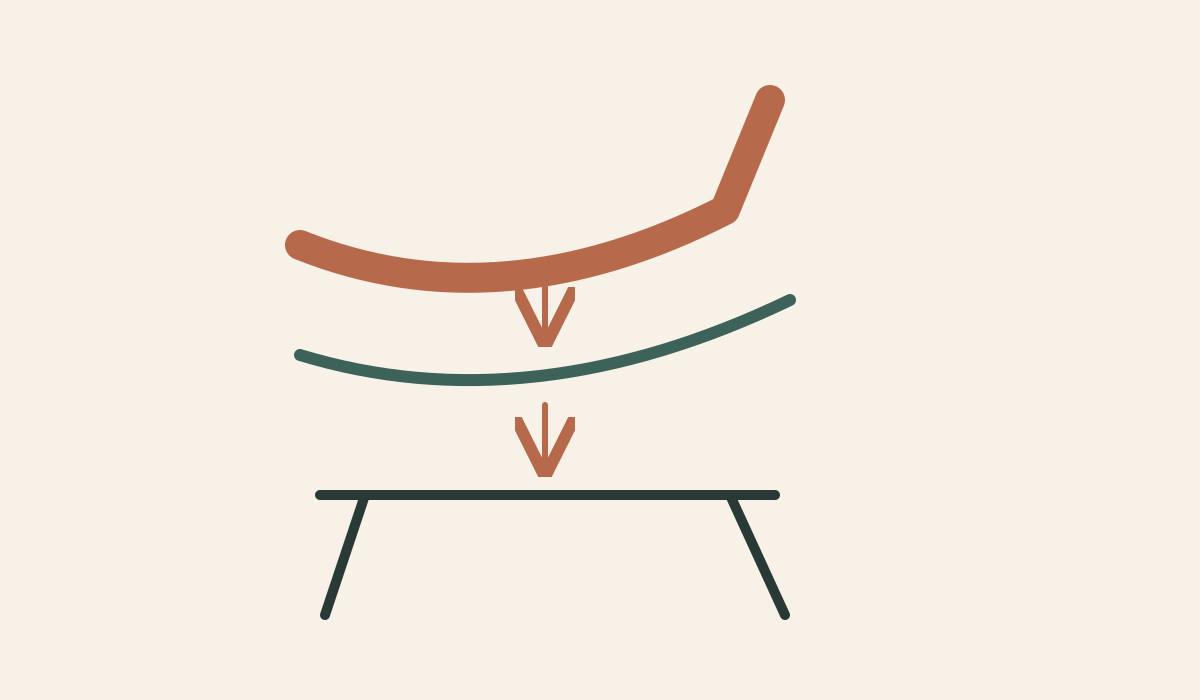
An upholstered seating surface sits above a thin body and an open leg structure.
Original PatinaHall schematic, not to scale. Upholstery, a seating body and an open support are shown as separate visual layers. Their spacing is explanatory, not an assembly instruction.

The company name matters

Oase belongs to Wim Rietveld's work with De Cirkel. His wider museum inventory also includes furniture made for Gispen. A designer's movement between firms can make those histories seem interchangeable when objects are described briefly, but the collection records keep them separate. 3

That separation helps the reader see a career through production relationships. The name on a company is one piece of evidence; the model, the attributed designer and the materials are others. They have to be read together rather than borrowed from a neighbouring design.

A space made for a sitter

The two Oase records give matching overall dimensions while preserving their individual museum identities. They are examples of one design, not a licence to assign their measurements or coverings to every surviving chair.12

The larger insight is visible without a tape measure. Oase gives the body a shaped place to sit while keeping the supporting structure open to view. Its invitation to relax is carried by an arrangement of distinct parts. Following those parts turns an apparently simple lounge chair into a carefully organised small space.
Research notesEvidence, connections and limits

The article follows Centraal Museum's two Oase records and their stated materials. It does not assign an unverified plastic formulation, award, model number or upholstery originality to the design or an offered chair.

Evidence map

Connected subjects and evidence

Reviewed facts

  • Designed 1958documented

    The article follows Centraal Museum's two Oase records and their stated materials. It does not assign an unverified plastic formulation, award, model number or upholstery originality to the design or an offered chair.

    Reviewed 23 October 2026 by PatinaHall editorial.

Reviewed connections

  • Oase lounge chairdesigned byWim Rietvelddocumented

    The cited record identifies the designer of this design or coherent project family.

    Reviewed 23 October 2026 by PatinaHall editorial.
  • Oase lounge chairmanufactured byDe Cirkeldocumented

    The source records this production relationship; it does not identify the maker or date of an unreviewed example. Later studio production is not used to date the original design.

    Reviewed 23 October 2026 by PatinaHall editorial.

Research trail

Sources and further reading

  1. Leunstoel Oase, object 27486Centraal Museum UtrechtAccessed 23 October 2026
  2. Leunstoel Oase, object 27485Centraal Museum UtrechtAccessed 23 October 2026
  3. Wim Rietveld: works and exhibitionsCentraal Museum UtrechtAccessed 23 October 2026

Last reviewed 23 October 2026. Found an error or a stronger primary source? Contact PatinaHall.