A table shaped by the steel sheet
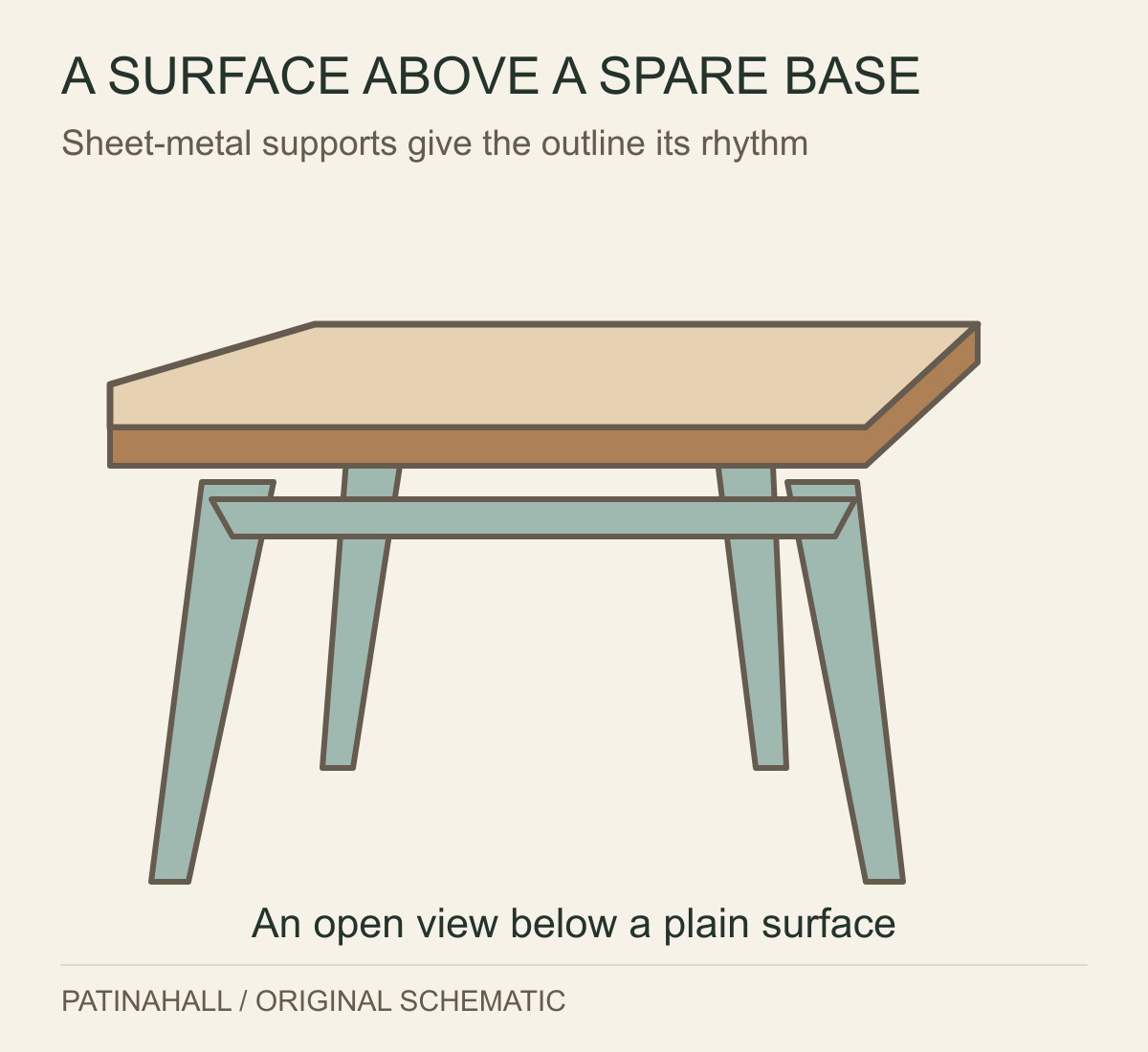
The Pyramid table’s character begins below the top. Wim Rietveld used cut and formed sheet steel to make a spare base whose broad upper portions narrow towards the floor. The result gives a plain working surface a distinctive support without filling the space underneath it.
HAY dates the Pyramid collection to 1959. Its account of the design explains the production logic: sheet-steel construction could use material efficiently and keep assembly straightforward. Those decisions mattered before the finished table reached a classroom or a dining room.2
Remembered from the classroom
Ahrend associates the collection with Dutch schools in the 1960s and 1970s. The table belonged to rooms where furniture served repeated daily activity, rather than appearing as a single prized object.1
Seen in that setting, the plain top is a strength. Books, papers and people supply the changing detail. The base provides enough visual order to make a group of tables readable without demanding attention from everything on them.
The original problem was also practical to manufacture. A leg has to connect a broad working surface to a comparatively small point on the floor. Pyramid makes that narrowing visible. Its name is easier to understand when you follow the support downwards than when you look only at the rectangle of the top.
What happens at the end of the top
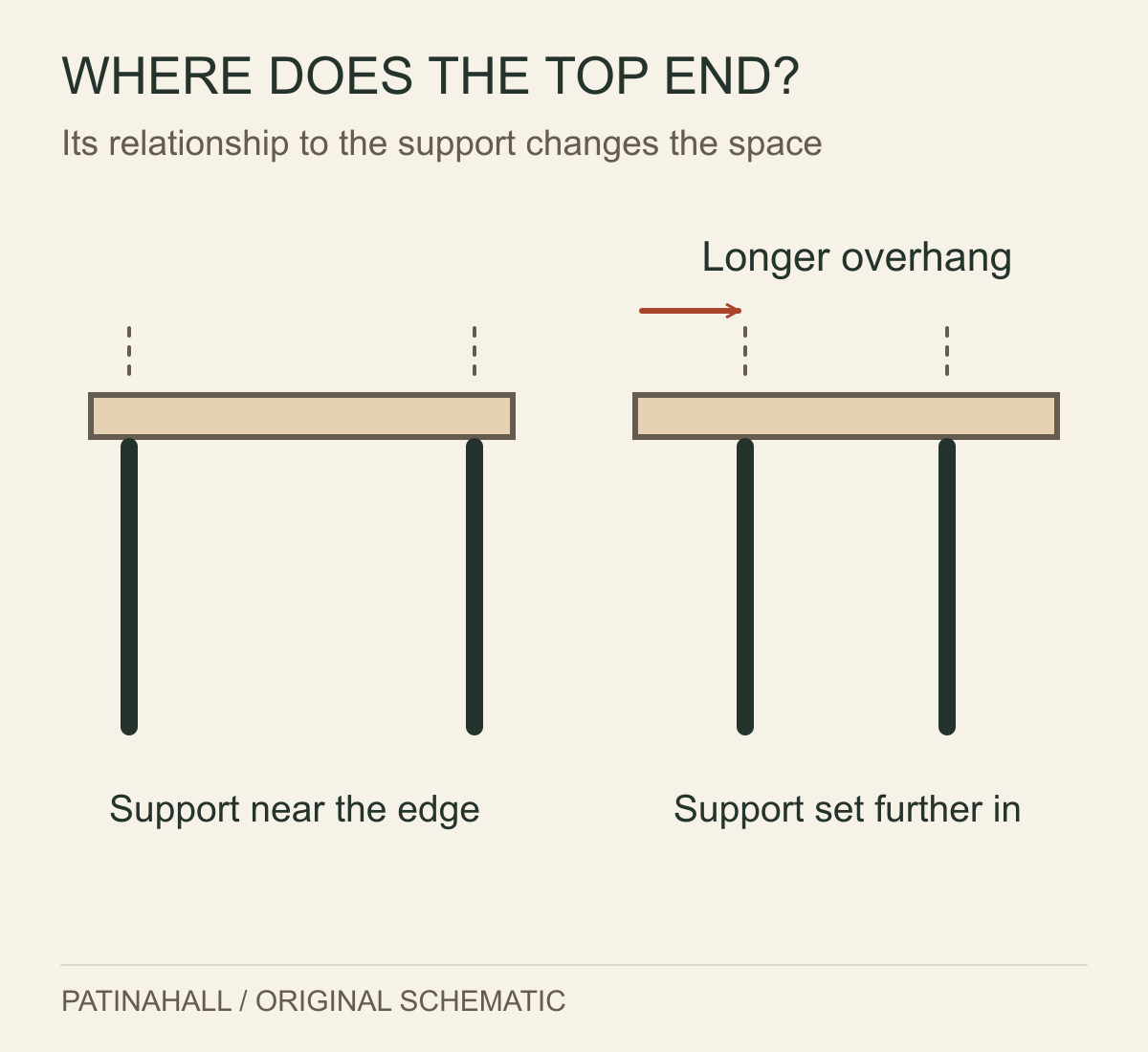
The relationship between the top and base affects the space for a seated person. A surface that extends beyond its supports offers a different approach from one whose legs sit close to the end. The drawing isolates that relationship so the steelwork can be read without the distraction of chairs around it.
HAY’s present Pyramid 01 combines a sheet-steel base with an oak top. That material pairing describes the current version; the collection’s history also includes other configurations and decades of use.3
Why HAY brought it back
The 2017 relaunch was an unusual choice for a company closely associated with contemporary designers. In HAY’s launch account, Rolf Hay explains the attraction of returning to an older industrial solution: efficient construction still made sense, and the furniture could remain accessible rather than being treated only as a collector’s object.2
Pyramid’s journey from school to home therefore has a concrete thread. The production idea that made an ordinary working table possible also gave it a useful second life. Put dinner or a drawing pad on top and the steel underneath is still doing the same legible work.