Start underneath
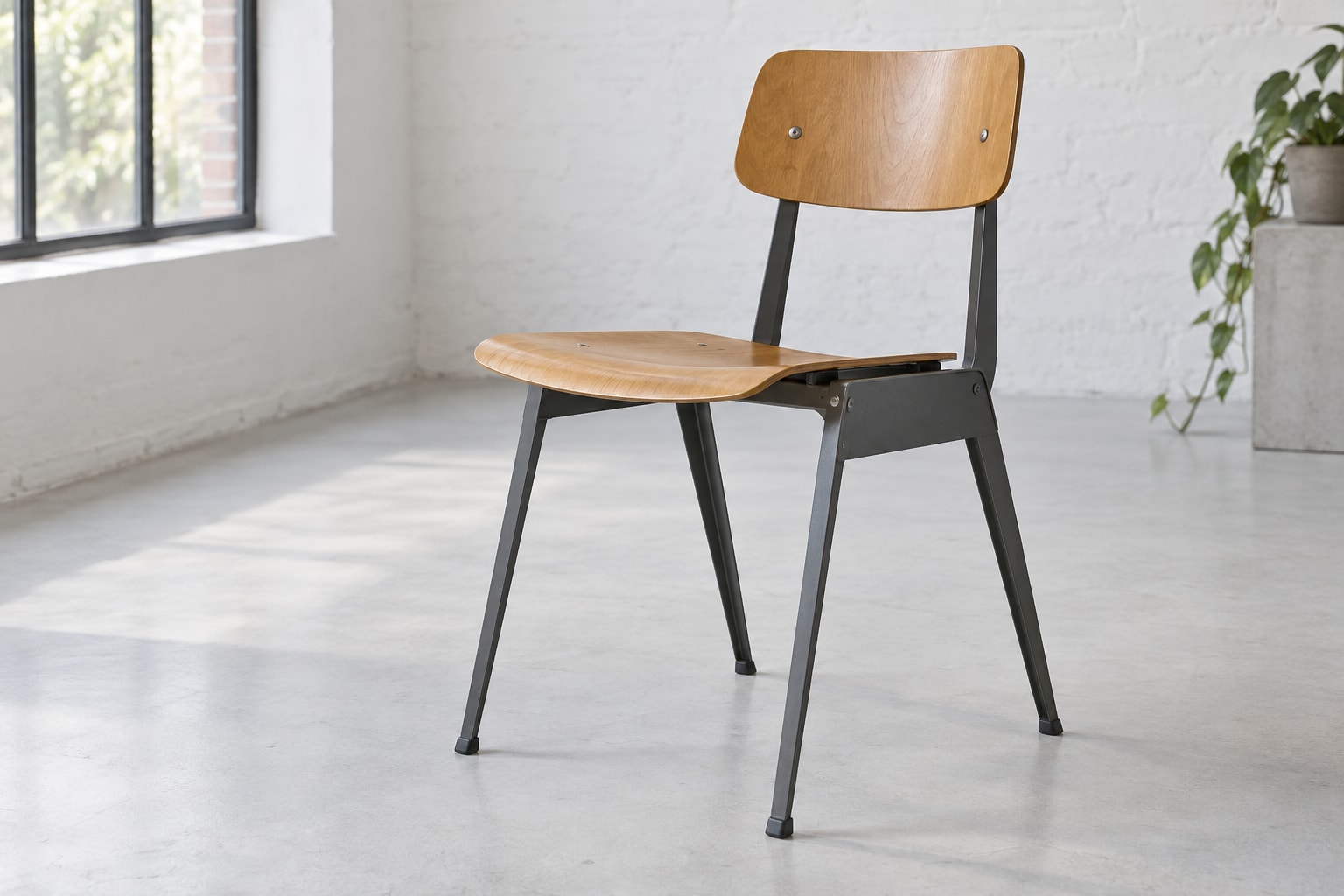
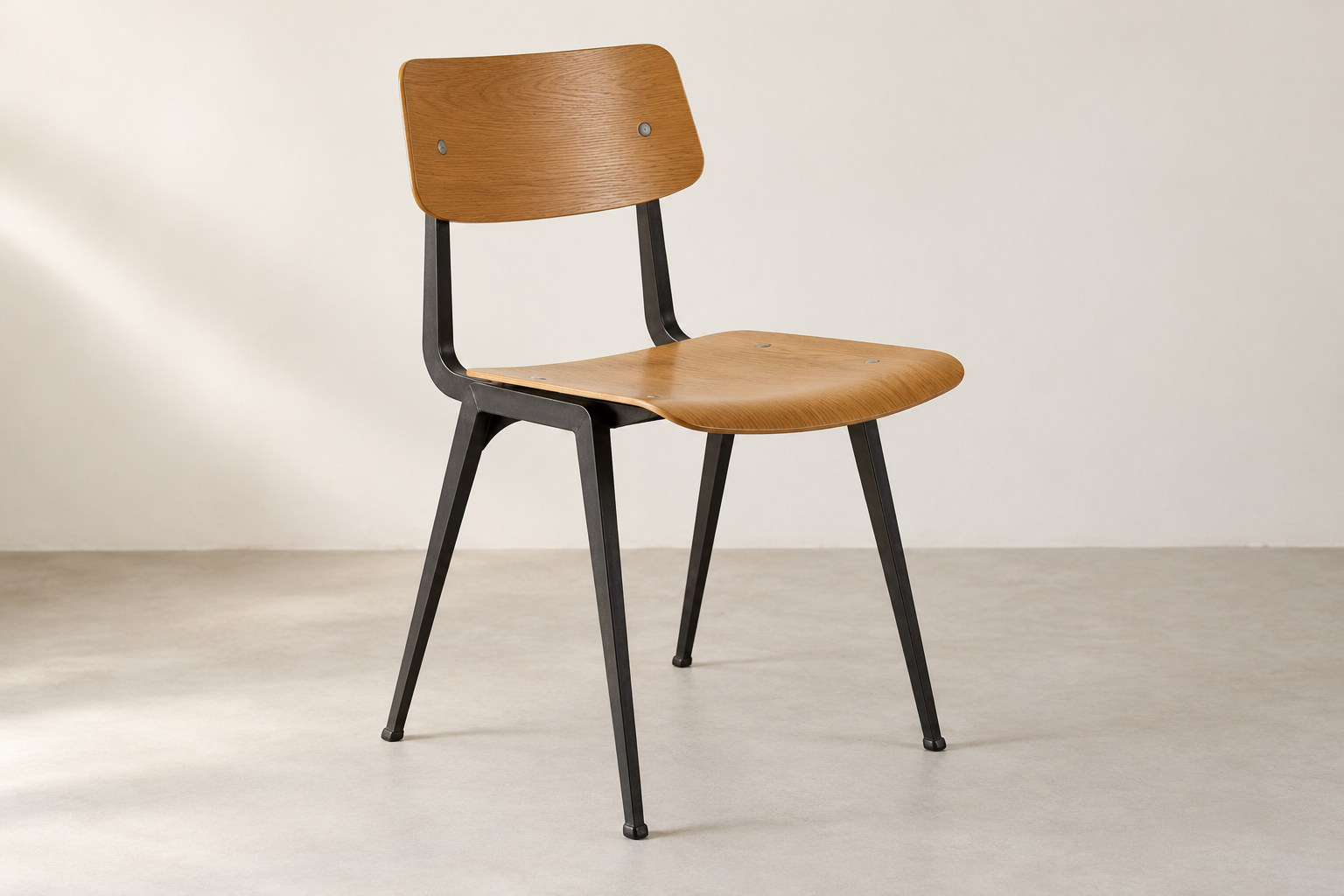
Result looks familiar enough to escape attention: a wooden seat, a separate back and four legs. Its more particular idea is below those surfaces. Friso Kramer and Wim Rietveld used shaped sheet steel to make a thin support whose faces change width and direction around the sitter. HAY and Ahrend credit the design to both men.1
The useful first view is from the side. Follow the metal from the floor towards the seat, then upwards behind the back. A wide face can become a narrow edge as it changes orientation. The chair's light appearance comes partly from that alternating visibility.
A section is a design decision
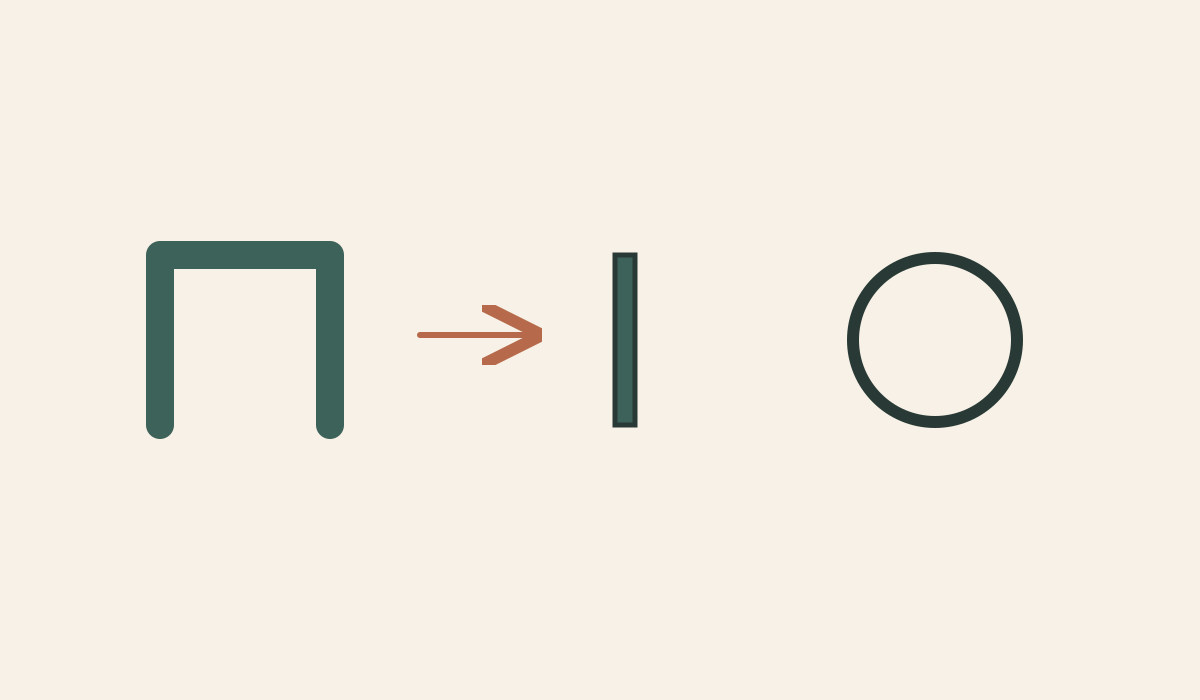
Steel sheet and steel tube are different starting points. A tube brings a closed section; sheet can be cut and formed so its edges, folds and width participate in the support. Result's construction makes those decisions visible without asking the sitter to think about metalworking.
HAY's current account identifies a thin sheet-steel base with an oak seat and back. It also describes the reissue made with Ahrend. These are useful production facts, provided the present specification is kept separate from the materials of every older example.2
The wood and metal have different tasks. The broader wooden surfaces meet the body; the narrower steel components connect them to one another and the floor. Their visible separation helps explain the whole object.
Two designers belong in the credit
The manufacturer dates the collaboration to 1958. Museum Boijmans Van Beuningen also places Result among Wim Rietveld's works and names Friso Kramer alongside him. The object belongs to a network of people and manufacturing knowledge, even when a short label has room for little more than a model name.13
Remembering both designers changes the story from a lone invention into a shared industrial project. It also avoids confusing a design's authorship with the maker, distributor or date of a particular surviving chair.
Familiarity can conceal the interesting part
The current collection offers different finishes and upholstery choices. Those variations can change the chair's presence considerably while leaving its characteristic relationship between surfaces and support legible. 2
Try briefly ignoring the colour. Look at the gap below the back, the edge of the seat and the way the supports approach them. Result is rewarding because the ordinary act of sitting rests on a less ordinary way of arranging metal. The familiar outline is where the story starts; the underside is where it becomes specific.