The chair is part of an ordinary day
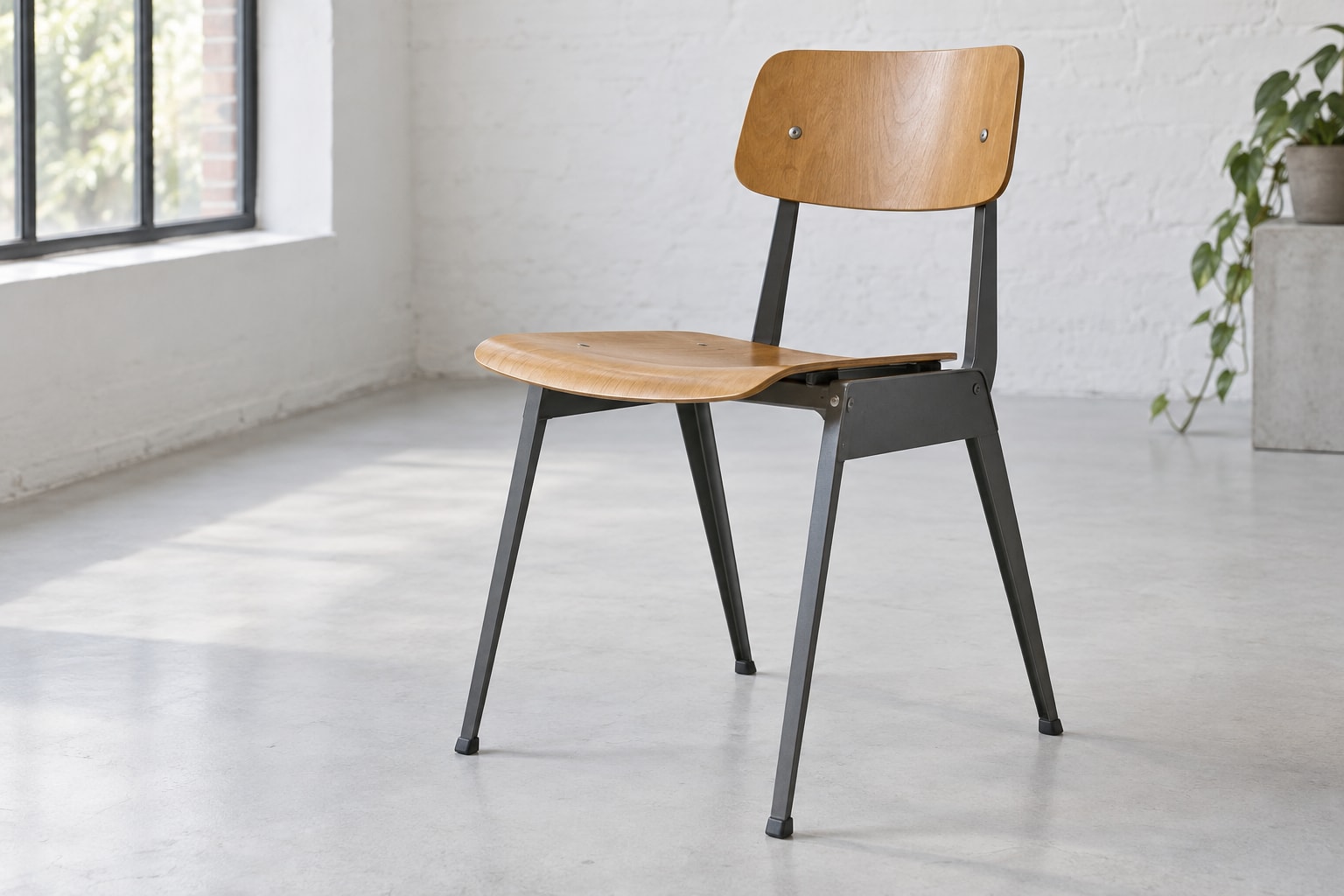
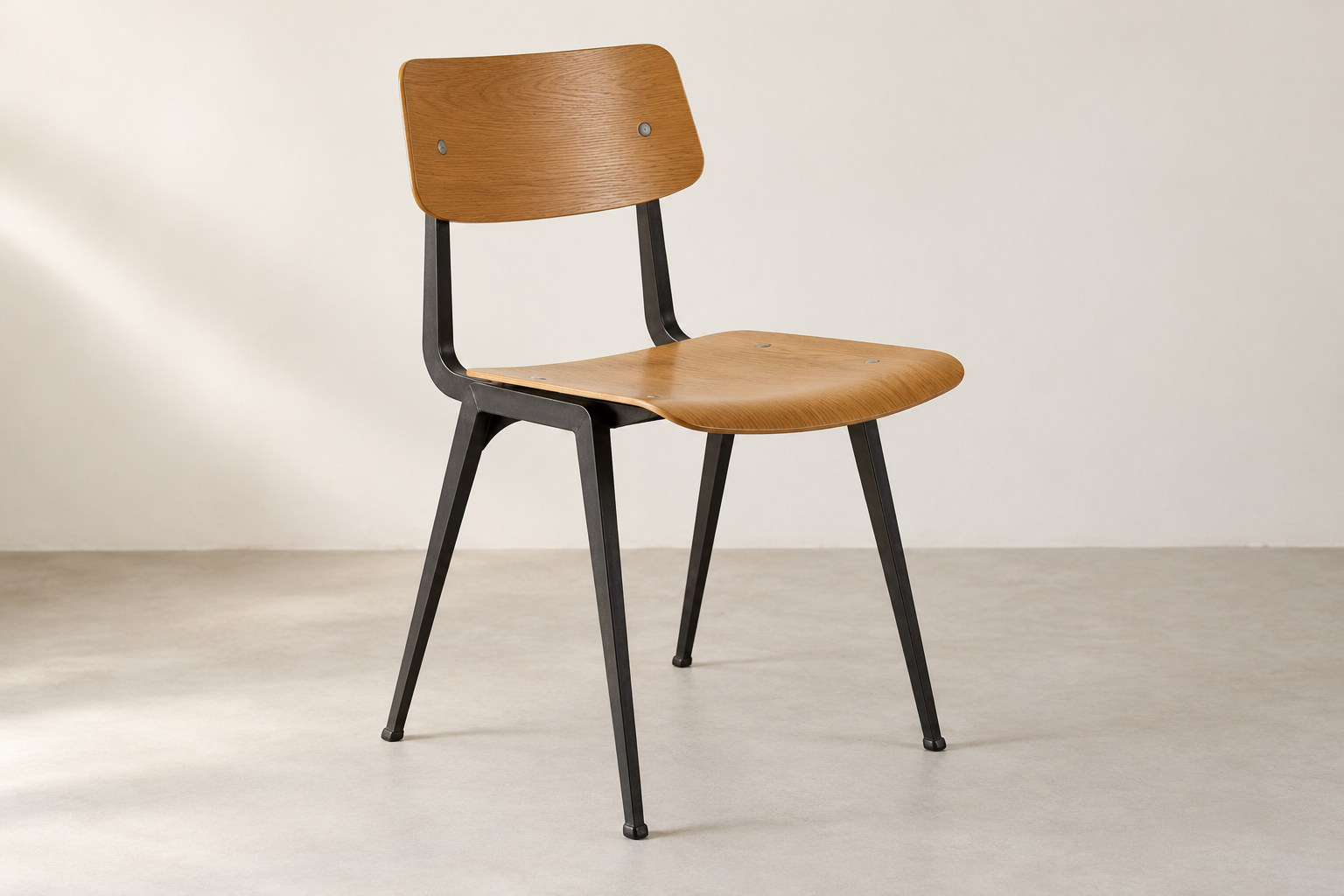
An everyday chair can be important without announcing itself. Friso Kramer’s work rewards attention to precisely that sort of object: furniture made to join the routines of schools, workplaces and other shared interiors. The Louis Kalff Instituut records his arrival at De Cirkel in 1948 and places the Revolt chair within that production history.1
This is a useful starting point for a designer profile. Instead of treating the chair as an isolated signature, look at the repeated acts around it: arriving, sitting, getting up and making a space available again. Ordinary activity supplies a serious design subject.
A factory belongs in the explanation
HAY’s account of Revolt connects Kramer’s design with Ahrend and its manufacturing history.2 The chair’s shaped metal support and separate seating surfaces make that relationship visible. Designing a repeatable object includes thinking about how its parts become a product, not simply drawing an attractive outline.
HAY’s designer account also records Kramer’s later art-director role at Ahrend. These relationships connect personal design work with a larger body of production knowledge. A finished object contains decisions made around tools, materials and manufacture as well as those made at a drawing board. Looking at a familiar chair can therefore open a view into a less visible kind of collaboration.
The same attention reaches the street
Kramer’s documented work extends beyond seating to lighting, heaters, beds and street furniture. A street lamp may seem far from a chair, but both enter everyday surroundings and become part of repeated use. The scale changes while the question of ordinary life remains productive.
There is something generous in paying attention to objects people encounter without arranging a special visit. Kramer’s career gives the overlooked things another turn in view. The next useful design worth noticing might already be beside the desk or on the way home.