
A designer who knew the factory floor
Friso Kramer did not arrive at De Cirkel with a famous chair under his arm. Ahrend recalls that a mutual acquaintance introduced him to the nearby factory, where he began as a construction draughtsman and became its designer. He later insisted that designers walk through the factory: knowing how parts were made was part of knowing what to draw.2
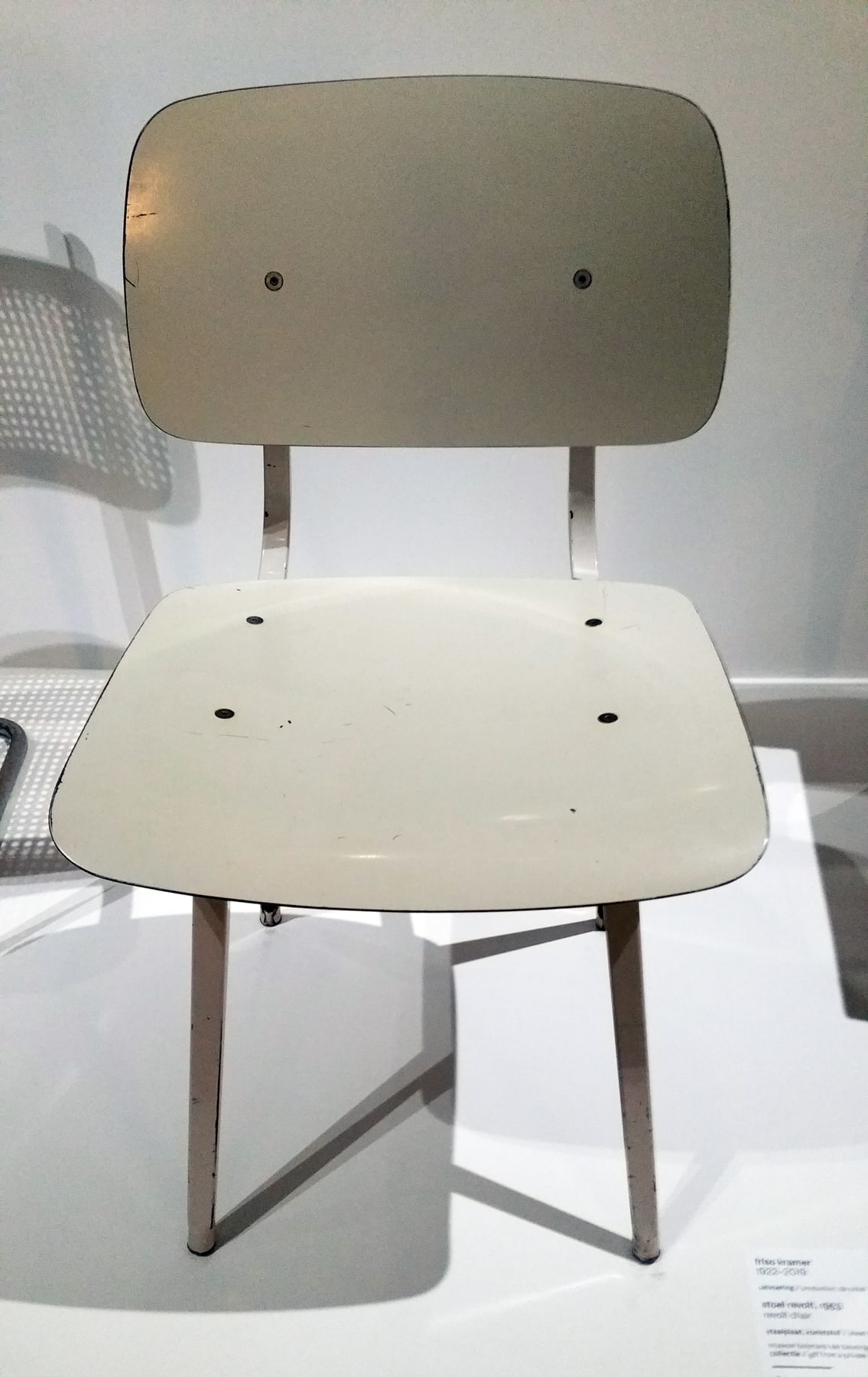
Revolt, introduced in 1953, makes that conviction visible. It has four legs and separate seat and back panels, but the frame uses curved sheet steel where a viewer might expect round tubing. The experiment is underneath the sitter, in the supporting parts.1
The important part is the edge
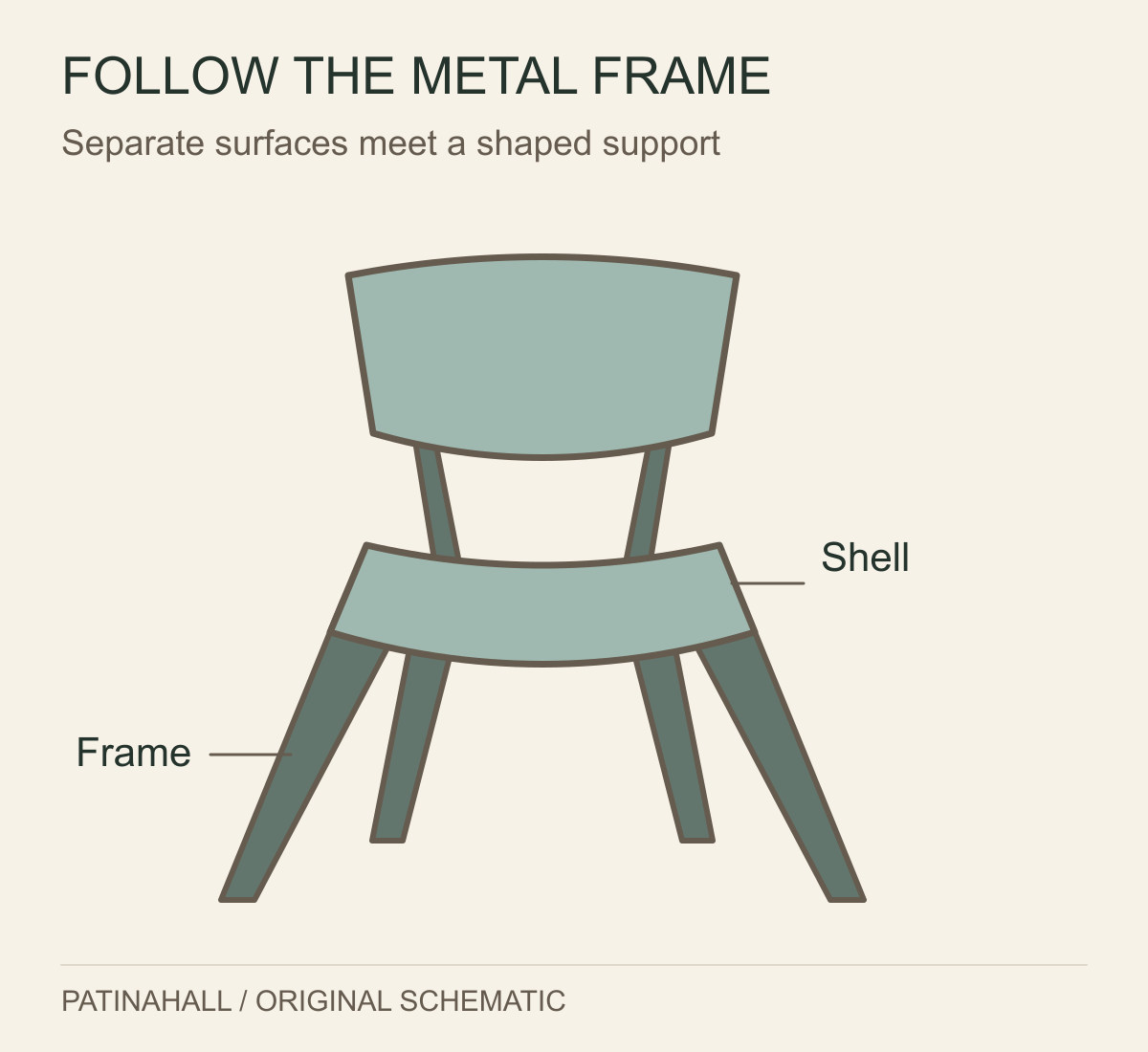
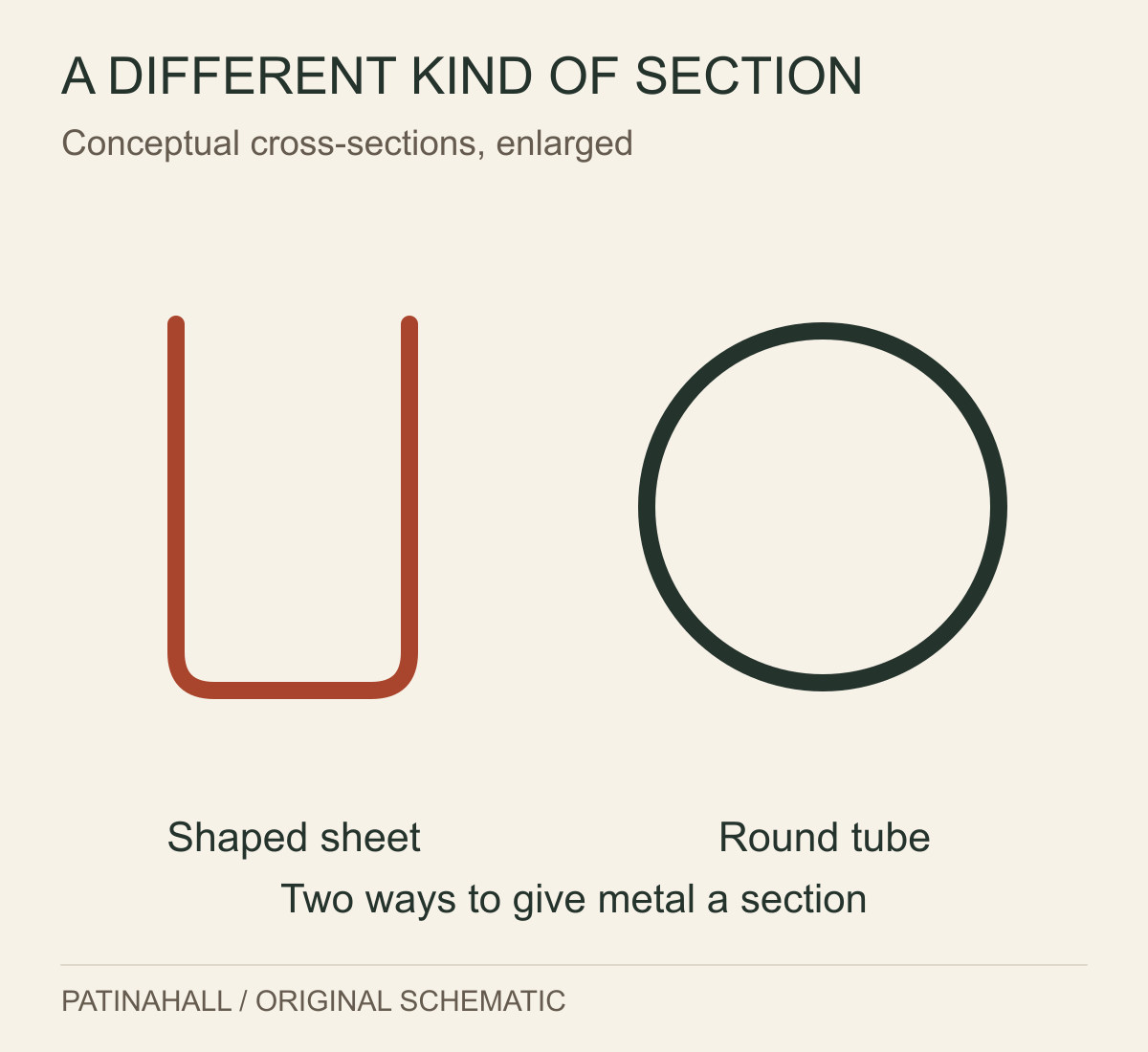
A tube presents much the same rounded section from every direction. A shaped strip of sheet metal can show a wide face and then almost disappear as the eye moves towards its edge. Follow Revolt’s supports from the floor towards the seat to see this change.
Shaping also gives the metal a job beyond drawing an outline. Ahrend describes a frame that flexes with the sitter and a design intended to use steel economically. Its light appearance comes from the arrangement of working components, with gaps between them, rather than an ornamental pattern cut into a bulky chair.1
This is why the side view matters. From the front, seat and back attract most of the attention. From beside the chair, their relationship to the folded, branching support becomes clearer.
Useful enough to become anonymous
Kramer admired familiar street furniture that people used without knowing its designer. Ahrend’s account connects that attitude to his wish to reduce the number of parts and make good everyday products widely useful. Anonymity could be a design achievement.2
Revolt carries the idea into the room. Nothing about sitting down requires an explanation of metalworking. Yet look underneath and the seemingly ordinary chair reveals a quite particular way of being made.
The Ahrend and HAY relaunch followed in 2020. HAY’s current chair uses ABS seat and back shells; their recycled content varies with colour. These are later production specifications, while the curved steel frame remains the recognisable link to Kramer’s original idea.13