Designer profile

Joris Laarman: building a different kind of workshop

A digitally designed chair still has to become an object. Joris Laarman’s work is especially interesting at that meeting point, where programming, material experiments, assembly and hand finishing share a workshop.

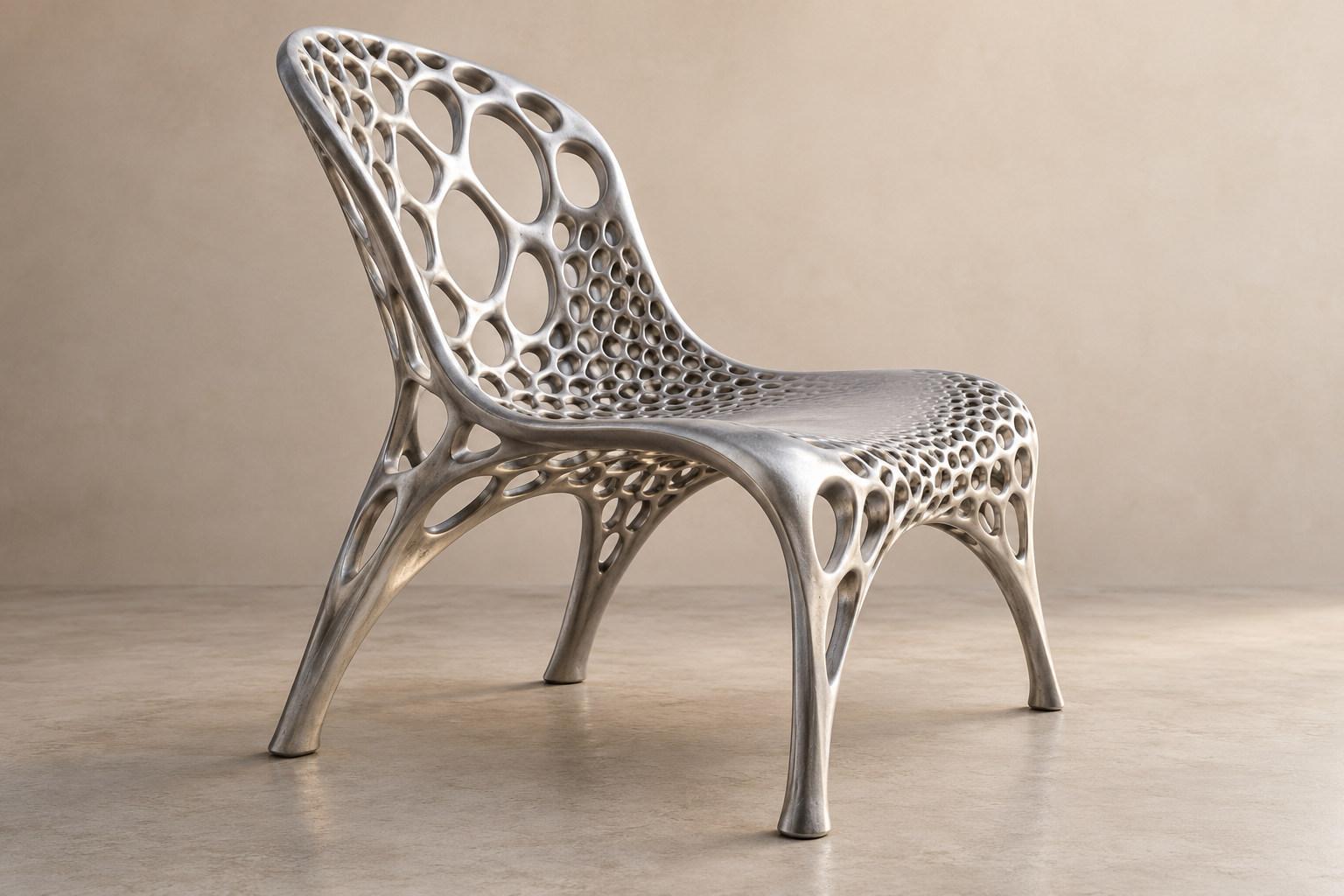
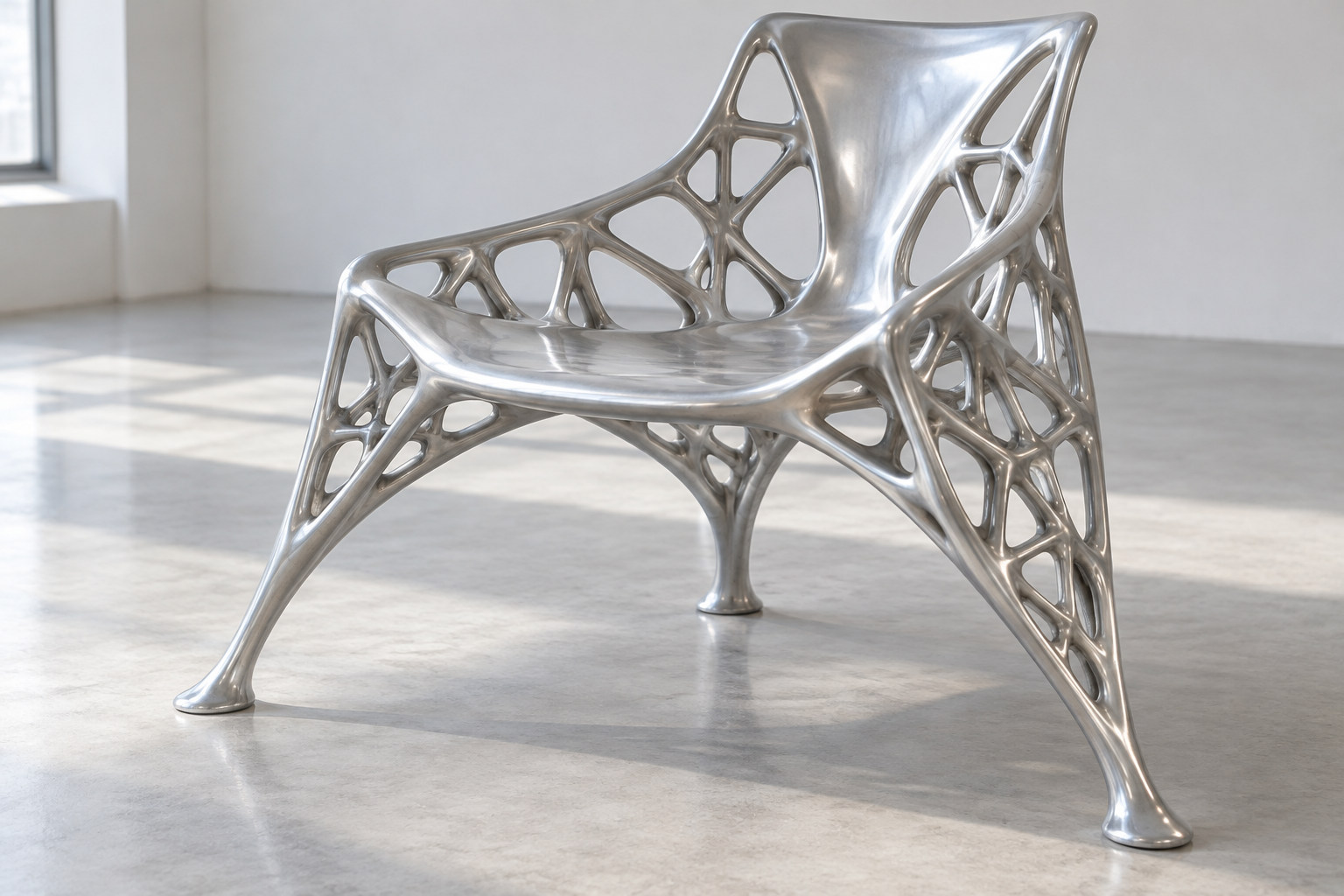
A metallic chair-like form changes between open cells and denser areas.
PatinaHall editorial reconstruction. It is not a documentary photograph. Changing cell density gives a structural idea a visible form. The aluminium-like interpretation is not a replica, stress map or manufacturing record of the NGV prototype.
On this page
Key facts & takeaways

At a glance

Subject
Joris Laarman
Entry
Designer profile
Last reviewed
25 October 2026

Three things to remember

  1. Anita Star co-founded the Lab with Laarman in 2004.
  2. The Pixel prototype combines CNC-cut resin parts, assembly and hand finishing.
  3. A computer-generated form still requires material and making decisions.

A chair made from many decisions

The Pixel chair offers a clear way into Joris Laarman's workshop. Cooper Hewitt describes a resin prototype made from many individually cut pieces. A CNC-directed router cuts the parts; they are joined and then finished by hand. Digital instructions, assembly and surface work all belong to the same object.2

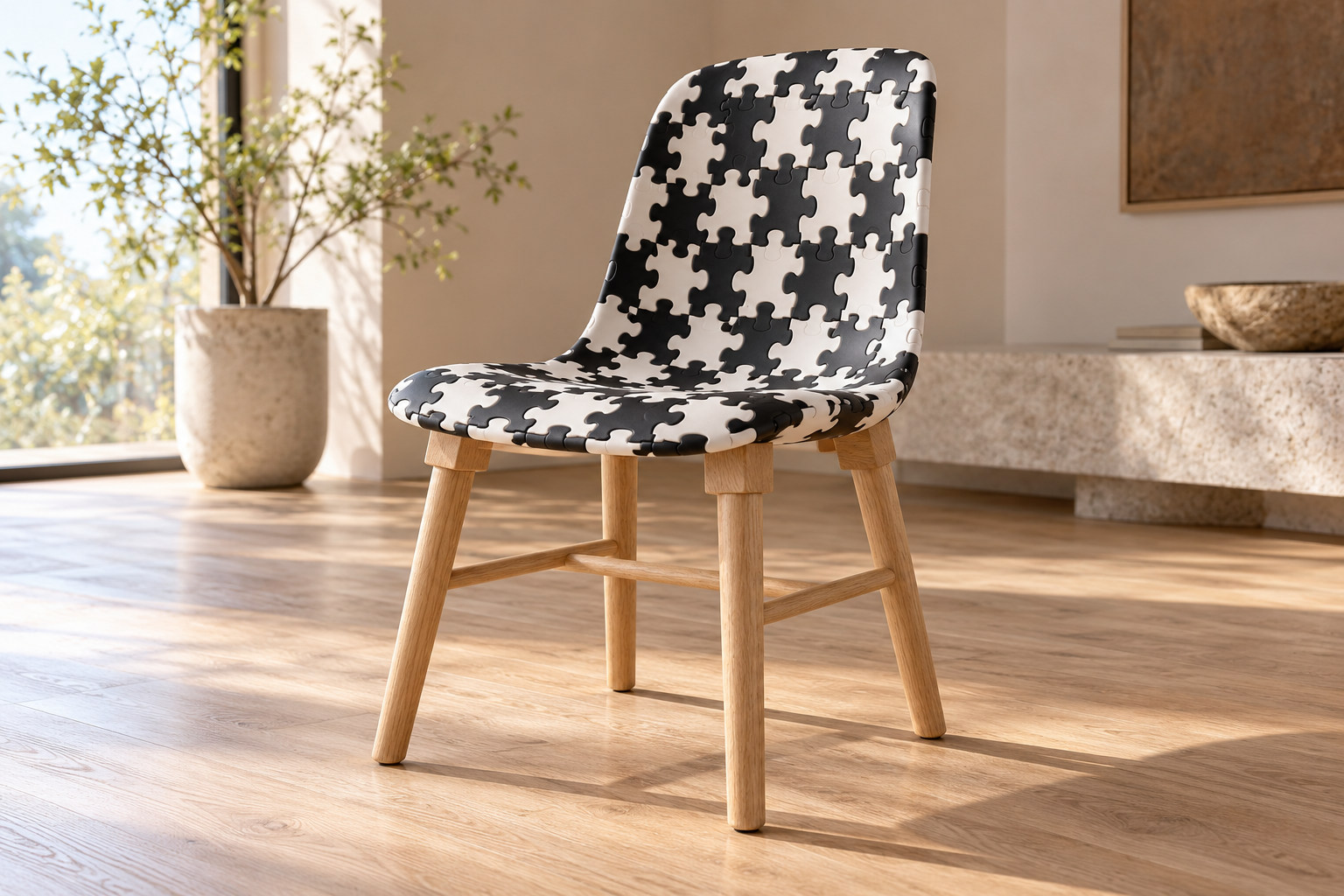
The resulting grey pattern helps the eye read that sequence. Its small areas suggest the enlarged pixels of a digital image, while their arrangement makes a continuous chair surface. A process associated with images becomes visible in a place to sit.

The hand finishing is an especially useful detail. It keeps the story close to the material object after the cutting file has done its work.
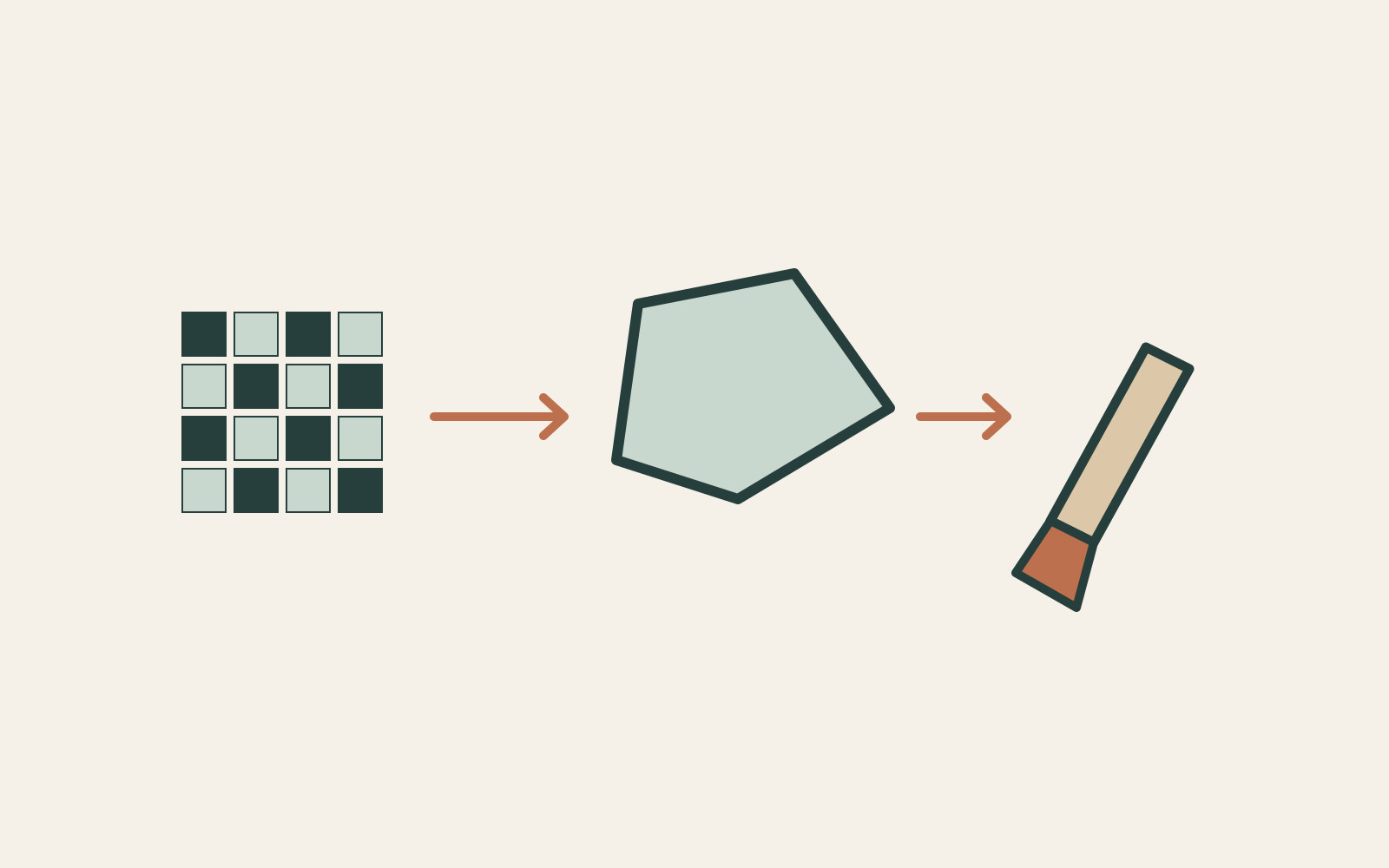
A pixel grid connects to a material part and a finishing gesture.
Digital definition, material making and hand finishing can contribute to one object. Original PatinaHall schematic, not to scale; it represents roles in the argument, not a universal Lab production sequence.

A workshop with different kinds of skill

In its 2017 exhibition account, Cooper Hewitt describes Joris Laarman Lab as a team of engineers, programmers and craftspeople. Laarman founded it with filmmaker Anita Star in 2004. The museum's description gives collaboration a practical meaning: different skills participate in developing the process as well as the result.3

A programmer can help define relationships within a form; a making process determines how those relationships can be realised in material. Assembly and finishing then bring another set of decisions into play.

That arrangement makes the workshop itself interesting. Its tools include code and machines, alongside the judgement needed to turn parts into an object someone can see and touch.

The object keeps the question visible

MoMA's artist record identifies Laarman as Dutch and lists the Bone Chair and a Microstructures Gradient prototype among his works. The collection offers different physical expressions of his interest in generating structure through design methods.1

The Pixel example adds another expression: a chair whose small pieces make the route from digital pattern to assembled material unusually legible. It gives a viewer something concrete to follow through a broader technical practice.

A useful starting question is therefore simple: what had to happen after the shape appeared on a screen? In Laarman's work, that question opens the door to the people, tools and material decisions inside the workshop.
Research notesEvidence, connections and limits

The team description is Cooper Hewitt’s 2017 account, not a current staff inventory. The Pixel prototype’s resin construction is not assigned to every Makerchair or to the separate aluminium Gradient prototype.

Evidence map

Connected subjects and evidence

Reviewed connections

  • Bone Chairdesigned byJoris Laarmandocumented

    The cited record identifies the designer of this design or coherent project family.

    Reviewed 23 October 2026 by PatinaHall editorial.
    • Source 4Joris Laarman, Bone Chair, 2006, object 443.2008
  • Heatwave radiatordesigned byJoris Laarmandocumented

    The museums credit Joris Laarman. High identifies a 2003 experimental prototype separately from its 2007 production Heatwave.

    Reviewed 25 October 2026 by PatinaHall editorial.
    • Source 5Creation date; material hierarchy; museum interpretation
    • Source 6Date; medium; maker; explanatory paragraph
    • Source 7Designer/manufacturer; date; medium
  • Microstructures aluminium gradient chair prototype, NGV 2016.425attributed toJoris Laarmanattributed

    NGV credits Joris Laarman as designer and Joris Laarman Lab, Amsterdam, as manufacturer. The two catalogue roles remain distinct.

    Reviewed 25 October 2026 by PatinaHall editorial.
    • Source 8Object title/date; medium; makers; About this work; accession
    • Source 9PDF page 204 of 226 (zero-based page 203), Microstructures label

Research trail

Sources and further reading

  1. MoMA: Joris LaarmanThe Museum of Modern ArtAccessed 25 October 2026
  2. Cooper Hewitt: Up Close With the Pixel ChairCooper Hewitt, Smithsonian Design MuseumAccessed 25 October 2026
  3. Cooper Hewitt: Joris Laarman Lab exhibition press documentCooper Hewitt, Smithsonian Design MuseumAccessed 25 October 2026
  4. Joris Laarman, Bone Chair, 2006, object 443.2008The Museum of Modern ArtAccessed 23 October 2026
  5. Boijmans, Heatwave V 2334 a-f (KN&V)Museum Boijmans Van BeuningenAccessed 25 October 2026
  6. High Museum, Reinventing Functionality (Prototype) 2012.64.1-2High Museum of ArtAccessed 25 October 2026
  7. High Museum, Heatwave 2012.65High Museum of ArtAccessed 25 October 2026
  8. NGV, Microstructures, aluminium gradient chair, prototypeNational Gallery of VictoriaAccessed 25 October 2026
  9. NGV Triennial artwork labelsNational Gallery of VictoriaAccessed 25 October 2026

Last reviewed 25 October 2026. Found an error or a stronger primary source? Contact PatinaHall.