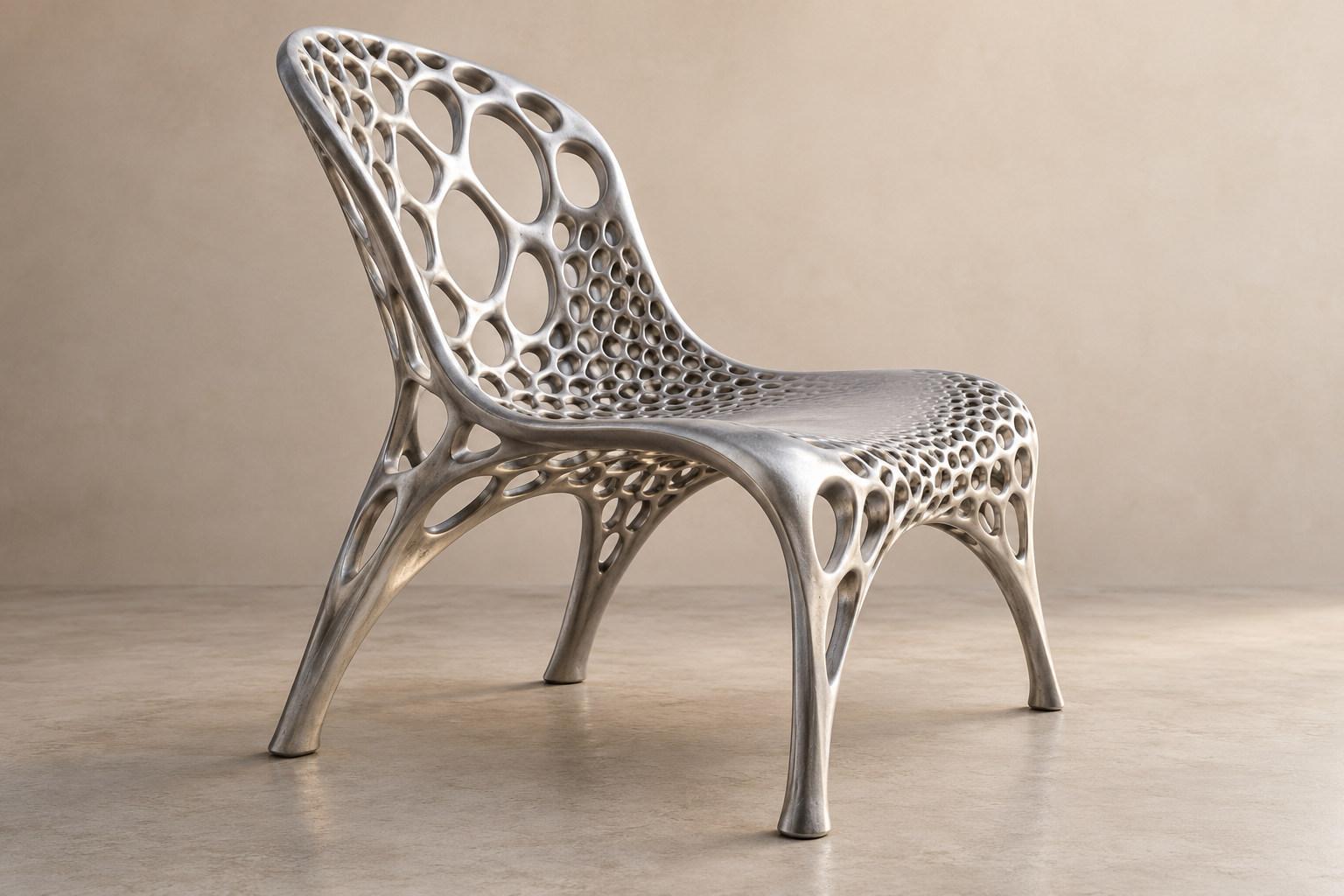
A chair with changing density
The interesting change in Joris Laarman's Aluminium Gradient Chair happens within its material. Open cellular areas give way to denser ones. The NGV describes a 3D-printed aluminium chair whose computer algorithm varies the cells, thickness and pattern according to structural requirements.1
That makes density part of the drawing. A designer can describe a chair through its outer contour; here, the distribution of material inside that contour also becomes a visible decision. Some places can open up while others move towards solid metal.
The museum compares the principle to bones and plants. The useful point of the comparison is variation: different areas can carry different amounts of structure. The comparison helps explain how different areas can receive different amounts of material.1
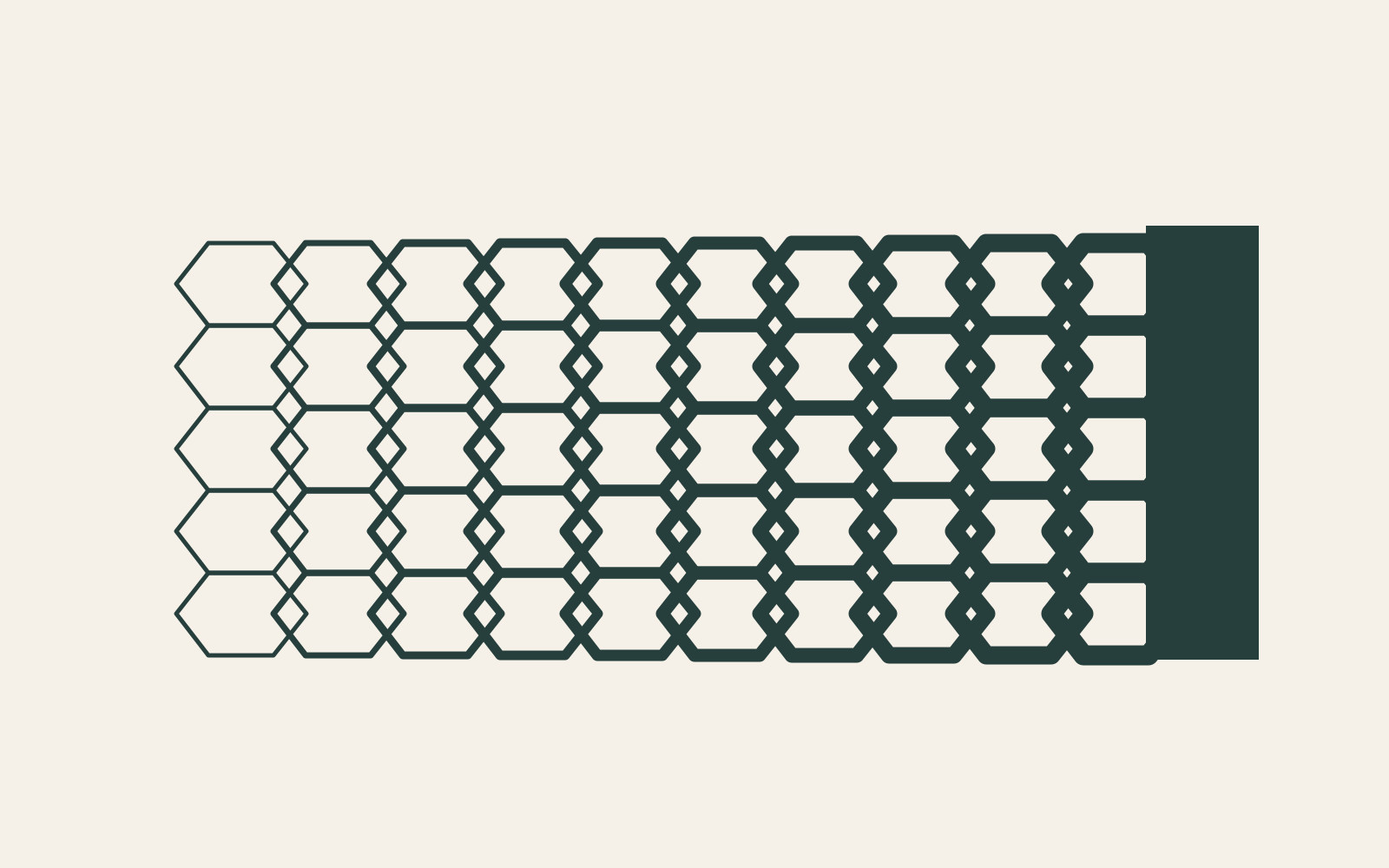
One aluminium prototype
The NGV catalogues this object as Microstructures, aluminium gradient chair, prototype, dated 2014. Its Triennial label also identifies it as a structural prototype in aluminium. These are two records for the same work, accession 2016.425.12
The collection entry separates two roles: Joris Laarman designed it, and Joris Laarman Lab in Amsterdam manufactured it. That distinction keeps the material experiment connected to the workshop that realised this particular object.1
A prototype gives a question a physical scale. Here the question can be seen across the breadth of a seat and the rise of a back: how should a chair distribute its material?
Looking through the surface
An open cellular area lets the eye look into and through the structure. A denser area interrupts that view. The transition makes the chair's surface something more complicated than a uniform sheet.
The most revealing way to look is to trace a change. Notice where openings begin to close, then follow the pattern into a more solid area. The chair offers a visible record of variation, even though looking alone cannot certify how much weight any part can carry.
Its memorable idea is a precise one: a chair need not give every place the same material density. Here, making those differences becomes the form.