Design story

Dragon Bench: drawing a seat with metal

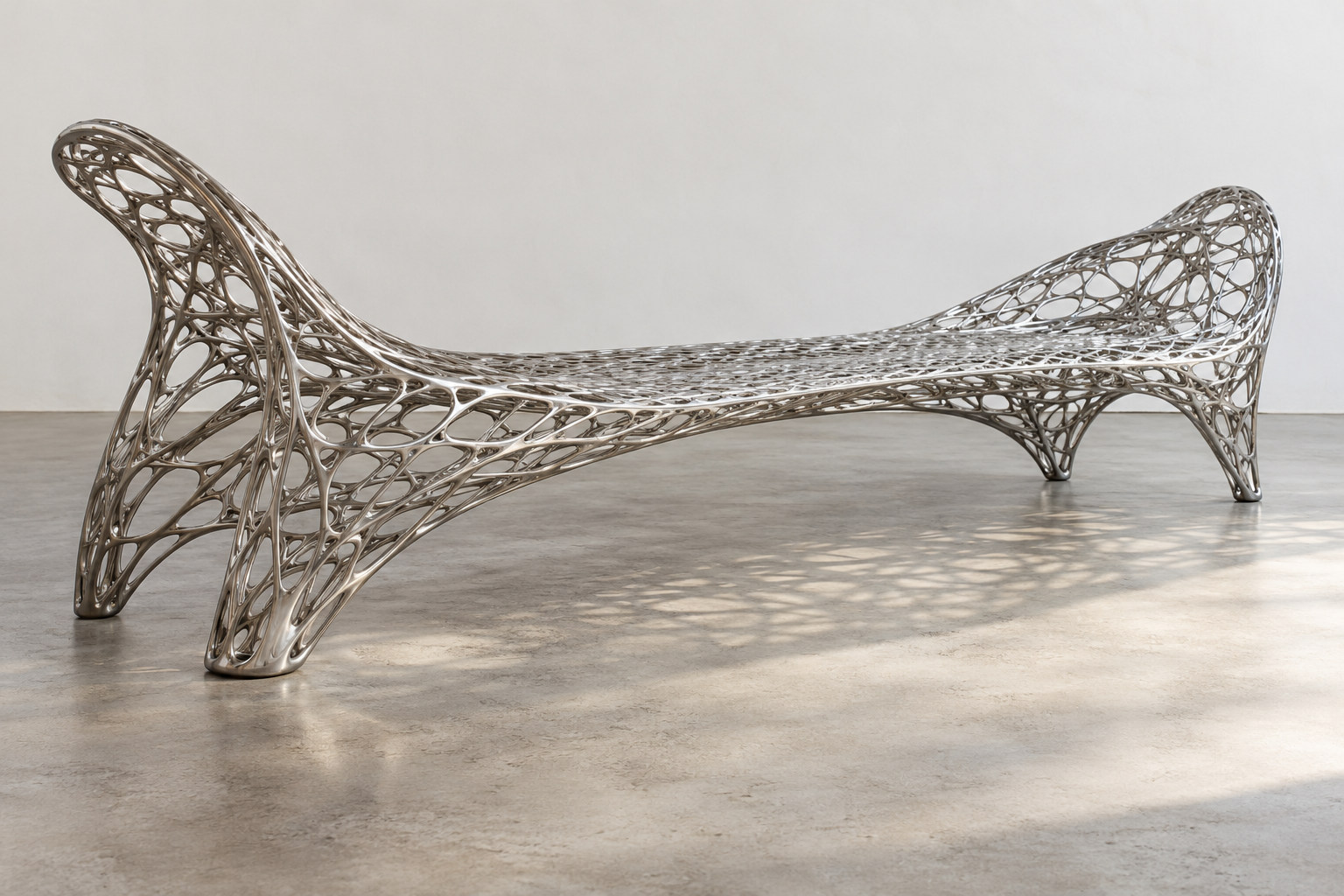
Dragon Bench makes metal look as though it has been drawn into space. Its open lattice offers a different encounter from a solid slab: lines accumulate, meet and become a volume large enough to suggest a place to sit.

An open silvery metal lattice forms a long curved bench with a changing shadow beneath it.
PatinaHall editorial reconstruction. It is not a documentary photograph. Deposited-line texture and open volume illustrate the robotic-metal idea. The scene does not identify a prototype, edition number or actual robotic toolpath.
On this page
Key facts & takeaways

At a glance

Subject
Dragon bench
Entry
Design story
Last reviewed
25 October 2026
Designed
2014documented

Three things to remember

  1. The design is dated 2014 in museum records.
  2. A prototype and later examples have separate identities.
  3. This is metal deposition, not plastic filament printing.

Let a line become a structure

The fascination of Dragon Bench lies in the distance between a thin metal line and a substantial furniture volume. Its lattice makes that distance visible: repeated deposits build an open body instead of disguising it behind a continuous surface.

The National Gallery of Victoria describes a stainless-steel work made through robotic metal deposition and identifies Joris Laarman Lab as manufacturer in Amsterdam.1 The process belongs to the design’s appearance as well as its making.

The openings do visual work

Gaps let light travel through the bench, separating it from the shadow it casts. Dense areas and open areas give the surface a changing rhythm. Moving around the object reveals new overlaps rather than one fixed pattern on a flat skin.

This is why calling it merely “3D-printed” loses useful information. The relevant material is metal, deposited into a growing structure.13 The visible lines are part of a specific fabrication exploration, not a generic plastic-printing effect.
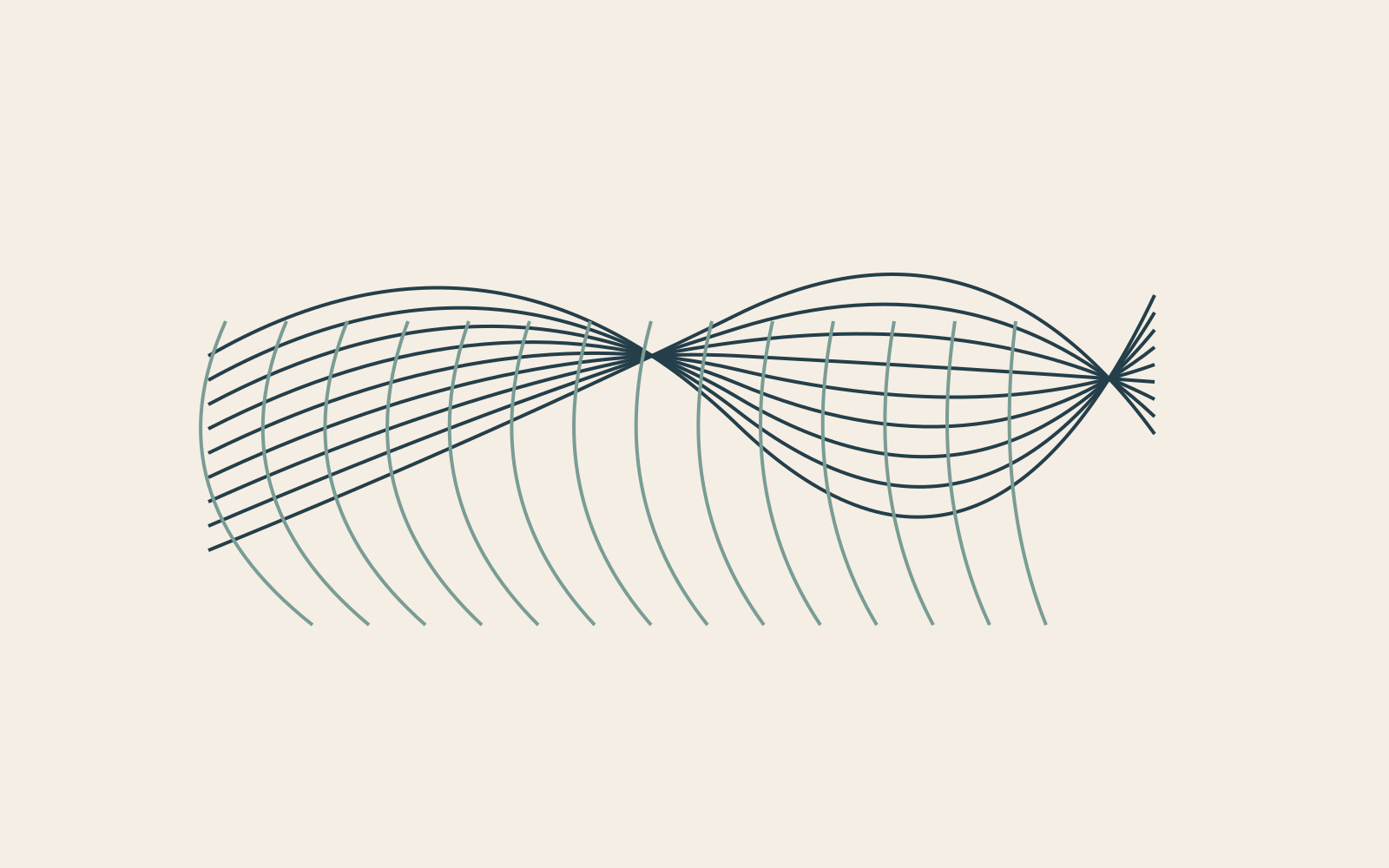
Curved lines cross to form an open network rather than a solid surface.
Original PatinaHall schematic, not to scale. Accumulated lines suggest a growing metal lattice. Their paths are interpretive and cannot be used as welding, robot or structural instructions.

A prototype is one particular object

High Museum explicitly calls its 2014 work an MX3D Dragon Bench prototype.3 MFAH records another example as designed in 2014 and made in 2015; NGV identifies its example as edition 4/8.21 The same design name does not make those objects interchangeable.

That variety helps keep the experiment alive in the telling. Dragon Bench asks what furniture might look like when the process can place material along new paths. Its open body lets that question remain visible after the making is finished.
Research notesEvidence, connections and limits

High Museum’s 2014.282 is a prototype. MFAH 2015.252 was designed 2014 and made 2015; NGV 2016.429 is edition 4/8. Dimensions, edition details and maker credits remain specimen-bound. This article provides no fabrication, structural or seating-safety specification.

Evidence map

Connected subjects and evidence

Reviewed facts

  • Designed 2014documented

    Museums date the design to 2014. High Museum 2014.282 is a 2014 prototype; MFAH 2015.252 was designed in 2014 and made in 2015; NGV 2016.429 is edition 4/8. Their dimensions and edition details are not interchangeable.

    Reviewed 25 October 2026 by PatinaHall editorial.
    • Source 1Artwork details; manufacturer;2016.429
    • Source 2Designer/Producer; Date;2015.252
    • Source 3Title; maker; date;2014.282

Reviewed connections

  • Dragon benchdesigned byJoris Laarmandocumented

    Joris Laarman is the designer; NGV and MFAH explicitly identify Joris Laarman Lab as maker in Amsterdam. Robotic metal deposition builds a stainless-steel lattice. Prototype, edition and dimensions stay attached to the particular museum example.

    Reviewed 25 October 2026 by PatinaHall editorial.
    • Source 1Artwork details; manufacturer;2016.429
    • Source 2Designer/Producer; Date;2015.252
    • Source 3Title; maker; date;2014.282
  • Dragon benchuses techniqueRobotic metal deposition in Dragon Benchdocumented

    Joris Laarman is the designer; NGV and MFAH explicitly identify Joris Laarman Lab as maker in Amsterdam. Robotic metal deposition builds a stainless-steel lattice. Prototype, edition and dimensions stay attached to the particular museum example.

    Reviewed 25 October 2026 by PatinaHall editorial.
    • Source 1Artwork details; manufacturer;2016.429
    • Source 2Designer/Producer; Date;2015.252
    • Source 3Title; maker; date;2014.282

Research trail

Sources and further reading

  1. Dragon bench: Artwork details; manufacturer;2016.429ngv.vic.gov.auAccessed 25 October 2026
  2. Dragon bench: Designer/Producer; Date;2015.252emuseum.mfah.orgAccessed 25 October 2026
  3. Dragon bench: Title; maker; date;2014.282high.orgAccessed 25 October 2026

Last reviewed 25 October 2026. Found an error or a stronger primary source? Contact PatinaHall.