Design story

Heatwave: ornament becomes part of the radiator

A radiator is usually something a room is arranged around. Heatwave makes it something to look towards: Joris Laarman turns curling ornament into the visible body of a useful household object.

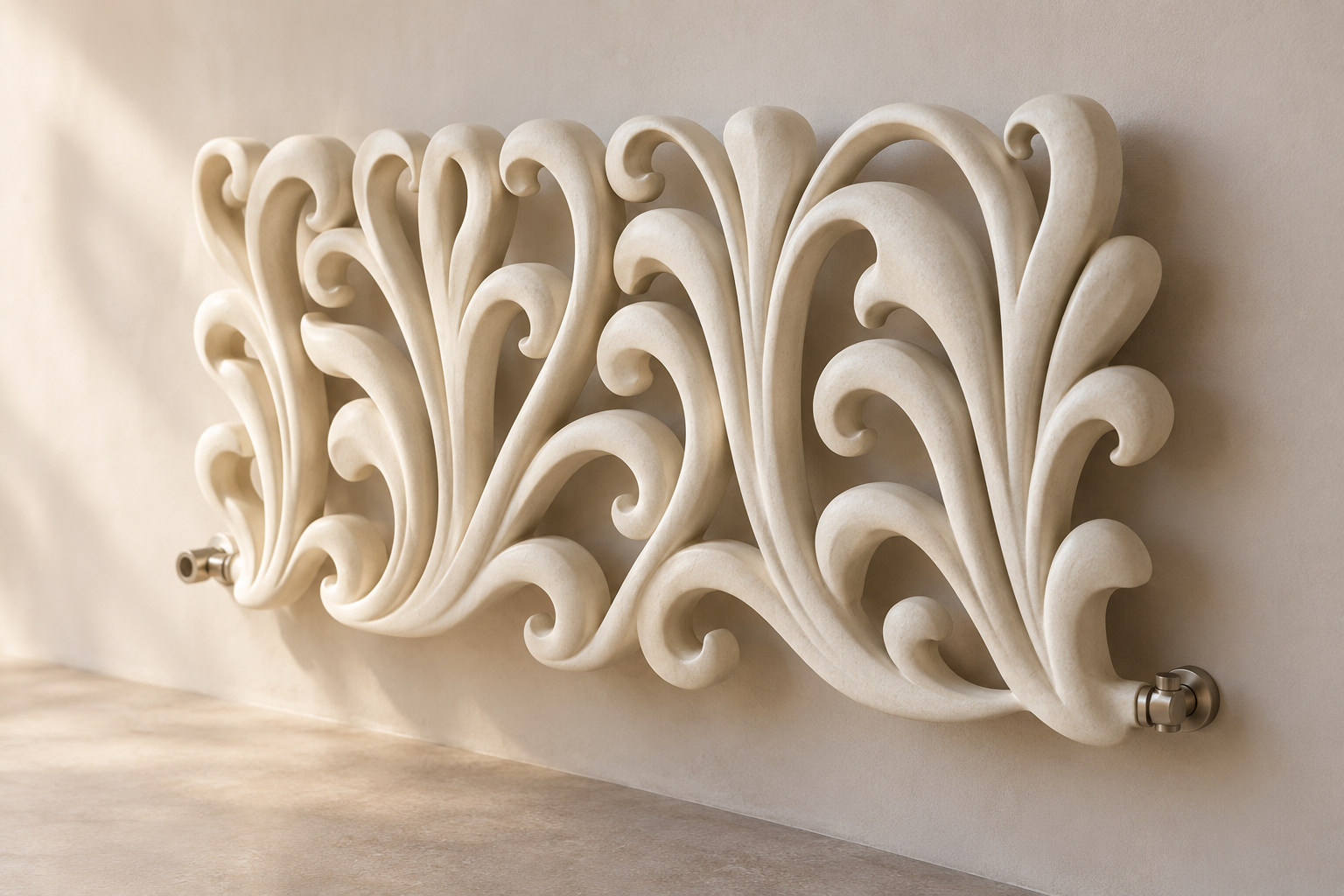
Pale scrolling forms make an open ornamental silhouette against a wall.
PatinaHall editorial reconstruction. It is not a documentary photograph. Curls and open spaces bring an ornamental radiator into the wall composition. The image interprets the later JAGA material vocabulary; it does not establish a safe installation or measured heating performance.
On this page
Key facts & takeaways

At a glance

Subject
Heatwave radiator
Entry
Design story
Last reviewed
25 October 2026

Three things to remember

  1. The ornamental outline is part of the radiator’s visible form.
  2. The 2003 prototype and 2007 JAGA example have different material records.
  3. Dutch designer Joris Laarman worked with Belgian manufacturer JAGA.

A useful curl

Heatwave gives the radiator an unexpected place in a room. Its scrolling outline belongs to the object doing the heating, so decoration becomes a way of shaping a utilitarian surface. Museum Boijmans Van Beuningen explains the design through that relationship between ornament and heat transfer.1

A flat cover would conceal the ordinary radiator behind another object. Here the curling form is the thing to notice. The outline spreads over the wall and leaves spaces within it, making the surrounding wall part of the visual composition.

That relationship changes how the object can be read. Follow a curl and the eye moves between solid surface and open space. A piece of household equipment acquires the kind of silhouette usually associated with decoration.

From a student's model to JAGA

The High Museum identifies its 2003 prototype as part of Laarman's graduate project, Reinventing Functionality. He made that model by hand in fibre-reinforced concrete, steel and plumbing parts. It gave an idea about form and use a physical object through which to develop it.2

The museum also holds a different Heatwave, dated 2007. That record names JAGA as manufacturer and lists polymer concrete with steel plumbing parts. JAGA is Belgian; Laarman's Dutch authorship and the manufacturer's identity are distinct parts of the story.3

The two objects make the move from experiment to manufacture tangible. The graduate model and the later product can share an idea while the material account changes.

Solid ornamental curls and the open spaces between them form a single wall-like arrangement.
The ornament shapes the visible surface and the wall spaces around it. Original PatinaHall schematic, not to scale; colours do not represent measured temperatures or efficiency.

Giving equipment a presence

Heatwave's lasting question is spatial: how much attention should a useful fixture receive? A radiator occupies wall space whether or not anyone finds it beautiful. Laarman's design uses that unavoidable presence as the starting point for an ornamental arrangement.

The curls also make the object's purpose a subject of conversation. Their surface participates in the museum's explanation of heating.

A room needs heat, and it has walls that people see every day. Heatwave brings those two ordinary facts into the same outline. The useful fixture becomes one of the things that gives the room its character.
Research notesEvidence, connections and limits

Museum explanations connect ornament and heating surface, but do not provide comparative efficiency measurements. The prototype’s fibre-reinforced concrete and the 2007 JAGA object’s polymer concrete are separate specifications.

Evidence map

Connected subjects and evidence

Reviewed connections

  • Heatwave radiatordesigned byJoris Laarmandocumented

    The museums credit Joris Laarman. High identifies a 2003 experimental prototype separately from its 2007 production Heatwave.

    Reviewed 25 October 2026 by PatinaHall editorial.
    • Source 1Creation date; material hierarchy; museum interpretation
    • Source 2Date; medium; maker; explanatory paragraph
    • Source 3Designer/manufacturer; date; medium
  • Heatwave radiatormanufactured byJAGAdocumented

    High credits the Belgian company JAGA as manufacturer of its 2007 Heatwave, in polymer concrete and steel plumbing parts. The earlier experimental objects have their own materials and dates.

    Reviewed 25 October 2026 by PatinaHall editorial.
    • Source 3Designer/manufacturer; date; medium

Research trail

Sources and further reading

  1. Boijmans, Heatwave V 2334 a-f (KN&V)Museum Boijmans Van BeuningenAccessed 25 October 2026
  2. High Museum, Reinventing Functionality (Prototype) 2012.64.1-2High Museum of ArtAccessed 25 October 2026
  3. High Museum, Heatwave 2012.65High Museum of ArtAccessed 25 October 2026

Last reviewed 25 October 2026. Found an error or a stronger primary source? Contact PatinaHall.